

Understanding Sales Methodologies Training Ppt




Try Before you Buy Download Free Sample Product
 Impress Your
 Audience
 100%
100% Editable
 Save Hours
 of Time


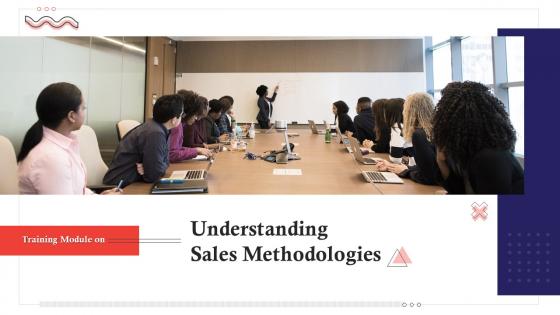
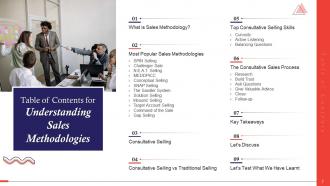
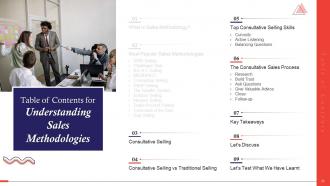
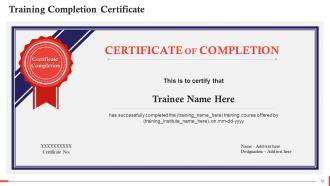
This training module on Understanding Sales Methodologies in depth covers the Popular Sales Methodologies SPIN Selling, Challenger Sale, N.E.A.T. Selling, MEDDPICC, Conceptual Selling, SNAP Selling, The Sandler System, Solution Selling, Inbound Selling, Target Account Selling, Command of the Sale, and Gap Selling. Further, it covers Consultative Selling, Top Consultative Selling Skills Curiosity, Active Listening, Balancing Questions, The Consultative Sales Process Research, Build Trust, Ask Questions, Give Valuable Advice, Close, Follow-up, and Consultative Selling vs. Traditional Selling. It also includes Key Takeaways and Discussion Questions related to the topic to make the coaching session more interactive. The deck has PPT slides on About Us, Vision, Mission, Goal, 30-60-90 Days Plan, Timeline, Roadmap, Training Completion Certificate, and Energizer Activities. It also includes a Client Proposal and Assessment Form for training evaluation.
People who downloaded this PowerPoint presentation also viewed the following :
Content of this Powerpoint Presentation
Slide 4
This slide provides information regarding sales methodology. It highlights that it is a set of rules that sales representatives follow while selling products or services to customers. It is a selling philosophy based on a specific belief about customer psychology.
Slide 5
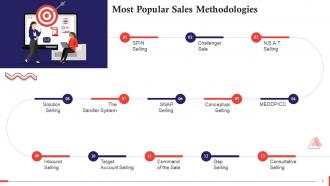
This slide lists the best sales methodologies that salesperson can use. The methodologies are: SPIN selling, challenger sale, N.E.A.T. selling, MEDDPICC, conceptual selling, snap selling, the Sandler system, solution selling, inbound selling, target account selling, command of the sale, gap selling, and consultative selling.
Slide 6
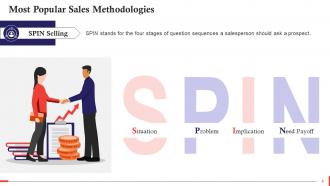
This slide gives an introduction to SPIN selling methodology to close complex sales. SPIN stands for the four stages of question sequences a salesperson should ask a prospect. These are situation, problem, implication, and need payoff.
Slide 7
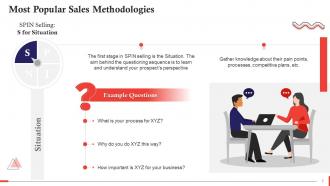
This slide highlights the importance of Situation stage in SPIN selling. The aim behind the questioning sequence in this stage is to learn about and understand your prospect’s perspective.
Slide 8
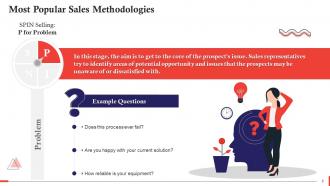
This slide highlights the importance of Problem stage in SPIN selling. In this stage, the aim is to get to the core of the prospect's issue. Sales representatives try to identify areas of potential opportunity and issues that the prospects may be unaware of or dissatisfied with.
Slide 9
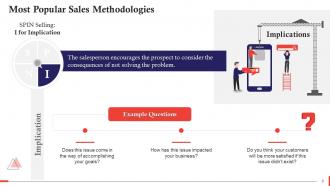
This slide highlights the importance of Implication stage in SPIN selling. In this stage, the salesperson encourages the prospect to consider the consequences of not solving the problem.
Slide 10
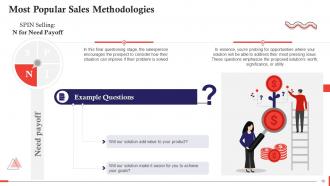
This slide highlights the importance of Need Payoff stage in SPIN selling. In this final questioning stage, the salesperson encourages the prospect to consider how the situation can improve if their problem is solved.
Slide 11
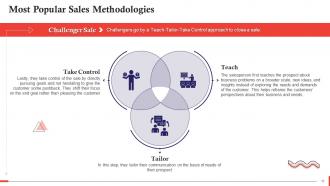
This slide gives an introduction to a Challenger sale for closing sales with complex customers. In this methodology, challengers go by a Teach-Tailor-Take Control approach to close a sale.
Slide 12
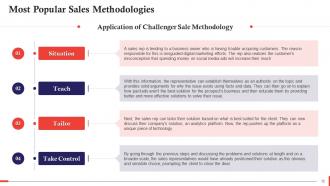
This slide shows an example of how to close a complex deal using the challenger sale methodology. The situation entails a problem of acquiring customers. The sales rep disagrees with the solution the client thinks would be best for them. The sales rep then goes on to explain how their solution will be a better suit for their business supporting it through facts and data. The sales rep will be able to close the deal based on his domain knowledge and confidence rather than by pleasing the customer
Slide 13
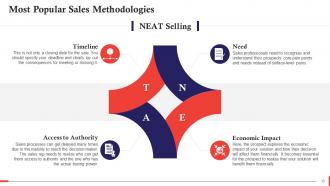
This slide depicts the NEAT selling methodology for closing sales with complex customers. NEAT is an abbreviation for Needs, Economic Impact, Access to Authority, and Timeline. It discusses the importance of understanding the customers’ core pain points, and making them understand how your solution will benefit them financially. NEAT also allows the sales rep to identify the person with actual buying power and help set a timeline for the sale.
Slide 14
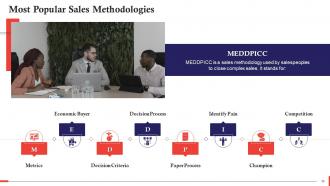
This slide showcases the MEDDPICC sales methodology to close sales with complex customers. It stands for Metrics, Economic Buyer, Decision Criteria, Decision Process, Paper Process, Identify Pain, Champion, and Competition.
Slide 15
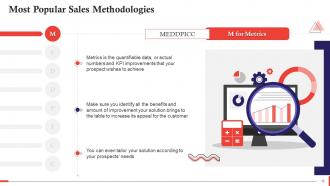
This slide highlights the importance of M or Metrics in MEDDPICC selling. Metrics is the quantifiable data, or actual numbers and KPI improvements that your prospect wishes to achieve. Make sure you identify all benefits and amount of improvement your solution brings to the table to increase its appeal for the customer.
Slide 16
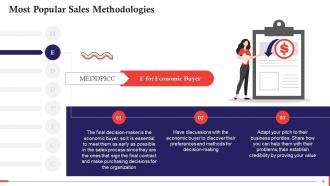
This slide talks about the importance of E or Economic Buyer in MEDDPICC selling. The final decision-maker is the economic buyer, so it is essential to meet them as early as possible in the sales process since they are the ones that sign the final contract and make purchasing decisions for the organization.
Slide 17
This slide highlights the importance of D or Decision Criteria in MEDDPICC selling. You need to understand how the prospect makes decisions. The objectives of buyers vary, and it is your responsibility to present your solution in such a way that the prospect believes it perfectly matches their unique wants and needs.
Slide 18
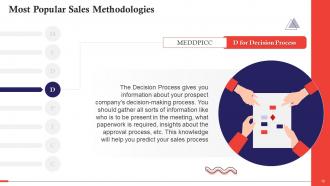
This slide talks about the importance of D or Decision Process in MEDDPICC selling. The Decision Process gives you information about your prospect company's decision-making process. You should gather all sorts of information like who is to be present in the meeting, what paperwork is required, insights about the approval process, etc.
Slide 19
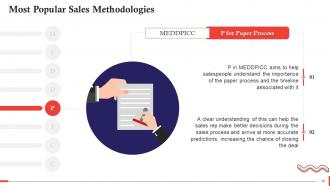
This slide highlights the importance of P or Paper Process in MEDDPICC selling. A clear understanding of the paper process can help the sales rep make better decisions during the sales process and make more accurate predictions, increasing the chance of closing the deal.
Slide 20
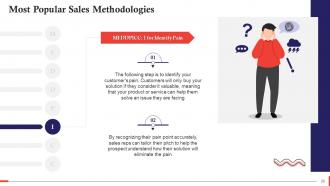
This slide talks about the importance of I or Identify Pain in MEDDPICC selling. Customers will only buy your solution if they consider it valuable, meaning that your product or service can help them solve an issue they are facing. By recognizing their pain points accurately, sales reps can tailor their pitch to help the prospect understand how their solution will eliminate the pain.
Slide 21
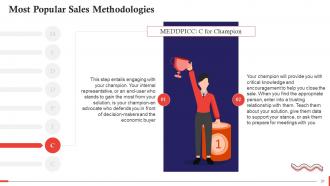
This slide highlights the importance of C or Champion in MEDDPICC selling. This step entails engaging with your champion. Your internal representative, or an end-user who stands to gain the most from your solution, is your champion—an advocate who defends you in front of decision-makers and the economic buyer.
Slide 22
This slide talks about the importance of C or Competition in MEDDPICC selling. Competition is the risk aspect that is most commonly ignored when securing and closing a deal. You must be aware of your competitive advantages and comprehend how the competition addresses the problems and helps achieve your prospects' goals.
Slide 23
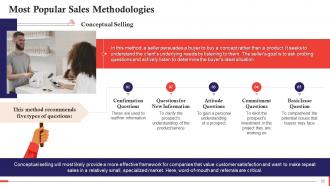
This slide talks about conceptual selling, a sales methodology. It highlights that in this method, a seller persuades a buyer to buy a concept rather than a product. It seeks to understand the client's underlying needs by listening to them. It also mentions that here the sellers’ goal is to ask probing questions and actively listen to determine the buyer's ideal situation.
Slide 24
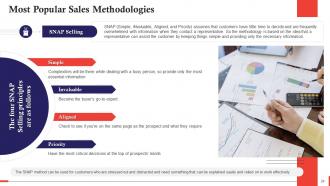
This slide provides information about SNAP (Simple, Invaluable, Aligned, and Priority), a sales methodology. SNAP assumes that customers have little time to decide and are frequently overwhelmed with information when they contact a representative. The methodology is based on the idea that a representative can assist the customer by keeping things simple and providing only the necessary information.
Slide 25
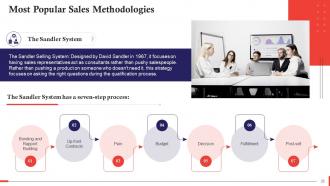
This slide discusses Sandler selling, a sales methodology. It highlights that The Sandler Selling System designed by David Sandler in 1967, focuses on having sales representatives act as consultants rather than pushy salespeople. Rather than pushing a product on someone who doesn't need it, this strategy focuses on asking the right questions during the qualification process.
Instructor’s Notes:
The Sandler System has a seven-step process:
- Bonding and Rapport Building: The first step in relationship building is establishing a bond and rapport with your prospect, which should encourage open and honest communication
- Up-front Contracts: Establishing roles and expectations is the second step in the relationship-building process. During this stage, establish ground rules and create a welcoming environment for conduct of business
- Pain: This section of the conversation will assist you in identifying the prospect's pain points and how your product or service can help them
- Budget: Sandler Selling System discusses the budget during the qualification phase. According to the Sandler System, selling your product to someone who can't afford it is pointless. The sales rep determines whether or not your prospect is willing and able to invest the time, money, and resources required to solve their problem during this stage of the qualification process
- Decision: The qualification phase concludes with a discussion of the decision-making process. Determine who, what, where, why, and how the prospect wants the purchasing process to proceed
- Fulfillment: In this final stage, the sales rep proposes their product or service as a solution to the prospect's problem. Your proposal will address their concerns, particularly regarding the budget and the decision-making process
- Post-sell: It is eventually time to close the deal quickly, before competition can step in
Slide 26
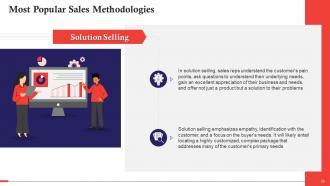
This slide discusses solution selling, a sales methodology. It highlights that in solution selling, sales reps understand the customer's pain points, ask questions to understand their underlying needs, have an excellent appreciation of their business and needs, and offer not just a product but a solution to their problems.
Slide 27
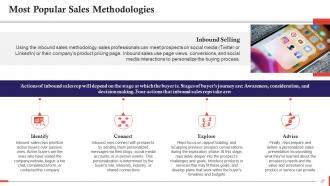
This slide discusses inbound selling, a sales methodology. It highlights that using the inbound sales methodology, sales professionals can meet prospects on social media (Twitter or LinkedIn) or their company's product pricing page. Inbound sales use page views, conversions, and social media interactions to personalize the buying process.
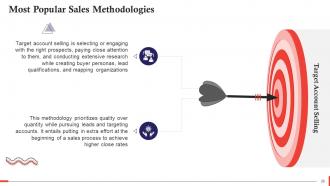
Slide 28
This slide discusses target account selling, a sales methodology. It highlights that target account selling is selecting or engaging with the right prospects, paying close attention to them, and conducting extensive research while creating buyer personas, lead qualifications, and mapping organizations.
Slide 29
This slide discusses command of the sale, a sales methodology. It highlights that selling with urgency and extensive product knowledge is part of the command of the sale methodology. It also states that a salesperson must be able to define how their product/service solves the pains, needs, and interests of their prospects in ways that their competitors cannot.
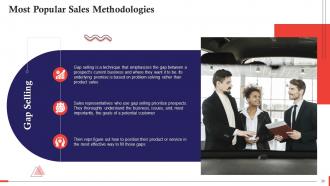
Slide 30
This slide discusses gap selling, a sales methodology. It highlights that gap selling is a technique that emphasizes the gap between a prospect's current business and where they want it to be. Its underlying premise is based on problem-solving rather than product sales. It also mentions that prospects are prioritized by sales representatives who use gap selling. They thoroughly understand the business, issues, and, most importantly, the goals of a potential customer.
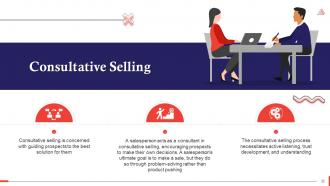
Slide 32
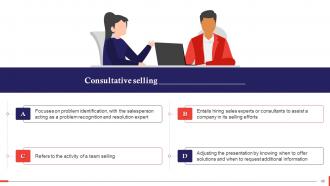
This slide explains about consultative selling. It highlights that consultative selling is concerned with guiding prospects to the best solution for them and the salesperson acts as a consultant, encouraging prospects to make their own decisions
Slide 33
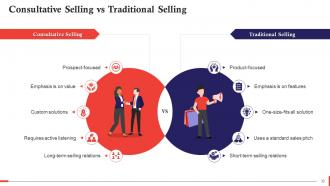
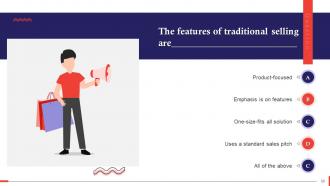
This slide differentiates between consultative and traditional selling. It mentions that consultative selling is prospect-focused, requires active listening, and offers customized solutions, whereas traditional selling is product-focused, employs a standard sales pitch, and offers a one-size-fits-all solution.
Slide 34
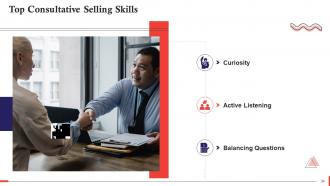
This slide depicts the major consultative selling skills. The skills are curiosity, active listening, and balancing questions.
Slide 35
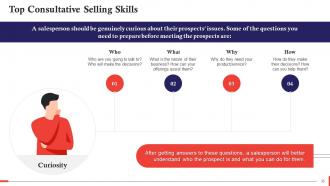
This slide depicts curiosity as a major consultative selling skill. It highlights that a salesperson should be genuinely curious about their prospects' issues. It also mentions the questions salesperson need to prepare before meeting the prospects.
Slide 36
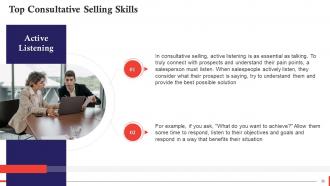
This slide depicts active listening as a consultative selling skill. It highlights that active listening is as critical as talking in consultative selling. To truly connect with prospects and understand their pain points, a salesperson must listen. It also mentions that when salespeople actively listen, they consider what their prospect is saying, try to understand them and provide the best possible solution.
Slide 37
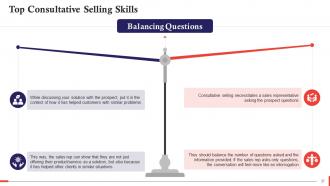
This slide discusses balancing questions as a consultative selling skill. It highlights that consultative selling necessitates a sales representative asking questions from the prospect. They should balance the number of questions and the amount of information provided. It also suggests that while discussing your solution with a prospect, frame it in terms of how it has helped customers with similar challenges.
Slide 38
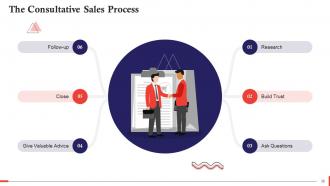
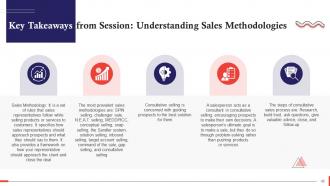
This slide provides information about the consultative sales process. The process steps are: Research, build trust, ask questions, give valuable advice, close, and follow-up.
Slide 39
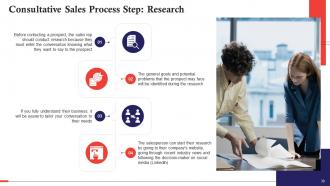
This slide discusses the significance of researching, which is a step in the consultative sales process. It highlights the importance of conducting research before contacting a prospect. While researching, the general goals and potential problems that the prospect may face are identified.
Slide 40
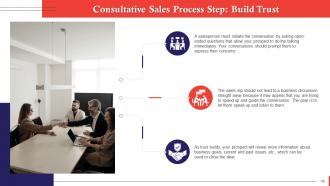
This slide discusses the importance of building trust, which is a step in consultative sales process. It highlights the importance of a salesperson initiating the conversation by asking open-ended questions that allow your prospect to do the talking immediately. It also states that the goal is to allow them to speak up and listen. As trust builds, your prospect will reveal more information about business objectives, current and previous issues, etc., which can be used to close the deal.
Slide 41
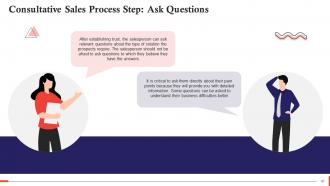
This slide discusses the significance of asking questioning, which is a step in the consultative sales process. It highlights that once trust is established; the salesperson can ask pertinent questions about the type of solution the prospects require. The salesperson should not be afraid to ask questions to which they believe they know the answers. It also mentions the importance of directly asking them about their pain points because they will provide you with detailed information.
Slide 42
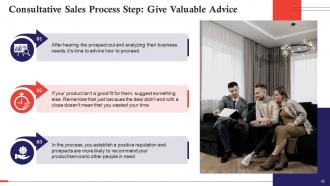
This slide discusses the significance of giving valuable advice, which is a step in the consultative sales process. It highlights that after hearing the prospect out and analyzing their business needs, it's time to advise how to proceed. It also mentions that if your product isn't a good fit for them, suggest something else. In the process, you establish a positive reputation and prospects are more likely to recommend your product/service to other people in need.
Slide 43
This slide discusses the significance of closing, which is a step in the consultative sales process. It highlights that while closing, a salesperson should maintain the same tone as used throughout the conversation. It also mentions that consultative selling aims to build long-term relationships with prospects. Closing is a bonus that comes naturally once you've built trust with your prospect.
Slide 44
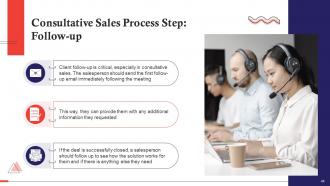
This slide discusses the significance of following-up, which is a step in the consultative sales process. It highlights that client follow-up is critical, especially in consultative sales. The salesperson should send the first follow-up email immediately following the meeting. It also mentions that if the deal is successfully closed, a salesperson should follow up to see how the solution works for them and if there is anything else they need.
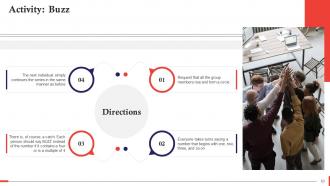
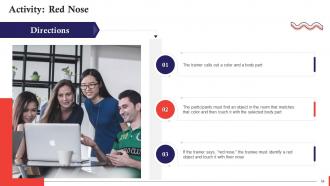
Slide 62 to 77
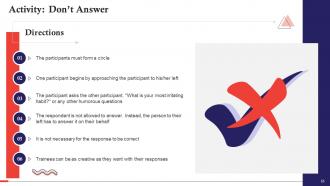
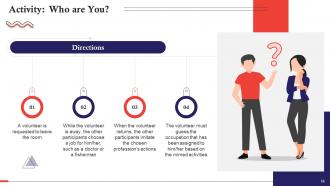
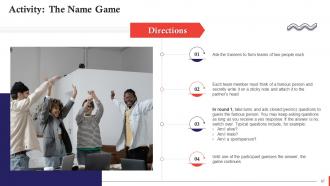
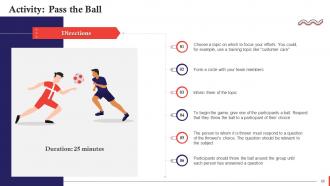
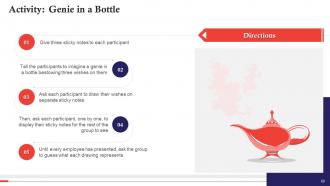
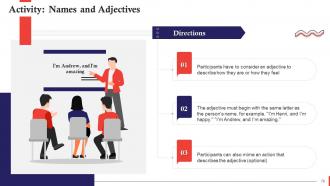
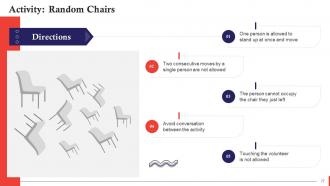
These slides contain energizer activities to engage the audience of the training session.
Slide 78 to 105
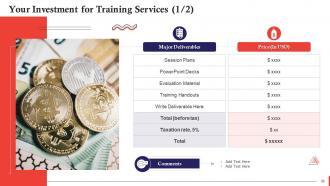
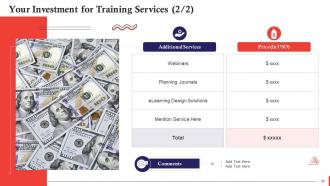
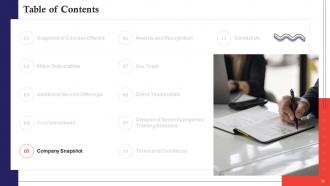
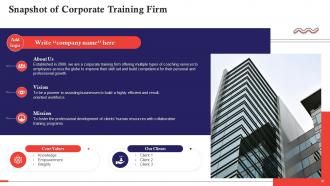
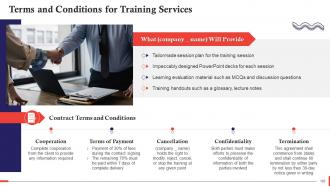
These slides contain a training proposal covering what the company providing corporate training can accomplish for the client.
Slide 106 to 108
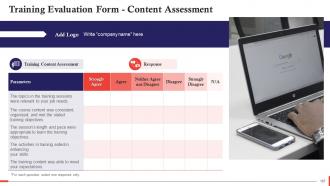
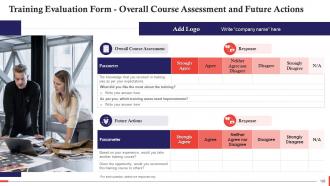
These slides include a training evaluation form for instructor, content and course assessment.
Understanding Sales Methodologies Training Ppt with all 113 slides:
Use our Understanding Sales Methodologies Training Ppt to effectively help you save your valuable time. They are readymade to fit into any presentation structure.


















FAQs for Understanding Sales
So SPIN is basically about asking questions in the right order - you go through Situation, Problem, Implication, then Need-payoff to let prospects figure things out themselves. Challenger Sale is different - you're teaching them stuff they don't know about their business and kind of shaking up their thinking. Way better than just rattling off features all day, honestly. What they both get right is this: you've got to really understand your prospect's world first. Otherwise you're just throwing darts blindfolded. I'd start by writing down what questions you should ask for each approach.
B2B is way more complicated because you're dealing with like five different people who all need to say yes. You've got procurement folks, the actual users, executives - everyone has different concerns. MEDDIC or Challenger Sale work well here since you need methodologies that handle complex stakeholder mapping. B2C is honestly so much simpler once you get it. Just one person making the decision usually. SPIN selling is perfect for this - you can focus on their individual psychology and emotions. The timeline thing matters too. B2B takes forever, B2C can happen fast. Pick your approach based on how many people you need to convince.
Dude, emotional intelligence is everything in sales. Doesn't matter if you're doing SPIN or Challenger or whatever - you've got to read the room. Like, I've seen reps who know their scripts backward but completely miss when someone's getting annoyed or excited. That's where you lose deals. You need to feel when to push harder and when to back off. Also when someone's just being polite vs actually interested - there's a difference. Practice really listening on your calls instead of just waiting for your turn to talk. Trust me, that connection piece makes or breaks everything.
Don't blow up your whole system - just add tech bits gradually. CRM automation is clutch for tracking where leads are (I swear it's a game changer for the messy follow-up stuff). Set up some email sequences too. Takes forever manually but automates nicely. AI research tools help before calls - gives you actual intel instead of going in blind. Pick one thing first though, get good at it, then stack more on top. Your core process stays the same, you're just getting better data and automating the annoying parts. Way less overwhelming than trying to revolutionize everything at once.
Honestly, consultative selling beats solution selling for relationship building - you're actually digging into their problems instead of just pitching. Takes forever though, which is annoying. Solution selling works better when you know your product fits and need quick wins. But here's the thing - some prospects literally just want you to get to the point already. Don't jump straight to your pitch with solution selling or you'll sound pushy as hell. My take? Go consultative for big, messy deals. Use solution selling when you've got clear product-market fit and shorter cycles.
Just map out how you guys actually sell first - don't try cramming some fancy methodology that doesn't fit. BANT and MEDDIC are probably way too much for most startups anyway. Pick maybe 2-3 things that fix your biggest problems. Better discovery questions? Faster qualifying? Handle objections without stumbling? I've literally watched teams argue about frameworks for weeks instead of, you know, actually selling stuff. Test whatever you pick for a month, then tweak based on what's moving deals. Don't overthink it - most of this comes down to practice anyway.
Track both your leading and lagging indicators - that's where the magic happens. Conversion rates at each stage, deal size, sales cycle length, win/loss ratios are your bread and butter. Revenue per rep matters too, but honestly that gets messy with all the variables involved. The stuff that really tells the story? Activity metrics like call-to-meeting ratios and how fast deals move through your pipeline. I'd compare these before/after you roll out any new methodology. Oh, and don't go crazy - pick 3-4 key ones to start or you'll drown in data.
Dude, you've got to keep practicing this stuff or it just dies. I've watched so many teams get trained once then completely forget everything within like 3 months - it's honestly painful to see. Monthly sessions work best for keeping everyone sharp. Role-playing feels weird at first but it actually helps. You'll want refresher courses when people slip back into their old ways. Peer coaching is clutch too. The cool thing is you can tweak the methodology based on what's actually working in the field vs what sounds good on paper. Don't let it become another forgotten training manual.
Agile sales is all about quick iterations and pivoting based on what prospects actually tell you. You ditch the rigid playbook approach. Break deals into short sprints instead, test your assumptions, then adjust when stuff isn't working. Way better than those scripted old-school methods, honestly. Your team works closer together with regular check-ins to see what's landing. Customer feedback drives your next move rather than some predetermined strategy. It's pretty refreshing actually - you stay flexible and can change direction fast. Much more realistic for how deals actually happen in the real world.
Oh man, this is huge. Germans want data and formal processes - that relationship-first approach that works in Brazil? Totally bombs there. Your aggressive NYC pitch will crash and burn in Japan where everything's about consensus. I learned this the hard way actually. Decision timelines are all over the place too. Some cultures expect instant answers, others deliberate forever. You've gotta keep your core sales framework but completely flip how you communicate. Different relationship styles, different timing expectations. It's like learning a new language every time you enter a market.
Honestly? Get your team involved from day one - have them help pick which methodology makes sense for your market. I've watched way too many managers just force some new system on everyone then act shocked when nobody uses it. Show them what's actually in it for THEM, not just company profits. Train them properly and keep coaching afterward. When someone nails the new approach, make a big deal about it in front of everyone. Oh, and don't expect miracles overnight - give people time to figure it out.
Think of psychological triggers as steroids for whatever sales approach you're already doing. SPIN selling? Throw in some scarcity - "only 3 spots left this quarter" - and suddenly your problem questions pack way more punch. With challenger sales, social proof becomes your best friend: "Companies like yours saw 40% improvement after shifting their thinking here." Pick one trigger that doesn't feel fake with your natural process. Test it for two weeks straight - no jumping around. I'd honestly start small rather than trying to be some psychology mastermind right away. It's crazy how much difference one little tweak makes.
Your customers literally know your sales process better than you do - they're the ones suffering through it! Collect feedback from prospects about their buying experience and you'll spot exactly where things get messy. Maybe your discovery calls drag on forever, or you're pitching solutions before understanding their actual problems. The whole thing becomes way clearer when you see it through their eyes. I always think it's wild how many salespeople skip this step. Set up regular check-ins and actually listen to what people tell you. Then tweak your approach based on what you hear. It's like having insider info on your own process.
Don't go cold turkey - that's a recipe for disaster! I tried it once and spent weeks totally confused about what I was even saying to prospects. Pick out what's already working from your current approach first. Then slowly mix in pieces of the new methodology. Practice the hybrid stuff on low-pressure calls before you try it on hot leads. Map out the main differences so you're not flying blind. Give yourself like 30-60 days minimum - rushing it will just mess with your head. Oh, and definitely track your conversion rates the whole time. If numbers start tanking, you'll know to dial it back.
Stories are seriously a game changer for sales. Your brain remembers them way better than boring feature lists. I've seen this work with SPIN, Challenger, whatever method you're using. When you tell a customer success story during discovery or handling objections, prospects can actually picture themselves in that situation. It's like social proof but way more powerful because they're not just hearing about results—they're feeling the problem and seeing the solution play out. Honestly, collect maybe 3-4 solid stories that hit different pain points. You'll be shocked how much better your conversations flow.
-
“Excellent service from the customer support team when I wanted a slide that was a bit different from those on their standard menu. Super helpful.”
-
Commendable slides with attractive designs. Extremely pleased with the fact that they are easy to modify. Great work!