


Sales methods and techniques powerpoint presentation slides





Try Before you Buy Download Free Sample Product
 Impress Your
 Audience
 100%
100% Editable
 Save Hours
 of Time


Grab this professionally designed Sales Methods And Techniques PowerPoint Presentation Slides to train your sales team regarding sales methodology, consumer’s buying behaviour, engagement experience, etc. Assess the pain points of the customers, identify market trends and create an ideal customer profile to pitch your products and services. Incorporate content-ready sales methods and techniques PPT presentation templates to show why your company exists and what are the services or products that you offer. This ready-to-use sales playbook complete presentation is perfect to improve sales effectiveness and productivity. This deck comprises of templates such as our customers, ideal customer profile, value proposition, customer journey mapping, buying/sales process, sales tools, and more. These PPT templates are completely customizable. You can edit the slides as per your requirement. Edit color, text, icon and font size if needed. Download sales playbook complete PowerPoint presentation to identify the weaknesses, leverage the strengths, intensify your profit ratio, and prove business value. Judge correctly due to our Sales Methods And Techniques Powerpoint Presentation Slides. Be able to investigate every inner detail.
People who downloaded this PowerPoint presentation also viewed the following :
Content of this Powerpoint Presentation
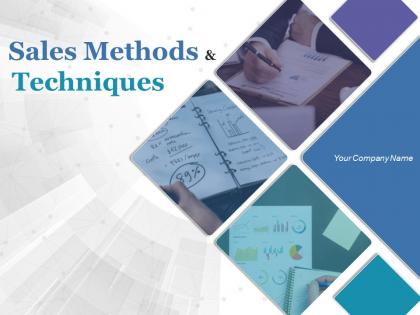
Slide 1: This slide introduces Sales Methods & Techniques. State your company name and get started.
Slide 2: This slide presents Sales Playbook Outline stating- Key Insights, Our Sales Process, Deal Advancement Plays, Marketing Campaigns, Expected Metrics, Content & Sales Tools, Our Customers.
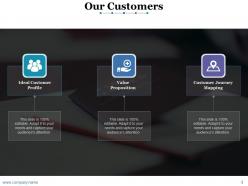
Slide 3: This is Our Customers slide showing- Ideal Customer Profile, Value Proposition, Customer Journey Mapping.
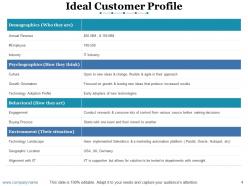
Slide 4: This slide showcases Ideal Customer Profile with 4 main aspects to state- Demographics (Who they are), Psychographics (How they think), Behavioral (How they act), Environment (Their situation).
Slide 5: This is Value Proposition slide in a tabular form.
Slide 6: This slide presents Customer Journey Mapping (Template 1 of 2) with the following points- Attract, Interact, Engage, Convert.
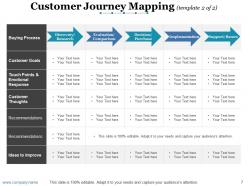
Slide 7: This slide also presents Customer Journey Mapping (template 2 of 2) with- Discovery/ Research, Evaluation/ Comparison, Decision/ Purchase, Implementation, Support/ Renew.
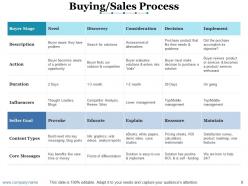
Slide 8: This slide showcases Buying/Sales Process with Buyer Stage and Seller Goal.
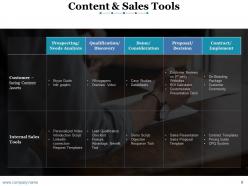
Slide 9: This is Content & Sales Tools slide with the following sub headings- Prospecting/ Needs Analysis, Qualification/ Discovery, Demo/ Consideration, Proposal/ Decision, Contract/ Implement.
Slide 10: This is Sales Methods and Techniques Icon Slide. Alter/ modify icons as per need.
Slide 11: This slide is titled Additional Slides to move forward. You can change the slide content as per need.
Slide 12: This is a Stacked Column graph slide to show product/ entity comparison, specifications etc.
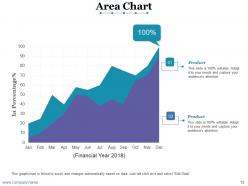
Slide 13: This slide shows an Area Chart. You can use it as per your requirement.
Slide 14: This is a Bubble Chart slide to show product/ entity comparison, specifications etc.
Slide 15: This slide represents Our Mission. State your mission, goals etc.
Slide 16: This is Our Main Goals slide showing Satisfaction, Values and Communication as examples. State your important goals here.
Slide 17: This is a Mind map image slide to show information, specifications etc.
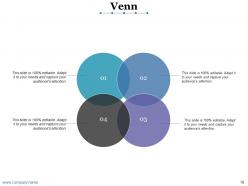
Slide 18: This is a Venn diagram image slide to show information, specifications etc.
Slide 19: This is a Thank You slide with Address# street number, city, state, Contact Numbers, Email Address.
Sales methods and techniques powerpoint presentation slides with all 19 slides:
Our Sales Methods And Techniques Powerpoint Presentation Slides give correct consideration to each aspect. You will acquire the desired balance.









FAQs for Sales methods and techniques
Here's the deal - traditional sales is basically "here's our stuff, buy it now." Pretty outdated if you ask me. Consultative selling flips that completely. You're asking questions first, actually listening to their problems, then figuring out how to help. It's way less pushy. Instead of launching into your pitch, you become more like their advisor who genuinely cares about solving whatever they're dealing with. Next time you're on a call, try this: spend most of your time just asking stuff and listening. Seriously, like 70% of it. You'll be shocked how much more they'll share with you.
Listen - forget the sales tricks and just be genuinely interested in what they're saying. Ask follow-up questions. Match their vibe too... formal people want formal, casual people don't. I swear most reps jump straight into pitching without any actual connection first. Look for things you have in common - maybe you've both dealt with the same headaches at work or whatever. When they mention something that sounds interesting, just say "tell me more about that." Works way better than you'd think. The whole thing is really about being curious about their actual situation, not just trying to sell them stuff.
Dude, stories are everything in sales. People don't remember your boring feature list, but they'll remember a good story about how you helped someone just like them. It's like giving them a preview of their own success - they can actually picture it happening to them instead of just hearing you pitch at them. Plus it feels way more natural than rattling off benefits. Honestly, I think it's the difference between sounding like a salesperson vs. sounding like someone who genuinely gets their problem. Keep 2-3 solid customer stories in your back pocket for different situations.
Dude, social proof is huge for sales pitches. Basically people see that others like them already bought from you, so it feels way less risky. I always throw in testimonials or case studies - even something simple like "we've worked with 200+ companies in your space" works great. Nobody wants to be the guinea pig, you know? Here's the thing though - match your examples to who you're talking to. If you're pitching startups, don't lead with your Fortune 500 wins. That just makes you seem out of touch. Keep a few different examples ready depending on the audience.
Listen first - don't just sit there planning your comeback. I like the "feel, felt, found" thing: "I get how you feel, others felt that way too, here's what they discovered..." You can also flip their objection back as a reason to buy (boomerang method works pretty well). Honestly? Sometimes I just say "fair point - what would it take to move forward?" Cuts right through all the dancing around. Stay chill about it. Their objections aren't attacks on you, they're just asking for more info. That mindset shift makes a huge difference.
Honestly, buyer personas are a game changer - they help you ditch the spray-and-pray approach. You'll actually know what keeps your prospects up at night and what gets them excited. A CFO? They want to see numbers and ROI. IT folks are more worried about whether your solution will break their systems (been there, done that). Once you nail down these personas, you can predict their objections before they even voice them. Plus you'll know if they prefer email or LinkedIn, and whether they decide fast or need six months to think it over. Interview your favorite customers first - they're goldmines for this stuff.
Honestly, it's all about matching your approach to what you're selling and who you're talking to. Assumptive closes kill it for big-ticket stuff - just ask "when do you want to start?" instead of "if." Create some urgency for smaller products with limited offers or whatever. B2B? I'd go with the summary close - recap everything they already nodded yes to. People way overthink this whole thing though. Just watch for buying signals and don't force a square peg into a round hole, you know? Practice maybe 3-4 different techniques so you can switch gears naturally. Half the battle is just reading the room right.
Honestly, the biggest game-changer is just paying attention to how people actually feel, not just their words. Watch their body language and energy - if someone seems stressed or rushed, don't dive into your whole pitch right away. I learned this the hard way lol. Acknowledge where they're at first, then adjust your approach. Builds way more trust than steamrolling through your script. Oh and when you hit rejections (which you will), stay calm. Don't take it personally. Try active listening on your next few calls - people respond so differently when they feel heard.
Honestly, data analytics is a game-changer for sales. You'll see exactly which leads actually convert and spot patterns in your best customers. When deals start stalling? You'll catch it early. I know it sounds nerdy, but there's something weirdly fun about being a detective with spreadsheets. The coolest part is predicting when someone's ready to buy based on how they're engaging with you. Segment your CRM prospects into different groups and personalize your pitch for each one. Makes a huge difference.
Dude, you really need to work on your personal brand. Like, buyers are researching everything online before they even talk to sales reps now. Trust gets built way before that first call happens. People still buy from people they actually like and trust - hasn't changed. Share helpful stuff on LinkedIn consistently and you'll be the person they think of when they're ready to purchase. Honestly, most salespeople sound exactly the same. Your brand is what makes you different. Just pick one platform to start. Post one useful tip about your area each week. That's it.
Honestly, do your homework first - stalk their LinkedIn and company news for insider details. I always steal their exact terminology when making slides because it proves you actually understand their problems. Look up recent expansions or challenges they're facing. Custom case studies work great, especially if you can casually mention how their competitors solved similar issues (without being too obvious about it). Oh, and if they're visual people, ditch boring charts for something in their brand colors. Starting with "I saw you guys just launched X" immediately gets their attention. It's like speaking their language from minute one.
Dude, start with just one CRM - don't go crazy trying to set up everything at once. It'll automate tracking your leads so you're not doing that boring stuff manually. Email sequences are clutch too, they nurture prospects even when you're binge-watching Netflix. Chatbots answer basic questions 24/7 which is pretty sweet. You can finally see what sales approaches actually work instead of just winging it with analytics tools. Pipeline management keeps your deals organized - I used to lose so many opportunities before I got this sorted. Once it's running smoothly, you'll have way more time for actual selling.
Dude, it's like night and day between B2B and B2C. With B2B you're playing the long game - building relationships, doing demos, tons of follow-ups because there's usually like 5 people making decisions. Way bigger budgets too. B2C? Total opposite. You need those quick emotional hits - urgency, social proof, make checkout stupid easy. I made the switch from B2C to B2B last year and wow, the patience thing nearly killed me at first! Map out how long your buyers actually take to decide, then build your follow-up around that. The timing difference will be your biggest shock honestly.
Dude, you've gotta keep learning or you'll sound like you're still pitching from 2019 - customers notice that stuff immediately. Every conversation is basically free data about what works. I spend like 30 minutes each week just reviewing my calls to spot patterns. New tech keeps popping up, buyer habits shift constantly, and honestly? The reps who adapt are the ones closing deals. Track what clicks with different prospect types. Stay curious about trends in your space. Don't be scared to try new approaches either - that's how you build stronger relationships over time.
Oh man, where do I start? Don't talk their ears off - seriously, I've seen so many people just ramble without checking if anyone's even listening. Read the room! Watch for those glazed-over looks. Focus on what your thing actually DOES for them, not every boring feature you've built. Ask questions instead of monologuing the whole time. Stories work way better than bullet points, trust me. Practice beforehand but honestly? Be ready to throw your script out the window if they seem interested in something totally different. Keep those slides clean too.
-
Accept