

Market Analysis Techniques And Methods Powerpoint Presentation Slides





Try Before you Buy Download Free Sample Product
 Impress Your
 Audience
 100%
100% Editable
 Save Hours
 of Time


Our pre built market analysis techniques and methods slide presentation is the helping hand you need to explain your next market analysis business plan. With help of PowerPoint presentation slides included in this PPT sample you can brief your employees about market research and market strategy analysis done by you. Using this market research methods PPT model you can also share insights with employees about how the market is doing so as to perfrom better in the business. Apart from this, this research techniques PowerPoint presentation supports to underline other closely related concepts like pricing strategies, asymmetric competition, business model, SWOT analysis, market trends, risk analysis etc. Innovative presentation slides like industry size, understanding the target market, industry cost structure, distribution channels, market share of competitors etc. makes this PPT slide show even more amazing. Best thing here is that you can contact our graphic designers to get customized pictorial show. So, what holding you back? It's time to visualize your next market research techniques Powerpoint show. Just click and get started. Spruce up your act with our Market Analysis Techniques And Methods Powerpoint Presentation Slides. Keep your listeners glued to their seats with your exciting ideas.
People who downloaded this PowerPoint presentation also viewed the following :
Content of this Powerpoint Presentation
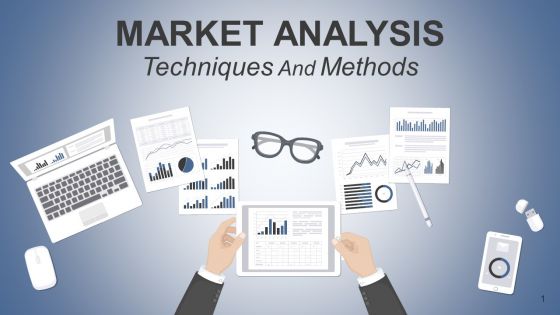
Slide 1: This slide introduces Market Analysis Techniques And Methods. State your intro and begin.
Slide 2: This is an Agenda slide. Present your agendas here.
Slide 3: This slide is titled Market Analysis to move forward.
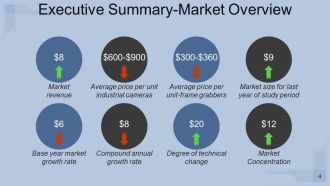
Slide 4: This slide presents Executive Summary-Market Overview displaying- Market revenue, Base year market growth rate, Average price per unit industrial cameras, Compound annual growth rate, Average price per unit-frame grabbers, Degree of technical change, Market size for last year of study period, Market Concentration.
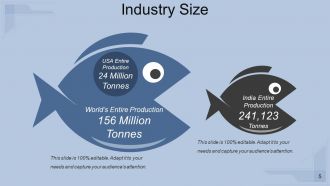
Slide 5: This slide showcases Industry Size in a creative fish imagery form.
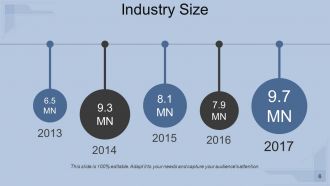
Slide 6: This slide showcases Industry Size to be shown.
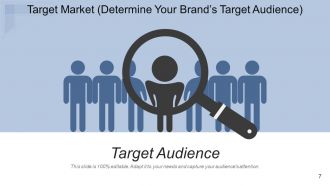
Slide 7: This slide shows Target Market (Determine Your Brand’s Target Audience) to be presented.
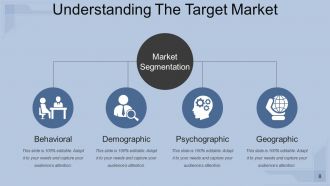
Slide 8: This slide showcases Understanding The Target Market categorized into- Behavioral, Geographic, Psychographic, and Demographic factors.
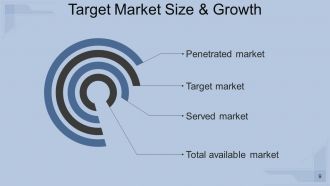
Slide 9: This slide showcases Target Market Size & Growth showing- Served market, Total available market, Target market.
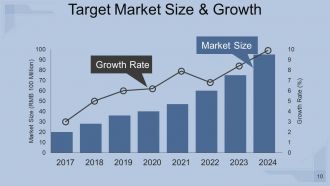
Slide 10: This slide presents Target Market Size & Growth in graph form displaying- Market Size and Growth Rate.
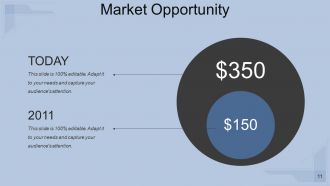
Slide 11: This slide showcases Market Opportunity. State relative facts, statistics etc. here.
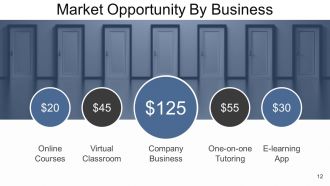
Slide 12: This slide showcases Market Opportunity By Business displaying- Online Courses, Virtual Classroom, E-learning App, One-on-one Tutoring, Company as factors to present.
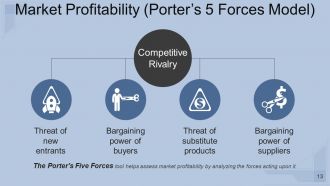
Slide 13: This slide shows Market Profitability (Porter’s 4 Forces Model) displaying- Bargaining power of buyers, Threat of new entrants, Threat of substitute products, Bargaining power of suppliers, Competitive Rivalry. The Porter's Five Forces tool helps assess market profitability by analyzing the forces acting upon it.
Slide 14: 14 This slide is 100% editable. Adapt it to your needs and capture your audience's attention. Market Trends 01 This slide is 100% editable. Adapt it to your needs and capture your audience's attention. Market Trends 02 This slide is 100% editable. Adapt it to your needs and capture your audience's attention. Market Trends 03 Market Trends This slide is 100% editable. Adapt it to your needs and capture your audience's attention.
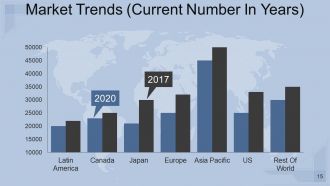
Slide 15: This slide shows Market Trends to be shown.
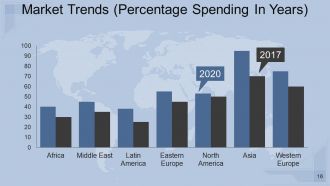
Slide 16: This slide shows Market Trends (Percentage Spending In Years) in bar graph form.
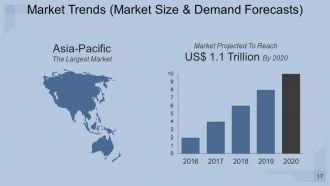
Slide 17: This slide presents Market Trends (Market Size & Demand Forecasts) in graph form with asia pacific map image.
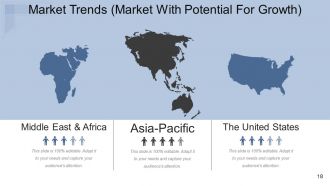
Slide 18: This slide presents Market Trends (Markets With Potential For Growth) showing- Middle East & Africa, Asia-Pacific, The United States map images to state geographical facts.
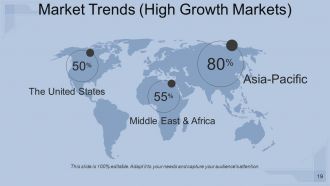
Slide 19: This slide presents Market Trends (High Growth Markets) with world map image.
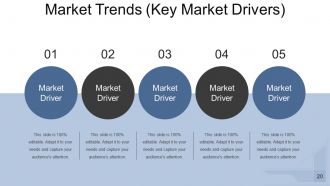
Slide 20: This slide showcases Market Trends (Key Market Drivers) to be displayed.
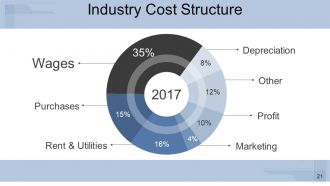
Slide 21: This slide shows Industry Cost Structure showing- Other, Depreciation, Purchases, Rent & Utilities, Marketing, Profit, Wages.
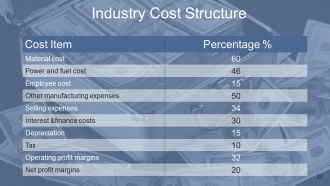
Slide 22: This slide displays Industry Cost Structure in tabular form.
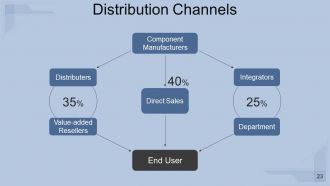
Slide 23: This slide shows Distribution Channels showcasing- Component Manufacturers, Direct Sales, Distributors, Integrators, End User, Value-added Resellers, System Developers.
Slide 24: This slide showcases Key Success Factors. The key success factors are those that are necessary for you to achieve success as a brand.
Slide 25: This slide is titled Competitor Analysis to move forward.
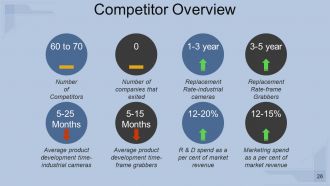
Slide 26: This slide shows Competitor Overview with- Number of competitors, Number of companies that exited, Average product development time-industrial cameras, Average product development time-frame grabbers, Replacement rate-industrial cameras, R & D spend as A per cent of market revenue, Replacement rate-frame grabbers, Marketing spend as A per cent of market revenue in, Decreasing, Increasing and Stable parameters.
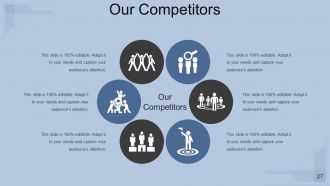
Slide 27: This slide shows Our Competitors with icon imagery to display.
Slide 28: This slide also shows Our Competitors with icon imagery to display.
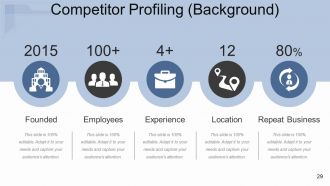
Slide 29: This slide presents Competitor Profiling (Background) showcasing- Founded, Employees, Experience, Location, and Repeat Business as factors to display.
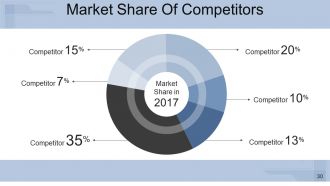
Slide 30: This slide presents Market Share Of Competitors in pie chart form.
Slide 31: This slide presents Competitor’s Objectives (Short Term & Long Term).
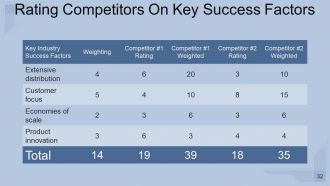
Slide 32: This slide displays Rating Competitors On Key Success Factors in tabular form.
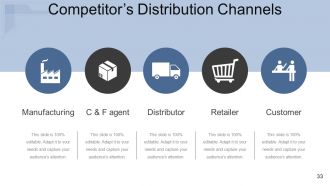
Slide 33: This slide showcases Competitor's Distribution Channels displaying- Manufacturing, Distributor, Retailer, Customer, C & F agent.
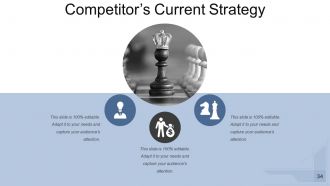
Slide 34: This slide showcases Competitor's Current Strategy. State those aspects here.
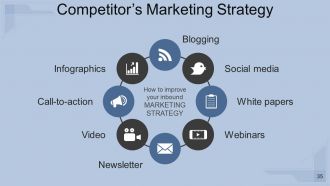
Slide 35: This slide presents Competitor’s Marketing Strategy displaying- Call-to-action, Infographics, Video, Newsletter, Social media, Blogging, White papers, Webinars.
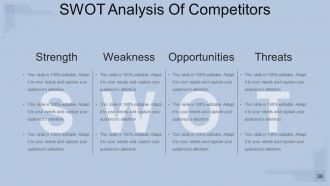
Slide 36: This slide showcases SWOT Analysis of Competitors.
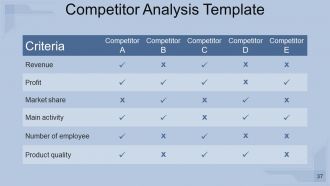
Slide 37: This is a Competitor Analysis Template slide.
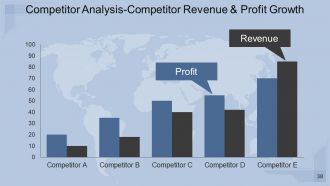
Slide 38: This slide shows Competitor Analysis- Competitor Revenue & Profit Graph showing- Revenue and Profit.
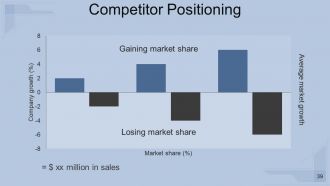
Slide 39: This slide shows Competitor Positioning stating- Losing market share, Gaining market share, Average market growth.
Slide 40: This slide showcases Market Analysis Icon Set. Use the icons as per need.
Slide 41: This slide is titled Additional slides. You can change the slide content as per need.
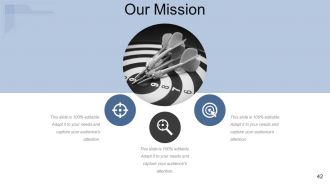
Slide 42: This is Our Mission slide with target imagery. State it here.
Slide 43: This is Our team slide with name, designation and text boxes to state information.
Slide 44: This is an About Us slide. State company/team specifications here.
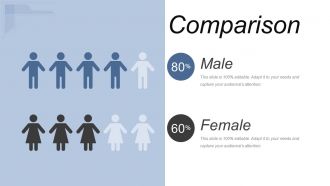
Slide 45: This is a Comparison slide to show comparison, information, specifications etc.
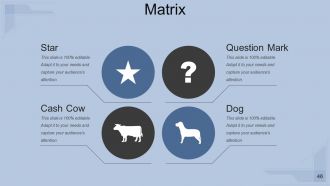
Slide 46: This is a MATRIX slide. Put relevant comparing data here.
Slide 47: This is an Our Goal slide. State your important goals here.
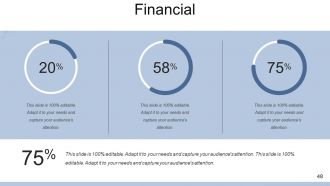
Slide 48: This slide presents Financial scores and stats to display.
Slide 49: This is a Quotes slide to highlight, or state anything specific. You may change the slide content as per need.
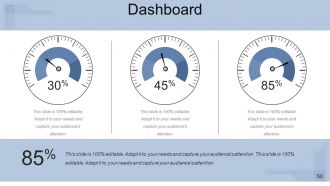
Slide 50: This is a Dashboard slide to state Low, medium and High aspects, kpis, metrics etc.
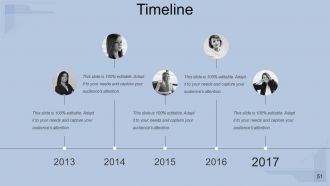
Slide 51: This is a Timeline slide to present important dates, evolution, milestones etc.
Slide 52: This is a Thank You slide with Address# street number, city, state, Contact Number, Email Address.
Market Analysis Techniques And Methods Powerpoint Presentation Slides with all 52 slides:
Address disruptive elements with our Market Analysis Techniques And Methods Powerpoint Presentation Slides. Halt the build up of instability.








FAQs for Market Analysis Techniques And Methods
Okay so for market analysis, hit these five things. Market size and growth trends first - how big is this thing and where's it going? Customer segments come next, figure out who you're actually selling to. Competitor research is critical but honestly don't fall down that rabbit hole for weeks like I did once. Also look at regulations and what might block new players from entering. Pricing and how stuff gets distributed rounds it out. Pro tip - make yourself a template because doing this from scratch every time is brutal. You'll thank me later when you're not starting over each project.
SWOT basically maps out your internal stuff (strengths/weaknesses) against what's happening outside your company (opportunities/threats). Think of it as a bird's eye view of your market position. The cool part is when things click together - like your main strength hitting right when a new opportunity opens up. Or when competitors mess up and leave room for you to jump in. Honestly, the threats section always catches me off guard with stuff I totally missed. It's not the end-all solution, but it's a solid starting point before you dive deeper into research and planning.
Look, competitor analysis is basically stalking with purpose - shows you what's working and what totally isn't. I'm guilty of spending hours scrolling through their social feeds, but honestly? It's pure gold. You'll catch their pricing patterns, see which messages actually hit with audiences, and spot the gaps they're completely missing. Their weak points become your opportunities. The trick is finding ways to stand out from what they're doing instead of just copying everything. Plus you get to see their campaign tactics up close, which is pretty useful when you're planning your own stuff.
Honestly, segmentation is a game changer. You basically group customers by what they actually do or want, then craft messages that hit different for each group. Way better than blasting everyone with the same generic stuff. Your conversion rates will thank you - people respond when you're speaking their language, you know? Budget-wise, you'll stop throwing money at people who were never gonna buy anyway. Focus on behavioral data over basic demographics though - that surface-level stuff doesn't tell you much. Oh and definitely A/B test your biggest segments first to see the difference. Start small but think bigger.
Think of customer personas as your cheat sheet for understanding who actually buys your stuff. They're way better than staring at spreadsheets full of random demographics - trust me on this one. You'll spot market gaps faster and predict what people want before your competitors do. Honestly, they make presentations so much easier because everyone can picture these "real" people instead of boring stats. Start small with maybe 2-3 personas. Build them out with actual customer feedback, not just guesswork. It's like having insider knowledge about your market without doing sketchy spy stuff.
So basically trend analysis is about spotting patterns in old data to guess where markets are going. Look at price movements, trading volumes, different timeframes - figure out if something's trending up, down, or just stuck sideways. Markets have this weird habit of repeating themselves, though they'll definitely surprise you when you least expect it (learned that the hard way). Moving averages and support/resistance levels are pretty solid tools for predictions. Oh, and you need at least 3-6 months of data or you're just guessing blindly.
Honestly, I'd start with market share - yours and your competitors'. Revenue growth rates are obvious but super telling. Then dig into customer acquisition cost because burning cash to grow is a nightmare. Customer lifetime value is where the real money story lives though. Market penetration rates matter too, plus keeping an eye on how everyone's pricing. Pull these monthly at first. Whatever screams "problem" or "opportunity" loudest? That's where you spend your time digging deeper. CAC going crazy high was always my biggest red flag back when I was tracking this stuff daily.
Dude, you absolutely have to nail the cultural stuff before jumping into a new market. I've watched companies crash and burn because they skipped this step - McDonald's was a mess in India at first since they didn't think about how many people are vegetarian there. Your pricing, marketing, even how you sell things needs to match what locals actually want and expect. Focus groups are your friend here. Also maybe find someone who really knows that market inside and out? Trust me, it's way cheaper than learning these lessons the hard way later.
Honestly, start with the free stuff first - Google Analytics and social media insights will tell you a lot about digital behavior. SurveyMonkey's great for quick surveys, super easy to use. I've been really into Google Trends lately, it's weirdly addictive for spotting what's coming up. SEMrush and Ahrefs are amazing for checking out competitors but they're pricey. Don't overlook just calling people though - I swear a 20-minute phone conversation sometimes beats any fancy dashboard. Figure out what you actually need from the free tools, then you can decide if paid ones are worth it.
Start with the hard numbers - they'll show you what's actually going down. Like if sales tanked 20% in Q3, that's your red flag right there. But here's the thing - data without context is pretty useless. You need to talk to actual people to figure out the "why" behind those numbers. Customer interviews are honestly a goldmine for this stuff. I'd do surveys first to catch the big trends, then sit down with a few customers for deeper conversations. Sometimes the real insights come from random comments people make, not the formal questions you planned. Numbers give you the problem, but people give you the solution.
Honestly, the worst part is drowning in data that's mostly garbage. You'll spend hours sorting through outdated or biased info just to find something useful. Consumer behavior shifts so fast now - like, your analysis could be irrelevant before you even finish it. Budget and time constraints suck too. You never get the resources to really dig deep into what matters. Oh, and finding people who actually know what they're doing? Good luck with that. My take? Pick clear goals first and focus only on metrics that'll actually change how you make decisions. Don't try analyzing everything or you'll go crazy.
Dude, the tech stuff happening right now is wild. AI can crunch through data that used to take weeks in literally minutes. Social media sentiment analysis gives you real-time market feels too. Machine learning catches patterns I'd never spot - honestly makes me feel a bit obsolete sometimes lol. The trick is figuring out what's actually useful vs just flashy garbage. Don't go crazy buying every new tool. Instead, look at where you're spending forever on boring analysis work and tackle those areas first. Automation handles the grunt work so you can think bigger picture.
Dude, macro factors are absolutely critical for market analysis. GDP growth, inflation, interest rates, employment numbers - this stuff drives the whole economy's direction. When the Fed even hints at rate changes, markets go crazy overnight. It's wild how much power they have. Consumer spending and business investment both follow these trends, so you can't really analyze individual stocks without understanding the bigger picture first. I always check the macro environment before jumping into company-specific research. Otherwise you're missing half the story about why sectors succeed or tank.
Just talk to your customers directly - surveys, interviews, whatever works. I swear nothing beats hearing someone walk through their actual thought process when they bought something. Those summary reports miss all the good stuff. Watch how people really use your product too, not just what they tell you (totally different things half the time). Ask open-ended questions and actually listen. Honestly? Start with like 10-15 quick customer chats. You'll spot patterns way faster than you'd think. It's wild how much you learn just by asking "why'd you pick this?"
Okay so first - be upfront about what data you're grabbing and why. Don't pull any shady moves that trick people or prey on vulnerable folks. I've definitely seen teams cherry-pick stats to fit their agenda (guilty as charged sometimes lol). Just be real about your methods and where things might fall short in your reports. Also, respect your competitors' private info - don't be that company doing sketchy research. Build everything on solid ground so your insights actually help both the business and customers win.
-
Innovative and attractive designs.
-
Very unique and reliable designs.