

Market Potential Powerpoint Presentation Slides





Try Before you Buy Download Free Sample Product
 Impress Your
 Audience
 100%
100% Editable
 Save Hours
 of Time


If you are worried about launching a product or service to market and you are always worried about market potential, we have complete solution to represent your thoughts with our market potential PowerPoint presentation slides. This Market Potential PPT slide will help you determine ideas to find your potential market and to see demand of the product in current business environment. This presentation template of market potential lets you find out different fundamentals of market and figure out if you are tapping the right market. Analyze market size for a product, market growth, current competition for your product or services, profitability and available different products and consumer types. So, if you are new to market, this template of market potential will allow you to outline different variables like current market for a product, different demographics for market, consumer types, profitability and finally unique values offered by your business. Download this Market Potential presentation slide and prepare the perfect product launch strategy. Instruct the gullible on discerning facts with our Market Potential Powerpoint Presentation Slides. Enlighten them about drawing inferences.
People who downloaded this PowerPoint presentation also viewed the following :
Content of this Powerpoint Presentation
Slide 1: This slide introduces Market Potential. State your company name and continue further.
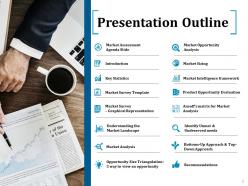
Slide 2: This is a Presentation Outline slide with- Market Assessment Agenda Slide, Introduction, Key Statistics, Market Survey Template, Market Survey– Graphical Representation, Understanding the Market Landscape, Market Analysis, Opportunity Size Triangulation - 3 way to view an opportunity, Bottoms-Up Approach & Top-Down Approach, Recommendations, Identify Unmet & Undeserved needs, Ansoff’s matrix for Market Analysis, Product Opportunity Evaluation, Market Intelligence framework, Market Sizing, Market Opportunity Analysis.
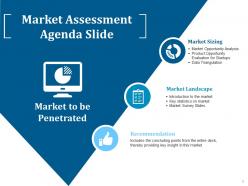
Slide 3: This is Market Assessment Agenda Slide showing- Market Sizing, Market Landscape, Recommendation.
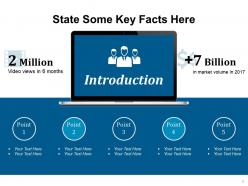
Slide 4: This is an Introduction slide with imagery and text boxes. State Some Key Facts Here.
Slide 5: This slide showcases Key Statistics. Some of them are- Cyber Attacks Are Unnoticed, Devices Are Vulnerable To Security, Users Don’t Protect Their Devices, Connected Devices Store Personal Information.
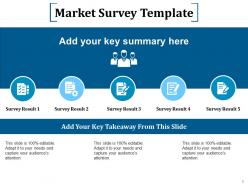
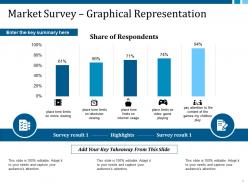
Slide 6: This slide shows Market Survey Template. Add your key summary here.
Slide 7: This slide shows Market Survey – Graphical Representation.
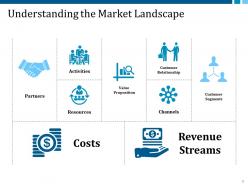
Slide 8: This is Understanding the Market Landscape slide showing- Partners, Activities, Resources, Value Proposition, Channels, Customer Relationship, Segments, Costs, Revenue Streams.
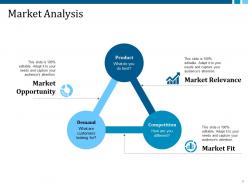
Slide 9: This is Market Analysis slide showing the following three aspects- Market Relevance, Market Fit, Market Opportunity.
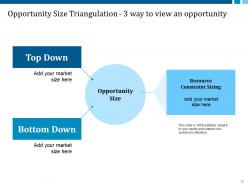
Slide 10: This is Opportunity Size Triangulation - 3 way to view an opportunity slide showing- Top Down, Bottom Down, Resource Constraint Sizing.
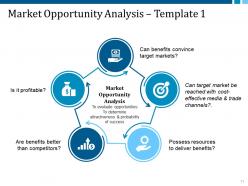
Slide 11: This slide shows Market Opportunity Analysis – Template 1 with the following 6 factors to consider- Can target market be reached with cost-effective media & trade channels? Possess resources to deliver benefits? Can benefits convince target markets? Is it profitable? Are benefits better than competitors?.
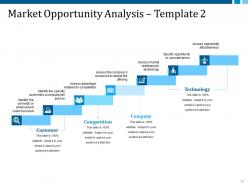
Slide 12: This slide also shows Market Opportunity Analysis – Template 2 with respect to- Customer, Competition, Company, Technology.
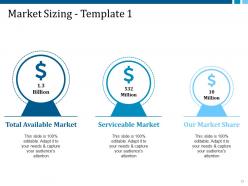
Slide 13: This is Market Sizing - Template 1 slide showing the stats of- Total Available Market, Serviceable Market, Our Market Share.
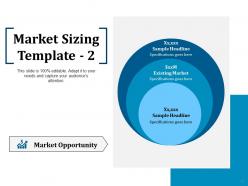
Slide 14: This is a Market Sizing Template - 2 slide. Showcase your own market size here.
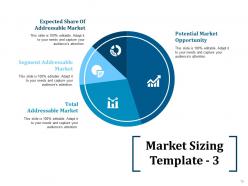
Slide 15: This is Market Sizing Template - 3 slide in a circular form showing the following aspects- Expected Share Of Addressable Market, Segment Addressable Market, Total Addressable Market, Potential Market Opportunity.
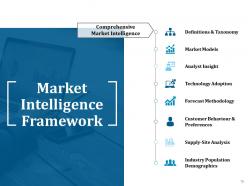
Slide 16: This slide shows Market Intelligence Framework with- Definitions & Taxonomy, Market Models, Analyst Insight, Technology Adoption, Supply-Site Analysis, Forecast Methodology, Industry Population Demographics, Customer Behaviour & Preferences.
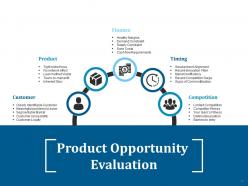
Slide 17: This slide shows Product Opportunity Evaluation with respect to- Customer, Product, Finance, Timing, Competition.
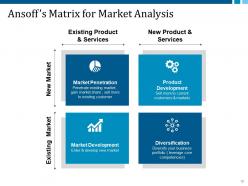
Slide 18: This slide shows Ansoff’s Matrix for Market Analysis with the following four points- Market Penetration, Product Development, Market Development, Diversification.
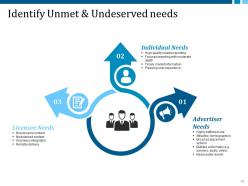
Slide 19: This is Identify Unmet & Undeserved needs slide describing the following three needs- Advertiser Needs, Individual Needs, Licensee Needs.
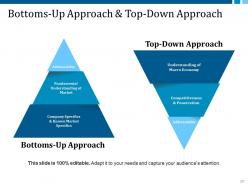
Slide 20: This slide shows Bottoms-Up Approach & Top-Down Approach each consisting of three levels.
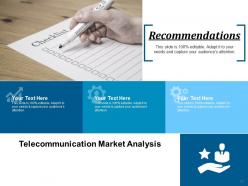
Slide 21: This is Telecommunication Market Analysis slide showing Recommendations with imagery and text boxes.
Slide 22: This is a Coffee Break image slide to halt. Edit content as per need.
Slide 23: This slide is titled Market Potential Icon Slides. Use icons as per your requirement.
Slide 24: This slide is also titled Market Potential Icon Slides. Add your own icons or make use of these.
Slide 25: This slide is titled Charts & Graph to move ahead. Change the content as per need.
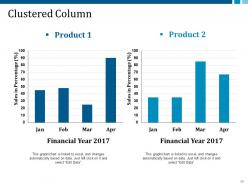
Slide 26: This is a Clustered Column chart slide to present product/ entity comparison, specifications etc.
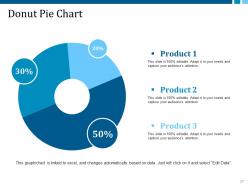
Slide 27: This slide presents a Donut Pie Chart. Add text as per need.
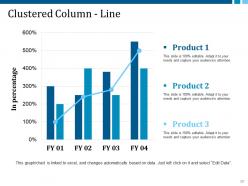
Slide 28: This is a Clustered Column - Line slide to present product/ entity comparison, specifications etc.
Slide 29: This slide is titled Additional Slides. You can change the slide content as per your needs.
Slide 30: This is Our Mission slide. State your Vision, Mission and Goals here.
Slide 31: This is an Our Team slide with name, image and text boxes to put the required information.
Slide 32: This is an About Us slide. State company or team specifications here.
Slide 33: This is Our Goal slide. State your important goals here.
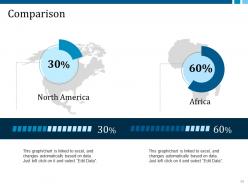
Slide 34: This slide shows Comparison of two entities.
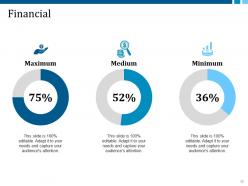
Slide 35: This slide is titled as Financials. Show finance related stuff here.
Slide 36: This is a Business Quotes slide to quote something you believe in.
Slide 37: This is Dashboard slide to show information in percentages etc.
Slide 38: This slide presents a Timeline to show growth, milestones etc.
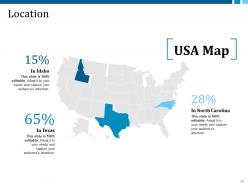
Slide 39: This is a Location slide of USA. Mark specific locations for company growth, market etc. here.
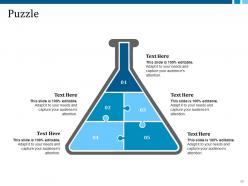
Slide 40: This is a Puzzle pieces image slide to show information, specifications etc.
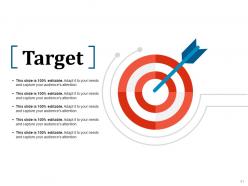
Slide 41: This is a Target image slide. State targets, etc. here.
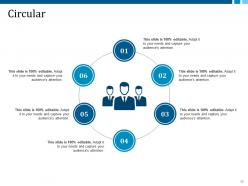
Slide 42: This is a Circular image slide to show information etc.
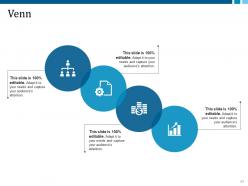
Slide 43: This is a Venn diagram slide to show information etc.
Slide 44: This is a Mind Map image slide with text boxes to fill information.
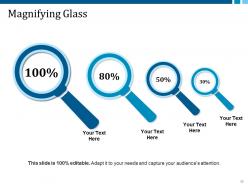
Slide 45: This slide shows a Magnifying Glass image with text boxes.
Slide 46: This is a Thank You slide with Address# street number, city, state, Contact Number, Email Address.
Market Potential Powerpoint Presentation Slides with all 46 slides:
Avoid feeling inhibited about anything with our Market Potential Powerpoint Presentation Slides. It enables you to be expressive.












FAQs for Market Potential
Honestly, start with market size and whether it's actually growing or just buzz. Customer adoption is massive - watch how early adopters behave. The regulatory stuff can kill entire sectors overnight (people sleep on this). Competition density tells you a lot too. I'd also track funding flows and how mature the tech actually is. Map these out for whatever market you're eyeing, then compare to similar industries that made it. The funding piece is kinda obvious but still worth watching since money talks. Start there and you'll get a decent read on things.
Look, consumer behavior is what separates realistic market projections from total fantasy. You've got to dig into how people actually buy stuff - what motivates them, how fast they jump on new products. Early adopters will grab anything shiny, but most folks need to see their friends using it first. That completely shifts your timeline and revenue expectations. Honestly, I've seen so many startups ignore basic patterns like seasonal trends or brand loyalty and then wonder why their numbers were way off. Do some real consumer research before you blow your budget - surveys, focus groups, whatever works.
Honestly, tracking market trends is like having a crystal ball for where money's headed next. I'm always digging through industry reports (probably too much lol) but it actually works. The trick? Spot patterns before everyone else does - consumer shifts, new tech, policy changes, all that stuff. Best opportunities happen where trends collide. Like how aging boomers + everyone going digital = telehealth explosion. Set up Google Alerts for your space and stalk what VCs are throwing money at lately. Sounds creepy but you'll thank me later when you're ahead of the curve.
Honestly, competitive analysis is your best reality check for market size. Look at 3-5 competitors and reverse-engineer their revenues, market share, customer numbers - gives you actual data instead of just guessing. What's cool is you'll spot gaps they're missing too. Those overlooked segments can be huge opportunities. I always benchmark my assumptions against what competitors are pulling in - helps me see if I'm being way too optimistic or playing it too safe. It's like having a cheat sheet for your projections, you know?
Start with TAM/SAM/SOM analysis - it's basically the go-to method everyone uses. Then do bottom-up research with surveys and customer interviews to double-check your numbers. IBISWorld and Statista have great data but they're expensive as hell. Google Trends is actually super helpful for spotting demand patterns, which most people overlook. I'd hit up free resources first before spending money on the fancy reports. Oh, and don't just pick one method - cross-reference everything because market data can be sketchy. Once you nail down your segments, that's when you invest in paid tools.
Dude, regulatory changes are honestly make-or-break for markets. GDPR basically created a whole compliance software industry overnight - wild how that worked out. Banking deregulation in the 90s? Total game-changer for fintech. But it goes both ways. Environmental rules have killed entire product lines (bye bye single-use plastics). Healthcare's the craziest though - FDA approval literally decides if your billion-dollar drug ever hits shelves. My advice? Watch those regulatory trends early so you can adjust before everyone else figures it out.
So basically, segmentation analysis lets you chop up your market into different customer groups instead of staring at this giant overwhelming blob. Way easier to spot the good stuff that way. You'll find segments with crazy high demand, barely any competition, or killer profit margins. Demographics, buying behavior, customer needs - pick like 2-3 of those to slice by and boom, suddenly you can see exactly where to focus. Honestly the best part is finding those hidden niches you totally would've missed otherwise. Oh and figuring out why some areas just aren't working for you.
Okay so scalability really comes down to a few big things. First off - is your market actually big enough? Like, are there tons of people who'd buy this thing? Your product needs to be something you can replicate easily too. Software scales beautifully, but if you're hand-making artisan soap... yeah, that's gonna be rough. Distribution's huge - how do you actually get to customers without burning cash? And honestly, super crowded markets are just brutal to break into. Don't even get me started on regulatory stuff - that can completely torpedo your plans if you're in a heavily regulated space. My advice? Figure out your biggest bottleneck now before it costs you.
Tech is literally reshaping entire industries right now. Healthcare's got AI doing diagnostics that weren't even possible a few years back. Banking? Fintech apps are making traditional banks look ancient. Even farming - and I'm not kidding here - tractors run on computer algorithms now with all these IoT sensors. Pretty nuts when you think about it. You need to figure out if these changes will blow up your market size in a good way or completely wreck your current business model. Some tech will 10x your opportunities, others might just kill what you're doing.
Dude, Southeast Asia and parts of Africa are absolutely killing it right now. Vietnam, Indonesia, Nigeria, Kenya - young populations getting online fast. It's like watching the internet boom happen all over again. Latin America's decent too, Mexico and Brazil especially, but they're further along already. Honestly? I'd skip Western Europe unless you've got something genuinely different - that market's packed. My advice is pick one region and really get to know it instead of trying to be everywhere at once. Way better than spreading yourself thin across like five different countries.
So I basically stalk social media all day for this stuff lol. Check engagement rates and see what posts actually get people talking - that's your real demand signal right there. Hashtag performance tells you what's trending too. Honestly, scrolling through competitor comments is weirdly addictive but super useful for finding what pisses people off. Demographics show you who's actually interested. Watch sentiment around your keywords and how much chatter there is over time. Just don't get caught up in vanity metrics - you need real sales data backing up those likes.
Track your TAM/SAM and growth rates first - that's your foundation. Customer acquisition trends matter a lot too. Don't sleep on pricing changes and regulatory stuff, those can wreck your projections if you miss them. I'd set up a quarterly dashboard honestly, because random data checks won't show you patterns. Competitive landscape shifts are huge, especially in fast-moving markets. Customer behavior is tricky but worth monitoring - adoption rates tell you everything. Oh and start simple with your metrics. Better to actually use basic ones than build some complex system you'll abandon after two months.
Customer feedback is like your reality check against whatever you *think* the market wants. You're out here making educated guesses about demand and pricing, right? But then actual customers come back and tell you your $50 price point is completely insane. Or they'll mention problems you didn't even know existed - which honestly can be a goldmine for expanding who you're selling to. The trick is getting this feedback early and constantly. Don't wait until you've built everything. Use what they tell you to tweak your market calculations and adjust how you're planning to actually sell this thing.
So basically, income and education levels totally shape what your customers can actually buy and what they care about. People with more money? They'll splurge on premium stuff. Lower income folks stick to necessities and hunt for deals - makes sense, right? Education matters too because it changes how people research before buying. Oh, and don't forget location - urban vs rural makes a huge difference with cost of living. I'd segment your research by these factors first, then adjust your pricing and messaging to match each group. Trust me, it's way more effective than the one-size-fits-all approach.
Honestly, the two biggest mistakes I see are thinking you'll get way more customers than you actually will, and totally underestimating your competition. Like, you can't just look at some massive market size and be like "we'll grab 5% of that" - doesn't work that way. A lot of people also use old research data or think because a few early users loved their product, everyone will. Been there myself actually. Talk to real potential customers instead of just sending out surveys. Pick one small segment you can actually dominate first, then grow from there.
-
Out of the box and creative design.
-
Good research work and creative work done on every template.