


Overview Of Consultative Selling Approach Training Ppt




Try Before you Buy Download Free Sample Product
 Impress Your
 Audience
 100%
100% Editable
 Save Hours
 of Time


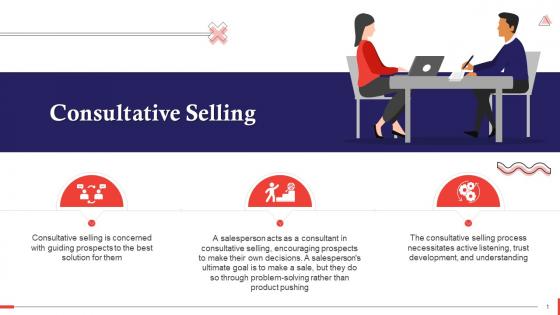
These slides explain the concept of consultative selling. Consultative selling is concerned with guiding prospects to the best solution for them and the salesperson acts as a consultant, encouraging prospects to make their own decisions.
People who downloaded this PowerPoint presentation also viewed the following :
Content of this Powerpoint Presentation
Slide 1
This slide explains about consultative selling. It highlights that consultative selling is concerned with guiding prospects to the best solution for them and the salesperson acts as a consultant, encouraging prospects to make their own decisions
Slide 2
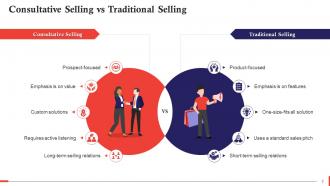
This slide differentiates between consultative and traditional selling. It mentions that consultative selling is prospect-focused, requires active listening, and offers customized solutions, whereas traditional selling is product-focused, employs a standard sales pitch, and offers a one-size-fits-all solution.
Slide 3
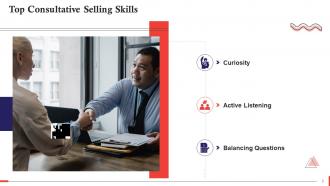
This slide depicts the major consultative selling skills. The skills are curiosity, active listening, and balancing questions.
Slide 4
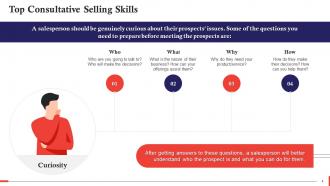
This slide depicts curiosity as a major consultative selling skill. It highlights that a salesperson should be genuinely curious about their prospects' issues. It also mentions the questions salesperson need to prepare before meeting the prospects.
Slide 5
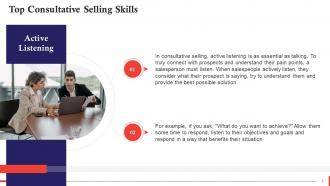
This slide depicts active listening as a consultative selling skill. It highlights that active listening is as critical as talking in consultative selling. To truly connect with prospects and understand their pain points, a salesperson must listen. It also mentions that when salespeople actively listen, they consider what their prospect is saying, try to understand them and provide the best possible solution.
Slide 6
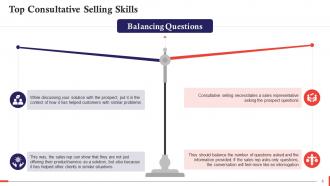
This slide discusses balancing questions as a consultative selling skill. It highlights that consultative selling necessitates a sales representative asking questions from the prospect. They should balance the number of questions and the amount of information provided. It also suggests that while discussing your solution with a prospect, frame it in terms of how it has helped customers with similar challenges.
Slide 7
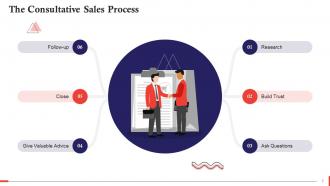
This slide provides information about the consultative sales process. The process steps are: Research, build trust, ask questions, give valuable advice, close, and follow-up.
Slide 8
This slide discusses the significance of researching, which is a step in the consultative sales process. It highlights the importance of conducting research before contacting a prospect. While researching, the general goals and potential problems that the prospect may face are identified.
Slide 9
This slide discusses the importance of building trust, which is a step in consultative sales process. It highlights the importance of a salesperson initiating the conversation by asking open-ended questions that allow your prospect to do the talking immediately. It also states that the goal is to allow them to speak up and listen. As trust builds, your prospect will reveal more information about business objectives, current and previous issues, etc., which can be used to close the deal.
Slide 10
This slide discusses the significance of asking questioning, which is a step in the consultative sales process. It highlights that once trust is established, the salesperson can ask pertinent questions about the type of solution the prospects require. The salesperson should not be afraid to ask questions to which they believe they know the answers. It also mentions the importance of directly asking them about their pain points because they will provide you with detailed information.
Slide 11
This slide discusses the significance of giving valuable advice, which is a step in the consultative sales process. It highlights that after hearing the prospect out and analyzing their business needs, it's time to advise how to proceed. It also mentions that if your product isn't a good fit for them, suggest something else. In the process, you establish a positive reputation and prospects are more likely to recommend your product/service to other people in need.
Slide 12
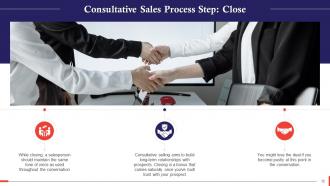
This slide discusses the significance of closing, which is a step in the consultative sales process. It highlights that while closing, a salesperson should maintain the same tone as used throughout the conversation. It also mentions that consultative selling aims to build long-term relationships with prospects. Closing is a bonus that comes naturally once you've built trust with your prospect.
Slide 13
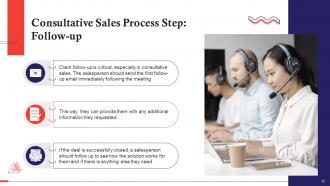
This slide discusses the significance of following-up, which is a step in the consultative sales process. It highlights that client follow-up is critical, especially in consultative sales. The salesperson should send the first follow-up email immediately following the meeting. It also mentions that if the deal is successfully closed, a salesperson should follow up to see how the solution works for them and if there is anything else they need.
Overview Of Consultative Selling Approach Training Ppt with all 29 slides:
Use our Overview Of Consultative Selling Approach Training Ppt to effectively help you save your valuable time. They are readymade to fit into any presentation structure.
-
Consultative Selling
-
Consultative Selling vs Traditional Selling
-
Top Consultative Selling Skills
-
Top Consultative Selling Skills
-
Top Consultative Selling Skills
-
Top Consultative Selling Skills
-
The Consultative Sales Process
-
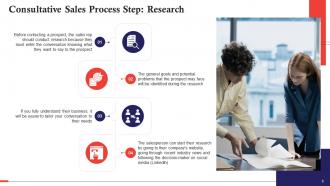
Consultative Sales Process Step Research
-
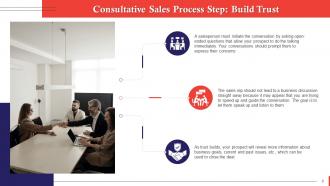
Consultative Sales Process Step Build Trust
-
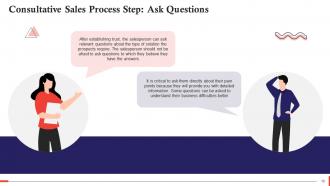
Consultative Sales Process Step Ask Questions
-
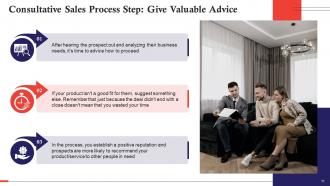
Consultative Sales Process Step Give Valuable Advice
-
Consultative Sales Process Step Close
-
Consultative Sales Process Step Follow up
-

Thank You
-
Comprehensive Curriculum for Sales Training Icons Slide
-
Additional Slides
-
About Us
-

Vision Mission Goal
-
Our Team
-
Idea Generation
-
Overview of Consultative Selling Approach Training
-
Timeline
-

Roadmap
-
Training Completion Certificate
-

-

-

-

-

FAQs for Overview Of Consultative Selling
Honestly, just stop being a walking sales pitch and become someone they actually trust. Ask good questions first - like "what's your biggest headache right now?" - then actually listen to their answer. I know it sounds obvious but most reps just wait for their turn to talk about features. Diagnose their problems before you jump into solution mode. The whole "always be closing" thing is dead anyway. You'll close way more deals when people feel like you genuinely care about fixing their mess instead of hitting your quota. Start there and see what happens.
Dude, you've gotta flip the whole script. Stop pitching and start asking questions instead - like, actually listen to what's messing with their head. Once you know their real problems, your solution practically sells itself. I swear, it's like being a detective (which is honestly way more fun than the typical sales BS). Discovery questions are your best friend here. When you understand their pain points first, you can make recommendations that actually make sense for them. It totally changes the dynamic - suddenly you're the helpful expert, not just another salesperson bugging them.
Dude, active listening is what makes or breaks consultative selling. Most sales reps just won't shut up long enough to hear what prospects are actually saying. You're missing the real gold - budget issues, who makes decisions, those concerns they hint at but don't spell out directly. Ask good follow-up questions that prove you're actually paying attention. Oh, and repeat back what you heard in your own words. Builds trust instantly and shows you get it. That's honestly the difference between being seen as a consultant vs. another annoying salesperson pushing stuff.
Honestly, you gotta listen way more than you talk. I know it sounds obvious but most people don't actually do it. Ask them about their problems, then ask follow-up questions based on what they say. Write down random stuff they mention - like their kid's soccer game or whatever. Brings it up later and they'll remember you. Oh and match how they communicate. Formal client? Stay professional. Laid-back type? You can joke around more. Stop thinking like a salesperson and just solve their actual problems. Trust me, start your next call asking about something personal first. Makes everything easier after that.
Honestly, SPIN works really well for this stuff. Start with situation questions - like "walk me through how you handle this now" - then dig into what's broken with problem questions. Here's where it gets good: implication questions make them realize how bad things could get, and need-payoff questions get them picturing your solution fixing everything. I probably listen way more than I talk (which is hard for me lol). Just keep asking "tell me more about that" after their answers. The whole thing feels less salesy when you're actually curious about their problems. Oh, and always wrap up by repeating what you heard back to them and asking what winning looks like.
Honestly, consultative selling just works better because you're actually fixing their problems instead of shoving products at them. Ask questions about their pain points first - like, really listen to what they're saying before you pitch anything. Clients start seeing you as someone who gets it, not just another quota-chasing salesperson. The whole thing builds way deeper relationships since you're genuinely trying to help them win. Plus those happy clients? They come back and send their friends your way, which beats cold calling randos any day of the week.
SPIN selling is probably your best bet to start - it's basically the holy grail for asking good questions (Situation, Problem, Implication, Need-payoff). BANT helps too for qualifying budget, authority, need, timeline stuff. I really like value mapping where you tie solutions straight to their business results. Makes things way clearer. Challenger Sale is solid if your team doesn't mind pushing back a little with insights - though honestly, some people hate that approach. But the real secret? Just get crazy good at asking "why" and "what if." Pick one method and practice it until you're not thinking about it anymore.
Dude, data changes everything for consultative selling. Instead of walking in blind, you can research their industry trends and competition beforehand. Honestly, generic pitches are dead - prospects smell that BS from miles away. Analytics help you find prospects who actually fit your ideal customer profile too, which saves tons of wasted calls. I'd also track common pain points that keep coming up in conversations. Then you can prep real solutions instead of just winging it. Try pulling some basic industry data before your next meeting - I bet the whole vibe shifts when you're dropping actual insights.
Time is your biggest enemy here - consultative selling just takes forever compared to regular pitches. Plus you need to actually know their industry inside and out before you even walk in the door, which is honestly exhausting. Quota pressure becomes brutal since everything takes longer. Some prospects hate all the questions too, especially the ones wanting quick demos. But man, when you finally get good at discovery calls? Your close rate goes through the roof. I'd pick one industry first and really dive deep into what makes them tick. Way easier than trying to be an expert at everything.
So it really depends on your industry, right? Tech folks are obsessed with ROI demos and proof-of-concepts. Healthcare? Good luck - you'll be dealing with endless compliance meetings and getting buy-in from like 47 different people. Financial services wants everything about risk and regulations covered. Manufacturing cares most about cutting costs and boosting efficiency. Real estate gets weird because it's so emotional and lifestyle-driven. You've gotta match your questions to whatever actually makes people say yes in your space. Oh, and your presentation style matters too - can't use the same approach everywhere.
Dude, emotional intelligence is huge for consultative selling. You've gotta read your client's mood - catch that frustration or excitement in their voice. Then adapt on the spot. Trust me, people buy from whoever they actually like and connect with. Use that awareness to ask smarter questions. Really listen to what they're NOT saying too - that's where the gold is. Oh, and practice watching body language on your next calls. You'll pick up on so much more than you expect. It's honestly a game changer once you get the hang of it.
Honestly, forget just watching sales numbers - you need to see if relationships are actually getting stronger. Your sales cycles might get longer at first (kind of annoying but normal), then they'll speed up once trust kicks in. Win rates and deal sizes are where you'll really see the difference. Consultative selling usually means fewer deals but way bigger ones. Customer satisfaction scores matter more than you'd think - those happy clients become your referral machine. Here's the weird part: try tracking how many discovery questions your reps ask. Are they actually listening to answers or just going through motions? That's the real test.
Stop pitching features and start asking questions that actually matter. Spend most of your time listening - like 70% - to figure out what's really bugging them. I know it feels super weird because you're not doing the whole "let me show you this cool thing" routine. But here's the thing: once you get their actual problems, your solution becomes the obvious answer instead of just another product demo. Ditch "What can I show you?" Try "What's driving this whole thing for you right now?" instead. You'll be shocked how much more they open up when you're genuinely curious about their situation first.
Dude, the biggest myth? That consultative selling means you just sit back asking random questions forever. Wrong. You've still gotta guide things and actually close deals. Another thing - people think it drags out sales cycles, but honestly it's the opposite. When you dig into real problems upfront, things move faster than just throwing features at the wall. Oh, and don't go all wishy-washy thinking "consultative" means you can't be direct. Ask smart questions, stay confident, then position your solution like it's the obvious choice. That's how you actually win.
Honestly, start with discovery modules - teach your team active listening and how to ask better questions. Most sales training is way too focused on features anyway, which drives me crazy. Mix in role-plays where they have to figure out the customer's actual problems first. Short practice sessions work better than long ones. Update your coaching stuff so managers reinforce this during field visits and deal reviews. Don't try to overhaul everything at once though. Pick one module, get that working, then gradually shift the whole program from "telling" to "asking and solving."
-
Helpful product design for delivering presentation.
-
SlideTeam is the way to go when you are in a time crunch. Their templates have saved me many times in the past three months.