


Financial Services Consultancy Business Plan Powerpoint Presentation Slides





Try Before you Buy Download Free Sample Product
 Impress Your
 Audience
 100%
100% Editable
 Save Hours
 of Time


A strategic business plan enables a roadmap for developing a successful insurance firm. If your company needs to submit a financial consultation proposal then you are at the right place. Our well-designed templates capture the firms objectives, product offerings, target market, and financial projections. Here is a competently researched financial services consultancy business plan PPT that will aid in developing start-up business plans for insurance agencies with fundamental essentials associated with the financial plan. The deck will help build financial, marketing, and workforce plans for setting up an insurance agency. The pitch deck covers slides about the firms overview, growth potential analysis, market analysis in terms of SWOT analysis, PESTLE analysis, Porters five forces analysis portrays slides regarding the marketing plan in terms of the product marketing mix, brand building, and advertising strategies. This commercial Insurance Services PowerPoint deck helps in fund raising for the financial service consultancy business. It showcases slides about financial planning in terms of projected financial statements, namely, income statements, balance sheets, etc. It caters to various risks associated with the insurance business tracking dashboard. Download the template now.
People who downloaded this PowerPoint presentation also viewed the following :
Content of this Powerpoint Presentation
Slide 1: This slide displays the title "Financial Services Consultancy Business Plan". State your Company Name
Slide 2: This slides showcase the Agenda of business.
Slide 3: This slide exhibits a Table of Contents.
Slide 4: This slide presents Table of Contents- "Executive Summary".
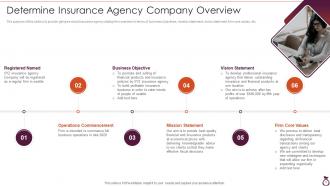
Slide 5: This slide presents a glimpse of an insurance agency startup firm overview.
Slide 6: This slide provides a glimpse of Ownership Business Formation and Exit Strategy.
Slide 7: This slide provides a glimpse of an insurance agency startup financing summary with estimated startup costs, usage of funds, etc.
Slide 8: This slide provides a glimpse about insurance agency offerings to its clients.
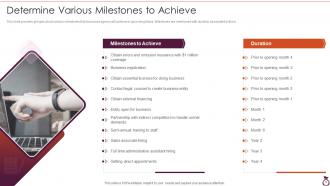
Slide 9: This slide provides a glimpse about various milestones that insurance agency will achieve in the upcoming future.
Slide 10: This slide exhibits a Table of Contents- "Growth Potential Analysis
Slide 11: This slide covers information regarding SWOT analysis for the insurance business.
Slide 12: This slide covers information regarding PESTLE analysis for the insurance business.
Slide 13: This slide illustrates information regarding Porter’s five force analysis which allow firms in understanding five competitive forces that determine profitability.
Slide 14: This slide exhibits Table of Contents- "Go to Market Strategy".
Slide 15: This slide addresses information regarding industry analysis of insurance business.
Slide 16: This slide addresses information regarding the market assessment of insurance business with high competition existing.
Slide 17: This slide showcase the target client group for insurance business.
Slide 18: This slide provides glimpse about segmentation of different insurance client groups based on demographic, behavioral and geographic segmentation
Slide 19: This slide adresses information regarding firm positioning in the insurance business along with product positioning statement and position mapping.
Slide 20: This table exhibits the Table of Contents- "Marketing Plan".
Slide 21: This slide provides a glimpse of product marketing mix for an insurance firm.
Slide 22: This slide provides glimpse about different ways for products and services sourcing.
Slide 23: This slide provides a glimpse about various brand building strategies that firm will utilize in order to achieve certain goals.
Slide 24: This slide provides a glimpse about different promotional and advertising strategies a that are essential in brand building.
Slide 25: This slide provides a glimpse about essential marketing activities for customer awareness and retention.
Slide 26: This slide provides information regarding the insurance and financial products sales estimation for the upcoming five years.
Slide 27: This slide exhibits Table of Contents- "Organizational Personnel Planning".
Slide 28: This slide provides glimpse about organizational personnel overview.
Slide 29: This slide covers information regarding key personnel involved in th insurance business such as exclusive agents and insurance brokers.
Slide 30: This slide provides a glimpse about personnel management in insurance agency with their personal staff planning and determine number of personnel required.
Slide 31: This slide showcase workforce training and development roadmap.
Slide 32: This slide displays a title Table of Contents- "Financial planning".
Slide 33: This slide projects the income statement of insurance business the upcoming three years.
Slide 34: This slide projects the balance sheet of the firm to visualize firm’s assets and liabilities for the upcoming five years.
Slide 35: This slide projectes the cash flow of the firm to visualize the firm’s cash position for the upcoming five years.
Slide 36: This slide provides a glimpse about important financial assumptions that are to be made while setting up the insurance business.
Slide 37: This slide exhibits Table of Contents- Assessment of Various Risks Associated to Insurance Business.
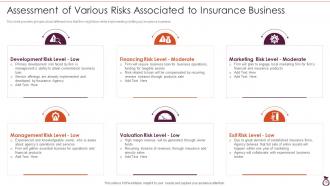
Slide 38: This slide provides a glimpse about different risks that firm might face while setting up the insurance business.
Slide 39: This slide displays title Table of Contents- "Insurance Agency Activities Tracking Dashboard".
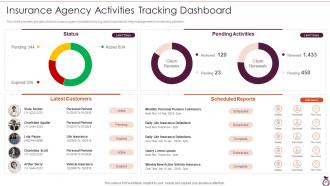
Slide 40: This slide provides a glimpse of the insurance agency activities tracking dashboard which helps management in monitoring activities.
Slide 41: This slide is the Icons Slides for Financial Services Consultancy Business Plan.
Slide 42: This slide displays title Additional Slides.
Slide 43: This slide showcase 30 60 90 Days Plan.
Slide 44: This slide showcase Weekly Timeline.
Slide 45: This slide showcase Roadmap.
Slide 46: This slide displays title About Us.
Slide 47: This slide showcase Our Vision and Mission.
Slide 48: This slide displays title "Meet Our Team".
Slide 49: This slide displays Post it Notes.
Slide 50: This slide displays Linear Process.
Slide 51: This slide displays Puzzle.
Slide 52: This slide displays Venn.
Slide 53: This slide displays the title Financial.
Slide 54: This slide displays Our Target.
Slide 55: This is thank you slide & contains contact details of the company like office address, phone no. etc
Financial Services Consultancy Business Plan Powerpoint Presentation Slides with all 60 slides:
Use our Financial Services Consultancy Business Plan Powerpoint Presentation Slides to effectively help you save your valuable time. They are readymade to fit into any presentation structure.
-

Financial Services Consultancy Business Plan
-

Agenda for Financial Services Consultancy Business Plan
-

Table of Contents for Financial Services Consultancy Business Plan
-
Table of Contents for Financial Services Consultancy Business Plan
-
Determine Insurance Agency Company Overview
-

Ownership Business Formation and Exit Strategy
-

Insurance Agency Start Up Financing Summary
-

What is Insurance Agency Offerings to Clients
-
Determine Various Milestones to Achieve
-
Table of Contents for Financial Services Consultancy Business Plan
-

Determine SWOT Analysis for Insurance Business
-

PESTLE Analysis for Insurance Business
-

Porter s Five Forces Analysis for Insurance Business
-

Table of Contents for Financial Services Consultancy Business Plan
-
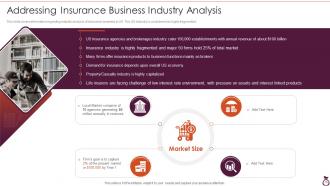
Addressing Insurance Business Industry Analysis
-
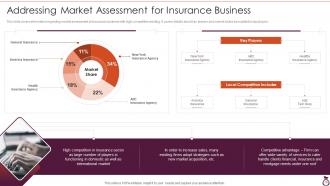
Addressing Market Assessment for Insurance Business
-
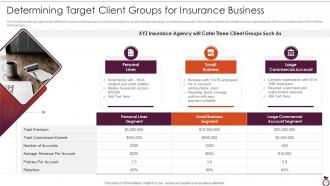
Determining Target Client Groups for Insurance Business
-
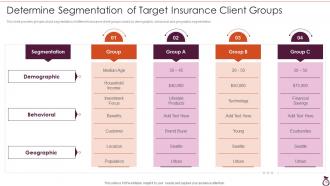
Determine Segmentation of Target Insurance Client Groups
-
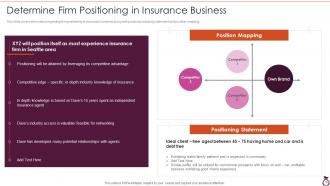
Determine Firm Positioning in Insurance Business
-

Table of Contents for Financial Services Consultancy Business Plan
-
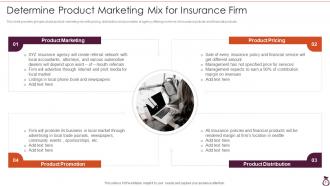
Determine Product Marketing Mix for Insurance Firm
-

Determine Sourcing of Products and Services
-
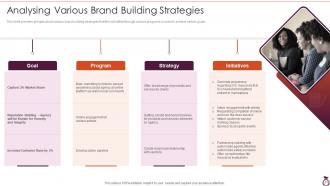
Analysing Various Brand Building Strategies
-

Promotional and Advertising Strategies for Brand Building
-
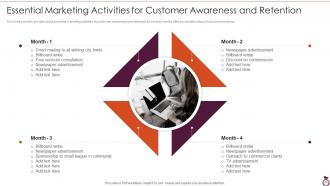
Essential Marketing Activities for Customer Awareness and Retention
-
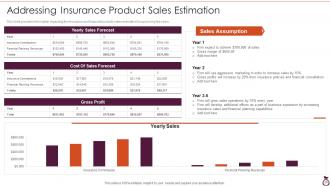
Addressing Insurance Product Sales Estimation
-

Table of Contents for Financial Services Consultancy Business Plan
-

Determine Organizational Personnel Overview
-
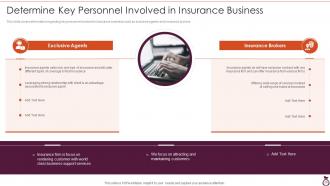
Determine Key Personnel Involved in Insurance Business
-
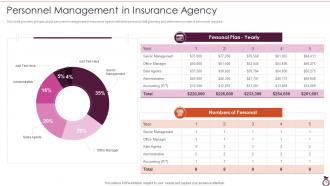
Personnel Management in Insurance Agency
-

Workforce Training and Development Roadmap
-

Table of Contents for Financial Services Consultancy Business Plan
-

Projected Income Statement for Insurance Business
-

Projected Balance Sheet Statement for Insurance Business
-

Projected Cash Flow Statement for Insurance Business
-
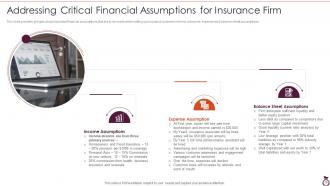
Addressing Critical Financial Assumptions for Insurance Firm
-
Table of Contents for Financial Services Consultancy Business Plan
-
Assessment of Various Risks Associated to Insurance Business
-
Table of Contents for Financial Services Consultancy Business Plan
-
Insurance Agency Activities Tracking Dashboard
-

Icons Slides for Financial Services Consultancy Business Plan
-

Additional Slides
-

30 60 90 Days Plan
-
Weekly Timeline
-
Roadmap
-

About Us
-
Our Vision and Mission
-

Meet Our Team
-
Post it Notes
-

Linear Process
-

Puzzle
-
Venn
-
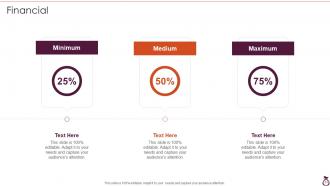
Financial
-

Our Target
-

Thanks for Watching
-

-

-

-

-

FAQs for Financial Services Consultancy Business Plan
Honestly, the regulatory stuff is brutal - feels like new rules drop every other day. Competition's insane too, with fintechs moving at lightning speed while traditional firms are still figuring out basic digital tools. Your clients will want cutting-edge solutions but freak out at any actual risk, which is... fun to navigate. Staying on top of AI, ESG compliance, and whatever else is trending while hitting deadlines? Exhausting. Oh, and don't even get me started on managing expectations during "digital transformation" projects. My take: pick maybe 2-3 areas you actually care about and go deep. Being mediocre at everything won't get you anywhere.
Honestly, the biggest thing is just being upfront about everything from the start - fees, risks, what they can actually expect. Don't just pitch them solutions; walk them through why you're recommending something so they get it. I always do regular check-ins even when nothing exciting is happening (those quiet periods are actually when people worry the most). Being consistent with communication is huge. Oh, and don't pretend you know everything - admitting when you're not sure about something builds way more trust than BS confidence. Set clear expectations and then just do what you say you'll do, even the small stuff.
Honestly, AI and machine learning are crushing it right now. They're handling risk assessment, catching fraud, and building custom investment plans for clients. Blockchain's making transactions way smoother and more transparent - trade finance especially. RPA is taking care of all that boring compliance stuff that used to kill productivity (thank god). Cloud computing makes everything cheaper and easier to scale up. I'd probably start with whichever tech fits what you're already doing best. No point jumping into blockchain if your clients need better fraud protection, you know?
Dude, when new regulations drop, you literally have to throw out your old playbook. Can't just tweak things - it's a complete methodology overhaul. The upside? Your clients are panicking about the same changes, so if you figure it out first, you're suddenly their hero. Set up Google alerts for your main industries (seriously, this saves so much time). Industry forums help too - people share what's actually happening vs just the boring official stuff. Oh and the retraining never stops, which honestly gets old fast. But staying ahead is what separates good consultants from mediocre ones.
Look, data analytics is what separates real financial consulting from just winging it. You're digging into spending patterns, catching risk factors early, and actually predicting where markets might head. Without solid data, you're basically throwing darts blindfolded. The numbers let you see how clients stack up against competitors and build portfolios that make sense. Plus - and this is huge - data backs up your recommendations so clients actually listen. I'd start by figuring out what data they already collect, then build from there. Way easier than starting from scratch.
Track the hard numbers first - ROI, cost savings, revenue bumps. Did they hit those financial targets you mapped out? But honestly, the relationship stuff is huge too. Are they actually using your recommendations or just nodding politely? I always ask if they feel more confident with their financial decisions now. Process improvements matter - cleaner reporting, smoother budgeting cycles, that kind of thing. Oh, and set up check-ins at 30, 90, 180 days. Don't just cross your fingers and hope it worked out.
Honestly, just layer everything - spread out client portfolios and stress test regularly. Documentation feels like a pain but trust me, it's saved me so many times. Set clear risk limits with each client upfront and stick to them. Do quarterly assessments and keep everyone posted on exposures. The thing that trips up most consultants? Getting too cozy with risks they think they know. I learned that one the hard way lol. Always question your assumptions and yeah, have backup plans for your backup plans. Compliance protocols aren't negotiable either.
LinkedIn's your best bet - that's where decision makers actually spend time scrolling. Post market insights, regulatory updates, maybe some anonymous case studies. Honestly, consistency beats perfection every time, so don't worry about going viral or whatever. Twitter works too for quick takes on financial news. Here's the thing though - engage with prospects' content first before pitching anything. Comment thoughtfully on their stuff. I'd say 2-3 posts weekly, then interact with others daily. Once people see you know your stuff, leads start flowing naturally.
Honestly? Most people just get dazzled by fancy credentials without checking if the consultant actually knows their industry. Big mistake. Always nail down fees upfront too - if they're being sketchy about costs, run. I learned this the hard way once. Ask for references and case studies that actually match what you're dealing with, not just their greatest hits reel. Don't rush it either, even if you're panicking about money stuff. Interview at least 2-3 people and make them explain exactly how they'd tackle your specific problems before you sign anything.
Ugh, don't make my mistake and leave this stuff till the last minute. I set up Google alerts for all the regulatory bodies in my sectors - fintech changes practically every other week, it's insane. Professional networks are gold though, other consultants will share compliance updates way faster than official channels. Also document literally everything as you go. Keep running checklists for each client so you're not scrambling later trying to remember what you did three months ago. The trick is baking compliance checks right into your normal project flow from day one. Oh and those quarterly briefings? Actually worth attending, even when they're boring as hell.
So analytical skills are huge - you'll be breaking down messy financial data constantly. Obviously knowing the technical stuff inside and out matters, but honestly? Being able to explain complex things simply is what sets people apart. Clients don't want jargon when you're delivering bad news or big changes. You'll also spend tons of time managing projects and dealing with different stakeholders (which can be... a lot). I'd focus on getting solid at financial modeling first, then work on translating all that into recommendations that actually make sense to non-finance people.
Honestly, client feedback is everything - it shapes your whole approach. Use it to fix your recommendations and adjust scope as you go. Way more valuable than whatever assumptions you walked in with, trust me. Regular check-ins help you spot problems before you've built some massive framework around the wrong idea. Don't just wait until the final presentation to get their thoughts. Build those feedback moments right into your timeline from the start. Makes such a huge difference when you actually listen to what they're telling you.
Dude, digital transformation is huge right now - everyone's panicking about updating their ancient systems. Regulatory stuff too, which is honestly a pain but pays well. ESG consulting came out of nowhere and now it's everywhere. Cybersecurity's obviously blowing up after all these data breaches. Oh, and AI is making some of the old-school consulting methods look pretty dated. My cousin just switched from finance to data analytics consulting and she's swamped with work. If I were you, I'd brush up on digital skills and whatever regulations hit your field hardest.
Honestly, discovery calls are everything - that's where you figure out what they actually need vs what they think they need. Some want you to roll up your sleeves and do the work, others just want high-level strategy stuff. I've learned to be a total chameleon with communication too. Startups love quick Slack messages, but corporate clients? They want those polished reports with charts and everything. Build your services like Legos so you can swap things around based on their budget. Oh and stay flexible with your approach - that's been huge for me. Just don't lose sight of what you're actually good at, you know?
Always put your client first over making a quick buck - seriously, this'll save you so much trouble down the road. Be upfront about any conflicts of interest even when it feels weird. Only recommend stuff you actually think helps them, not whatever pays you more commission. Keep their info private (duh), and don't promise crazy returns or sugarcoat the risks. Oh, and write down why you suggested big moves - covers your butt if they question it later. Honestly, being straight with people from day one makes everything smoother.
-
Fantastic collection of visually appealing PowerPoint templates. They certainly uplift the look of the presentation.
-
Placing an order on SlideTeam is very simple and convenient, saves you a lot of your time.