


Financial Advisory Proposal Powerpoint Presentation Slides





Try Before you Buy Download Free Sample Product
 Impress Your
 Audience
 100%
100% Editable
 Save Hours
 of Time


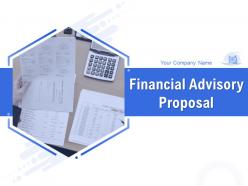
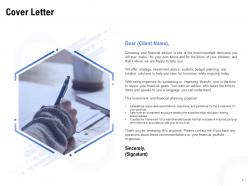
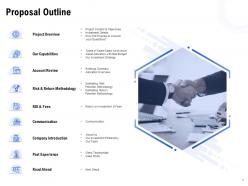
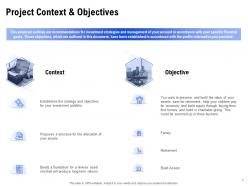
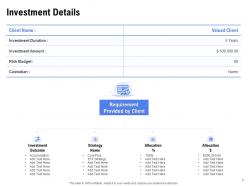
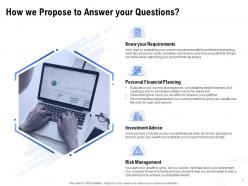
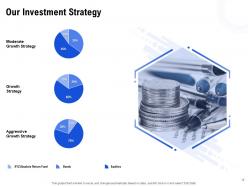
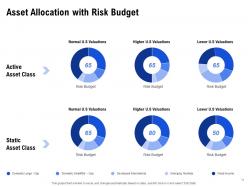
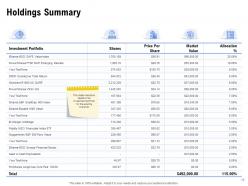
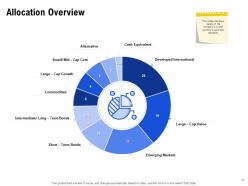
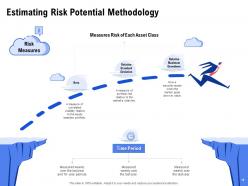
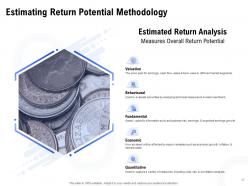
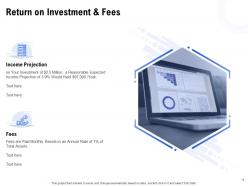
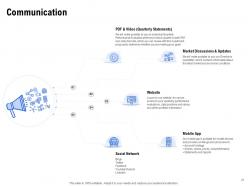
Financial advisers do more than just help clients in building a robust investment portfolio. They offer insights on budget, insurance, tax, and savings, so your financial health thrives. It is an ongoing process that demands constant market analysis and realignment of strategies. But it is all-important for your client to be on the same page to create a personalized portfolio. And communicating your services and approach accurately is the trickiest task. Therefore, SlideTeam developers have designed Financial Advisory Proposal Powerpoint Presentation Slides based on industry experts’ research. This investment adviser business proposal PPT template helps in successfully generating and converting more leads. Position your company in the minds of your clients with an immaculate cover letter. Registered investment advisers, broker-dealers, flat-fee advisers, and others can close more deals using this highly compatible proposal PowerPoint presentation. Convey the context and objectives of the project. Consolidate client requirements and other investment details like risk budget, investment amount, etc. Showcase your investment strategy, asset allocation, and the overall benefits of your services. This financial planner business proposal PPT deck features industry-leading data visuals to enhance functionality. It also adds to the aesthetics and piques the attention of your customers. The white and blue color combination reflects a professional tone. Further, elucidate the holdings summary and allocation overview. Walk your clients through the risk and return methodology. Present risks associated with each class of asset income projection and estimated return analysis. Also, you can highlight the return on investment and fees. Demonstrate the communication channels between you and your clients. Our investment counselor proposal PowerPoint theme helps you put an impactful company introduction. Boost credibility by presenting client testimonials as well as a case study. So, hit the download icon and hook more customers. Financial advisers do more than just help clients in building a robust investment portfolio. They offer insights on budget, insurance, tax, and savings, so your financial health thrives. It is an ongoing process that demands constant market analysis and realignment of strategies. But it is all-important for your client to be on the same page to create a personalized portfolio. And communicating your services and approach accurately is the trickiest task. Therefore, SlideTeam developers have designed Financial Advisory Proposal PowerPoint Presentation Slides based on industry experts’ research. This investment adviser business proposal PPT template helps in successfully generating and converting more leads. Position your company in the minds of your clients with an immaculate cover letter. Registered investment advisers, broker-dealers, flat-fee advisers, and others can close more deals using this highly compatible proposal PowerPoint presentation. Convey the context and objectives of the project. Consolidate client requirements and other investment details like risk budget, investment amount, etc. Showcase your investment strategy, asset allocation, and the overall benefits of your services. This financial planner business proposal PPT deck features industry-leading data visuals to enhance functionality. It also adds to the aesthetics and piques the attention of your customers. The white and blue color combination reflects a professional tone. Further, elucidate the holdings summary and allocation overview. Walk your clients through the risk and return methodology. Present risks associated with each class of asset income projection and estimated return analysis. Also, you can highlight the return on investment and fees. Demonstrate the communication channels between you and your clients. Our investment counselor proposal PowerPoint theme helps you put an impactful company introduction. Boost credibility by presenting client testimonials as well as a case study. So, hit the download icon and hook more customers.
People who downloaded this PowerPoint presentation also viewed the following :
Financial Advisory Proposal Powerpoint Presentation Slides with all 42 slides:
Use our Financial Advisory Proposal Powerpoint Presentation Slides to effectively help you save your valuable time. They are readymade to fit into any presentation structure.





FAQs for Financial Advisory Proposal
So you gotta hit the main stuff first - what's your investment approach, how much you charge, what services you actually do. Walk them through your whole process too, like how you'll figure out their situation and track everything later. The boring regulatory stuff and your credentials need to be in there unfortunately, plus any track record you've got. Oh, and definitely throw in a timeline so they know what to expect when. Examples of similar clients you've helped work great. But honestly? The biggest thing is making it actually about THEM, not some cookie-cutter thing you send everyone. People can tell when you've just swapped out names.
Honestly, discovery is where you'll win or lose these deals. Don't rush through it - I probably spend twice as long as other advisors just understanding their actual situation. Risk tolerance, timeline, family stuff, what they really want (not what they think sounds smart). Cookie-cutter proposals are so obvious it hurts. Match how they communicate too. That young entrepreneur who interrupts you every 30 seconds? Totally different approach than the methodical pre-retiree taking notes. Even if the strategy's similar underneath. Always start your proposal meeting by walking through what makes them different from your last client.
Honestly, the biggest thing is being super vague about what you'll actually deliver and when. Clients hate that. Don't oversell yourself either - those "world's best consultant" lines are so cringey. You've gotta hit their real problems, not just throw generic services at them. Templates are dead giveaways too. Takes like 10 minutes to add specifics about their actual situation, and it makes a huge difference. Oh, and definitely spell out your fees upfront - nothing kills a deal faster than surprise costs popping up later. I learned that one the hard way.
Dude, yes - visuals totally save your proposals from being boring number dumps. People's eyes glaze over at spreadsheets, but throw in a chart showing their portfolio growing? Now they're paying attention. I always use simple stuff - growth projections, fee breakdowns, maybe a risk comparison graph. Nothing fancy. Just one solid visual per main point you're making. It's honestly crazy how much more engaged clients get when they can actually *see* their financial future instead of trying to decode a bunch of percentages. Makes the whole pitch feel way more real, you know?
Think of market analysis as your "proof" section - it's what stops clients from thinking you're just throwing darts at a board. You're showing them why these specific moves make sense right now, given what's actually happening in the economy and markets. Without it? Your whole proposal just sounds like educated guessing (which, let's be honest, sometimes it kind of is). Include both the big picture stuff and details about sectors that matter to their portfolio. Clients can smell generic advice from a mile away. Do your homework on current trends and you'll look way more credible than the advisor down the street.
Start with your credentials and actual results - certifications, experience, whatever specializations match their needs. But honestly? Certificates are just the entry ticket. What really matters is showing your track record with real client outcomes and case studies. Testimonials from similar situations help too. Briefly explain your investment approach and planning process - people want to know how you actually work. Oh, and skip the generic advisor speak. Address their specific concerns directly. That's what separates you from every other advisor giving cookie-cutter responses. Portfolio performance examples don't hurt either if you've got them.
Always hit the regulatory stuff first - licensing details, fee breakdowns, conflict of interest disclosures. Fiduciary duty explanations are huge if that applies to you. Data privacy compliance is non-negotiable when you're dealing with financial info. Document everything about the advisory relationship and keep proper records. Honestly, I learned this the hard way - clients get suspicious fast if this stuff feels sketchy or incomplete. Build it right into your proposal template so you don't accidentally skip anything when you're scrambling to meet a deadline.
Put your case studies right after the services section - that's when they need to see proof. Pick 2-3 examples that actually match their situation. Hard numbers are everything here. "Boosted portfolio 23%" or "saved $15K in taxes" - stuff like that. Testimonials though? Way more powerful than case studies honestly. Don't clump them together in one boring section. Sprinkle short quotes throughout the whole proposal instead. Just make sure you got permission first (learned that one the hard way). Start with the result, then quickly explain how you pulled it off. Works every time.
Dude, just put your fees right up front - none of that buried treasure nonsense. Use real numbers, not "competitive rates" because that screams sketchy. I've watched so many people tank deals over confusing pricing, it's painful. Break down what each fee actually covers and show examples with realistic scenarios. Like if most clients spend $X, spell that out. Different tiers? Make it obvious why someone would pay more. Oh and throw in a simple table early on - people love tables for some reason. Being transparent from the start beats trying to sneak stuff in later every time.
Don't wait for them to bring up objections - beat them to it. Work the answers right into your proposal. Show clear ROI numbers when you know they're worried about cost. If timing's always an issue, explain why waiting actually costs more than starting now. Honestly, I've seen too many advisors pretend the obvious concerns don't exist and it backfires every time. Throw in a quick FAQ section hitting their top 3-4 worries. Use case studies from similar situations so they see how others got past the same stuff. You're basically having the objection conversation before they even open their mouth.
Dude, stop dumping data on them like a robot. Tell them a story instead - start with their actual problems that you picked up during those discovery calls. Charts and visuals are your friend here because nobody wants to read paragraphs of dense text (learned this the hard way). Throw in some case studies from similar clients so they can actually picture themselves winning. Write like you're having a conversation, not giving a presentation. Keep everything scannable and short. Oh, and definitely end with clear next steps - they need to know exactly what happens next if they're ready to move forward.
Dude, tech isn't optional anymore - clients straight up expect it. Show them your portfolio platforms, mobile apps, robo-advisory stuff. Otherwise you look like you're still using a flip phone, you know? Don't just rattle off features though. Walk them through how it actually makes their life easier. Screenshots help tons. Be specific about what they'll get as your client - like "you'll get real-time alerts when your portfolio hits X" instead of vague promises. Nobody cares about fancy tech if they can't picture themselves using it.
Definitely focus on the money stuff first - cost savings, fee reductions, tax savings. Those hit hardest. Then show different investment scenarios based on risk tolerance. Time savings are huge too, like "you'll get 15 hours back monthly." Always include a "what happens if you do nothing" comparison because honestly, that's what seals most deals. Break everything down into 1, 3, and 5-year projections with actual dollar amounts. Oh, and keep your estimates conservative - way better to surprise them later than overpromise upfront. Learned that one the hard way.
Dude, skip the generic investment BS everyone copies. Tell them exactly what you believe about risk and markets - then back it up with real examples from when things got messy. Like, walk them through how your philosophy actually saved (or cost) clients during the last downturn. That's what separates you from every other advisor spouting the same textbook nonsense. Make it feel like you're talking to them specifically, not reciting some compliance-approved script. Wrap up with maybe 2-3 simple rules that'll guide their money decisions going forward.
Definitely send that thank-you email within 48 hours - recap what you talked about and next steps. I totally blew it once by letting a solid lead go cold, so trust me on this one! Weekly check-ins for the first month work well, then switch to every two weeks. Keep an eye on whether they're opening stuff you send them. Market updates are gold if they actually relate to their situation. Calendar reminders are your friend here because honestly, it's easy to forget. Short story: stay visible without being annoying. You want them thinking of you when decision time comes.
-
Helpful product design for delivering presentation.
-
Designs have enough space to add content.