


Wealth Management Advisory Services Proposal Powerpoint Presentation Slides




Try Before you Buy Download Free Sample Product
 Impress Your
 Audience
 100%
100% Editable
 Save Hours
 of Time


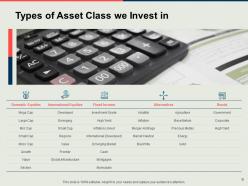
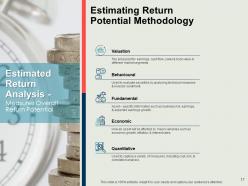
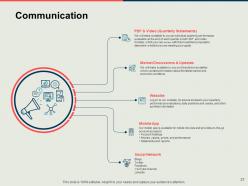
When a financial advisor provides a full range of financial services to the client is known as wealth management advisory. Many firms and organizations use these servicers to stabilize their economic conditions. The advisors make sure to handle all the financial operations of the client’s organization. The readymade proposals are made so that the advisors pitch their financial services to the clients with ease. Introducing our topic-specific Wealth Management Advisory Services Proposal PowerPoint Presentation Slides. Make a great-looking proposal and impress your clients with the aid of this outwardly engaging wealth management proposal PPT layout. Use the proposal presentation template to input all the relevant information about your company and win the deal with your clients. Take the assistance of this outwardly engaging financial advisory proposal PPT slide to showcase your return potential methodology that involves valuation, behavioral, fundamental, economic, and quantitative methods. With the help of our visually-attractive wealth management advisory proposal PowerPoint presentation, you can outline the various communication channels your company uses for managing the long-term better client relationship. These channels are PDF & video, market discussions & updates, website, mobile app, and social network. Employ this outwardly engaging financial advisor proposal PPT theme to portray the different types of asset classes such as domestic equities, international equities, fixed income, alternative, and bonds. Exhibit your investment plans and win the confidence of your potential clients by using this content ready wealth management advisory proposal PPT slide. These investment plans cover personal financial planning, budgeting investments, charitable giving, tax planning, etc. Take the help of this proposal PPT slide to describe your strategies for achieving the goals and objectives of the clients. Talk about your upcoming business ventures and hold the attention of your loyal clients. Increase the monetary value of your client’s business by downloading our ready-to-use wealth management advisory PowerPoint presentation slide.
People who downloaded this PowerPoint presentation also viewed the following :
Content of this Powerpoint Presentation
Slide 1: This slide introduces Wealth Management Advisory Services Proposal. State your Company name and begin.
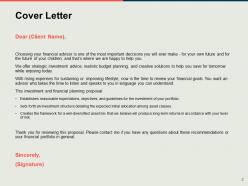
Slide 2: This slide displays Cover Letter.
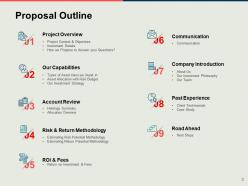
Slide 3: This slide showcases Proposal Outline.
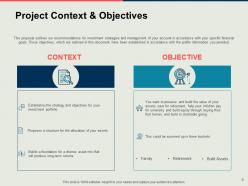
Slide 4: This slide displays Project context & objectives.
Slide 5: This slide displays Project Context & Objectives.
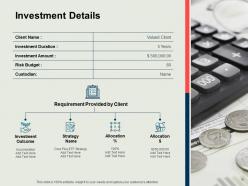
Slide 6: This slide showcases Investment Details.
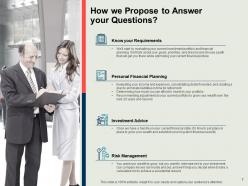
Slide 7: This slide shows How we Propose to Answer your Questions?
Slide 8: This slide displays Our Capabilities.
Slide 9: This slide shows Types of Asset Class we Invest in.
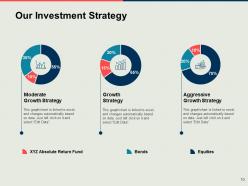
Slide 10: This slide shows Our Investment Strategy.
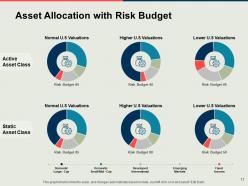
Slide 11: This slide displays Asset Allocation with Risk Budget.
Slide 12: This slide showcases Account Review.
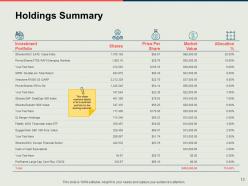
Slide 13: This slide showcases Holdings Summary. This slides mentions details of all investment portfolio for the existing customer
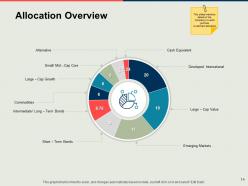
Slide 14: This slide represents Allocation Overview.
Slide 15: This slide shows Risk and Return Methodology.
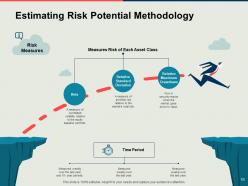
Slide 16: This slide showcases Estimating Risk Potential Methodology.
Slide 17: This slide showcases Estimating Return Potential Methodology.
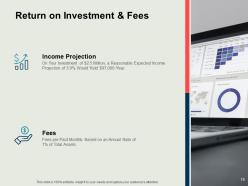
Slide 18: This slide presents Return on investment & fees.
Slide 19: This slide depicts Return on Investment & Fees with- Income Projection
Slide 20: This slide represents Communication.
Slide 21: This slide represents Communication with- Social Network, Blogs, Twitter, Facebook, YouTube Channel, LinkedIn.
Slide 22: This is Company Introduction slide with- Our investment philosophy, Our team.
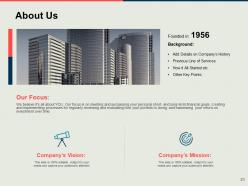
Slide 23: This is About Us slide with Company's Vision, Mission and Background details.
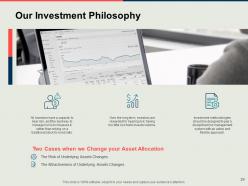
Slide 24: This slide depicts Our Investment Philosophy.
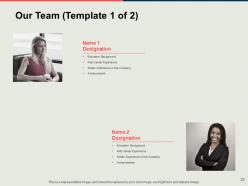
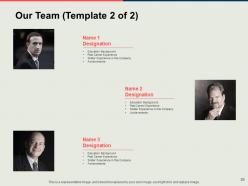
Slide 25: This is Our Team slide with Names and Designations.
Slide 26: This is Our Team slide with Names and Designations.
Slide 27: This slide showcases Past Experience with- Client testimonials, Case study.
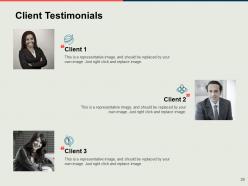
Slide 28: This slide displays Client Testimonials.
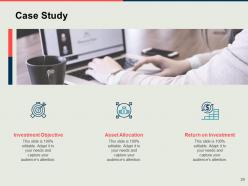
Slide 29: This slide depicts Case Study.
Slide 30: This slide shows Road Ahead with Next steps
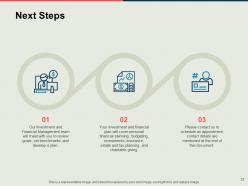
Slide 31: This slide presents Next Steps.
Slide 32: This is Contact Us slide with Email address, Contact number and Address.
Slide 33: This slide is titled as Additional Slides for moving forward.
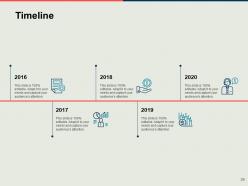
Slide 34: This slide depicts Timeline process.
Slide 35: This slide displays Roadmap process.
Slide 36: This slide showcases Roadmap.
Slide 37: This is another slide showing Roadmap.
Slide 38: This slide depicts Roadmap process.
Slide 39: This slide displays Roadmap process.
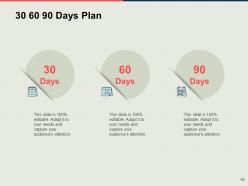
Slide 40: This is 30 60 90 Days Plan slide.
Wealth Management Advisory Services Proposal Powerpoint Presentation Slides with all 40 slides:
Use our Wealth Management Advisory Services Proposal Powerpoint Presentation Slides to effectively help you save your valuable time. They are readymade to fit into any presentation structure.





FAQs for Wealth Management Advisory Services Proposal
So wealth management usually covers the big stuff - investment management, financial planning, tax strategy, estate planning. Most firms also do retirement planning and insurance stuff for risk management. If you're dealing with serious money, they might offer family office services too. Portfolio reviews and performance reports are pretty standard, though some firms go way overboard with the reporting (like, do I really need 30 pages every quarter?). You might also see specialized things like philanthropic planning or business succession help. Honestly though, just find someone who offers what you actually need instead of paying for services you'll never touch.
Most wealth advisors start with these detailed questionnaires about your finances, goals, timeline - the whole picture. They'll throw scenarios at you like "what if your portfolio tanks 20% next year?" Honestly sounds basic but your reaction tells them everything. Then comes the fun part - they run projections for different situations. Early retirement, surprise medical bills, whatever. The smart ones check back with you regularly too since how much risk you can handle definitely shifts over time. Oh, and here's a tip: grill them about their assessment process in that first meeting. You want someone thorough, not just going through the motions.
So basically wealth managers split your money across different stuff - stocks, bonds, real estate, commodities, sometimes fancier things like private equity. They mix up domestic and international markets too. Plus they'll vary by company size and different sectors. It's the whole "don't put all your eggs in one basket" thing but way more complex, honestly. The mix depends on how much risk you can handle and your timeline. What's key is they're always rebalancing - if one area gets too big, they'll sell some and buy more of what's been underperforming to keep everything balanced.
Dude, taxes basically run the whole show when it comes to wealth management. They affect when you buy/sell stuff, how you set up your portfolio, everything. Focus on after-tax returns instead of just gross numbers - way more important. Things like tax-loss harvesting and putting your tax-heavy investments in retirement accounts can save you big time. I've literally watched people get crushed by taxes they didn't see coming. Oh, and timing matters huge for when you actually take those gains. Build this stuff in from the start rather than trying to fix it later.
Look, estate planning is basically the backbone of wealth management - it makes sure your money goes where you want without Uncle Sam taking a huge bite. Your advisor will team up with estate lawyers to create trusts, update beneficiaries, all that stuff. Most people procrastinate on this forever (honestly can't blame them). But it's not just about dying - covers what happens if you can't make decisions too. Start simple: get your will, power of attorney, healthcare directives sorted. Then you can get fancy with the advanced strategies later as your wealth grows.
So wealth managers have to do continuing education - it's actually mandatory. Most of them read financial journals and hit up industry conferences throughout the year. The smart ones rely on their compliance teams too, which honestly makes sense because regulations change constantly. No way one person can track it all. They've got specialized software that pings them about new regulatory stuff and market changes. Oh, and they do regulatory webinars which sounds boring as hell but whatever. When you're picking someone, just ask how they stay up to date and what resources they use.
So investment-only advisors just handle your portfolio stuff - stocks, bonds, rebalancing, the usual. Holistic wealth management covers way more ground though. You're getting investment help plus tax planning, estate stuff, insurance reviews, retirement strategies. Sometimes they'll even look at your debt and cash flow (which honestly can be pretty eye-opening). It's like having someone who actually sees your whole financial mess instead of just one corner of it. Investment-only is definitely cheaper but limited. I'd probably go holistic if you've got complicated finances, otherwise the basic route works fine.
Rich clients need totally different approaches because their money situations are way more complicated. They're dealing with tax strategies across multiple businesses, estate planning, private equity, hedge funds - stuff most people never touch. Regular investors? Just basic portfolio allocation based on how much risk they want and when they need the money. Honestly, the wealth gap in investment options is pretty wild. High-net-worth folks can access exclusive funds with crazy high minimums that average investors can't even dream of. When you're working with them, you've got to understand their whole financial picture, not just where they want to put their money.
So most financial advisors use CRM stuff like Salesforce or Redtail to manage clients. For tracking investments, they've got portfolio systems - Orion and Black Diamond are big ones. Then there's financial planning software like eMoney or MoneyGuidePro. Oh, and tons of dashboards everywhere - honestly feels excessive but whatever, clients eat that visual stuff up. They also need document management for compliance headaches and secure portals so you can access your info. When you're shopping around, definitely ask what tech they're using because some firms are still stuck in the stone age and it'll make everything painfully slow.
A good wealth advisor basically maps out how to get you financially free by looking at everything - your income, spending, debt, investments, the whole mess. Most people are either way too scared or ridiculously aggressive with their money without even knowing it. They'll help set realistic timelines and make sure you're not missing obvious stuff like tax breaks or maxing out retirement accounts. Plus they keep you from making dumb emotional decisions when things get crazy. The trick is finding someone who actually cares about what YOU want, not someone just trying to sell you whatever financial product they're pushing that month.
Look at total return and risk-adjusted stuff like Sharpe ratio first. Alpha tells you if you're actually beating the market, beta shows how volatile you are compared to it. Benchmarking against similar portfolios matters too. Don't get caught up in quarterly drama - I swear some people check their accounts daily and panic. Annual trends and 3-5 year windows give you the real story. Maximum drawdown's huge for understanding worst-case scenarios. Honestly? I'd rather see steady 10% growth than crazy 15% gains with wild swings.
Look, good wealth advisors will set up trusts and gift strategies to cut down on taxes when you pass stuff along. They team up with your lawyer and accountant to make it all work together. But honestly? The timing thing is huge - I've heard horror stories of families getting crushed by taxes because they procrastinated. Your advisor can also teach your kids about money (which, let's be real, most parents suck at). Some even help set up family councils so everyone knows what's expected. Don't wait on this one. Get everyone in a room and hash out the plan now.
Yeah, ethical investing is everywhere now in wealth management. Clients want portfolios that match their values - ESG stuff, impact investing, avoiding certain industries. It's not just millennials anymore either, which honestly surprised me at first. The hard part? Balancing those preferences with actually making money, plus avoiding the greenwashing trap. Most platforms have decent screening tools and ESG funds these days, so it's not too painful to set up. I'd get familiar with the main ESG rating systems. Also, bring this up early when you're getting to know new clients - saves headaches later.
Your wealth manager can hook you up with donor-advised funds or charitable trusts - basically ways to give that'll save you tons on taxes. They'll also dig into charities for you because honestly? Some of these organizations spend like 80% on admin costs, which is insane. The paperwork alone is worth paying for - have you seen IRS charity forms? Nightmare. A good advisor will research everything so your money actually helps people instead of paying for fancy office buildings. Just tell them your annual giving budget and what causes you care about, they'll handle the rest.
Honestly, the biggest headache is market volatility crushing your clients' portfolios when they least expect it. Regulatory changes happen overnight too - suddenly you're scrambling to meet new compliance rules. Clients can be... challenging. They'll expect 15% returns in a bear market, no joke. Watch out for concentration risk when someone dumps everything into crypto or whatever's trending. Tax laws change constantly, and don't get me started on keeping up with new investment products. My advice? Set realistic expectations from day one. Document every conversation and communicate like crazy - it'll save your butt later.
-
Great designs, really helpful.
-
Out of the box and creative design.
-
Good research work and creative work done on every template.
-
Good research work and creative work done on every template.