

Financial Consulting Proposal Powerpoint Presentation Slides




Try Before you Buy Download Free Sample Product
 Impress Your
 Audience
 100%
100% Editable
 Save Hours
 of Time


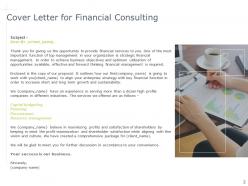
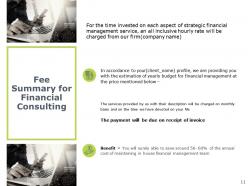
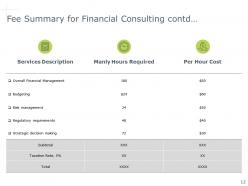
Due to the competitive nature of financial consulting services, it is vital to have a detailed and a well-structured agreement between the consultant and client. Utilize these visually attractive Financial Consulting Proposal PowerPoint Presentation Slides to develop this agreement and set yourself apart from the rest. This sample consulting proposal PowerPoint template can be incorporated in your business operations to land more consulting projects with ease. Capital generation is an important factor for which credible financial institutions need advices. Use this consulting proposal PPT visual to show that you are the best in providing financial suggestions to anybody who uses your services. Bring your viewers focus on your offerings that will help them in meeting their organizational goals like inspection of accounts, risk management etc. You can also discuss each of the services in detail to help your clients understand your operations in a much better way. Pitch your financial advisory services with the exact fee structure in front of your viewers and turn them into clients with the assistance of this intuitively designed sample quotation for advisory services PowerPoint slideshow. Since, this simple consulting proposal template is designed by our experts at SlideTeam, it can be incorporated by any of the financial planners and advisors who are looking for some good proposal themes. All you have to do is add your information in the text placeholders and change the color of the slides if needed. You can also edit the high-quality images to suit your business needs and preferences. Therefore, don’t miss the golden chance of adopting this fully functional PPT deck, click on the download now.
People who downloaded this PowerPoint presentation also viewed the following :
Financial Consulting Proposal Powerpoint Presentation Slides with all 29 slides:
Use our Financial Consulting Proposal Powerpoint Presentation Slides to effectively help you save your valuable time. They are readymade to fit into any presentation structure.











FAQs for Financial Consulting Proposal
Start with a solid problem statement - show them you actually get their struggles. Your methodology and timeline matter, but honestly, the team bios are what often sell it. People buy from people they trust. Break down your pricing clearly and spell out exactly what deliverables they'll receive. Hook them with your exec summary upfront. Got any case studies? Toss those in. Here's the thing though - focus on specific outcomes, not just a laundry list of services. Risk mitigation shows you're thinking ahead. Oh, and format it so they can actually scan through it quickly.
During discovery calls, ask specific questions about their finances, goals, and what's stressing them out. Cash flow issues? Current processes that suck? Dig into that stuff. Don't settle for vague answers - keep asking "why" until you get the real story. If they'll share financial docs beforehand, even better. Listen way more than you talk (harder than it sounds tbh). The whole point is crafting a proposal that actually fixes their problems, not just pushing your usual service menu. Oh, and their "pain points" are usually way deeper than what they first tell you.
Dude, make your financial stuff visual - charts beat boring tables every time. Executives literally won't read dense spreadsheets, so put your big findings right at the top. Then add the nitty-gritty details underneath. Always show your methodology so nobody can call BS on your work later (learned that the hard way). Round your numbers - being too precise on projections just looks weird. Oh, and consistent formatting matters more than you'd think. Most crucial part? Connect every single number to actual business impact. Random data points without context are basically useless noise.
Honestly, you've gotta nail their specific industry first - like if they're fintech vs traditional banking, show you actually get their world. Lead with hard numbers from similar clients, not some generic "we help businesses grow" BS. Most consultants totally blow it by being way too broad. Come up with your own framework or approach that other firms can't just steal. And here's the thing - forget flashy presentations. Instead, dig deep into their actual problems and prove you understand what's keeping them up at night. ROI examples beat pretty graphics every single time.
Look, risk assessment is what separates real consultants from wannabes - clients can tell the difference immediately. You've got to spot the actual threats: market swings, new regulations, cash flow problems, whatever might derail their plans. Honestly, this section gets read more carefully than anything else because people hate financial surprises. Don't just dump a list of scary scenarios though. Every risk needs your game plan for handling it. That's how you show you actually know what you're doing and aren't just reciting textbook stuff.
Honestly, visuals are a game-changer for financial proposals. Nobody wants to stare at endless spreadsheets - charts and graphs make complex data way easier to digest. Your clients will actually understand the trends and forecasts you're showing them. Plus it makes you look super professional and detail-oriented. I'd throw in some before/after scenarios and clean timelines for implementation. Keep each visual focused on one main point though, or it gets messy fast. Oh, and definitely lead with your strongest chart right up front to grab their attention immediately.
Dude, you NEED clear objectives - like seriously. They're what keep clients from going "wait, I thought you were doing XYZ too" halfway through. Plus they help you price things right from the start. Without them? You're gonna get scope creep out the ass, trust me. I learned this the hard way on a project last year - never again. Good objectives also give you something solid to point to when you're done, like "see? We hit everything we said we would." Honestly, just spend the extra hour upfront nailing them down. Future you will thank you.
Be super transparent about your pricing breakdown - show them exactly what they're paying for. I always list my hourly rates and project phases right upfront because nobody likes surprises later. Try checking what competitors charge, though honestly their rates are sometimes impossible to figure out. Give clients options too - maybe hourly vs. fixed project pricing. Oh, and spell everything out clearly in your proposal so you don't deal with scope creep nightmares down the road. That stuff'll kill your profit margins fast.
Start with the boring but necessary stuff - licenses, certifications, which regulatory bodies you answer to. Data protection is huge since you're dealing with their financial info. Fee transparency matters too, clients hate surprise costs. If you're acting as a fiduciary, spell that out clearly. Conflict of interest disclosures are required anyway, so get those out of the way early. Honestly, being super upfront about industry standards right off the bat shows you're legit and actually know what you're doing. It's all about building that trust from the start.
Don't just stick your case studies in some boring appendix - weave them right into the proposal where they actually matter. Pick 2-3 really solid examples that match their specific problems. Like if they're hemorrhaging cash, show exactly how you fixed that for another client. Finance people are total numbers nerds, so hit them with the ROI percentages and actual dollar savings. Keep each one short though - maybe a paragraph or two max. Oh, and here's the key part: always tie it back to what you'll actually do for them specifically. Nobody cares about your random past wins if they can't see how it applies to their situation.
Biggest mistake? Being way too vague about what you'll actually deliver. Clients hate that. Also, don't lowball your prices - I swear every new consultant thinks this wins deals but it just makes you look desperate. Be super clear about timelines and milestones too. Oh, and here's the thing - you've gotta show you actually get their industry, not just spout generic business jargon. They can smell BS from a mile away. Always include a detailed scope section or you'll end up doing endless revisions for free. Trust me on that one. Bottom line: be specific, price confidently, and prove you've researched their business.
Okay so first thing - dig deep into what actually keeps them up at night in their specific industry. Healthcare folks are obsessed with compliance stuff and patient outcomes. Tech startups? They just want to see those growth numbers go brrr. I totally bombed a manufacturing pitch once because I sent some generic garbage instead of doing my homework first. Speak their language too - use the jargon they throw around every day. Oh and definitely include case studies from similar companies. That's what actually proves you get their world instead of just trying to sell them whatever.
Definitely follow up within 2-3 days just to make sure they got everything. After that, I'd do weekly check-ins for the first month, then maybe every two weeks. Don't just send "any updates?" texts though - those are the worst. Mix in some actual value like market data or case studies that relate to their situation. Oh, and tell them upfront when you'll be following up so they know what to expect. I learned that one the hard way! If they ghost you after a solid month of reasonable follow-ups, just move them to your back-burner list and chase warmer leads.
Look, your best teacher is honestly the feedback from proposals that didn't win. I know it sucks to hear why you lost, but that's where the gold is. You'll start noticing patterns - like what clients actually want vs what you assumed they cared about. Pricing becomes way clearer too once you see what's worked before. Keep a simple log after each proposal (I learned this the hard way). Which sections confused people? What made them say no? Some industries respond totally differently to the same approach. Even brutal feedback usually has the most useful stuff buried in there. Otherwise you're just repeating mistakes forever.
Dude, try PandaDoc or Proposify - total game changers for templates. Just plug in client details and you're done. CRM integration is where it gets really good though, pulls all their info automatically so no more copy-pasting forever. AI writing tools help with the first draft, and e-signatures save you from that annoying email chain. Honestly? Start simple first. Maybe just build templates in Google Docs before dropping money on the fancy stuff. I learned that the hard way lol. Once you get any system going, you'll wonder how you survived before.
-
Unique design & color.
-
It saves your time and decrease your efforts in half.
-
Unique design & color.
-
Perfect template with attractive color combination.
-
Great designs, Easily Editable.
-
Perfect