


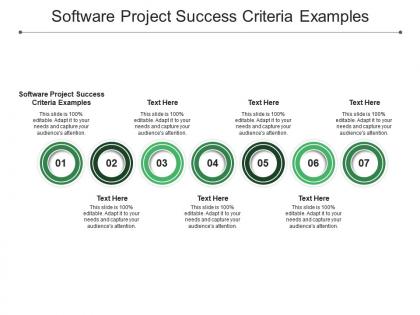
Software project success criteria examples ppt powerpoint presentation summary portfolio cpb




Try Before you Buy Download Free Sample Product
 Impress Your
 Audience
 100%
100% Editable
 Save Hours
 of Time


Our Software Project Success Criteria Examples Ppt Powerpoint Presentation Summary Portfolio Cpb are topically designed to provide an attractive backdrop to any subject. Use them to look like a presentation pro.
People who downloaded this PowerPoint presentation also viewed the following :
Software project success criteria examples ppt powerpoint presentation summary portfolio cpb with all 2 slides:
Use our Software Project Success Criteria Examples Ppt Powerpoint Presentation Summary Portfolio Cpb to effectively help you save your valuable time. They are readymade to fit into any presentation structure.
FAQs for Software project success criteria examples ppt powerpoint presentation
Track the basics first: did you hit your deadlines, stay on budget, and actually deliver what you promised? Quality stuff matters too - defect rates and whether users are happy with what you built. Nobody wants software that technically shipped on time but sucks to use. For agile teams, I'd throw in velocity and code coverage metrics. Honestly though, pick maybe 4-5 things max that your stakeholders actually care about. Don't go crazy tracking every possible metric - you'll just drown in data. Set up something simple early so you can pivot when things start going wrong.
Dude, stakeholder engagement is literally everything. I've watched so many solid projects crash and burn because teams didn't loop people in early enough. You'll catch those "wait, that's not what I meant" moments way sooner if you're doing regular check-ins and demos. Plus users actually feel heard, which honestly makes them way more flexible when you need to pivot. Skip this step and you're basically guaranteed scope creep and those awful delivery meetings where everyone's confused. Trust me - a few extra feedback sessions upfront beats rebuilding the whole thing later. Way less painful for everyone involved.
Dude, scope management literally saves projects from disaster. You gotta define what you're building upfront - otherwise stakeholders will keep adding "quick features" that aren't quick at all. I've watched so many teams get buried under random requests because nobody drew clear boundaries. Document everything early and make stakeholders sign off before coding starts. Can't measure success when the target keeps moving, right? Also helps your team stay focused instead of chasing every shiny new idea. Trust me, saying no to scope creep is way better than explaining why you're three months behind schedule.
Look, Agile basically flips the whole success thing on its head. Instead of "did we stick to the original plan exactly?" it becomes "are we actually delivering value and rolling with changes?" Your team starts caring more about customer happiness and getting working software out regularly rather than hitting some arbitrary deadline from months ago. Honestly, scope changes stop feeling like failures - they're just part of the process. You measure wins through sprint demos and what customers actually think, not whether you checked every box from day one. Way less stressful once you get used to it.
Dude, scope creep will destroy you every time. Also unclear requirements and terrible communication between everyone involved. I've watched so many projects crash because nobody planned properly or they got stuck with insane deadlines. Developers literally burn out trying to make the impossible happen - it's brutal to watch. Testing gets skipped, risk management? What's that? The worst part is how everything snowballs together. Rush the timeline, skip the tests, then you're dealing with way bigger messes later. My take? Document the hell out of everything upfront and don't budge on your boundaries.
Dude, user feedback is make-or-break for your project. Get it early during requirements and design - otherwise you'll build something nobody wants. I learned this the hard way on my last project, trust me. Regular testing during development catches those annoying usability issues before they're expensive to fix. Most teams think they can skip this step... big mistake. Even after launch, you need that feedback for updates and future versions. The trick is baking feedback loops into your process from the start. Don't treat it like an afterthought or you'll regret it.
Ugh, yeah - people get weirdly fixated on deadlines even when you nail everything else. Miss a date and suddenly nobody cares about your amazing work, they just remember you were late. It's kinda ridiculous but whatever. Hit your timeline though? Everyone's happy and they'll overlook small bugs or missing features. Here's the thing - how people *feel* about your timeline matters way more than what actually happened. So I always pad my estimates like crazy and give heads up early if things are slipping. Way better to surprise people by finishing early than have them think you screwed up.
Look, quality literally makes or breaks your project. Nobody gives a damn if you shipped on time when the app crashes every five minutes. Good software that actually works? That's what keeps users happy and cuts down on those 3am support calls nobody wants to deal with. Plus it builds trust with whoever's paying the bills. My advice - bake quality in from day one instead of scrambling to fix everything later. Those post-launch fire drills are brutal and honestly, totally avoidable if you just don't rush garbage out the door.
Definitely start with a risk register - just a simple doc to track what could go wrong. I'd use probability/impact grids to figure out what's actually worth stressing over. Most stuff people panic about never even happens anyway lol. JIRA or Azure DevOps are solid for tracking this alongside your regular tasks. Set up weekly or bi-weekly risk check-ins depending on how big your project is. Pre-mortems are pretty cool too - basically imagine everything went to hell and work backwards to spot potential issues. Honestly though, just pick whatever tool works and stick with it. Don't overcomplicate things.
Dude, communication can literally tank your entire project. I've watched teams with solid code fall apart because nobody talked to each other. When people actually communicate, you catch bugs way earlier and everyone's building toward the same thing - instead of creating pieces that don't even connect. Plus you solve problems faster when knowledge gets shared instead of hoarded (which honestly drives me crazy). Bad communication = scope creep, blown deadlines, frustrated devs. Set up regular check-ins that don't suck, pick tools your team won't hate, and make sure people feel safe calling out problems early.
Look, you absolutely need that vision locked down upfront or your project's gonna be chaos. I've watched so many teams just spin their wheels because everyone's pulling different directions. Developers build random stuff. Stakeholders keep asking for "one more feature." Nobody can even define what winning looks like, you know? Write down exactly what success means - be specific enough that you can actually say yes or no to new requests. Then stick it somewhere everyone can see it. Trust me, when things get messy (and they will), that's your lifeline for making decisions.
Dude, coding standards are a lifesaver. Your future self will thank you when you're not trying to decode whatever mess you wrote at 2am last month. Anyone on your team can actually read your code without wanting to scream. Bugs drop way down, code reviews go faster, and new people don't spend weeks figuring out your weird habits. Honestly, I used to think it was just extra work but it's so worth it. Start with basic stuff like naming things consistently and auto-formatting. You'll notice the difference right away.
So definitely track the basics first - did you hit their deadlines, stay on budget, deliver what they wanted? But honestly, communication is where most agencies screw up. Clients get anxious when they don't hear from you, even if everything's fine. Check how responsive your team was and if you solved problems well. Post-launch support counts too - don't just disappear after delivery. I'd send a feedback survey maybe two weeks later, then hop on a quick call to talk through anything face-to-face. Way better than just hoping they're happy.
Yeah, tech changes totally mess with how you define "success" for software projects. What used to be impressive performance? Now it's just expected. Meanwhile everyone wants AI features and real-time collaboration - that's where you actually stand out. Security requirements are honestly exhausting - feels like there's new compliance stuff every few weeks. I'd suggest checking your success metrics every quarter and asking "would this still wow users today?" Otherwise you're measuring against outdated standards. The whole landscape shifts so fast that what worked two years ago might be completely irrelevant now.
Build sustainability right into your project from the start - don't just slap it on later. Monitoring and alerts will save your ass when things break (and they will). Document everything because debugging at 2am with zero notes is actual hell. Get someone to own the maintenance stuff after launch and make sure there's real budget for ongoing support. Oh, and software is never actually finished - you'll need regular updates and security patches forever. The key thing? Figure out who's doing what post-launch and get them to commit to it in writing before you ship.
-
Best way of representation of the topic.
-
Wonderful templates design to use in business meetings.
-
Very well designed and informative templates.
-
Excellent design and quick turnaround.
-
Unique design & color.
-
Nice and innovative design.
-
Informative presentations that are easily editable.
-
Informative design.