


Software technical development proposal powerpoint presentation slides




Try Before you Buy Download Free Sample Product
 Impress Your
 Audience
 100%
100% Editable
 Save Hours
 of Time


A successful piece of software is not created by chance. It necessitates meticulous preparation and implementation. The amount of planning that goes into a project before it begins impacts whether the product is successful or not. A well-planned process needs a purpose, specific objectives, a timetable, changes, and deliverables. With this, a project manager may acquire an idea of costs and resources. Defining these factors will help a project go more smoothly. It also stops it from slowing down or coming to a halt. SlideTeam provides in-depth information about software technical development proposal through our software PowerPoint templates. Our team of experts have created a variety of templates to help you visualize and communicate your ideas effectively. Download our software ppt templates now to get started on your next project.
People who downloaded this PowerPoint presentation also viewed the following :
Content of this Powerpoint Presentation
Slide 1: This slide introduces Software Technical Development Proposal. State Submission date, User assigned and Client name.
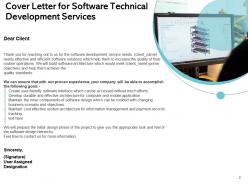
Slide 2: This slide displays Cover Letter for Software Technical Development Proposal.
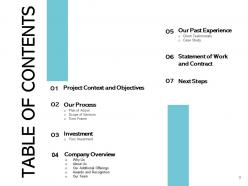
Slide 3: This slide displays Table of Contents of the presentation.
Slide 4: This slide showcases Table of Contents
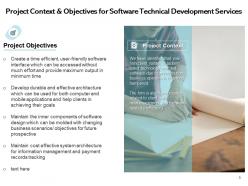
Slide 5: This slide describes Project Context & Objectives for Software Technical Development Proposal.
Slide 6: This slide displays Table of Contents.
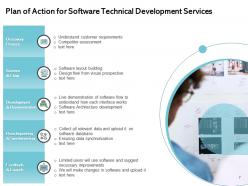
Slide 7: This slide showcases Plan of Action for Software Technical Development Proposal.
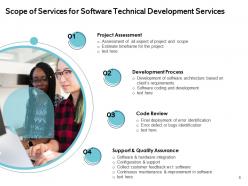
Slide 8: This slide describes Scope of Services for Software Technical Development Proposal.
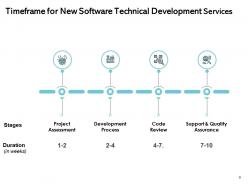
Slide 9: This slide showcases Timeframe for Software Technical Development Proposal.
Slide 10: This slide displays Table of Contents of the presentation.
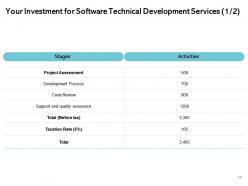
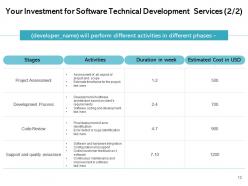
Slide 11: This slide displays Investment details.
Slide 12: This slide displays Investment details.
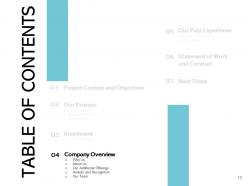
Slide 13: This slide showcases Table of Contents of presentation.
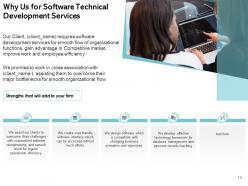
Slide 14: This slide depicts reasons for choosing us for Software Technical Development Proposal.
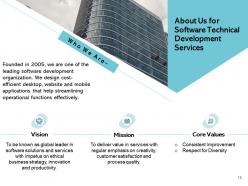
Slide 15: This is About Us slide to showcase Company specifications.
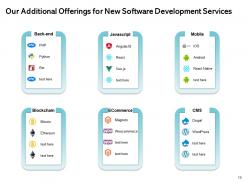
Slide 16: This slide shows Our Additional Offerings.
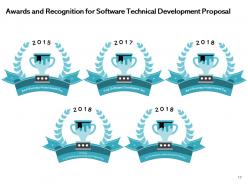
Slide 17: This slide depicts Awards and Recognition
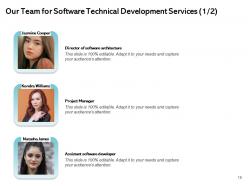
Slide 18: This is Our Team slide with Names and Designations.
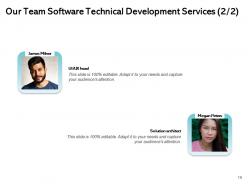
Slide 19: This is Our Team slide with Names and Designations.
Slide 20: This slide displays Table of Contents
Slide 21: This slide displays Client Testimonials.
Slide 22: This slide showcases Client Testimonials.
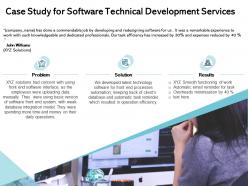
Slide 23: This slide represents Case Study for Software Technical Development Proposal.
Slide 24: This slide shows Table of Contents
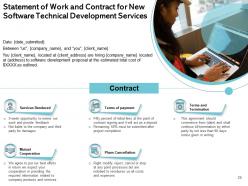
Slide 25: This slide describes Statement of Work and Contract for Software Technical Development Proposal.
Slide 26: This slide displays Table of Contents.
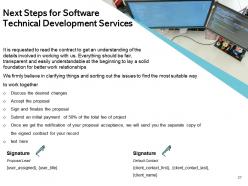
Slide 27: This slide depicts Next Steps for Software Technical Development Proposal.
Slide 28: This is Contact Us slide with Address, Email address and Contact number.
Slide 29: This is Icons Slide for Enterprise Software Development Proposal
Slide 30: This slide is titled as Additional Slides for moving forward.
Slide 31: This is About Us slide to showcase Company specifications.
Slide 32: This is Our Mission slide with Mission, Vision and Goals.
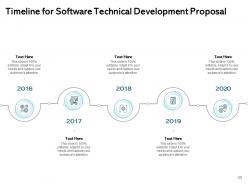
Slide 33: This slide shows Timeline process.
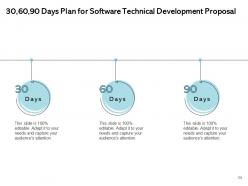
Slide 34: This slide shows 30 60 90 days plan.
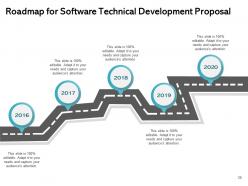
Slide 35: This slide shows Roadmap process.
Software technical development proposal powerpoint presentation slides with all 35 slides:
Use our Software Technical Development Proposal Powerpoint Presentation Slides to effectively help you save your valuable time. They are readymade to fit into any presentation structure.
FAQs for Software technical development proposal
Okay so you definitely need project scope, timeline with milestones, and budget breakdown - that's like the holy trinity. Tech stack overview too, but don't go crazy with jargon. Team roles matter more than you'd think. I always throw in risk assessment because honestly, stuff goes wrong and clients appreciate the honesty. Development methodology (Agile's usually safe), testing approach, and what happens after launch. Oh, and be super specific about deliverables - clients get weird when they don't know exactly what they're paying for. Start with a template but customize each one. Takes forever but it's worth it.
Honestly, you gotta break it down into chunks with real deadlines. I always work backwards from the big stuff - like "MVP done by Week 8" - then fill in all the little tasks. Gantt charts are kinda boring but clients love seeing that visual timeline thing. Buffer time is absolutely crucial because I swear everything takes 50% longer than you think. Oh, and mark where you need their approval on stuff - that's where things usually get stuck. Each milestone should be something they can actually touch or click on, not just "work completed" (which means nothing to them).
You've gotta lead with hard numbers - how much money you'll save them or time you'll cut. Skip the fluffy "efficiency" talk because honestly, everyone says that. Walk them through a real before/after scenario if you can swing it. Demo something that actually works, even if it's rough around the edges. Here's the thing though - you need to nail their specific problems first. Don't just show off cool tech features. Connect everything back to what keeps them up at night business-wise. Make it super obvious why they should care beyond just "wow, neat gadget."
Honestly, get ahead of the risks before they bite you. Break them down - technical stuff, timeline issues, budget problems, resource gaps. Think third-party APIs going down or your best developer taking vacation. I'm probably obsessive about this step, but whatever. For each one, note how likely it is and what damage it could do. Then figure out your backup plan. Don't sugarcoat the bad ones either - clients actually respect when you're upfront about potential disasters. Shows you know what you're doing. Keep it simple with bullets or a basic table so they can skim it fast.
Look, user research is what keeps your proposal from being total garbage. It shows you what people actually need instead of you just throwing darts at a board. Plus stakeholders eat that stuff up - they want proof you get the real problem, not just whatever tech sounds fun to build. Start with those research findings right up front. Pain points, user behaviors, all that good stuff. It backs up every decision you make and helps you figure out which features actually matter. I learned this the hard way on a project last year - skipped the research phase and ended up building something nobody wanted. Don't be me.
Absolutely weave their feedback right into your proposal sections! Quote the specific concerns they brought up and show how you're fixing them. Nothing makes me cringe more than proposals that completely ignore what came up in discovery calls - like, did you even listen? Drop in their exact words when you can. Reference those pain points they mentioned. Then connect your tech recommendations back to what actually matters for their business. That way reviewers think "okay, these people actually get it" instead of wondering if you missed the point entirely. Close that loop between what they told you and what you're planning to build.
So there's basically three ways to price this stuff. Fixed-price works when the project's super clear-cut, but man, scope creep will destroy you. Time and materials is more flexible - clients just hate not knowing the final number upfront. Then there's value-based pricing where you charge based on what it's actually worth to their business. That one's harder to explain but the money's way better if you can pull it off. Oh, and definitely give them two options in your proposal. People love feeling like they're choosing, even when you're steering them toward what you want anyway.
Honestly, just ditch the tech speak completely when you're talking to non-techies. Like, don't say "API integration" - tell them "your customers can sign in with Google instead of creating another password." I always compare software to building a house since everyone gets that. You wouldn't tell someone about "foundation reinforcement specs," right? Just say we need a solid base so nothing cracks later. Visuals help tons too - even a quick mockup gets the point across better than explaining. Focus on what it'll actually do for them, not the boring how-we'll-build-it stuff.
Get specific about scalability stuff - load balancing, database optimization, cloud infrastructure that grows with users. Also map out your monitoring tools and how fast you'll fix bugs when things break. I learned the hard way to always include technical debt management because wow, that piles up quick if you ignore it. Don't forget staffing plans for ongoing support either. Oh, and knowledge transfer processes are clutch. They want to see you've thought past the fun building part to all the annoying maintenance that happens after launch.
Set up a team section with short bios that show relevant experience. Then showcase 3-4 projects that actually match what your client wants - same tech, similar industry, whatever. Trust me, they don't care about your flashy unrelated work. What they want are specific wins with numbers. Like "cut load times by 40%" or "doubled user engagement" instead of just listing features. Oh, and connect each team member to past projects so clients know exactly who'll be handling their stuff. Makes it way more personal and credible.
Honestly, start with the problem you're solving - don't dive into tech specs right away like everyone does. Then hit them with your solution and why it rocks. You'll want sections covering scope, timeline with milestones, team setup, and budget breakdown. Stick the technical stuff in an appendix so decision-makers can focus on results first. Risk assessment is clutch because execs eat that up - shows you're not just winging it. Oh, and always end with next steps and deadlines. Keeps things moving instead of letting it sit in email hell forever.
Honestly, visuals are a game changer for proposals. Nobody wants to wade through dense paragraphs when a simple chart can show your budget breakdown in seconds. Flowcharts are clutch for explaining complex processes to non-tech people - saves you from watching their eyes glaze over. Plus it makes you look like you actually put effort in, which matters more than people admit. I'd stick to maybe 2-3 really strong visuals though. Don't be that person who throws in random graphs just to have them. Pick ones that actually back up your main arguments and you'll be golden.
Honestly, you gotta understand their actual business problems first - not just what they think they want. Like, sometimes they'll ask for this fancy solution when really they just need something simple that works. Talk to the decision-makers about revenue goals and what's currently breaking in their workflow. Then connect your features directly to how it'll save them money or time. I learned this the hard way lol - spent weeks building something beautiful that totally missed the mark. Discovery calls are clutch here. Lead with why they need it, then explain how you'll build it.
Okay so first thing - nail down exactly how you'll talk throughout the whole thing. Pick your channels (Slack, email, video calls) and be clear about response times. Weekly check-ins are usually good. I always mention my actual hours because getting pinged at midnight is the worst! Figure out what reports make sense - status updates, dashboards, milestone stuff. How will you handle emergencies or when they inevitably want to change everything? Honestly, the more specific you are upfront, the less headaches later.
Honestly, the worst mistakes are being way too vague about what you're actually building and totally lowballing your timelines. Like, I can't tell you how many proposals I've seen tank because someone promised to build the next Facebook in two weeks - it's almost painful to watch. Skip the buzzword salad too. Clients want to know exactly what they're getting, not hear about "synergistic solutions." Oh, and don't pretend nothing can go wrong! Actually mention potential hiccups upfront. They respect the honesty. Make your scope super clear - what's included vs. what costs extra. Trust me on this one.
-
Easily Editable.
-
It saves your time and decrease your efforts in half.
-
Understandable and informative presentation.
-
Awesome presentation, really professional and easy to edit.