


Solving Chicken And Egg Problem In Business Powerpoint Presentation Slides





Try Before you Buy Download Free Sample Product
 Impress Your
 Audience
 100%
100% Editable
 Save Hours
 of Time


Platform company is a business model that focuses on assisting in facilitating interactions among a large number of people. It aids in the connection of buyers and sellers through the formation of social relationships, cooperation to achieve a common goal, or continuous efforts to enhance participants performance by assisting them in learning faster together. Check out our professionally designed template on Solving Chicken and Egg Problem in Business that focuses on current state analysis, linear model, average cost curve, increasing costs, etc., and different business models offered in the industry. Its role is to provide a governance structure, standards, and protocols that facilitate large-scale interactions so network effects can be unleashed. We have focused on the platform business model, which covers the benefits, canvas model, components, main types, and categorization. The 5 step process focuses on environment scan, ideation phase, value proposition, service design, strategy, costs, valuation, and implementation plan. Get access to this 100 percent editable template now.
People who downloaded this PowerPoint presentation also viewed the following :
Content of this Powerpoint Presentation
Slide 1: This slide introduces Solving Chicken and Egg Problem in Business. State Your Company Name and begin.
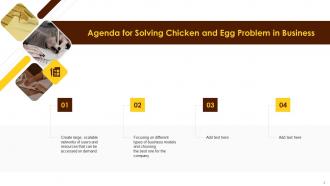
Slide 2: This slide states Agenda of the presentation.
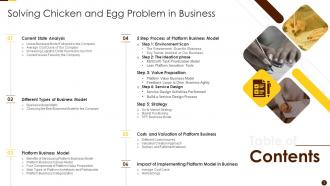
Slide 3: This slide presents Table of Content for the presentation.
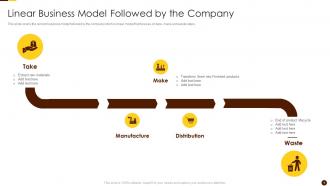
Slide 4: This slide displays Linear Business Model Followed by the Company.
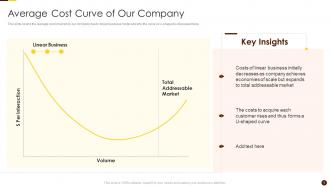
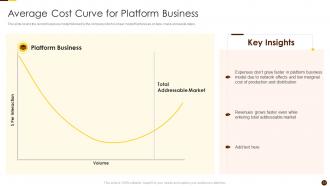
Slide 5: This slide represents average cost incurred by our company due to linear business model.
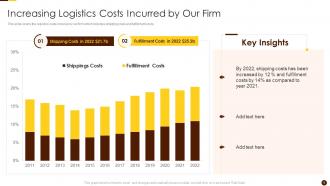
Slide 6: This slide showcases logistics costs incurred by our firm which includes shipping costs and fulfillment costs.
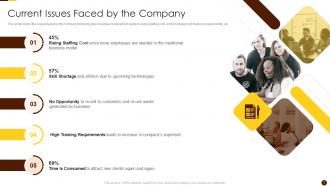
Slide 7: This slide shows issues faced by the company following pipe business model.
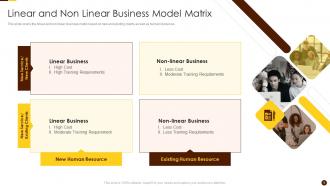
Slide 8: This slide presents linear and non linear business matrix based on new and existing clients.
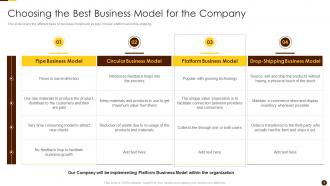
Slide 9: This slide displays Choosing the best business model for the company.
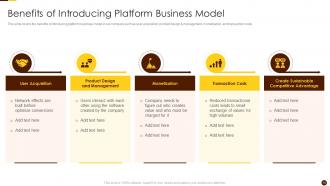
Slide 10: This slide represents benefits of introducing platform business model.
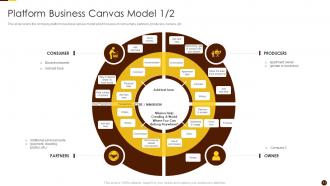
Slide 11: This slide showcases company platform business canvas model which focuses on consumers, partners, producers, etc.
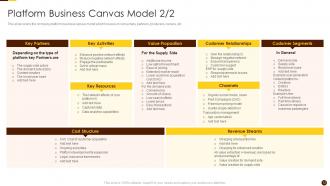
Slide 12: This slide shows company platform business canvas model.
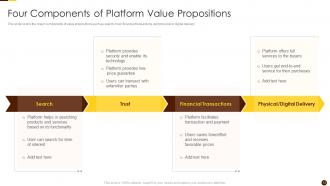
Slide 13: This slide presents Four Components of Platform Value Propositions.
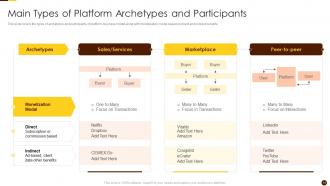
Slide 14: This slide displays Main Types of Platform Archetypes and Participants.
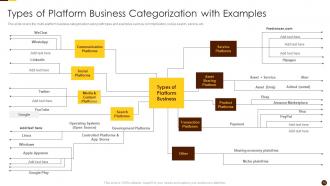
Slide 15: This slide represents Types of Platform Business Categorization with Examples.
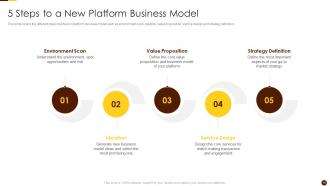
Slide 16: This slide showcases different steps involved in platform business model such as environment scan, ideation, etc.
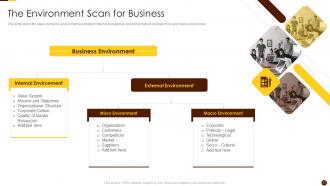
Slide 17: This slide shows steps involved in environment scanning for internal and external environment.
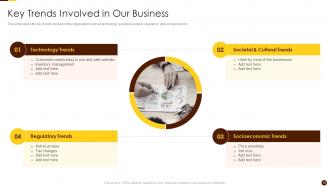
Slide 18: This slide presents key trends involved in the organization such as technology, societal & cultural, etc.
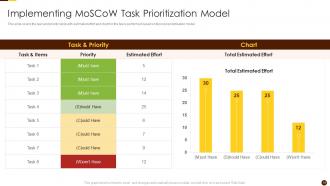
Slide 19: This slide displays task and priority table with estimated effort and chart for the tasks performed.
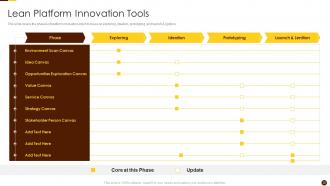
Slide 20: This slide represents phases of platform innovation which focuses on exploring, ideation, etc.
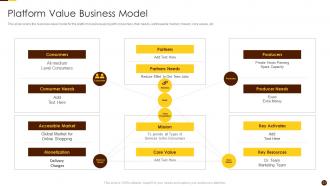
Slide 21: This slide showcases business value model for the platform business along with consumers, their needs, etc.
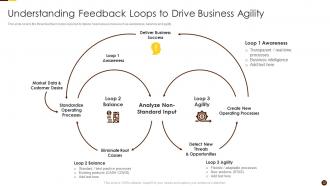
Slide 22: This slide shows Understanding Feedback Loops to Drive Business Agility.
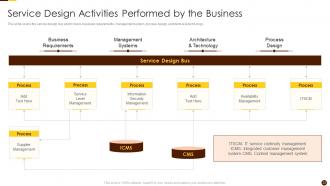
Slide 23: This slide presents Service Design Activities Performed by the Business.
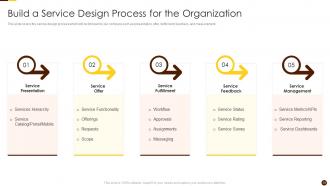
Slide 24: This slide displays service design process which will be followed by our company such as presentation, offer, etc.
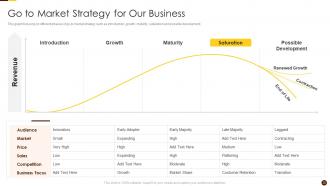
Slide 25: This slide represents phases of go-to market strategy such as introduction, growth, maturity, etc.
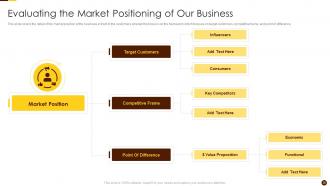
Slide 26: This slide showcases detail of the market position of the business in front of the customers.
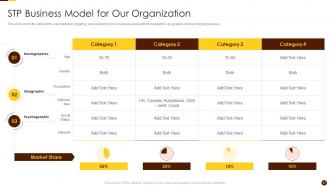
Slide 27: This slide shows detail of the segmentation, targeting, and positioning of our business.
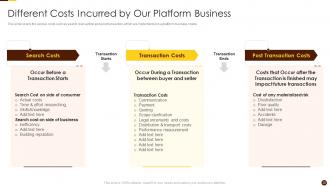
Slide 28: This slide presents Different Costs Incurred by Our Platform Business.
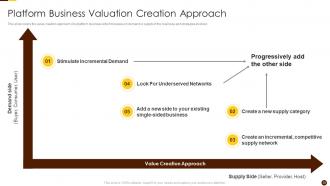
Slide 29: This slide displays value creation approach of a platform business which focusses on demand or supply.
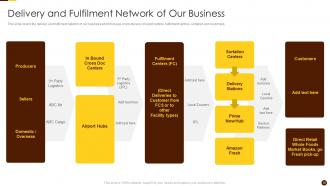
Slide 30: This slide represents delivery and fulfilment network of our business which focuses on producers, inbound centres, etc.
Slide 31: This slide showcases inear model that focuses on take, make and waste steps.
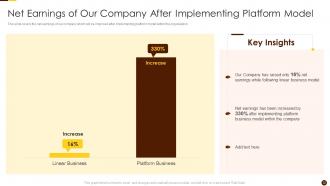
Slide 32: This slide shows Net Earnings of Our Company After Implementing Platform Model.
Slide 33: This slide presents Icons for Solving Chicken and Egg Problem in Business.
Slide 34: This slide is titled as Additional Slides for moving forward.
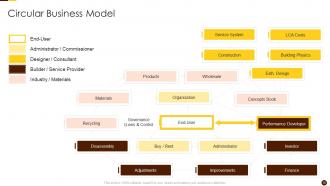
Slide 35: This slide presents Circular Business Model with related icons and text.
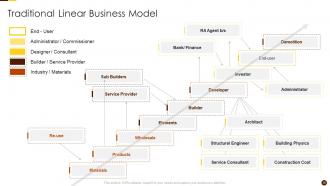
Slide 36: This slide shows Traditional Linear Business Model with related imagery.
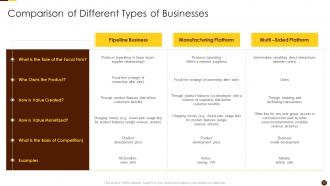
Slide 37: This slide displays Comparison of Different Types of Businesses.
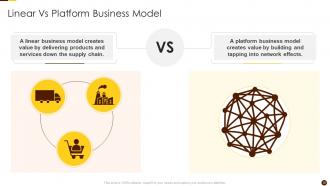
Slide 38: This slide represents Linear Vs Platform Business Model.
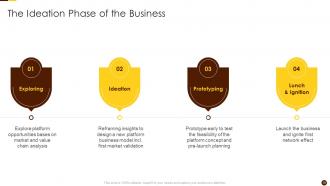
Slide 39: This slide showcases The Ideation Phase of the Business.
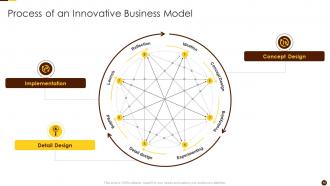
Slide 40: This slide shows Process of an Innovative Business Model.
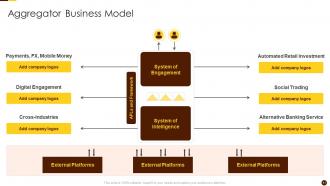
Slide 41: This slide presents Aggregator Business Model with additional textboxes.
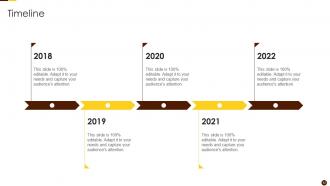
Slide 42: This is a Timeline slide. Show data related to time intervals here.
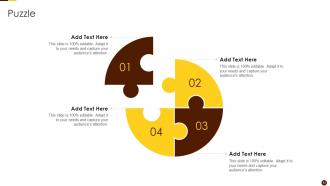
Slide 43: This slide contains Puzzle with related icons and text.
Slide 44: This is Our Team slide with names and designation.
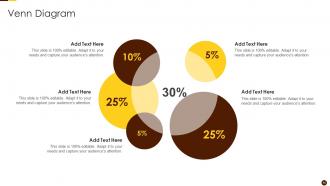
Slide 45: This slide depicts Venn diagram with text boxes.
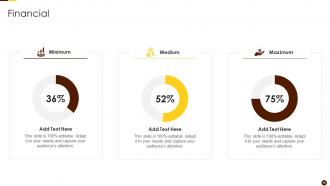
Slide 46: This is a Financial slide. Show your finance related stuff here.
Slide 47: This is an Idea Generation slide to state a new idea or highlight information, specifications etc.
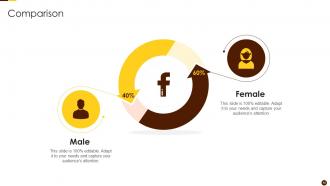
Slide 48: This is a Comparison slide to state comparison between commodities, entities etc.
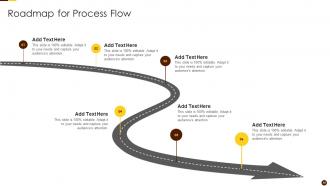
Slide 49: This slide showcases Roadmap for Process Flow.
Slide 50: This is Our Goal slide. State your firm's goals here.
Slide 51: This is a Thank You slide with address, contact numbers and email address.
Solving Chicken And Egg Problem In Business Powerpoint Presentation Slides with all 56 slides:
Use our Solving Chicken And Egg Problem In Business Powerpoint Presentation Slides to effectively help you save your valuable time. They are readymade to fit into any presentation structure.










FAQs for Solving Chicken And Egg Problem In Business
Primary factors influencing the chicken and egg problem in startups include network effects, user acquisition costs, platform scalability, trust establishment, and resource allocation constraints. These challenges particularly affect marketplace platforms, social networks, and service aggregators, with many startups finding that strategic partnerships, targeted incentives, and phased rollouts enable sustainable growth while minimizing initial barriers to adoption.
Businesses can effectively identify their chicken and egg by conducting comprehensive market research, analyzing competitor strategies, interviewing potential customers, mapping value chains, and testing minimum viable products with target segments. Through pilot programs and iterative feedback loops, companies can determine whether building the product first attracts customers or whether securing early adopters enables product development, ultimately delivering the strategic clarity needed for successful market entry.
Entrepreneurs can break chicken and egg cycles through strategic pre-launch positioning, partnership leverage, phased market entry, minimum viable product testing, and targeted incentive programs. These approaches enable startups to create initial momentum by securing early adopters, establishing strategic alliances, and demonstrating value propositions, with many successful platforms finding that focused niche targeting ultimately delivers sustainable growth and market validation.
Network effects intensify the chicken and egg problem by creating platforms that become more valuable as user bases grow, making it difficult to attract initial participants without existing activity. Tech companies like social media platforms, ride-sharing services, and online marketplaces face this challenge, where users want active networks while businesses need sufficient users, ultimately requiring strategic subsidies or incentives to break the cycle.
Customer feedback enables businesses to validate assumptions, refine value propositions, and build credibility that attracts initial users in chicken-and-egg scenarios. By engaging early adopters through surveys, beta programs, and direct conversations, companies can demonstrate market demand to subsequent customers and partners, while iteratively improving their offerings to break the initial adoption barrier and achieve sustainable growth momentum.
Strategic partnerships enable companies to overcome chicken and egg dilemmas by sharing resources, cross-promoting services, and creating mutual value propositions that benefit both user bases. Through collaborative approaches, businesses can leverage each other's existing customers, infrastructure, and market presence, ultimately delivering faster market penetration and reduced individual risk while building sustainable ecosystems.
Businesses should track customer acquisition cost, retention rates, revenue per user, market penetration, and network effects velocity to measure chicken-and-egg progress. These metrics enable organizations to assess demand-supply balance, user engagement momentum, and platform growth acceleration, with many companies finding that tracking both sides simultaneously delivers clearer insights into breakthrough timing and sustainable scaling opportunities.
The chicken and egg problem manifests differently across industries based on their unique interdependencies and market structures. In technology platforms, user adoption drives merchant participation while merchants attract users, whereas in financial services, credit histories require lending experience that necessitates initial credit access. Manufacturing faces supplier relationships requiring volume commitments that depend on established distribution networks, while media companies need audiences to attract advertisers who fund content creation, ultimately requiring strategic approaches tailored to each sector's specific circular dependencies.
Businesses should prioritize customer acquisition strategies first by conducting market research, identifying target audiences, and validating demand through minimal viable products or pilot programs. This approach enables companies to understand customer needs before investing heavily in feature development, with many startups finding that early customer feedback drives more strategic product decisions, ultimately reducing development costs and accelerating market entry.
Uber, Airbnb, and OpenTable demonstrate effective chicken-and-egg solutions through strategic market seeding and dual-sided incentives. Uber initially subsidized both drivers and riders in target cities, Airbnb manually recruited hosts while guaranteeing bookings, and OpenTable provided free management software to restaurants before monetizing reservations, ultimately creating self-sustaining marketplace ecosystems.
Funding rounds provide startups with essential capital to break chicken and egg cycles by enabling them to build initial user bases, develop minimum viable products, and subsidize early adoption before achieving natural market traction. This financial runway allows companies to invest in customer acquisition, product development, and market validation simultaneously, with many tech startups finding that seed funding enables strategic risk-taking that ultimately delivers sustainable growth and competitive positioning.
Strong branding helps break chicken and egg cycles by creating initial trust and credibility that attracts early adopters, even without proven track records. Through consistent messaging, professional presentation, and strategic positioning, companies like Tesla and Airbnb leveraged compelling brand narratives to overcome market hesitation, ultimately delivering customer confidence and competitive advantage in challenging launch scenarios.
Data analytics enables companies to identify market patterns, consumer behaviors, and demand signals through predictive modeling, market research analysis, and competitor benchmarking. By leveraging historical data from similar markets, businesses can simulate scenarios, test assumptions with pilot programs, and make informed decisions about which side of their platform to prioritize first, ultimately reducing uncertainty and strategic risk.
Yes, several technological innovations help mitigate chicken and egg dilemmas, including AI-driven matching algorithms, blockchain-based incentive systems, freemium models with gradual monetization, and automated market-making tools. These technologies enable platforms to create initial value through artificial liquidity, predictive recommendations, and strategic partnerships, with many startups finding that combining multiple approaches accelerates user acquisition and marketplace momentum.
Market segmentation helps identify and prioritize customer groups most likely to adopt your solution early, breaking the chicken-and-egg cycle by focusing resources strategically. Through demographic, behavioral, and needs-based analysis, businesses can target early adopters in specific sectors like tech startups or innovative enterprises, ultimately building initial traction and credibility.
-
Great combination of visuals and information. Glad I purchased your subscription.
-
The templates are the best in class. Very clear and innovative graphics! I am excited to explore and download more presentations.