


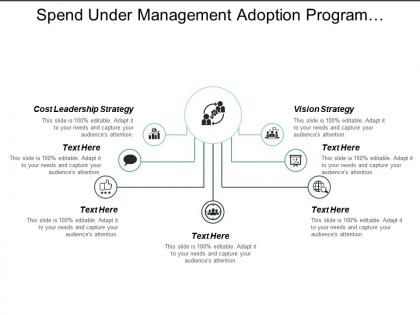
Spend under management adoption program contract termination joint initiatives




Try Before you Buy Download Free Sample Product
 Impress Your
 Audience
 100%
100% Editable
 Save Hours
 of Time


Encourage folks to extend a hand of friendship with our Spend Under Management Adoption Program Contract Termination Joint Initiatives. Handle feelings of isolation.
People who downloaded this PowerPoint presentation also viewed the following :
Spend under management adoption program contract termination joint initiatives with all 5 slides:
Avoid the build up of any delay with our Spend Under Management Adoption Program Contract Termination Joint Initiatives. Handle attempts to jib.




FAQs for Spend under management adoption program contract
Effective spend management strategies include comprehensive spend visibility, strategic supplier relationships, automated procurement processes, contract optimization, and real-time analytics dashboards. These components work together by centralizing purchasing decisions, reducing maverick spending, and enabling data-driven negotiations, with many organizations finding that this integrated approach delivers 15-20% cost savings while streamlining operations.
Organizations can leverage artificial intelligence, automated procurement systems, cloud-based analytics platforms, digital invoice processing, and real-time spend tracking technologies to enhance their spend management processes. These solutions streamline operations by reducing manual errors, accelerating approval workflows, and providing comprehensive visibility into expenditures, with many enterprises finding that strategic technology integration ultimately delivers significant cost savings and improved compliance across all spending categories.
Key metrics for evaluating spend management effectiveness include cost savings percentages, compliance rates, supplier performance scores, procurement cycle times, and maverick spending reduction. These measurements enable organizations to assess operational efficiency, contract adherence, and strategic sourcing success, with many companies finding that tracking spend visibility and vendor consolidation ultimately delivers improved cost control and enhanced procurement transparency.
Involving stakeholders in spend management improves outcomes by enhancing transparency, ensuring comprehensive requirement gathering, and facilitating better budget allocation decisions across departments. This collaborative approach enables organizations to identify cost-saving opportunities, streamline procurement processes, and align spending with strategic objectives, ultimately delivering improved financial control and operational efficiency.
Spend management contributes to business sustainability by optimizing resource allocation, reducing waste through strategic procurement, and enhancing supplier relationships that prioritize environmental responsibility. These practices enable organizations to minimize operational costs, streamline supply chains, and support sustainable vendors, with many companies finding that comprehensive spend oversight ultimately delivers competitive advantage while advancing their environmental commitments.
Common spend management pitfalls include poor visibility into spending patterns, lack of centralized procurement processes, inadequate supplier management, weak compliance controls, and insufficient data analytics capabilities. These challenges can be avoided by implementing comprehensive spend analytics platforms, establishing clear procurement policies, conducting regular supplier performance reviews, and leveraging automated approval workflows, ultimately delivering greater cost control and operational efficiency.
Data analytics enhances spend management by identifying spending patterns, detecting anomalies, and providing predictive insights for budget optimization. Through advanced analytics tools, organizations streamline procurement decisions, negotiate better supplier contracts, and minimize maverick spending, with many companies finding that data-driven approaches deliver 15-20% cost reductions while improving operational efficiency.
Spend management and supplier relationship management work together strategically, with spend data providing insights for supplier performance evaluation, contract negotiations, and risk assessment. This strategic combination enables organizations to optimize procurement costs, strengthen vendor partnerships, and improve supply chain resilience, while delivering enhanced operational efficiency and competitive advantage through better supplier collaboration.
Small businesses can implement effective spend management through free expense tracking apps, automated bank reconciliation tools, digital receipt capture systems, and cloud-based budgeting platforms. These cost-effective solutions streamline financial oversight by centralizing expense data, automating approval workflows, and providing real-time spending insights, ultimately enabling better cash flow control and operational efficiency without significant upfront investment.
Spend management significantly improves cash flow by optimizing payment timing, negotiating better vendor terms, and eliminating unnecessary expenditures through strategic procurement processes. Organizations implementing comprehensive spend controls typically see enhanced liquidity through automated approval workflows, bulk purchasing advantages, and predictive budget forecasting, ultimately delivering stronger financial resilience and improved working capital management.
Companies foster compliance culture through clear spend policies, regular employee training, automated approval workflows, and transparent reporting mechanisms. By implementing user-friendly procurement platforms, establishing accountability measures, and recognizing compliant behavior, organizations streamline expense processes while reducing maverick spending, with many finding that engaged employees become active compliance advocates, ultimately delivering cost savings and operational efficiency.
Spend visibility enables strategic decision-making by providing real-time insights into expenditure patterns, supplier performance, and budget allocation across departments. This transparency allows organizations to identify cost-saving opportunities, negotiate better contracts, and reallocate resources strategically, with many companies finding that enhanced visibility delivers improved profitability and competitive advantage.
Businesses can balance cost savings with quality through strategic vendor partnerships, comprehensive spend analytics, competitive bidding processes, and performance-based contracts that prioritize value over price. By implementing category management strategies and supplier scorecards, organizations streamline procurement while maintaining standards, ultimately delivering operational efficiency and sustainable cost reductions without compromising deliverables.
Global spending patterns significantly influence local spend management through currency fluctuations, supply chain disruptions, regulatory changes, and shifting market demands that require strategic adaptation. Organizations increasingly find that international commodity prices, geopolitical events, and global supplier relationships directly affect their local procurement costs, vendor negotiations, and budget allocations, ultimately driving the need for more agile, data-driven spend management approaches.
Emerging trends in spend management include AI-powered procurement analytics, real-time spend visibility platforms, sustainable sourcing initiatives, supplier risk management systems, and automated invoice processing technologies. These innovations streamline procurement workflows by enhancing data accuracy, accelerating approval cycles, and improving vendor relationships, with many organizations finding that integrated spend management delivers significant cost reductions and operational efficiency.
-
Attractive design and informative presentation.
-
Professional and unique presentations.