


Staircase Model For Receiving Feedback Constructively Training Ppt




Try Before you Buy Download Free Sample Product
 Impress Your
 Audience
 100%
100% Editable
 Save Hours
 of Time


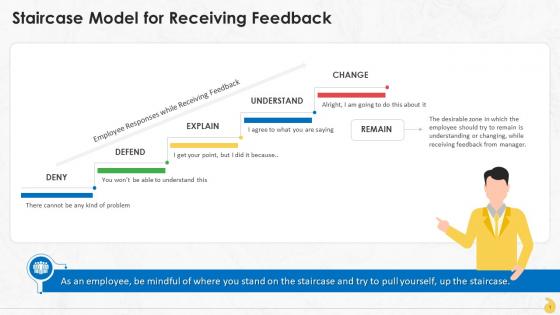
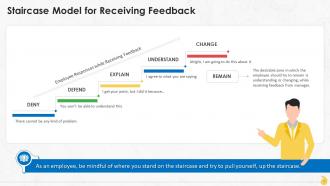
This slide showcases the feedback staircase, which represents the signals that employees exhibit at the workplace while receiving feedback. It also shows the desirable stages, which are of understanding and changing. These not only help the manager, but also facilitate employees growth.
People who downloaded this PowerPoint presentation also viewed the following :
Staircase Model For Receiving Feedback Constructively Training Ppt with all 19 slides:
Use our Staircase Model For Receiving Feedback Constructively Training Ppt to effectively help you save your valuable time. They are readymade to fit into any presentation structure.








FAQs for Staircase Model For Receiving Feedback
So basically, the Staircase Model is like learning to drive - you wouldn't jump straight onto the highway, right? You start with tiny, manageable changes first. Each step builds on what they already know, so people don't get that overwhelming "fire hose" feeling that just crushes motivation. Once they've actually mastered one thing, then you move up to the next level. I've seen this work way better than dumping everything on someone at once. Just pick one foundational skill they need to nail down first, then figure out your next 2-3 steps from there. It's all about building confidence gradually instead of freaking them out.
So basically the Staircase Model is about giving feedback in chunks instead of hitting someone with everything at once. You focus on one thing first, let them get good at it, then move to the next step. Way less overwhelming, honestly. I've seen people just shut down when they get this massive list of things to fix - it's like, where do you even start? But when you break it down step by step, they actually build confidence as they go. Each level builds on the last one. Next time just pick one specific thing to work on first and see how it goes.
So the Staircase Model breaks down into three parts. First is supervised fine-tuning - you're basically showing the model good examples of what to do. Then comes reward modeling, which is honestly the trickiest bit. You collect human feedback on different outputs to build a "reward" system that knows good from bad. Last step uses reinforcement learning to actually train your model with that reward system. Each stage builds off the last one. Pro tip though - don't mess up your initial training data quality or you'll be fixing problems later that could've been avoided.
Okay so break your training into levels like a video game - employees master one thing before moving to the next. Each step needs clear goals so people actually know what they accomplished. Don't wait till the end to give feedback! Build in peer reviews and manager check-ins throughout. Celebrating small wins is huge for keeping momentum going. Honestly, I've seen too many companies skip this part and wonder why people lose interest. Start with just one department as a pilot first - way easier to fix issues when you're not dealing with the whole company at once.
So the Staircase Model basically starts with self-assessment before anything else. Students look at their own work first, which honestly makes them way better at taking feedback later - like checking yourself in the mirror before someone tells you there's food in your teeth lol. Once they've done that self-reflection, then you add peer and instructor feedback on top. I'd suggest having them fill out a quick rubric about their own work before peer reviews. The discussions get so much better when they've already thought critically about what they did. Trust me, it works.
So basically the Staircase Model works because you're giving people bite-sized feedback they can actually do something with. Way better than those awful traditional reviews that leave everyone feeling confused and defeated, you know? Each step builds on the last one, so people get those little confidence wins along the way. Plus it's more like an actual conversation instead of your boss just talking at you for 30 minutes. Honestly, try it in your next one-on-one - I bet you'll see people respond totally differently when they're not drowning in vague criticism.
Honestly? People hate change, even when what they're doing sucks. Your biggest headache will be getting managers to actually learn the new system instead of winging it like they always do. Training takes forever and some of them just won't get it - they're used to giving random feedback whenever they remember to. The cultural shift is huge too. You need leadership backing you up or it'll flop. My advice? Don't go big right away. Pick maybe 3-4 managers who are actually excited about it and start there.
Track if people actually do what you talked about in your "next steps" - that's the real deal. I check back around a week later because honestly, most stuff gets forgotten without follow-up. Ask them straight up how clear your feedback was too. Performance should improve on their next attempts, so set up quick check-ins to catch those changes happening. The immediate stuff matters, but long-term behavioral shifts are what you're really after. Oh, and observing them in action beats self-reported progress every time.
So with the Staircase Model, praise effort and strategy instead of just hitting targets. When someone gets stuck on step 2, call it a "not yet" situation - basically reframe struggles as useful info, not failures. What works best is getting specific about improvements between steps. Like, really specific. Celebrate when people spot their own knowledge gaps or actually ask for help climbing higher. Each step deserves recognition, even tiny wins. Oh, and track learning moments alongside your usual performance stuff - sounds nerdy but it works. The whole point is making every rung feel like real progress.
Honestly, the Staircase Model is pretty flexible - you can tweak it for whoever you're working with. Your visual people love seeing those clear steps laid out. The analytical folks? They eat up that structured approach. I'll usually throw in practice exercises between steps for hands-on learners, and with the chatty types, I pause for questions at each level. You don't have to cram everything into one sitting either - spread it out however makes sense. The real trick is just paying attention to what clicks for each person and adjusting from there.
So I always make a one-page worksheet with the four steps: Context, Behavior, Impact, Next Steps. Has prompts like "what specific situation happened?" and "what exact behaviors did you see?" Makes it way less weird, honestly. Timer apps help too - like 3-5 minutes per section so you don't ramble. Some people love those fancy Miro boards for virtual stuff, but a Google Doc works just fine. Actually might be better since it's less distracting? Main thing is having something structured so you don't bounce around or forget steps. Trust me, without it you'll definitely skip the hard parts.
Just bake peer reviews right into each step before they move up. Instead of only you giving feedback, they're getting input from classmates at every level. Honestly, the learning happens as much when they're critiquing others as when they receive it - which is kinda cool. Plus it saves you from drowning in papers to grade. Give them solid rubrics for each staircase level and switch up who's reviewing who so they don't get stuck with the same feedback style. Works way better than the traditional approach where everything bottlenecks through the instructor.
Look, feedback timing is honestly where most people mess this up. Too much and you're basically hovering over them - super annoying. Too little and they're wandering around lost. What works best is hitting them with feedback right after each step, then maybe some casual check-ins if they seem stuck. I usually start heavy early on (like, they need it), then back off as they get the hang of things. The whole point is making them feel supported, not babysat. Oh and don't overthink the "perfect" schedule - just pay attention to how they're responding and adjust from there.
Honestly, the Staircase Model translates pretty well to remote work. You still hit the same beats - observation, impact, solutions - just over video calls instead of face-to-face. Actually might be better since you can't ambush people at their desks anymore, so they get prep time. Schedule regular feedback check-ins rather than waiting for the "perfect moment" that'll probably never come when you're all remote. Your tone and camera presence become way more important for creating that safe space. The structure stays the same, but you've gotta be more deliberate about making it happen.
Dude, culture is absolutely everything with the Staircase Model. Without psychological safety, people won't take feedback well at each level - they'll just get defensive. Rigid hierarchies are the worst for this because it kills open dialogue between different levels. Here's what works though: start by doing it yourself first. When you celebrate others for actually embracing feedback (even the tough stuff), it catches on. Find those few people on your team who are already open to growth - they'll help you shift things slowly. I've seen it work, but yeah, it takes patience.
-
Impressive templates. Designing a presentation is fun now!
-
I am not the best at presentations but using SlideTeam’s PPT template made it easier for me. Thank you SlideTeam!