

 0 Comment
 Customer Reviews

Can you ever improve your cooking skills without ever tasting what you cook? No, right? Similarly, you cannot improve your working style without proper feedback. With no markers or feedback for guidance, it can all feel like a directionless effort, no improvement, just guesswork.
Feedback is the seasoning that transforms average performance into excellence. However, surprisingly, 60% of employees wish they received more feedback. Without it, confusion grows, performance stagnates, and potential goes ignored.
Why Feedback Feels Like Walking on Eggshells
Despite being an exceedingly powerful tool, giving and receiving feedback can look like navigating a minefield. Managers worry about hurting feelings, and employees on the other hand feel judged or misunderstood.
Be it a performance review or a team review, poor communication skills can turn feedback into conflict. A lack of active listening, unclear expectations, or one-way communication only makes things worse.
However, feedback is not something to dread; rather, it is a tool for transformation.
Giving and Receiving Feedback PPT Templates
Creating an interesting and actionable feedback presentation may be an intimidating task. However, using the right resources, such as SlideTeam’s Giving and Receiving Feedback PPT Templates, offers a wiser approach. These ready-to-use, editable templates assist you in establishing the feedback presentation.
Let us now explore the top 10 PPT Templates, each 100% customizable and editable, that are perfect for making your presentations impactful.
Template 1: Attributes for Giving Effective Feedback
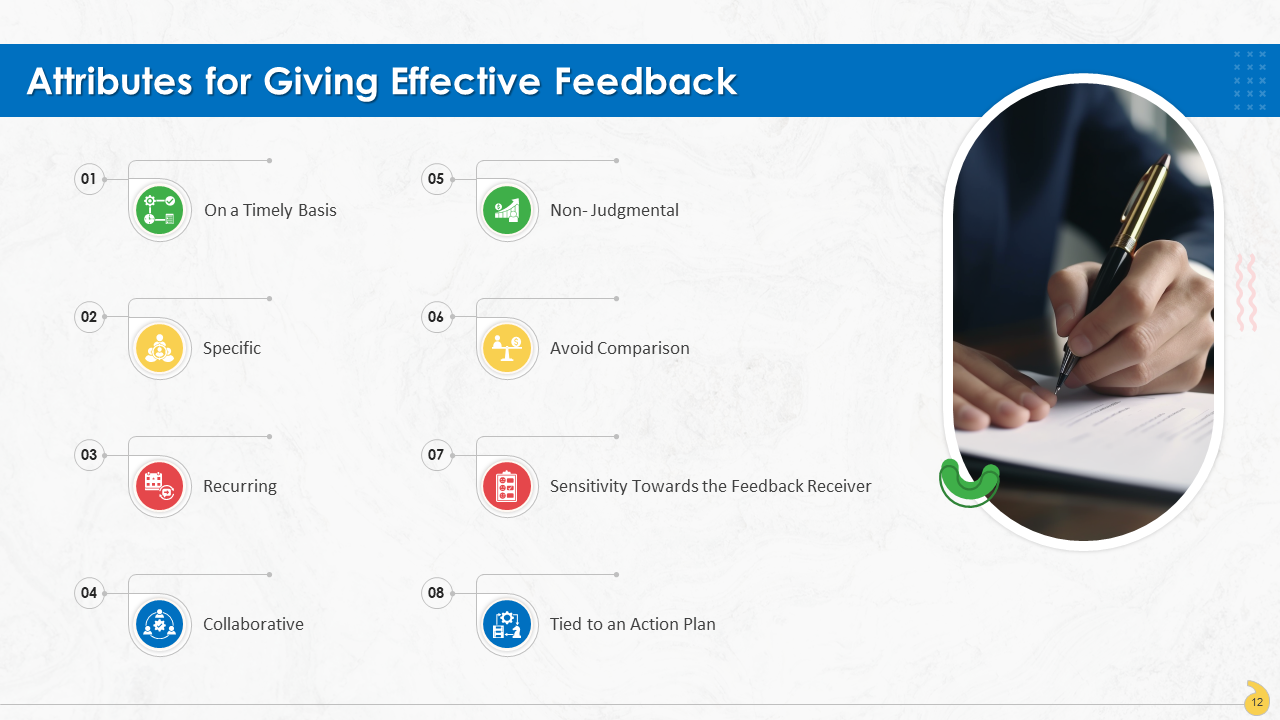
This PowerPoint Slide illustrates eight essential qualities for providing feedback in a clear, structured format with numbered icons and concise explanations. The professional blue-white color scheme uses images to underline key feedback concepts. These concepts include punctuality, specificity, repeating patterns, teamwork, and non judgment. It also emphasizes avoiding comparisons, being respectful to the recipient, and prioritizing action planning. This template provides a foundation for addressing constructive criticism strategies. It is perfect for managers, trainers, and human resource professionals performing evaluations of performance or communication seminars. Download now!
Template 2: Attributes for Receiving Feedback Effectively PowerPoint Template
This PowerPoint Template highlights six important traits for accepting feedback, presented in a visually attractive circular arrangement with numbered points and color coding. The design expresses ideas, such as being open, reflecting and deciding, understanding the message, being aware, attentive, and being explicit. The template is a fantastic way to teach active listening and communication skills in feedback discussions. Use this template to lead workshops on personal development and effective feedback implementation. Grab it today!

Template 3: Benefits of Feedback
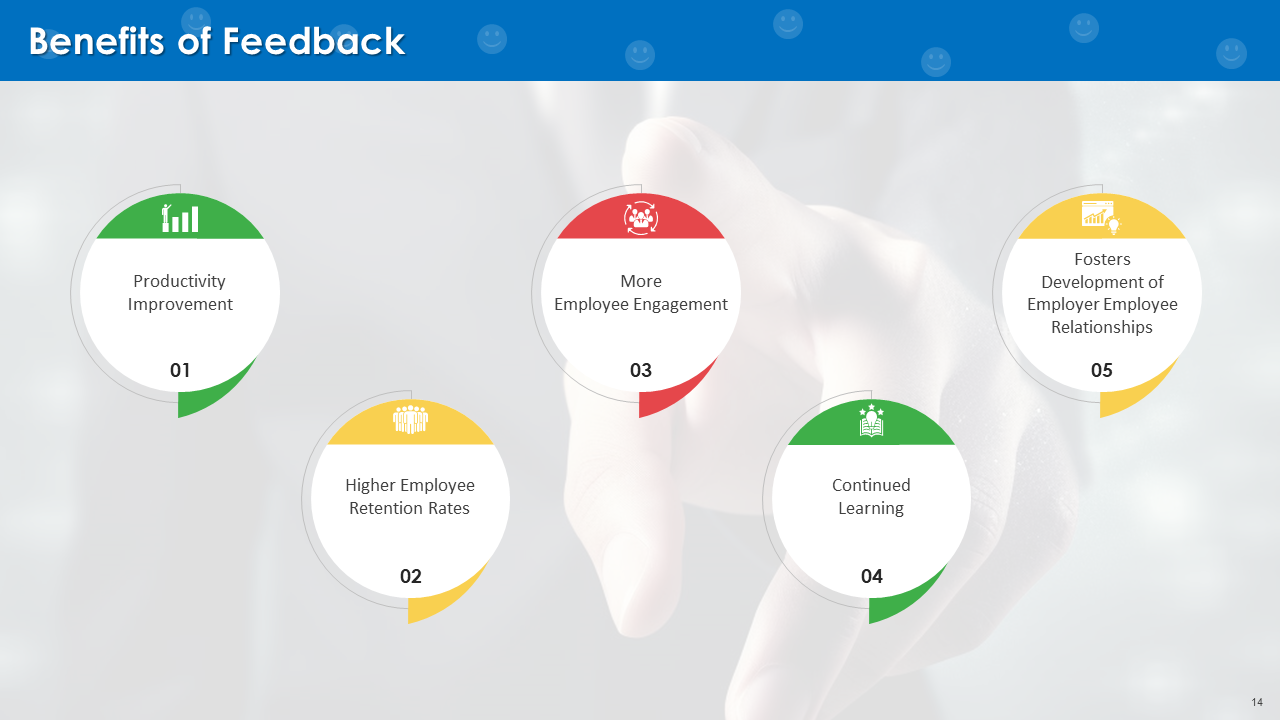
Why does feedback matter in professional settings? This PowerPoint Slide outlines five important benefits of feedback in a clean, modern circular style with brilliant color-coding. The structure emphasizes the following advantages, such as increased productivity, higher employee retention rates, more employee engagement, and so on. The clean look with light background artwork adds visual appeal while keeping the focus on the information.
Template 4: Formal vs Informal Feedback
This PowerPoint Template clearly distinguishes between formal and informal feedback, emphasizing distinctions in method of behavior, sources, and time. The template's clear, divided style makes it easy to teach the principles of constructive criticism and performance assessment, resulting in an ideal tool for educational sessions or corporate training. Use this template to improved communication skills and deliver developmental feedback in an engaging, visually appealing manner.

Template 5: Mistakes to Avoid while Giving Positive Feedback
Positive feedback may enhance motivation, but frequent mistakes might reduce its effectiveness. This PowerPoint Slide showcases three mistakes to stay away from, such as ignoring unpleasant talk, emphasizing talent over effort, and offering imprecise praise. The straightforward, circular layout visibly identifies each error, making it simple to show and debate. Use this template if you want to improve communication skills, streamline the feedback loop, and successfully give developmental feedback in your business.

Template 6: Why is Negative Feedback Essential at Workplace?
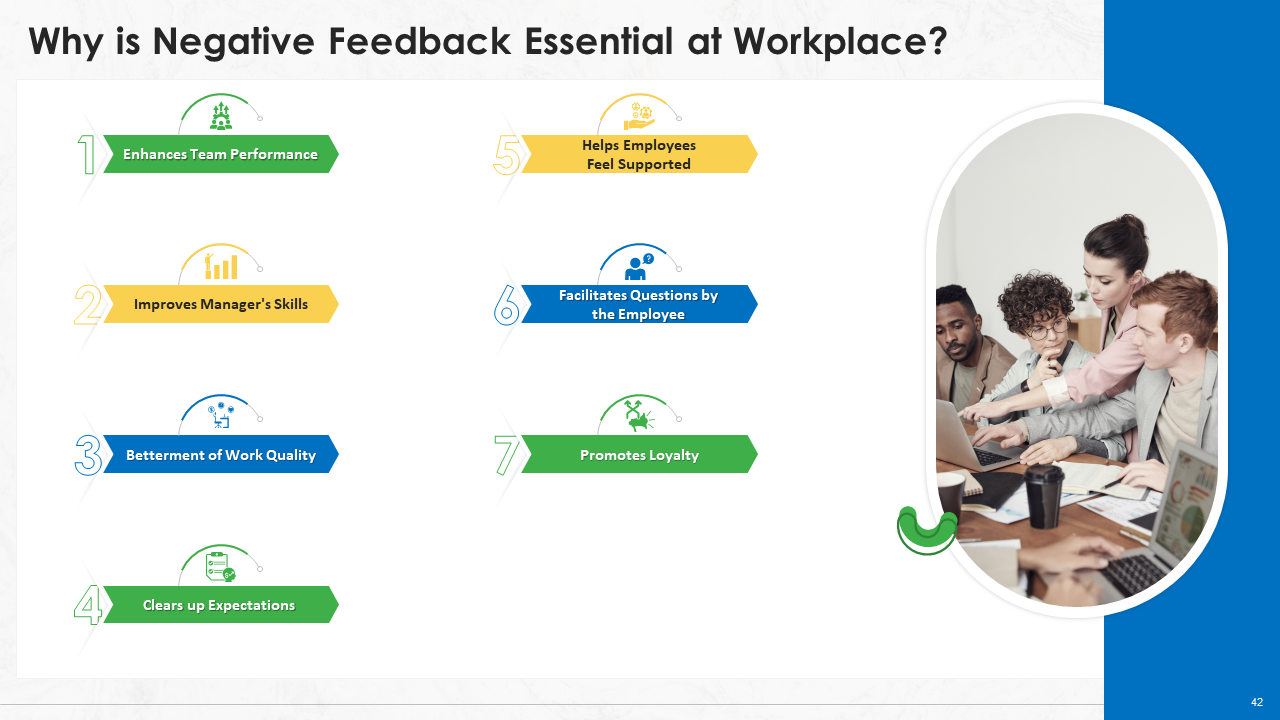
Have you considered how important constructive criticism is for career growth? This PowerPoint Slide employs color-coded, numbered banner images to demonstrate seven compelling explanations why negative feedback matters in the workplace. The structure offers advantages, including greater team performance, management skills, higher work quality, clear expectations, employee support, etc. The right panel depicts a diverse team working together, highlighting the collaborative element of good performance evaluation systems of all kinds.
Template 7: How to Provide Negative Feedback Positively PPT Template
Want to turn uncomfortable talks into development opportunities? This PowerPoint slide contains seven practical ways for providing constructive feedback in a positive manner, organized in a clean, visual structure. The design incorporates methods, including emotional balance, regular meetings, behavior-focused feedback, promptness, and action planning. The feedback sign graphic at the bottom emphasizes the message. This presentation template is helpful for managers, HR experts, and team leaders who want to master the delicate art of giving constructive feedback.

Template 8: Sandwich Approach for Giving Constructive Feedback
This PowerPoint Slide depicts the Sandwich Approach, breaking down each step. It begins with a pleasant comment, then constructive criticism, and finally encouragement. The layered pattern, which resembles a sandwich, makes it simple and memorable. This template is ideal for managers, HR professionals, and trainers who want to learn how to improve feedback during performance evaluations or coaching sessions. Download today!

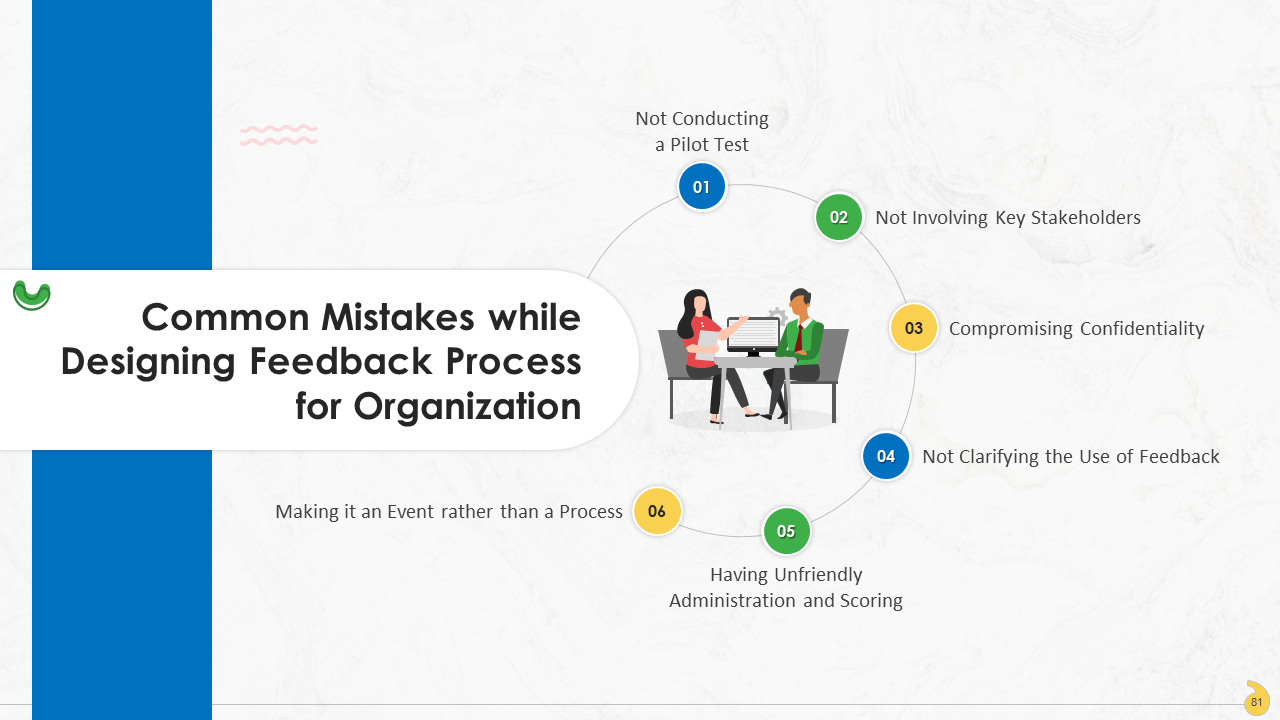
Template 9: Common Mistakes while Designing Feedback Process for Organization
This PowerPoint Template employs a circular flow diagram with color-coded numbered points to show six frequent faults in feedback process design. The PPT Layout includes an eye-catching headline, a professional graphic of coworkers working together, and brief descriptions of errors. It includes skipping pilot testing, excluding stakeholders, compromising confidentiality, unclear feedback usage, unfriendly administration, etc. This template is beneficial for HR directors and corporate executives looking to build effective, long-term feedback processes inside their respective businesses.
Template 10: 360 Degree Feedback
This PowerPoint Slide skillfully shows the 360-degree feedback idea with an interesting, well-organized style that includes both explanatory numerical points and a graphic flowchart of input sources. The design showcases how information is taken from stakeholders, teammates, supervisors, direct reports, and self-evaluation which is then routed to a central feedback receiver. The bottom portion elegantly categorizes evaluation categories into performance, conduct, and professional connections using color-coded icons. Grab it today!

FEEDBACK TRANSFORMS!
Feedback is a tool for transformation. It is a tool which facilitates an upward growth in the workplace. It is a necessary and essential condition of organization growth and employee involvement in the nitty-gritty and the vision of the business. Feedback can be very tough to execute well, across levels in the organization. With our templates, you can execute it well!
PS: With SlideTeam’s PPT templates, you can make every feedback conversation clear, constructive, and memorable. Don’t just give feedback — give it with confidence and for mutual growth.
FAQs on Giving and Receiving Feedback
1. What are some frameworks for giving feedback?
Looking to provide feedback that genuinely has an impact? Try out these strong frameworks! The Sandwich Approach begins with praise, then offers constructive feedback, and concludes with encouragement. The STAR Method can help you explain particular actions and consequences. The SBI Model is ideal for clarity since it focuses on what occurred, the behavior that was witnessed, and its consequences. Mastering these techniques may instantly improve your communication abilities.
2. What digital tools support feedback in remote teams?
Provide your remote workforce with the necessary digital tools for smooth feedback! Platforms such as Slack and Microsoft Teams provide for immediate feedback via direct chat, whilst Zoom and Google Meet provide real-time video feedback for clarity. Use Trello or Asana for task-based comments, ensuring feedback stays organized. Even if your team is spread out, these technologies ensure that communication is clear, productive, and consistent.
3. What are the risks of a workplace without open feedback?
A workplace without open feedback is like a ship without a compass. Employees may feel overlooked, resulting in low morale and disengagement. Mistakes remain unchecked, and possibilities for improvement are missed. Misunderstandings could recur, compromising collaboration and trust. Finally, it creates a culture of silence, preventing creativity and making talent retention difficult. Do not let feedback be the missing component.