


Stand Out Supply Chain Strategy Improving Performance Through Digitalization Complete Deck Strategy CD




Try Before you Buy Download Free Sample Product
 Impress Your
 Audience
 100%
100% Editable
 Save Hours
 of Time


A supply chain strategy is a set of activities or policies to achieve end-to-end supply chain visibility and boost organizational capabilities. Grab our Stand out supply chain strategy improving performance through digitalization template. It will help businesses to gain a competitive edge in the market. Our Digital transformation deck begins with a supply chain strategy development guide section, with an overview of supply chain strategy, planning elements, capabilities, and best practices. Organizations can provide insights on supply chain 4.0 and showcase how digitalization will improve their ability to overcome significant bottlenecks through the supply chain 4.0 section. Our Agile supply chain PPT will assist businesses in developing supply chain agility through digitalization and help the managers make the supply chain more resilient in a state of disruption through various tactics. Optimizing the supply chain and measuring performance sections will help the managers ensure end-to-end visibility across the supply chain process and measure and monitor the performance of strategies implemented. Lastly, the module showcases Starbucks and Teslas plan for managers to become globally successful firms. Get access now.
People who downloaded this PowerPoint presentation also viewed the following :
Content of this Powerpoint Presentation
Slide 1: This slide introduces Stand Out Supply Chain Strategy: Improving Performance Through Digitalization. Commence by stating Your Company Name.
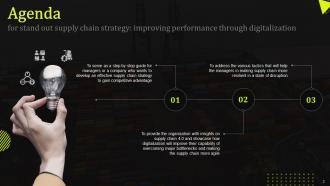
Slide 2: This slide depicts the Agenda of the presentation.
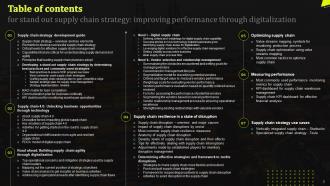
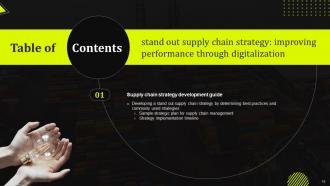
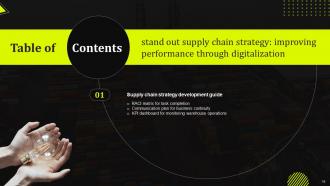
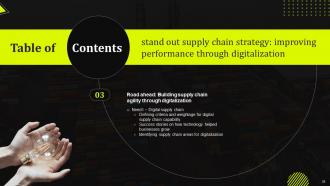
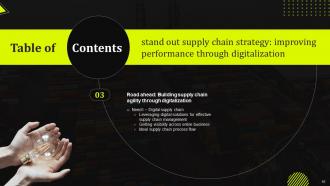
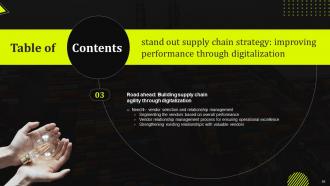
Slide 3: This slide incorporates the Table of contents.
Slide 4: This slide highlights the Title for the Topics to be discussed further.
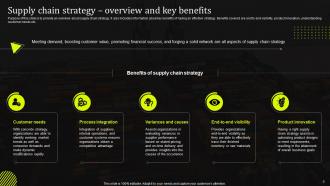
Slide 5: The Purpose of this slide is to provide an overview about supply chain strategy.
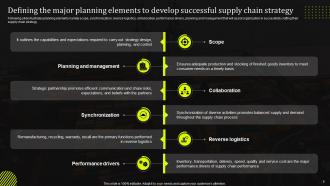
Slide 6: This slide deals with Defining the major planning elements to develop successful supply chain strategy.
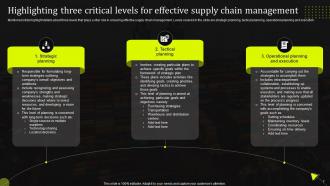
Slide 7: This slide Highlights the three critical levels for effective supply chain management.
Slide 8: This slide mentions the Heading for the Contents to be covered in the following template.
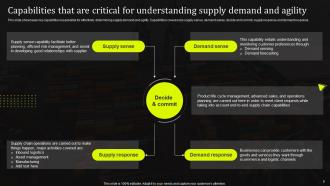
Slide 9: This slide showcases key capabilities responsible for effectively determining supply demand and agility.
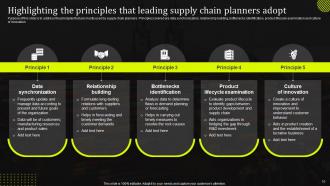
Slide 10: This slide focuses on Highlighting the principles that leading supply chain planners adopt.
Slide 11: This slide incorporates the Title for the Ideas to be discussed further.
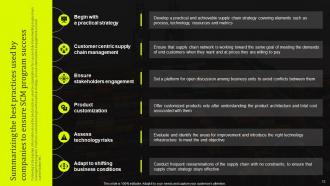
Slide 12: This slide displays information about the best practices used by organizations for successfully implementing supply chain management program.
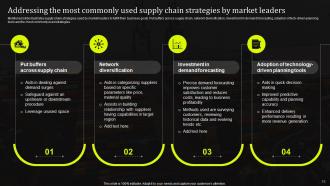
Slide 13: This slide illustrates supply chain strategies used by market leaders to fulfill their business goals.
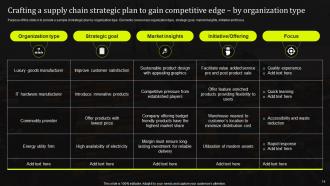
Slide 14: This slide provides a sample of strategic plan by organization type.
Slide 15: This slide showcases the Heading for the Ideas to be covered next.
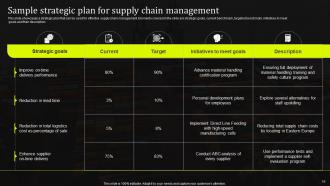
Slide 16: This slide presents a strategic plan that can be used for effective supply chain management.
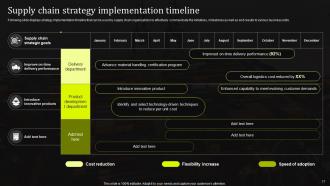
Slide 17: This slide displays the strategy implementation timeline.
Slide 18: This slide exhibits the Title for the Components to be discussed further.
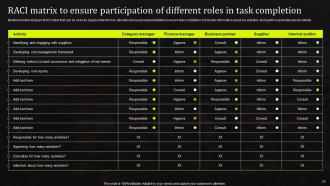
Slide 19: This slide displays the RACI matrix that can be used by supply chain firms to allocate role based responsibilities to ensure task completion.
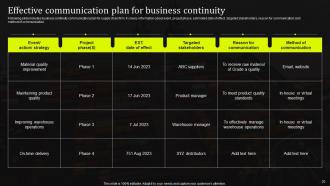
Slide 20: This slide includes the business continuity communication plan for supply chain firm.
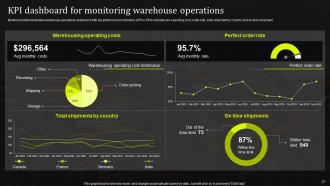
Slide 21: This slide illustrates warehouse operations dashboard with key performance indicators (KPIs).
Slide 22: This slide indicates the Heading for the Topics to be covered in the following template.
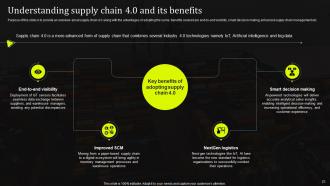
Slide 23: This slide deals with Understanding supply chain 4.0 and its benefits.
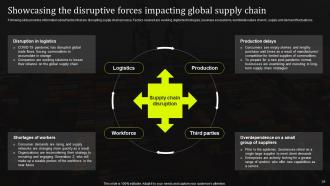
Slide 24: This slide emphasizes on Showcasing the disruptive forces impacting global supply chain.
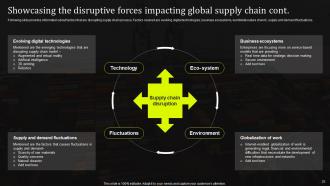
Slide 25: This slide continues Showcasing the disruptive forces impacting global supply chain.
Slide 26: This slide reveals the Title for the Ideas to be discussed further.
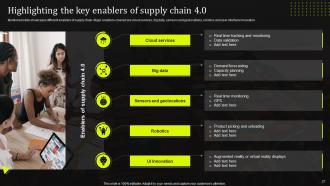
Slide 27: This slide showcases different enablers of supply chain.
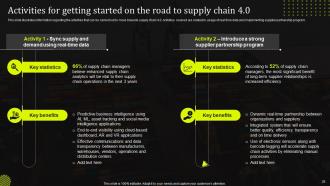
Slide 28: This slide illustrates information regarding the activities that can be carried out to move towards supply chain 4.0.
Slide 29: This slide indicates the Heading for the Ideas to be covered in the forth-coming template.
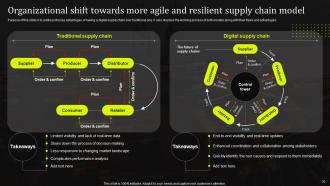
Slide 30: This slide displays the working process of both models along with their flaws and advantages.
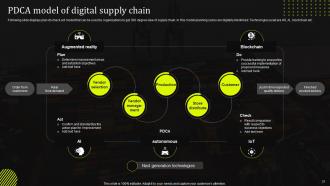
Slide 31: This slide reveals the PDCA model of digital supply chain.
Slide 32: This slide exhibits the Title for the Contents to be discussed further.
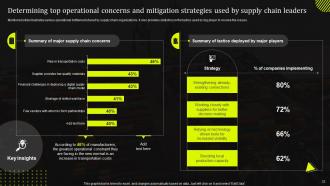
Slide 33: This slide illustrates various operational bottlenecks faced by supply chain organizations.
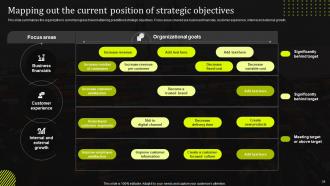
Slide 34: This slide focuses on Mapping out the current position of strategic objectives.
Slide 35: This slide presents the Heading for the Topics to be covered next.
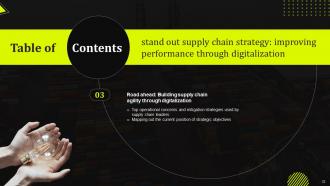
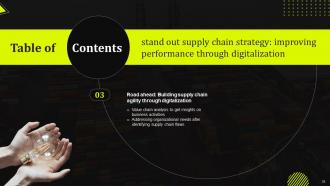
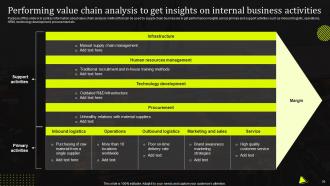
Slide 36: This slide emphasizes on Performing value chain analysis to get insights on internal business activities.
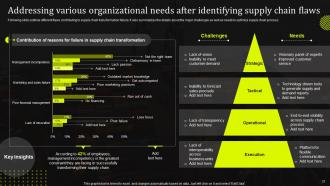
Slide 37: This slide focuses on Addressing various organizational needs after identifying supply chain flaws.
Slide 38: This slide portrays the Title for the Topics to be discussed further.
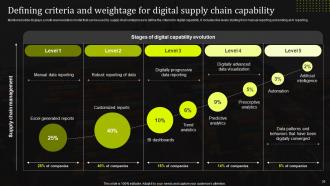
Slide 39: This slide displays a multi-level evolution model that can be used by supply chain enterprises to define the criteria for digital capability.
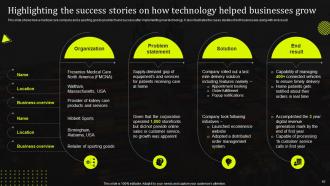
Slide 40: This slide shows how a medical care company and a sporting goods provider found success after implementing new technology.
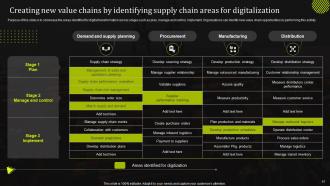
Slide 41: This slide represents Creating new value chains by identifying supply chain areas for digitalization.
Slide 42: This slide depicts the Heading for the Components to be covered in the forth-coming template.
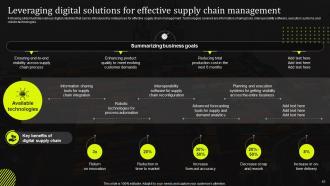
Slide 43: This slide illustrates various digital solutions for effective supply chain management.
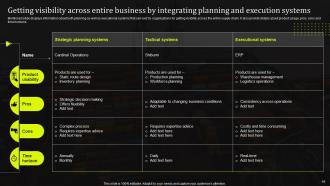
Slide 44: This slide talks about Getting visibility across entire business by integrating planning and execution systems.
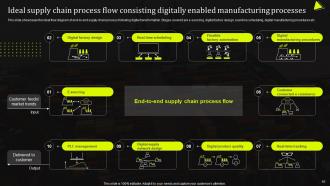
Slide 45: This slide showcases the ideal flow diagram of end-to-end supply chain process following digital transformation.
Slide 46: This slide indicates the Title for the Ideas to be discussed further.
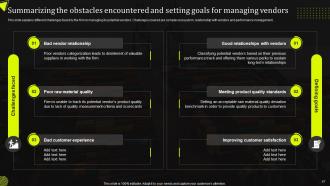
Slide 47: This slide explains different challenges faced by the firm in managing its potential vendors.
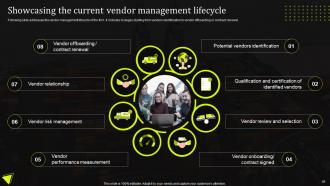
Slide 48: This slide addresses the vendor management lifecycle of the firm.
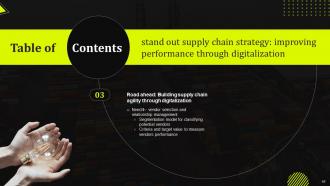
Slide 49: This slide exhibits the Heading for the Ideas to be covered next.
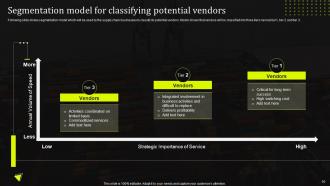
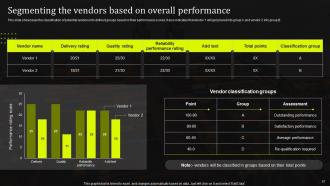
Slide 50: This slide shows segmentation model which will be used by the supply chain businesses to classify its potential vendors.
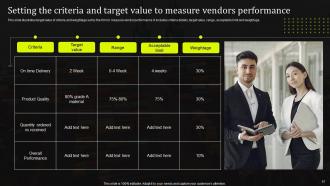
Slide 51: This slide illustrates target value of criteria and weightage set by the firm to measure vendor performance.
Slide 52: This slide includes the Title for the Components to be covered in the following template.
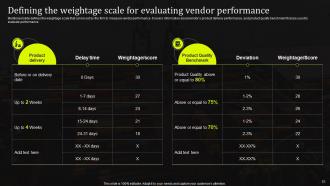
Slide 53: This slide defines the weightage scale that can be set by the firm to measure vendor performance.
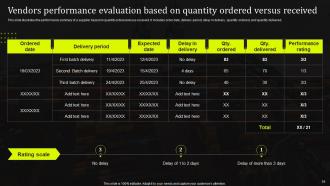
Slide 54: This slide illustrates the performance summary of a supplier based on quantity ordered versus received.
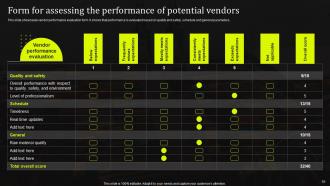
Slide 55: This slide showcases vendor performance evaluation form.
Slide 56: This slide elucidates the Heading for the Topics to be discussed next.
Slide 57: This slide states the classification of potential vendors into defined groups based on their performance scores.
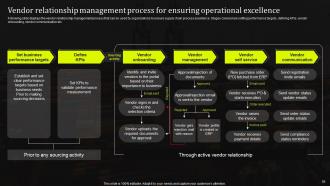
Slide 58: This slide displays the vendor relationship management process that can be used by organizations to ensure supply chain process excellence.
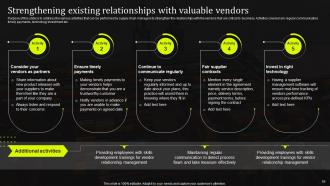
Slide 59: This slide talks about Strengthening existing relationships with valuable vendors.
Slide 60: This slide indicates the Title for the Ideas to be covered in the forth-coming template.
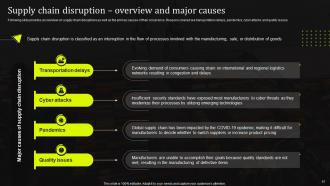
Slide 61: This slide provides an overview on supply chain disruptions as well as the primary causes of their occurrence.
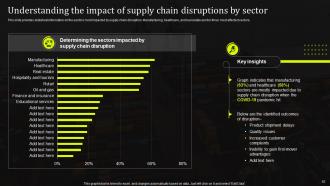
Slide 62: This slide deals with Understanding the impact of supply chain disruptions by sector.
Slide 63: This slide displays the Heading for the Ideas to be discussed in the following template.
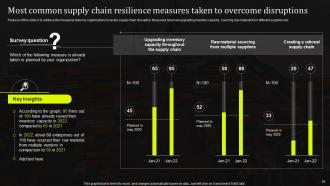
Slide 64: The Purpose of this slide is to address the measures taken by organizations to tackle supply chain disruption.
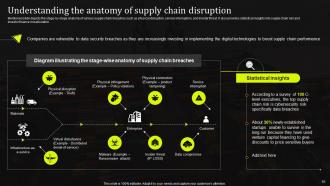
Slide 65: This slide emphasizes on Understanding the anatomy of supply chain disruption.
Slide 66: This slide depicts the Title for the Components to be covered further.
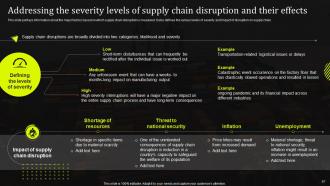
Slide 67: This slide portrays information about the major factors based on which supply chain disruption is measured.
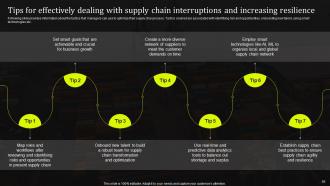
Slide 68: This slide elucidates the Tips for effectively dealing with supply chain interruptions and increasing resilience.
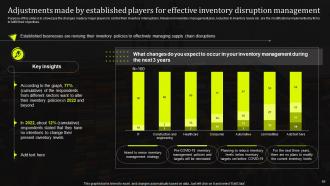
Slide 69: This slide talks about Adjustments made by established players for effective inventory disruption management.
Slide 70: This slide represents the Heading for the Topics to be discussed next.
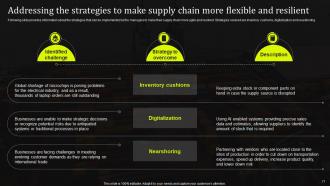
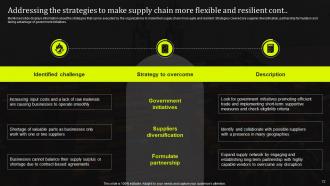
Slide 71: This slide shows the strategies that can be implemented by the managers to make their supply chain more agile and resilient.
Slide 72: This slide continues the strategies to be executed by the organizations to make their supply chain more agile and resilient.
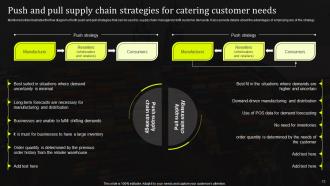
Slide 73: This slide illustrates the flow diagram of both push and pull strategies that can be used by supply chain managers to fulfil customer demands.
Slide 74: This slide portrays the Title for the Ideas to be covered further.
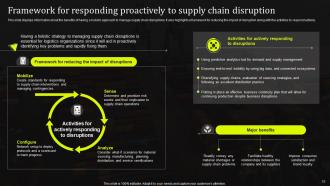
Slide 75: This slide displays information about the benefits of having a holistic approach to manage supply chain disruptions.
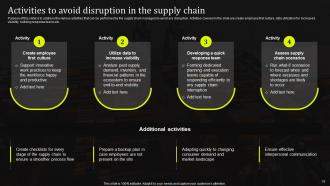
Slide 76: This slide talks about Activities to avoid disruption in the supply chain.
Slide 77: This slide depicts the Heading for the Ideas to be discussed in the next template.
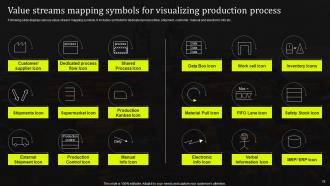
Slide 78: This slide reveals various value stream mapping symbols.
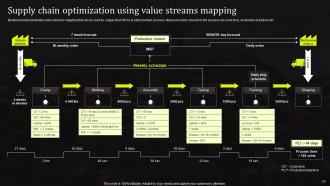
Slide 79: This slide illustrates value streams mapping that can be used by supply chain firms to optimize their process.
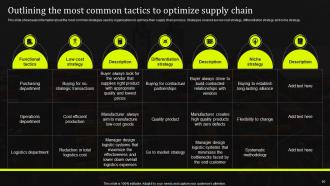
Slide 80: This slide showcases information about the most common strategies used by organizations to optimize their supply chain process.
Slide 81: This slide depicts the Title for the Topics to be covered further.
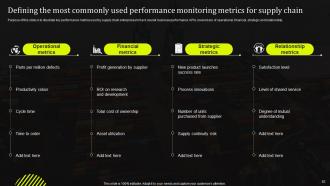
Slide 82: This slide illustrates the key performance metrics used by supply chain enterprises to track overall business performance.
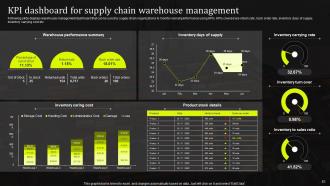
Slide 83: This slide reveals the KPI dashboard for supply chain warehouse management.
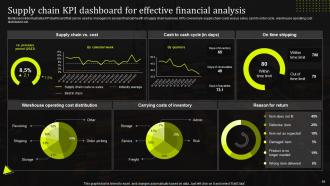
Slide 84: This slide shows the KPI dashboard that can be used by managers to assess financial health of supply chain business.
Slide 85: This slide incorporates the Heading for the Contents to be discussed next.
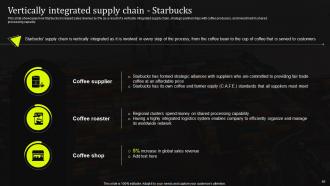
Slide 86: This slide showcases how Starbucks increased sales revenue by 5% as a result of a vertically integrated supply chain.
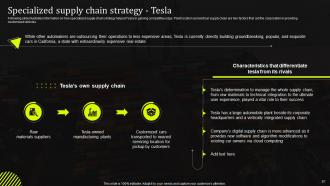
Slide 87: This slide exhibits how specialized supply chain strategy helped Tesla in gaining competitive edge.
Slide 88: This is the Icons slide containing all the Icons used in the plan.
Slide 89: This slide is used for displaying some Additional information.
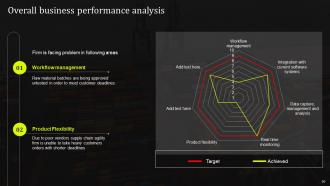
Slide 90: This slide portrays the Overall business performance analysis.
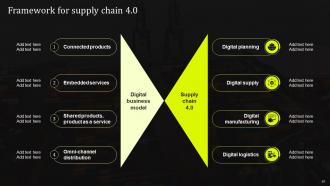
Slide 91: This slide represents the Framework for supply chain 4.0.
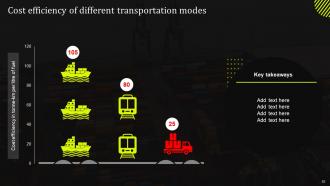
Slide 92: This slide talks about Cost efficiency of different transportation modes.
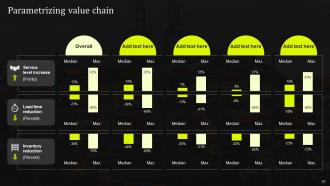
Slide 93: This slide displays the Parametrizing value chain.
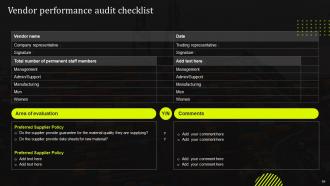
Slide 94: This slide reveals the Vendor performance audit checklist.
Slide 95: This slide portrays the organization's mission ,vision, and goal.
Slide 96: This slide shows the firm's Timeline.
Slide 97: This is the 30,60,90 days plan slide for effcetive planning.
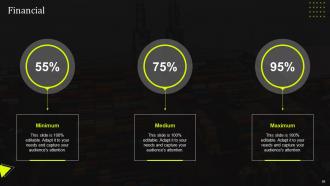
Slide 98: This slide elucidates information related to the Financial topic.
Slide 99: This is the Thank You slide for acknowledgement.
Stand Out Supply Chain Strategy Improving Performance Through Digitalization Complete Deck Strategy CD with all 104 slides:
Use our Stand Out Supply Chain Strategy Improving Performance Through Digitalization Complete Deck Strategy CD to effectively help you save your valuable time. They are readymade to fit into any presentation structure.








FAQs for Stand Out Supply Chain Strategy Improving Performance Through Digitalization Complete
Digitalizing supply chain processes delivers enhanced visibility, improved efficiency, cost reduction, better risk management, and faster decision-making capabilities. Through real-time tracking and analytics, companies in manufacturing, retail, and logistics streamline operations, minimize disruptions, and optimize inventory levels, ultimately achieving greater competitive advantage and customer satisfaction in an increasingly complex global marketplace.
Blockchain technology enhances supply chain transparency by creating immutable transaction records, enabling real-time tracking, and providing decentralized verification systems across all stakeholders. Through distributed ledgers, companies in manufacturing, pharmaceuticals, and food services can trace products from origin to consumer, reduce fraud, and streamline compliance reporting, ultimately delivering greater accountability and faster issue resolution.
Big data revolutionizes supply chain optimization through demand forecasting, inventory management, route optimization, supplier performance analysis, and risk assessment. These analytics capabilities enable companies to predict market fluctuations, minimize stockouts, reduce transportation costs, and enhance operational efficiency, with manufacturers and retailers finding significantly improved customer satisfaction and competitive advantage.
IoT devices enhance real-time tracking and inventory management by providing continuous sensor monitoring, automated data collection, and instant location updates throughout the supply chain. These connected systems enable organizations to reduce stockouts, optimize warehouse operations, and improve demand forecasting, with manufacturing and retail companies finding significantly lower operational costs and enhanced customer satisfaction.
Companies face challenges including legacy system integration, data quality inconsistencies, workforce skill gaps, cybersecurity vulnerabilities, and change management resistance when transitioning to digital supply chains. While these obstacles require strategic investment in training, infrastructure, and security protocols, organizations across manufacturing, retail, and logistics increasingly find that addressing these challenges upfront delivers enhanced visibility, reduced operational costs, and stronger competitive positioning.
Digitalization enhances supplier collaboration through real-time data sharing, automated communication systems, integrated procurement platforms, and transparent performance tracking. These technologies streamline relationship management by enabling faster decision-making, reducing manual coordination errors, and providing comprehensive visibility into supplier capabilities, with many organizations finding that digital collaboration tools ultimately deliver stronger partnerships and more resilient supply chains.
Best practices for integrating digital tools in supply chain workflows include starting with pilot programs, ensuring data standardization across platforms, training staff comprehensively, establishing clear KPIs, and maintaining robust cybersecurity protocols. These approaches streamline implementation by minimizing disruption, enhancing visibility, and building organizational capability, with many manufacturers and retailers finding that phased integration ultimately delivers improved efficiency and competitive advantage.
Machine learning algorithms forecast demand by analyzing historical sales data, seasonal patterns, market trends, and external factors like weather or economic indicators. These predictive models enable retailers and manufacturers to optimize inventory levels, automate reordering processes, and anticipate fluctuations, with many companies finding that accurate forecasting reduces stockouts by 20-50% while minimizing excess inventory costs.
Essential cybersecurity measures include multi-factor authentication, end-to-end encryption, network segmentation, regular security audits, and real-time monitoring systems. These technologies enhance supply chain resilience by preventing data breaches, ensuring regulatory compliance, and maintaining operational continuity, with many manufacturing and retail organizations finding that integrated security frameworks ultimately deliver competitive advantage and customer trust.
Cloud computing facilitates supply chain data sharing through centralized platforms, real-time synchronization, standardized APIs, automated workflows, and secure access controls. These technologies enable suppliers, manufacturers, and distributors to seamlessly exchange inventory levels, demand forecasts, and logistics updates, while enhancing transparency and reducing operational delays, ultimately delivering improved coordination and competitive advantage.
Supply chain digitalization presents both environmental challenges and opportunities, including increased energy consumption from data centers, reduced paper waste, optimized transportation routes, and enhanced resource efficiency monitoring. Through digital tracking and analytics, organizations streamline logistics, minimize overproduction, and reduce carbon footprints, with many companies finding that strategic digitalization ultimately delivers significant sustainability improvements and competitive environmental advantages.
Digital twin technology enhances supply chain resiliency by creating real-time virtual replicas that enable predictive analytics, scenario modeling, and proactive risk management across all operations. Through continuous monitoring and simulation capabilities, manufacturers and retailers can identify potential disruptions before they occur, optimize inventory positioning, and develop alternative sourcing strategies, ultimately delivering faster recovery times and reduced operational costs.
Organizations should track key performance indicators including inventory turnover rates, order fulfillment accuracy, supply chain visibility scores, cost per transaction, and supplier response times. These metrics enable companies to measure operational efficiency, customer satisfaction improvements, and cost reductions, with many manufacturers and retailers finding that comprehensive tracking delivers enhanced decision-making capabilities and competitive advantage.
Automation reshapes supply chain workforce dynamics by eliminating repetitive manual tasks, creating demand for technical skills, and enabling employees to focus on strategic decision-making and exception handling. While reducing routine positions, it simultaneously generates opportunities in system management, data analysis, and process optimization, with many organizations finding that reskilling existing workforce delivers better retention and operational continuity than replacement strategies.
Businesses should monitor artificial intelligence-driven demand forecasting, autonomous logistics systems, blockchain-enabled transparency, digital twin simulations, and sustainability tracking technologies. These emerging capabilities will revolutionize supply chain operations by enabling predictive maintenance, real-time visibility, and automated decision-making, with companies increasingly finding that early adoption delivers significant competitive advantages in cost reduction and customer responsiveness.
-
Their designing team is so expert in making tailored templates. They craft the exact thing I have in my mind…..really happy.
-
The slides come with appealing color schemes and relevant content that helped me deliver a stunning presentation without any hassle!