


Steps To Perform Competitor Analysis For Organizations Powerpoint Presentation Slides MKT CD V





Try Before you Buy Download Free Sample Product
 Impress Your
 Audience
 100%
100% Editable
 Save Hours
 of Time


Competitor analysis is determining businesses operating in your market and analyzing their offerings, branding, sales, and marketing approaches. Grab our Steps to Perform Competitor Analysis for Organizations template that includes an assessment of the strengths and weaknesses of existing and potential competitors. Our Market Research deck can help any business determine strong and weak areas of competitors compared to its own business and find the gap in the market. It introduces competitor analysis and its advantages to improving business position. Additionally, our Industry Analysis PPT presents the survey results demonstrating how often marketers perform competitive analysis. Moreover, it indicates steps to conduct competitor analysis, including sections like a company overview, go to market strategy, product offering, pricing, etc. Further, our Content Evaluation module outlines competitor analysis frameworks like SWOT matrix, growth share matrix, marketing mix, business model canvas, PESTLE analysis, Porter five forces model, strategic group analysis, perceptual mapping matrix, and many more. Lastly, it exhibits various dashboards for domain and ranking analysis, organic keywords analysis, email campaign analysis, and social media performance analysis. Get instant access.
People who downloaded this PowerPoint presentation also viewed the following :
Content of this Powerpoint Presentation
Slide 1: This slide introduces Steps to Perform Competitor Analysis for Organizations. Commence by stating Your Company Name.
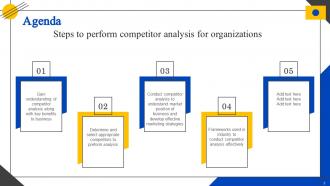
Slide 2: This slide depicts the Agenda of the presentation.
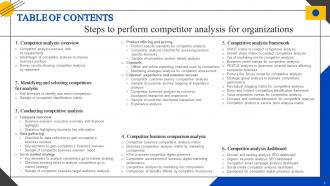
Slide 3: This slide incorporates the Table of contents.
Slide 4: This is yet another slide continuing the Table Of Contents.
Slide 5: This slide highlights the Title for the Topics to be covered further.
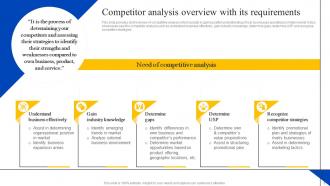
Slide 6: This slide shows theoverview of competitive analysis with requirements.
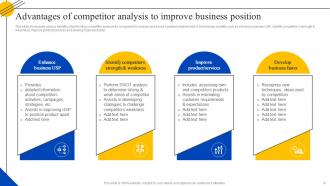
Slide 7: This slide depicts the Advantages of competitor analysis to improve business position.
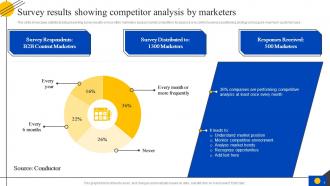
Slide 8: This slide presents the Survey results showing competitor analysis by marketers.
Slide 9: This slide includes the Heading for the Contents to be discussed next.
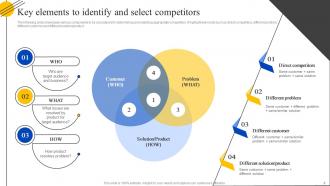
Slide 10: This slide states the Key elements to identify and select competitors.
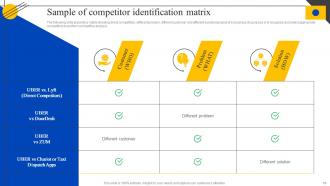
Slide 11: This slide displays the Sample of competitor identification matrix.
Slide 12: This slide includes the Title for the Ideas to be covered in the following template.
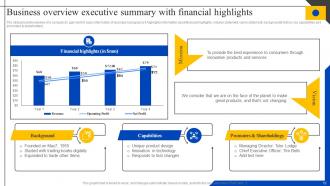
Slide 13: The slide presents overview of a company to gain brief of basic information of business background.
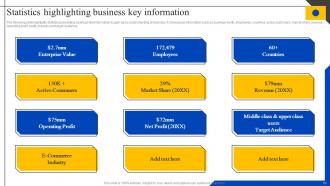
Slide 14: This slide exhibits the Statistics highlighting business key information.
Slide 15: This slide reveals the Heading for the Ideas to be discussed further.
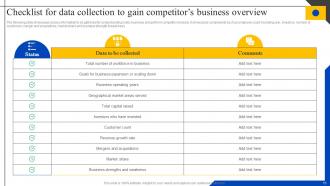
Slide 16: This slide mentions the Checklist for data collection to gain competitor’s business overview.
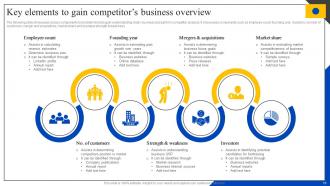
Slide 17: This slide portrays the Key elements to gain competitor’s business overview.
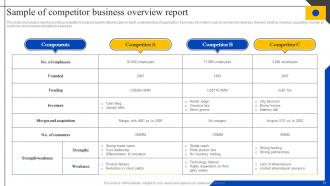
Slide 18: This slide shows the Sample of competitor business overview report.
Slide 19: This slide displays the Title for the Contents to be covered in the following template.
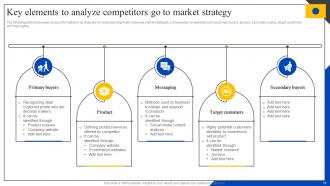
Slide 20: This slide states the Key elements to analyze competitors go to market strategy.
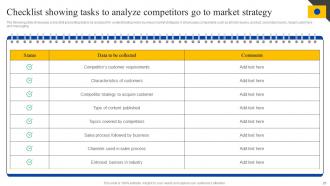
Slide 21: This slide portrays the Checklist showing tasks to analyze competitors go to market strategy.
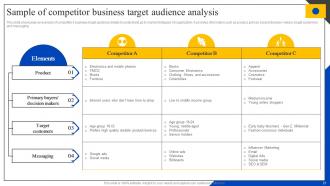
Slide 22: This slide displays the Sample of competitor business target audience analysis.
Slide 23: This slide incorporates the Heading for the Topics to be discussed next.
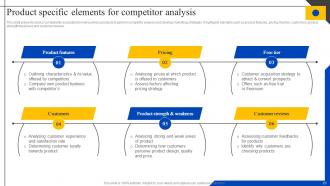
Slide 24: This slide illustrates the Product specific elements for competitor analysis.
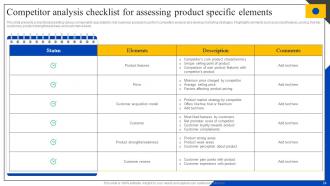
Slide 25: This slide shows a Competitor analysis checklist for assessing product specific elements.
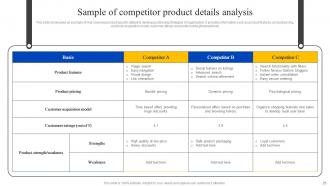
Slide 26: This slide reveals a Sample of competitor product details analysis.
Slide 27: This slide exhibits the Title for the Topics to be covered in the following template.
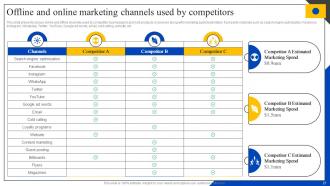
Slide 28: This slide presents the Offline and online marketing channels used by competitors.
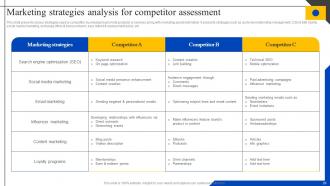
Slide 29: This slide highlights the Marketing strategies analysis for competitor assessment.
Slide 30: This slide mentions the Heading for the Contents to be discussed further.
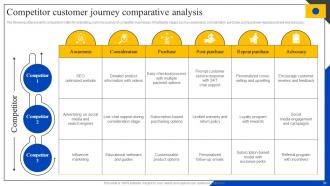
Slide 31: This slide reveals the Competitor customer journey comparative analysis.
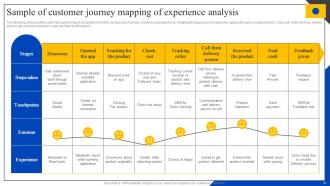
Slide 32: This slide shows a Sample of customer journey mapping of experience analysis.
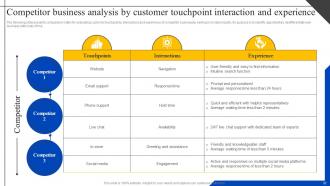
Slide 33: This slide exhibits a Competitor business analysis by customer touchpoint interaction and experience.
Slide 34: This slide reveals a Sample of customer touchpoint interaction and experience analysis.
Slide 35: This slide contains the Title for the Ideas to be covered next.
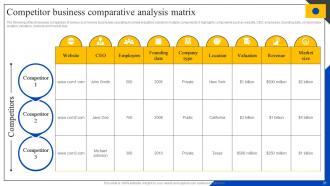
Slide 36: This slide represents the Competitor business comparative analysis matrix.
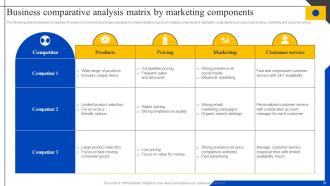
Slide 37: This slide illustrates the Business comparative analysis matrix by marketing components.
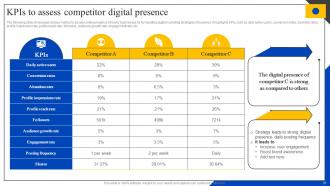
Slide 38: This slide indicates the KPIs to assess competitor digital presence.
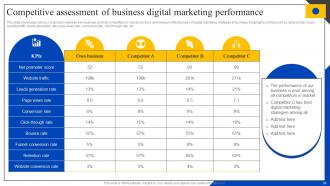
Slide 39: This slide showcases various comparison between own business and key competitors in market.
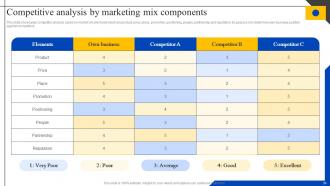
Slide 40: This slide reveals the Competitive analysis by marketing mix components.
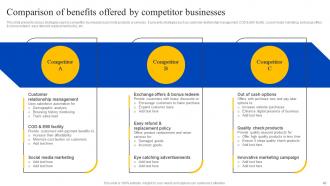
Slide 41: This slide presents various strategies used by competitor businesses to promote products or services.
Slide 42: This slide depicts the Heading for the Ideas to be discussed in the following template.
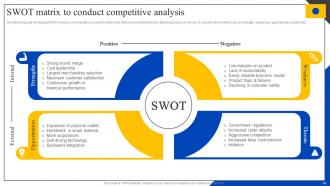
Slide 43: This slide presents the SWOT matrix to conduct competitive analysis.
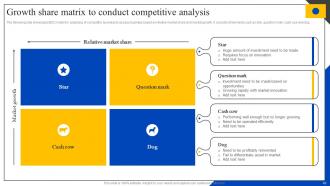
Slide 44: This slide showcases the Growth share matrix to conduct competitive analysis.
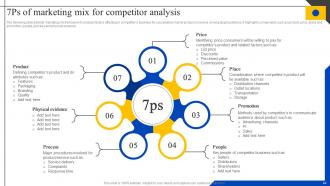
Slide 45: This slide exhibits the 7Ps of marketing mix for competitor analysis.
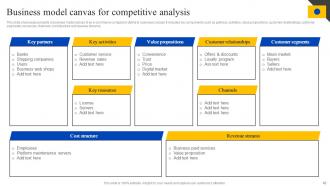
Slide 46: This slide reveals the Business model canvas for competitive analysis.
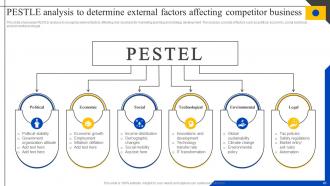
Slide 47: This slide presents the PESTLE analysis to determine external factors affecting competitor business.
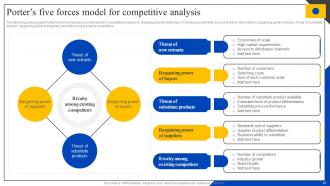
Slide 48: This slide shows the Porter’s five forces model for competitive analysis.
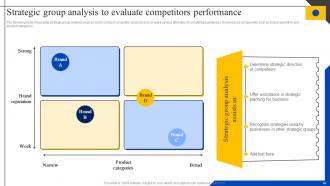
Slide 49: This slide indicates the Strategic group analysis to evaluate competitors performance.
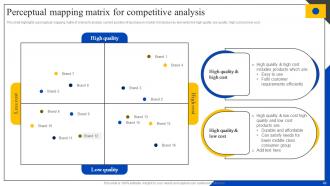
Slide 50: This slide highlights a perceptual mapping matrix of brands to analyze current position of business in market.
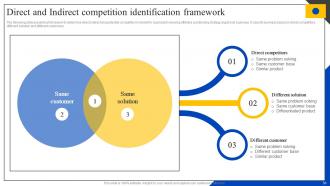
Slide 51: This slide showcases Direct and indirect competition identification framework.
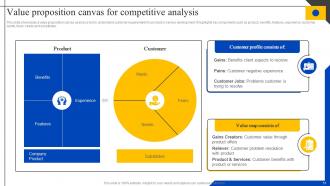
Slide 52: This slide portrays the Value proposition canvas for competitive analysis.
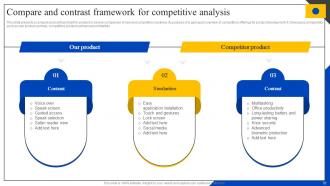
Slide 53: This slide presents a compare and contrast chart for product or service comparison of own and competitors business.
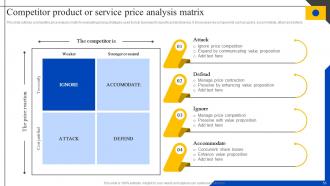
Slide 54: This slide exhibits the Competitor product or service price analysis matrix.
Slide 55: This slide mentions the Title for the Contents to be covered next.
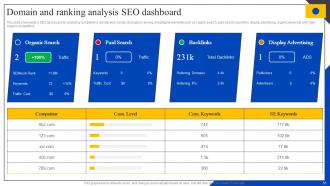
Slide 56: This slide showcases a SEO dashboard for analyzing competitor’s domain and monitor changes in ranking.
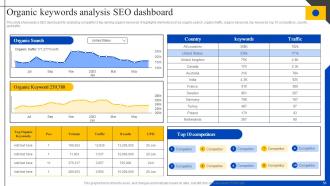
Slide 57: This slide represents the Organic keywords analysis SEO dashboard.
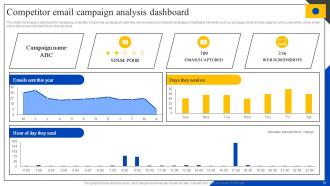
Slide 58: This slide displays the Competitor email campaign analysis dashboard.
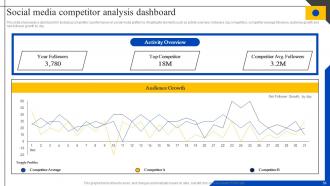
Slide 59: This slide showcases a dashboard for analyzing competitor’s performance on social media platforms.
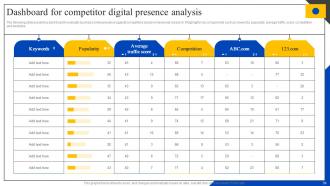
Slide 60: This slide presents a Dashboard for competitor digital presence analysis.
Slide 61: This is the Icons slide containing all the Icons used in the plan.
Slide 62: This slide is used for depicting some Additional information.
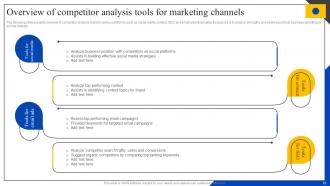
Slide 63: The following slide presents overview of competitor analysis tools for various platforms.
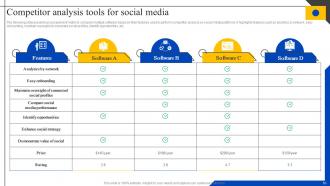
Slide 64: This slide depicts the Competitor analysis tools for social media.
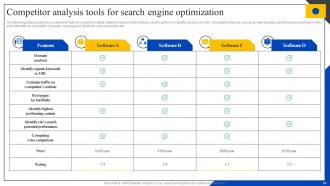
Slide 65: This slide indicates the Competitor analysis tools for search engine optimization.
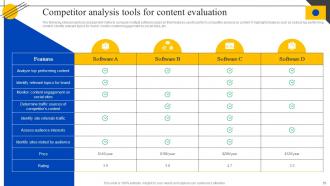
Slide 66: This slide talks about the Competitor analysis tools for content evaluation.
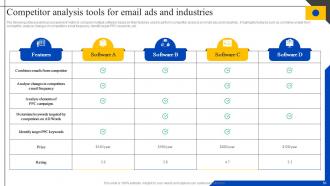
Slide 67: This slide mentions the Competitor analysis tools for email ads and industries.
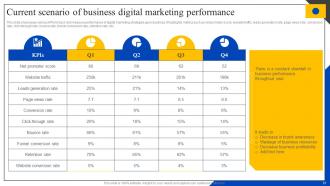
Slide 68: This slide exhibits the Current scenario of business digital marketing performance.
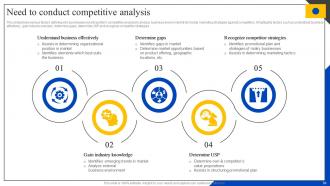
Slide 69: This slide highlights the Need to conduct competitive analysis.
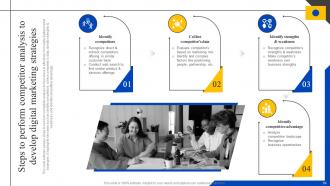
Slide 70: This slide states the Steps to perform competitor analysis to develop digital marketing strategies.
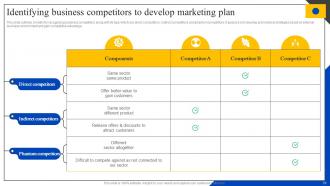
Slide 71: This slide outlines a matrix for recognizing business competitors along with its type.
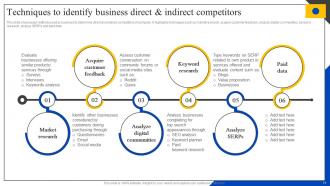
Slide 72: This slide shows the Techniques to identify business direct & indirect competitors.
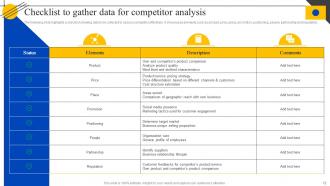
Slide 73: This slide revals the Checklist to gather data for competitor analysis.
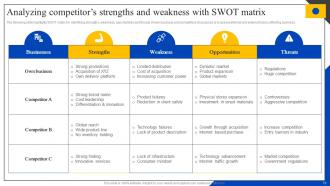
Slide 74: This slide focuses on Analyzing competitor’s strengths and weakness with SWOT matrix.
Slide 75: This is the About us slide. State your company-related information here.
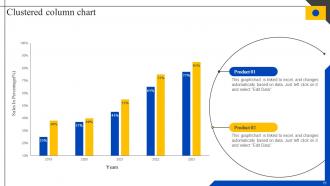
Slide 76: This slide presents the Clustered column.
Slide 77: This is the Column chart slide.
Slide 78: This is the 30,60,90 days plan slide for effective planning.
Slide 79: This is the Puzzle slide with related imagery.
Slide 80: This is Our goal slide. State your company-goals here.
Slide 81: This is Our team slide for showcasing the team-related information.
Slide 82: This is the Venn diagram slide.
Slide 83: This slide incorporates the organization's Roadmap.
Slide 84: This slide presents the firm's vision, mission & goal.
Slide 85: This slide contains the Post it notes for reminders and deadlines.
Slide 86: This is the Quotes slide for motivation.
Slide 87: This is the Thank You slide for acknowledgement.
Steps To Perform Competitor Analysis For Organizations Powerpoint Presentation Slides MKT CD V with all 91 slides:
Use our Steps To Perform Competitor Analysis For Organizations Powerpoint Presentation Slides MKT CD V to effectively help you save your valuable time. They are readymade to fit into any presentation structure.























FAQs for Steps To Perform Competitor Analysis For Organizations Powerpoint Presentation Slides
Key metrics include market share, pricing strategies, template design quality, customer reviews and ratings, download volumes, and feature differentiation across categories. Through comprehensive analysis of these factors, businesses can identify competitive gaps, optimize their positioning strategies, and enhance their template offerings, with many companies finding that strategic competitor insights ultimately deliver improved market penetration and sustainable competitive advantage.
Analyze competitors' templates by examining design consistency, visual hierarchy, content structure, brand alignment, and audience engagement effectiveness across their marketing materials, sales decks, and public presentations. Through systematic evaluation of layout quality, messaging clarity, and professional polish, businesses can identify gaps in competitors' approaches while benchmarking their own template standards, ultimately enhancing their presentation competitive advantage.
Tools for design industry competitor analysis include SEMrush for SEO insights, SimilarWeb for website traffic data, Ahrefs for backlink analysis, BuzzSumo for content performance tracking, and social media analytics platforms like Sprout Social. These technologies streamline competitive intelligence by monitoring design trends, client acquisition strategies, and market positioning, with many design agencies finding that automated data collection enhances strategic decision-making and identifies new business opportunities.
Customer reviews of competitor templates reveal crucial insights about user pain points, desired features, and market gaps that directly inform your product development strategy. By analyzing feedback patterns across platforms like design marketplaces, social media, and business forums, you can identify recurring complaints about usability, customization limitations, or missing functionalities, ultimately enabling you to create superior templates that address these unmet needs.
Competitor USPs typically include specialized expertise, superior technology, cost advantages, exceptional service quality, and established market relationships. Through comprehensive competitive analysis, businesses can identify market gaps, develop distinctive value propositions, and enhance their positioning by combining innovative features, targeted customer experiences, and strategic pricing, ultimately delivering competitive differentiation that resonates with specific customer segments.
Competitor pricing strategies directly influence your template pricing by establishing market benchmarks, revealing pricing gaps, and highlighting value differentiation opportunities through premium features, bundle offerings, and subscription models. Through competitive analysis, businesses can position their templates strategically above or below competitor price points while emphasizing unique value propositions, ultimately enabling more informed pricing decisions that balance market competitiveness with profitability goals.
Competitors typically leverage social media platforms, search engine optimization, content marketing, email campaigns, and paid advertising most effectively to reach their audiences. Through comprehensive competitor analysis tools and social listening, businesses can identify which channels drive the most engagement and conversions for rivals, ultimately enabling strategic resource allocation and competitive advantage in an increasingly crowded marketplace.
Competitor analysis helps anticipate market trends by tracking template themes, color schemes, layout innovations, and visual styles across leading providers. By monitoring competitors' seasonal releases, popular categories, and customer feedback patterns, you can identify emerging design preferences early, enabling strategic template development that positions your offerings ahead of market demand and delivers competitive advantage.
Competitors typically focus on business presentation templates featuring strategic frameworks, financial dashboards, marketing plans, and organizational charts, alongside educational templates for training and corporate learning. Many presentation providers find that business-focused templates addressing competitive analysis, market research, and project management deliver the highest engagement, with creative agencies and consultants increasingly demanding industry-specific solutions that streamline client presentations and enhance professional credibility.
Competitor analysis is crucial for identifying strategic partnerships in the presentation template space, revealing complementary strengths, shared target markets, and collaboration opportunities that individual companies might miss. Through systematic analysis, businesses can discover non-competing players with synergistic capabilities, enabling co-development of specialized template libraries, cross-promotional partnerships, and enhanced market reach, ultimately delivering expanded customer value and competitive advantage.
Current design trends competitors embrace include minimalist interfaces, bold typography, immersive storytelling, sustainable branding, and AI-powered personalization features. These approaches streamline user experiences, enhance brand recognition, and deliver targeted engagement, with many organizations finding that strategic combination of emerging aesthetics and functional innovation ultimately creates competitive advantage in increasingly crowded markets.
Evaluate competitors' online presence through website traffic analytics, social media engagement rates, content marketing effectiveness, search engine rankings, and customer review analysis across platforms. Tools like SEMrush, Ahrefs, and social listening platforms enable presentation template businesses to assess competitor positioning, audience reach, and engagement strategies, ultimately revealing market gaps and opportunities for differentiation.
SEO significantly impacts competitors' online visibility through keyword optimization, content structure, meta descriptions, backlink profiles, and search ranking positions. By analyzing competitors' SEO strategies, you can optimize your templates with targeted keywords, improved metadata, strategic content placement, and enhanced user experience elements, ultimately delivering better search performance and competitive advantage in an increasingly crowded digital marketplace.
Analyzing competitors' customer service strategies reveals gaps in response times, channel preferences, pain point resolution methods, and service personalization approaches that directly inform your user experience improvements. By benchmarking their support workflows, technology integration, and customer feedback patterns, businesses can identify optimization opportunities, streamline their own service delivery, and ultimately enhance customer satisfaction while gaining competitive advantage.
Competitor webinars and instructional content significantly elevate customer expectations by showcasing advanced design techniques, interactive features, and professional presentation standards that customers then expect from all providers. This creates an increasingly competitive landscape where businesses must enhance their own educational offerings, streamline their design processes, and deliver more sophisticated presentation solutions, with many organizations finding that investing in comprehensive training content ultimately drives customer loyalty and market differentiation.
-
Slideteam offers pocket-friendly products. As a college student this is a really necessary thing to look at while paying for something.
-
Easy to edit slides with easy to understand instructions.