


Stock Management Strategies For Improved Inventory Accuracy Powerpoint Presentation Slides




Try Before you Buy Download Free Sample Product
 Impress Your
 Audience
 100%
100% Editable
 Save Hours
 of Time


Stock procurement and management help an organization in real-time inventory tracking and procuring goods from suppliers. Grab our insightfully designed Stock management strategies for improved inventory accuracy template. It aids in decreasing operational costs and reducing the wastage of inventory. Our Warehouse Management deck initially showcases processes for maintaining an optimum stock level. It does so by purchasing accurate quantities of merchandise from suppliers. The PPT further covers demand forecasting to help identify the optimum level of required inventory quantity based on historical sales data. It also covers methods like economic order quantity and reorders point to determine the required amount of inventory. Our Stock Inventory Procurement presentation also exhibits various warehouse optimization strategies. These include ABC analysis and warehouse automation that can help reduce inventory waste. Additionally, it showcases an automated tracking system to minimize wastage of stock and determine the ideal time to order inventory. It also highlights various strategies for accurate order fulfillment and preventing stock-outs. The PPT also highlights costs incurred and challenges organizations face in managing inventory. Lastly, it contains dashboards and KPIs to track warehouse operations and inventory. Get access now.
People who downloaded this PowerPoint presentation also viewed the following :
Content of this Powerpoint Presentation
Slide 1: This slide displays the title Stock Management Strategies for Improved Inventory Accuracy.
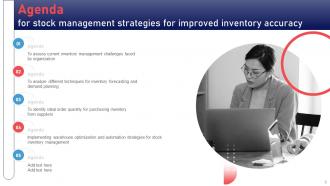
Slide 2: This slide displays the title Agenda.
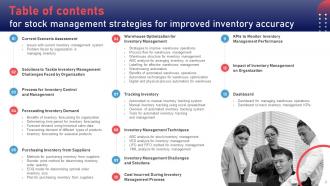
Slide 3: This slide exhibit table of content.
Slide 4: This slide exhibit table of content that is to be discuss further.
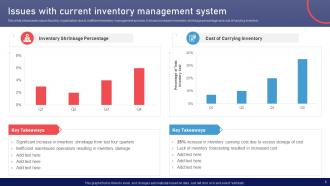
Slide 5: This slide showcases issues faced by organization due to inefficient inventory management process.
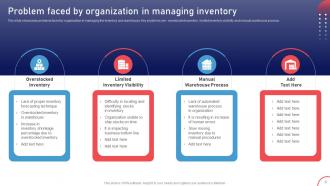
Slide 6: This slide showcases problems faced by organization in managing the inventory and warehouse.
Slide 7: This slide exhibit table of content that is to be discuss further.
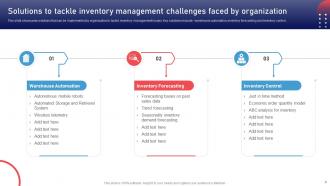
Slide 8: This slide showcases solutions that can be implemented by organization to tackle inventory management issues.
Slide 9: This slide exhibit table of content that is to be discuss further.
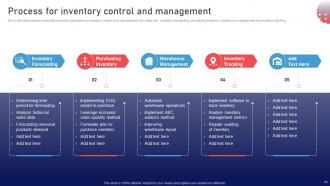
Slide 10: This slide showcases process that can help organization in inventory control and management.
Slide 11: This slide exhibit table of content that is to be discuss further.
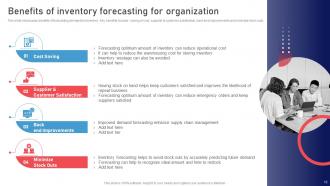
Slide 12: This slide showcases benefits of forecasting demand for inventory.
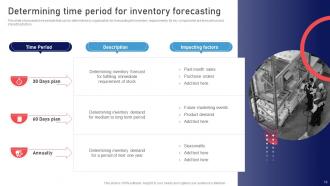
Slide 13: This slide showcases time periods that can be determined by organization for forecasting the inventory requirements.
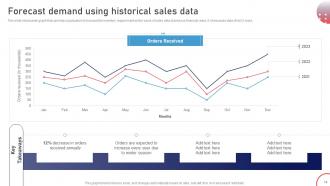
Slide 14: This slide showcases graph that can help organization to forecast the inventory requirement on the basis of sales data of previous financial years.
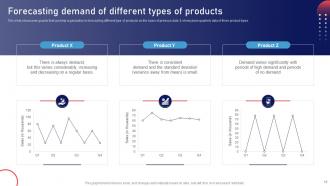
Slide 15: This slide showcases graphs that can help organization in forecasting different type of products on the basis of previous data.
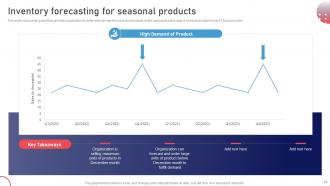
Slide 16: This slide showcases graph that can help organization to determine demand for seasonal products on the basis past sales data.
Slide 17: This slide exhibit table of content that is to be discuss further.
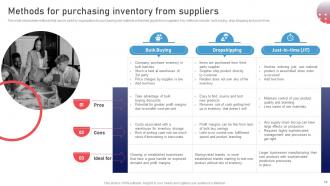
Slide 18: This slide showcases methods that can be used by organization for purchasing raw material or finished goods from suppliers.
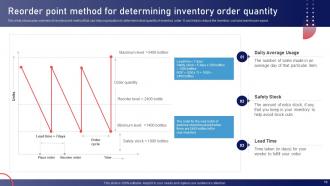
Slide 19: This slide showcases overview of reorder point method that can help organization to determine ideal quantity of inventory order.
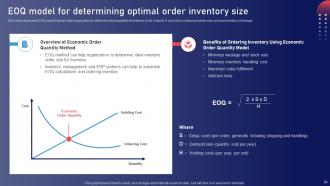
Slide 20: This slide showcases EOQ model that can help organization to determine ideal quantity of inventory to be ordered.
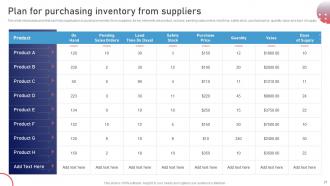
Slide 21: This slide showcases plan that can help organization to purchase inventory from suppliers.
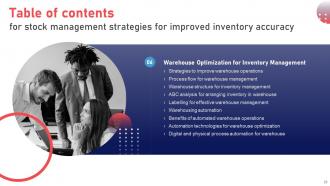
Slide 22: This slide exhibit table of content that is to be discuss further.
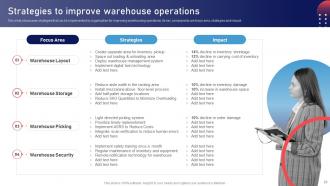
Slide 23: This slide showcases strategies that can be implemented by organization for improving warehousing operations.
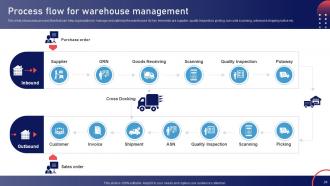
Slide 24: This slide showcases process flow that can help organization to manage and optimize the warehouse.
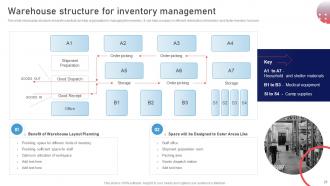
Slide 25: This slide showcases structure of warehouse that can help organization in managing the inventory.
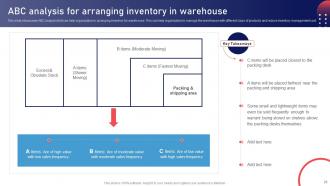
Slide 26: This slide showcases ABC analysis that can help organization in arranging inventory for warehouse.
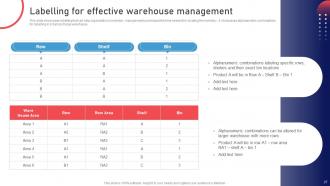
Slide 27: This slide showcases labelling that can help organization in inventory management and reduce the time needed for locating the inventory.
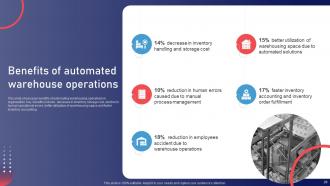
Slide 28: This slide showcases benefits of automating warehousing operations in organization.
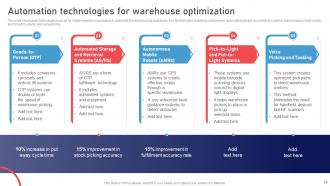
Slide 29: This slide showcases technologies that can be implemented in organization to automate the warehousing operations.
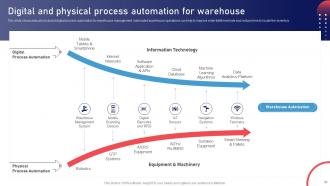
Slide 30: This slide showcases physical and digital process automation for warehouse management.
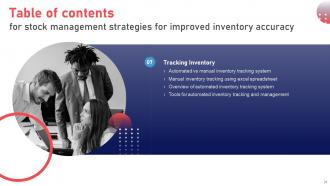
Slide 31: This slide exhibit table of content that is to be discuss further.
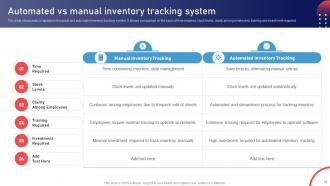
Slide 32: This slide showcases comparison of manual and automated inventory tracking system.
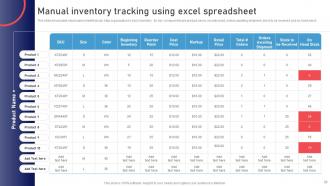
Slide 33: This slide showcases showcases sheet that can help organization to track inventory.
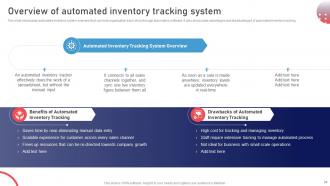
Slide 34: This slide showcases automated inventory system overview that can help organization track stock through automation software.
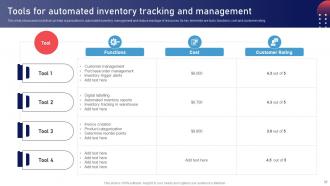
Slide 35: This slide showcases tools that can help organization in automated inventory management and reduce wastage of resources.
Slide 36: This slide exhibit table of content that is to be discuss further.
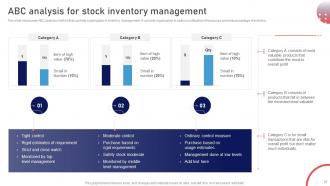
Slide 37: This slide showcases ABC analysis method that can help organization in inventory management.
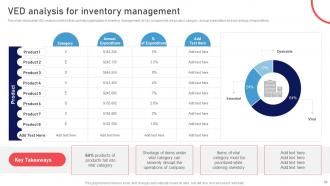
Slide 38: This slide showcases VED analysis method that can help organization in inventory management.
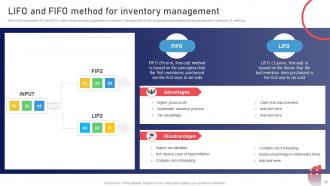
Slide 39: This slide showcases LIFO and FIFO method that can help organization in inventory management.
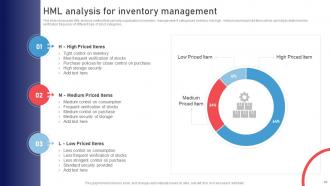
Slide 40: This slide showcases HML analysis method that can help organization in inventory management.
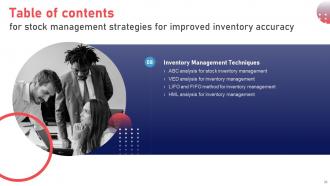
Slide 41: This slide exhibit table of content that is to be discuss further.
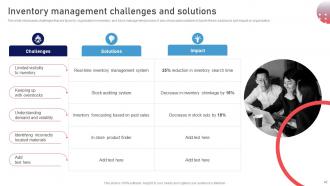
Slide 42: This slide showcases challenges that are faced by organization in inventory and stock management process.
Slide 43: This slide exhibit table of content that is to be discuss further.
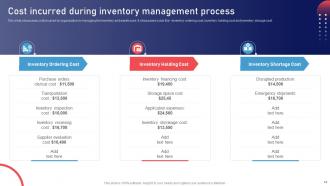
Slide 44: This slide showcases cost incurred by organization in managing the inventory and warehouse.
Slide 45: This slide exhibit table of content that is to be discuss further.
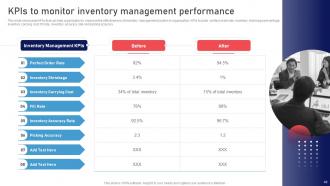
Slide 46: This slide showcases KPIs that can help organization to measure the effectiveness of inventory management system in organization.
Slide 47: This slide exhibit table of content that is to be discuss further.
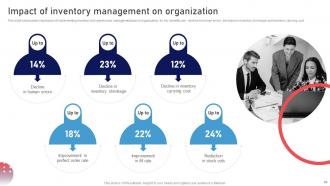
Slide 48: This slide showcases importance of implementing inventory and warehouse management plan in organization.
Slide 49: This slide exhibit table of content that is to be discuss further.
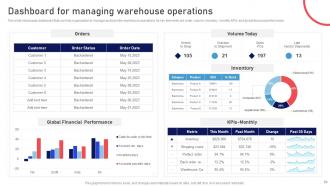
Slide 50: This slide showcases dashboard that can help organization to manage and track the warehouse operations.
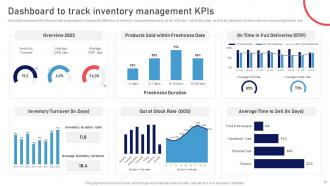
Slide 51: This slide showcases KPIs that can help organization to evaluate the efficiency of inventory management process.
Slide 52: This is the icons slide.
Slide 53: This slide presents title for additional slides.
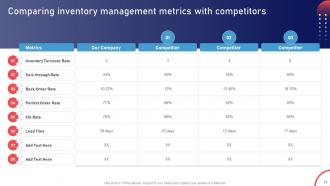
Slide 54: This slide display Comparing inventory management metrics with competitors.
Slide 55: This slide depicts posts for past experiences of clients.
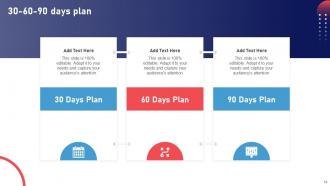
Slide 56: This slide depicts 30-60-90 days plan for projects.
Slide 57: This slide shows details of team members like name, designation, etc.
Slide 58: This slide display Quotes.
Slide 59: This slide display SWOT analysis.
Slide 60: This slide shows about your company, target audience and its client's values.
Slide 61: This slide display Our goal.
Slide 62: This is thank you slide & contains contact details of company like office address, phone no., etc.
Stock Management Strategies For Improved Inventory Accuracy Powerpoint Presentation Slides with all 67 slides:
Use our Stock Management Strategies For Improved Inventory Accuracy Powerpoint Presentation Slides to effectively help you save your valuable time. They are readymade to fit into any presentation structure.










FAQs for Stock Management Strategies For Improved Inventory Accuracy
Honestly, start with demand forecasting and keeping your stock levels right where they need to be. Dead inventory will absolutely murder your cash flow - learned that one the hard way! Track your bestsellers like crazy and don't go nuts stocking slow movers. ABC analysis is your friend for prioritizing high-value stuff. Set up those automated reorder points, keep safety stock for core products. The goal? Just enough inventory to meet demand without drowning in capital. Oh, and dig into your sales data from the past 6-12 months first - that'll show you the patterns you're working with.
RFID tags or barcode scanners are your best bet - they'll update everything automatically when stuff moves around. I'd go with cloud software like TradeGecko or Fishbowl since it syncs across all your locations instantly. Fair warning though, the initial setup is kind of a nightmare. But once it's running? Game changer. No more counting errors screwing you over, plus you get alerts before you run out of stock. Oh, and you can actually track where everything is from warehouse to customer. Start with just your expensive items first - way less overwhelming that way.
Honestly, demand forecasting is what separates the pros from people just winging it with inventory. Look at your sales from the past year and find the patterns - seasonal stuff, trends, whatever jumps out. This data tells you how much to order and when, so you're not stuck with dead inventory eating up your cash or running out of popular items. I learned this the hard way when I first started. You'll want to set up proper reorder points and safety stock based on what you find. It's basically predicting what customers actually want instead of just hoping for the best.
So just-in-time is basically ordering stuff right when you need it instead of stockpiling everything. Cuts way down on storage costs - no more paying for warehouse space or insurance on inventory just sitting there. You won't get stuck with expired products either, which happened to my cousin's restaurant like three times last year. The tricky part? Your suppliers need to be super reliable, and you've gotta nail your demand forecasting. I'd probably start testing it with whatever sells fastest for you. It's honestly pretty smart if you can pull it off without running out of stock.
So ABC analysis is pretty straightforward - rank your products by how much revenue they bring in annually, then split them into three groups. Your A items (the money makers) need constant attention and tight controls. C items? Don't stress too much about those. Honestly, most people waste way too much time micromanaging cheap stuff that barely moves the needle. You'll cut down on carrying costs and actually improve service on products that matter. It's basically that 80/20 thing - focus your energy where it counts. Game changer for sure.
Honestly, seasonal swings will mess with your whole ordering game. You gotta stock up way before peak times - holidays, summer stuff, whatever applies to you. Then dial it back hard during slow periods or you'll be drowning in leftover crap. Predicting demand is the worst part though. Last year's numbers help but aren't perfect. Also, suppliers get crazy backed up during busy seasons, so factor in longer waits. I'd start planning like 3-4 months out and keep extra stock of your top sellers just in case.
Start with your inventory turnover ratio - just divide cost of goods sold by average inventory value. Higher numbers mean you're moving stuff faster, which is usually good. Check how long inventory sits around and track when you run out of things. Here's what trips most people up though: gross margin per product matters more than you'd think. Sometimes your slowest sellers are actually making you the most money per unit, which is kinda backwards but whatever. Do this monthly and see how you stack up against others in your space. Honestly, just calculate your current ratio this week so you have something to work with.
Look, demand forecasting is your best friend here - use your past sales data to set smart reorder points. Most people totally blow off tracking inventory turnover rates, which is honestly such a mistake. ABC analysis helps you focus on the stuff that actually matters (your high-value items). Set min/max stock levels for each category and automate the reordering if you can because doing it manually is a nightmare. Oh, and seasonal trends matter way more than you'd think. Review everything monthly and start with just your top 20% of products first - don't overwhelm yourself.
Honestly, demand forecasting is gonna be your biggest headache. You're basically guessing what customers want while juggling stock between your website, Amazon, social feeds - wherever you're selling. Stockouts kill sales but too much inventory eats your cash. Then there's seasonal stuff, supplier delays, returns to sort back in... it's a mess. Oh and manually tracking everything? Don't even think about it - you'll lose your mind. Get decent inventory software from day one. Trust me on this one.
Honestly, just start talking to your suppliers more. Share your forecasts and what's happening with your business - they can't read your minds! I learned this the hard way by only calling when stuff hit the fan. Monthly check-ins with your top three suppliers will save you so much headache. Set up some automated data sharing for inventory and sales so they know what's coming. Maybe offer longer contracts for better pricing? The whole point is treating them like actual partners instead of just... people you buy stuff from. Trust me, it makes a huge difference.
Hey! So the economy totally affects how much stuff you should keep in stock. Strong economy means people buy more, so you can hold extra inventory without stressing about it. But when things get sketchy economically? That's when you want to order just what you need and cut back on safety stock - learned this the hard way during 2020 honestly. Inflation's another headache since your supplier prices keep jumping around. I check economic indicators maybe once a month and tweak my reorder points based on that. Trust me, it's better to run a little low than get stuck with a warehouse full of stuff nobody wants.
Look, you're probably drowning in spreadsheets right now but automated systems fix that mess. Real-time inventory tracking means no more guessing games. Hit your minimum threshold? It reorders automatically. Your sales channels stay synced so you won't accidentally oversell (been there, it sucks). Honestly, we all screw up manual data entry when we're in a rush - automation catches those mistakes. The reporting shows what's actually moving vs collecting dust. Start with automating reorder points first. That one change will save you tons of monitoring time and you'll dodge those embarrassing out-of-stock moments with customers.
Honestly, FIFO is everything - older stuff has to move first or you're screwed. Track those expiration dates like your life depends on it and don't let anything sit in the back getting forgotten. Temperature control will make or break you (learned that one the hard way). Start with smaller orders more often until you figure out your actual demand patterns. Build good relationships with suppliers so they can be flexible with deliveries when you need them. Set up alerts for stuff that's about to expire. Better to discount it early than toss it completely. Once you've got the rhythm down, then you can start ordering bigger quantities.
Honestly, dive into your sales history first - that's where the gold is. Check which products fly off shelves vs. the ones just sitting there forever (ugh, we've all had those). Seasonal patterns are huge too. Set up some basic dashboards so you can actually see your turnover rates instead of just guessing. I'd focus on your top 20% of products to start - that's where you'll feel the biggest difference in cash flow. The whole point is using real data to figure out reorder points rather than crossing your fingers and hoping for the best.
Dude, you've gotta train your people properly - it makes such a huge difference. I've literally seen warehouses lose thousands because untrained staff made basic counting errors or screwed up receiving procedures. Your team needs to know the inventory system cold, plus how to spot damaged goods before they become bigger headaches. Honestly, most managers skip this step and then wonder why they have constant stock issues. Start with hands-on sessions and give them simple checklists to follow. Once they get the hang of it, everything runs way smoother and you'll have way fewer discrepancies to deal with.
-
Thank you for offering such fantastic custom design services. The team is really helpful and innovative. In a very short time, I received my personalized template.
-
“I always have a wonderful experience with SlideTeam. It's my ""go to"" when I need a template.”