


Strategic Roadmap To Implement DevSecOps Powerpoint Presentation Slides




Try Before you Buy Download Free Sample Product
 Impress Your
 Audience
 100%
100% Editable
 Save Hours
 of Time


Explore our Strategic Roadmap to Implement DevSecOps PowerPoint presentation, which briefly explains how to implement the DevSecOps process in an organization. In this Elevating Security with DevSecOps implementation, we have covered the key challenges that organizations experience, various performance tracking metrics, and performance gap analysis. Additionally, this DevSecOps Impact on Business PPT demonstrates the DevSecOps adoption strategy and integration of security into the CI or CD pipeline. It also discusses the process involved in pipeline security and the different stages of the DevSecOps pipeline, such as the development pre-commit, continuous integration commit, continuous deployment acceptance, and production post-deployment stage. Furthermore, this DevSecOps Adoption Template caters to scenarios after integrating DevSecOps implementation in the organizational networks based on several parameters, such as security, data breaches, and compliance. Moreover, this DevSecOps vs. DevOps Deck comprises a budget overview, including estimated costs for DevSecOps implementation and employee training. Lastly, our DevSecOps CI or CD Pipeline PowerPoint Presentation contains a performance tracking dashboard and the impact of DevSecOps deployment on the organization. Download our 100 percent editable and customizable template, also compatible with Google Slides.
This complete deck covers various topics and highlights important concepts. It has PPT slides which cater to your business needs. This complete deck presentation emphasizes Strategic Roadmap To Implement DevSecOps Powerpoint Presentation Slides and has templates with professional background images and relevant content. This deck consists of total of fifty nine slides. Our designers have created customizable templates, keeping your convenience in mind. You can edit the color, text and font size with ease. Not just this, you can also add or delete the content if needed. Get access to this fully editable complete presentation by clicking the download button below.
People who downloaded this PowerPoint presentation also viewed the following :
Content of this Powerpoint Presentation
Slide 1: This slide introduces Strategic roadmap to implement DevSecOps. State Your Company Name and begin.
Slide 2: This slide is an Agenda slide. State your agendas here.
Slide 3: This slide shows a Table of Contents for the presentation.
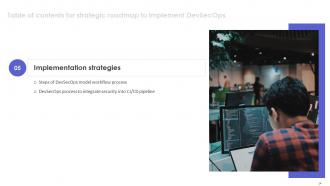
Slide 4: This slide is an introductory slide.
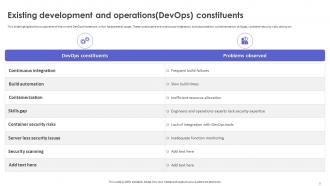
Slide 5: This slide highlights the components of the current DevOps framework, which faces several issues.
Slide 6: This slide is an introductory slide.
Slide 7: This slide discusses the issues faced by the organization in DevOps.
Slide 8: This slide summarizes DevOps security risks across different organizational departments.
Slide 9: This slide is an introductory slide.
Slide 10: This slide indicates the performance analysis of the organization’s current security infrastructure.
Slide 11: This slide is an introductory slide.
Slide 12: This slide discusses the working procedure of the DevOps model.
Slide 13: This slide mentions the workflow procedure of DevSecOps model.
Slide 14: This slide is an introductory slide.
Slide 15: This slide gives an overview of the working procedure of DevSecOps.
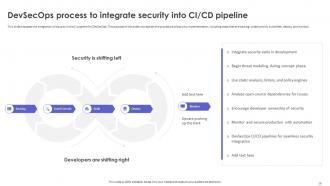
Slide 16: This slide discusses the integration of security in the CI pipeline for DevSecOps.
Slide 17: This slide is an introductory slide.
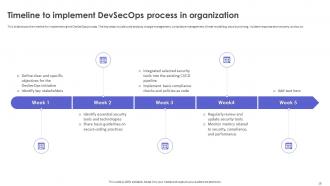
Slide 18: This slide shows the timeline for implementing the DevSecOps process.
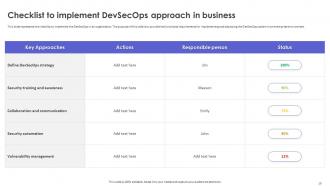
Slide 19: This slide represents the checklist to implement the DevSecOps in an organization.
Slide 20: This slide is an introductory slide.
Slide 21: This slide presents the team structure for the DevSecOps implementation project.
Slide 22: This slide shows the matrix to assign multiple responsibilities to the different team members for the cloud data encryption implementation project.
Slide 23: This slide is an introductory slide.
Slide 24: This slide discusses the pipeline security of DevSecOps.
Slide 25: This slide is an introductory slide.
Slide 26: This slide includes the continuous integration commit stage of the DevSecOps pipeline.
Slide 27: This slide contains the continuous deployment acceptance stage of the DevSecOps pipeline.
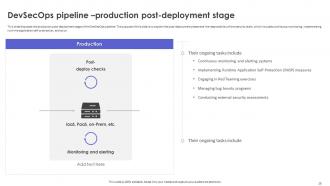
Slide 28: This slide puts the production post-deployment stage of the DevSecOps pipeline.
Slide 29: This slide is an introductory slide.
Slide 30: This slide represents the estimated and actual cost of implementing a DevSecOps system in an organization.
Slide 31: This slide is an introductory slide.
Slide 32: This slide presents the training schedule for strategy implementation for customers to manage, monitor, and troubleshoot DevSecOps implementation procedures.
Slide 33: This slide showcases the breakdown cost for the DevSecOps installation and management training for the customers.
Slide 34: This slide is an introductory slide.
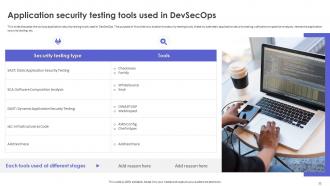
Slide 35: This slide discusses the various application security testing tools used in DevSecOps.
Slide 36: This slide is an introductory slide.
Slide 37: This slide highlights the project roadmap to implement the DevSecOps plan in an organization.
Slide 38: This slide is an introductory slide.
Slide 39: This slide entails the challenges faced while implementing DevSecOps process.
Slide 40: This slide is an introductory slide.
Slide 41: This slide represents the dashboard to track the DevSecOps performance.
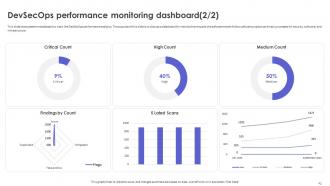
Slide 42: This slide showcases the dashboard to track the DevSecOps performance analytics.
Slide 43: This slide is an introductory slide.
Slide 44: This slide discusses the various impacts of the DevSecOps process in an organization.
Slide 45: This slide showcases the comparative analysis of the before versus after DevSecOps implementation.
Slide 46: This slide is an introductory slide.
Slide 47: This slide presents the case study related to DevSecOps.
Slide 48: This slide shows all the icons included in the presentation.
Slide 49: This slide is titled Additional Slides for moving forward.
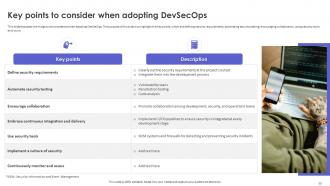
Slide 50: This slide discusses the things to be considered when adopting DevSecOps.
Slide 51: This slide represents the summary of the DevSecOps implementation project.
Slide 52: This slide is Our Team slide with names and designations.
Slide 53: This slide is an About Us slide to show company specifications etc.
Slide 54: This slide is a Timeline slide. Show data related to time intervals here.
Slide 55: This slide provides a 30-60-90-day plan with text boxes.
Slide 56: This slide depicts a Venn diagram with text boxes.
Slide 57: This slide presents a Roadmap with additional text boxes.
Slide 58: This slide showcases the suitable graph/chart.
Slide 59: This slide is a thank-you slide with address, contact numbers, and email address.
Strategic Roadmap To Implement DevSecOps Powerpoint Presentation Slides with all 67 slides:
Use our Strategic Roadmap To Implement DevSecOps Powerpoint Presentation Slides to effectively help you save your valuable time. They are readymade to fit into any presentation structure.

































FAQs for Strategic Roadmap To Implement DevSecOps
Okay so the big ones are shift-left security - basically bake security into development from day one instead of tacking it on later. Automate your security testing, obviously. Make it everyone's responsibility, not just the security team's problem. Continuous monitoring is clutch, and do threat modeling while you're designing stuff. Treat your infrastructure like code with proper version control. Oh and honestly? Plan like you're gonna get breached because you probably will at some point. Don't rely on manual security checks - code that shit right into your CI/CD pipeline. Start with one app first though, don't try to boil the ocean.
Honestly, just build security into your pipeline from the start instead of trying to add it later. Automate those vulnerability scans in CI/CD - catches stuff early when it's not a massive headache to fix. I've watched teams scramble to add security afterward and... yeah, don't do that to yourself. Get your devs trained on secure coding basics. Give them static analysis tools they can actually run on their own machines. Oh, and make it everyone's job, not just something you dump on the security team. Start with maybe two automated checks, then keep adding more as you go.
Honestly, the cultural stuff is gonna be your biggest headache. Developers hate anything that slows them down, and security teams get paranoid about moving too fast. Don't try to change everything at once - that's a recipe for disaster. Start with automated scanning in your CI/CD pipeline instead. Education is key here; show people how catching bugs early actually saves time later. I learned this the hard way, but seriously invest in decent tools from the start. Those "free" solutions will bite you eventually. Pick one project as your guinea pig and build from there once people see it works.
Dude, automation is like having a security guard that never sleeps. Set up automated scans and code analysis that trigger every time someone pushes code - trust me, manual reviews are painfully slow and people miss stuff. SAST, DAST, dependency scanners... throw them all into your CI/CD pipeline so security just happens automatically. I'm probably biased because I've seen too many late-night fire drills, but honestly? Start with just one tool and automate that first. Don't try to boil the ocean. Build it up piece by piece and you'll actually stick with it.
So basically you want to hit three main things: code scanning tools (SonarQube or Checkmarx are decent), container security like Twistlock, and infrastructure scanning with Terraform Sentinel or AWS Config. Dependency scanning is huge too - seriously, the vulnerable library situation is wild these days. For CI/CD, I'd go with Jenkins plus security plugins or just use GitLab since it has security stuff built in. You'll need HashiCorp Vault for secrets management. Oh, and monitoring with Splunk or ELK stack. Start with one tool per area though, don't go crazy all at once.
You'll definitely want to track security AND delivery stuff together - that's where the real insights are. Start with maybe 3-4 key metrics instead of going crazy with data. Track how fast you catch vulnerabilities, patch times for critical bugs, plus deployment frequency. The whole shift-left thing should mean fewer security issues hit production eventually. Don't forget developer happiness though - if your security tools are making everyone miserable, something's wrong. Oh, and set up dashboards for vulnerability trends, compliance scores, incident response times. Way easier than digging through reports every week.
Dude, training is make-or-break for DevSecOps. Security can't just be the security team's problem anymore - everyone needs to own a piece of it. Get your devs up to speed on secure coding, teach ops about infrastructure security, hell even PMs should know enough to catch red flags. Here's the thing though: without proper training, your teams will accidentally create vulnerabilities or skip security steps because they don't get why those controls exist in the first place. Focus on role-specific sessions first, then build shared docs that people will actually use. Makes all the difference.
Start with SAST and DAST tools baked right into your CI/CD pipeline - they'll catch issues on every commit automatically. Dependency scanning too, obviously. Infrastructure as code with security templates makes life easier, and proper secrets management is non-negotiable. Container scanning if you're using those. The trick is making it seamless for devs instead of annoying them constantly. Honestly, automated compliance checks save you from those nightmare audit conversations later. Don't go crazy initially though - pick one or two tools first, then expand. Your team will thank you for not dumping everything on them at once.
Dude, you've gotta stop letting each team live in their own bubble. Get developers, ops, and security actually working together on the same stuff daily - none of this "throw it over the wall" nonsense that everyone pretends works. Build your security scanning right into the CI/CD pipeline so there's no finger-pointing over different data. Those threat modeling sessions? Actually pretty useful for getting everyone on the same page. Oh, and definitely align your KPIs across teams. Nothing worse than security celebrating while dev is getting roasted for missing deadlines because of conflicting goals.
Track speed AND security together - that's the whole point. Mean time to fix vulnerabilities, how many builds actually pass security scans, security issues hitting production. Don't forget deployment frequency and lead time though. If security's making everything painfully slow, something's broken in your process. False positive rates matter too because nobody wants to deal with constant noise from scanning tools. Oh, and maybe start with like 3-4 metrics instead of going crazy with dashboards right away. You want metrics showing security actually helps you ship faster and safer, not just creates more hoops to jump through.
Think of it as your security system that never sleeps - it watches everything from when you first write code to when it's running live. Code gets scanned as you write it, containers get checked during builds, and production environments get monitored 24/7. Honestly, the feedback loop is game-changing because you catch problems right away instead of discovering them weeks later (been there, not fun). Set up automated alerts that actually mean something - nobody wants to get pinged for every tiny thing. I'd start with your most important stuff first, then build out from there.
Think of threat modeling as your security game plan for the whole DevSecOps pipeline. Start during design phase, but keep updating it as your app grows. STRIDE framework is pretty solid for beginners - don't overcomplicate it at first. Your threat model should drive what you focus on during code reviews and which automated tests you run. The real magic happens when you bake those findings into your CI/CD workflows so security just becomes part of the process. Way better than randomly adding security tools and hoping for the best. Short version: map out what could go wrong, then build defenses around that.
Honestly, you've gotta bake security checks into every step instead of dumping it all at the end. Set up automated scans that ping developers right where they're working - Slack alerts, PR comments, whatever they actually check. Make it instant so they can fix stuff while it's still fresh in their head. Trust me, debugging three-week-old code is torture nobody deserves. Oh, and do regular sit-downs with your security and dev teams to hash out what's actually working. Don't go crazy though - pick one feedback method first, then build from there.
Honestly, cloud-native makes DevSecOps way trickier but so much more powerful at the same time. Containers, microservices, orchestration - there's just more attack surface to worry about. The upside though? Way better automation and you get that immutable infrastructure magic that monoliths can't touch. Security scanning has to move left into your CI/CD pipeline now. Runtime protection becomes this whole thing with dynamic workloads. My advice? Get container scanning and policy-as-code set up early. Trust me on this one - it's a nightmare to retrofit later when you're trying to scale fast.
Dude, you've gotta connect your DevSecOps stuff to what the C-suite actually gives a damn about - revenue, customer trust, compliance headaches. Map your security work to real business risks and show how secure deployments get products to market faster while avoiding expensive breaches. Most teams I know just throw technical numbers at executives who have zero clue what they mean. Better approach? Translate everything: "We saved the company $X from potential losses" or "Cut audit prep time by 30%." Honestly, half the battle is just speaking their language. Track these connections and report back regularly so leadership sees the value.
-
“Superb. What a great finding. Thankful for SlideTeam. We were paying people to make slides which went all in vain. We are so happy to have found you.”
-
SlideTeam’s pool of 2Million+ PPTs has really benefited my team, everyone from the IT department to HR. We are lucky to have crossed ways with them.