

Strategy execution with context and content





Try Before you Buy Download Free Sample Product
 Impress Your
 Audience
 100%
100% Editable
 Save Hours
 of Time


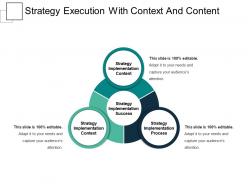
Demonstrate the strategic execution process with Strategy Execution With Context And Content PowerPoint presentation. Portray the various steps of strategy generation with the help of this strategy monitoring PowerPoint visual viz. building commitment, managing resources, gathering knowledge about theory, etc. Take advantage of this strategy engagement PowerPoint infographic to ensure that all the requisite elements and resources are in the place to make the process a successful one. You can include all the crucial parameters such as environmental scans, SWOT analyses, strategic issues and goals in this strategic analysis PPT background image. Take the assistance of this activity execution PowerPoint graphic and assign individuals to tasks and timelines that will consequently help your company to achieve its long-term goals. Employ collective tools, processes, and techniques in this strategy formulation PPT layout that will allow your business concern to align its business strategy with the overall mission of the company. Hence, download this idea implementation PPT graphic to execute your strategy in the most feasible manner and reach great heights in your industry.
People who downloaded this PowerPoint presentation also viewed the following :
Strategy execution with context and content with all 5 slides:
Our Strategy Execution With Context And Content add asset by asset. Ensure good growth of your capital.



FAQs for Strategy execution with
Critical components of an effective strategy execution plan include clear performance metrics, defined accountability structures, resource allocation frameworks, communication protocols, and regular monitoring systems. These elements work together by establishing measurable objectives, assigning ownership responsibilities, and ensuring adequate funding, while enabling organizations across industries like healthcare, manufacturing, and financial services to track progress systematically and deliver sustained competitive advantage.
Organizations align teams and resources for optimal strategy execution through clear communication of strategic objectives, establishing cross-functional accountability structures, and implementing robust performance measurement systems. Through strategic resource allocation and regular progress reviews, companies streamline decision-making processes, enhance operational coordination, and maintain strategic focus, with many finding that consistent alignment mechanisms ultimately deliver faster execution timelines and sustainable competitive advantage.
Leadership drives strategic plan execution by setting clear vision, allocating resources effectively, maintaining accountability systems, and fostering organizational alignment throughout implementation phases. Through consistent communication and decision-making authority, leaders enable teams to navigate challenges, adapt to market changes, and deliver measurable outcomes, with many organizations finding that engaged leadership ultimately determines whether strategic initiatives achieve their intended competitive advantages.
Companies can measure strategy execution success through key performance indicators, milestone tracking, financial metrics, employee engagement scores, and customer satisfaction data. These measurement approaches enable organizations to assess progress across departments, identify implementation gaps, and adjust tactics in real-time, with many finding that regular monitoring ultimately delivers improved accountability, faster course corrections, and enhanced competitive advantage.
Organizations should avoid inadequate communication cascading, insufficient resource allocation, lack of accountability mechanisms, poor progress monitoring, and resistance to cultural change during strategy execution. These pitfalls often derail initiatives in sectors like retail and healthcare, where successful execution requires clear ownership structures, regular milestone tracking, and adaptive leadership approaches, ultimately determining whether strategic investments deliver competitive advantage.
Technology enhances strategy execution by automating progress tracking, facilitating real-time data analysis, and streamlining cross-departmental communication through integrated platforms. These digital solutions enable organizations to monitor KPIs continuously, adjust tactical approaches quickly, and maintain strategic alignment across all levels, with many enterprises finding that automated dashboards and collaborative tools significantly reduce execution delays while improving overall strategic outcomes.
Techniques include setting clear performance expectations, implementing regular check-ins and progress reviews, establishing transparent reporting systems, creating cross-functional accountability partnerships, and linking individual goals to strategic outcomes. These approaches enhance organizational alignment by encouraging ownership, facilitating real-time course corrections, and ensuring consistent communication across teams, with many companies finding that structured accountability frameworks ultimately deliver improved execution rates and stronger strategic results.
Clear communication improves strategy execution by ensuring alignment across all organizational levels, eliminating ambiguity in roles and responsibilities, and creating shared understanding of strategic objectives. Through transparent communication channels, organizations streamline decision-making processes, reduce implementation delays, and enhance employee engagement, with many companies finding that regular strategic updates ultimately deliver faster execution and measurable performance improvements.
Best practices for engaging stakeholders in strategy execution include establishing clear communication channels, defining specific roles and responsibilities, creating regular feedback mechanisms, implementing transparent progress tracking, and fostering collaborative decision-making processes. These approaches streamline alignment by building stakeholder ownership, minimizing resistance, and ensuring consistent strategic focus, with many organizations finding that engaged stakeholders accelerate implementation timelines and deliver superior execution outcomes.
Organizations can adjust strategy execution by implementing agile planning cycles, establishing real-time performance monitoring systems, creating flexible resource allocation mechanisms, and developing rapid decision-making frameworks. Through these adaptive approaches, companies in sectors like retail and technology can pivot quickly during market shifts, reallocate investments strategically, and maintain competitive positioning, with many finding that continuous strategy refinement ultimately delivers sustained growth and market resilience.
Effective strategy execution KPIs include financial performance indicators, operational efficiency metrics, customer satisfaction scores, employee engagement levels, and milestone completion rates. These metrics enable organizations to track progress across multiple dimensions, with many companies finding that balanced scorecards combining leading and lagging indicators deliver comprehensive visibility into strategic progress and competitive advantage.
Employee training and development significantly enhances strategy execution by aligning workforce capabilities with strategic objectives, improving performance consistency, and building essential competencies for organizational change. Through targeted skill development programs, organizations streamline implementation processes, reduce execution gaps, and accelerate strategic outcomes, with many companies finding that well-trained teams deliver measurably faster results and sustained competitive advantage.
**INPUT**: What strategies can be employed to ensure cross-departmental collaboration during execution? **OUTPUT**: Cross-departmental collaboration strategies include shared performance metrics, regular cross-functional meetings, integrated project management systems, clear communication protocols, and joint accountability frameworks. These approaches streamline execution by breaking down silos, aligning objectives, and enhancing transparency, with many organizations finding that strategic coordination ultimately delivers faster project completion and improved operational efficiency. [Word count: 54 words]
Risk management can be integrated into strategy execution through continuous risk assessment, establishing risk-based performance metrics, creating contingency planning protocols, and embedding risk considerations into decision-making frameworks. Organizations increasingly develop strategic risk registers alongside execution plans, enabling teams to proactively address potential obstacles while maintaining strategic momentum, ultimately delivering more resilient outcomes and sustainable competitive advantage.
Feedback serves as a critical mechanism for identifying execution gaps, measuring performance against strategic objectives, and enabling real-time course corrections throughout implementation phases. Organizations leverage continuous feedback loops from employees, customers, and stakeholders to refine processes, optimize resource allocation, and enhance decision-making, ultimately delivering improved strategic outcomes and sustainable competitive advantage.
-
I discovered this website through a google search, the services matched my needs perfectly and the pricing was very reasonable. I was thrilled with the product and the customer service. I will definitely use their slides again for my presentations and recommend them to other colleagues.
-
Excellent products for quick understanding.