


Succession Planning Powerpoint Ppt Template Bundles





Try Before you Buy Download Free Sample Product
 Impress Your
 Audience
 100%
100% Editable
 Save Hours
 of Time


Our Succession Planning Powerpoint Ppt Template Bundles are topically designed to provide an attractive backdrop to any subject. Use them to look like a presentation pro.
People who downloaded this PowerPoint presentation also viewed the following :
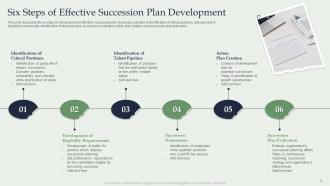
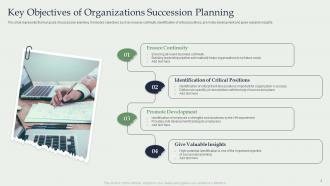
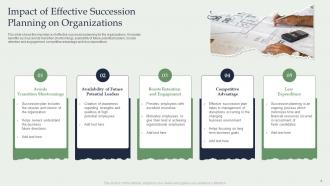
Succession Planning Powerpoint Ppt Template Bundles with all 17 slides:
Use our Succession Planning Powerpoint Ppt Template Bundles to effectively help you save your valuable time. They are readymade to fit into any presentation structure.







FAQs for Succession Planning Powerpoint
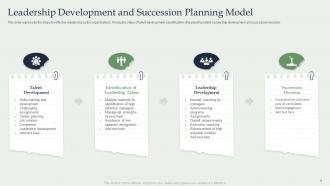
Organizations should consider talent identification and assessment, leadership development programs, knowledge transfer mechanisms, timeline planning, and risk mitigation strategies when developing succession plans. These factors work together by mapping critical roles, nurturing internal candidates, and ensuring business continuity, with many companies finding that strategic succession planning reduces recruitment costs while maintaining operational stability during leadership transitions.
Succession planning ensures leadership continuity by identifying high-potential employees, developing their skills through mentoring and training programs, and creating clear pathways for advancement within the organization. This strategic approach minimizes disruption during leadership transitions, maintains institutional knowledge, and enables seamless operations, with many companies finding that well-executed succession plans deliver sustained performance and competitive advantage.
Employee development serves as the foundation of succession planning by identifying high-potential candidates, providing targeted training, mentoring opportunities, cross-functional experience, and leadership skill building. Through strategic development programs, organizations cultivate internal talent pools, reduce external recruitment costs, and ensure seamless leadership transitions, with many companies finding that comprehensive development initiatives significantly enhance retention and organizational continuity.
Organizations identify high-potential employees through comprehensive talent assessments, performance evaluations, 360-degree feedback, leadership competency frameworks, and behavioral interviews that evaluate strategic thinking and adaptability. These identification methods enable companies to build robust leadership pipelines by recognizing emerging leaders early, ultimately delivering stronger succession outcomes and competitive advantage in talent retention.
Common succession planning pitfalls include inadequate talent identification, limited leadership development programs, poor communication about career paths, lack of diversity in candidate pools, and insufficient mentoring systems. Organizations can avoid these challenges by implementing comprehensive assessment processes, creating structured development opportunities, establishing transparent succession criteria, actively cultivating diverse leadership pipelines, and fostering continuous coaching relationships, ultimately ensuring stronger organizational continuity.
Technology and data analytics enhance succession planning by identifying high-potential candidates through performance metrics, predicting future leadership needs using workforce analytics, and tracking skill development gaps across organizations. Through AI-powered assessment tools and predictive modeling, companies streamline talent identification, accelerate leadership development programs, and make data-driven succession decisions, ultimately reducing leadership transition risks while building stronger talent pipelines.
Engaging current leaders in succession planning involves creating mentorship programs, establishing knowledge transfer initiatives, involving them in talent assessment processes, and linking succession activities to performance evaluations. These strategies work by fostering ownership through direct participation, enabling leaders to shape their legacy, and providing clear pathways for career development, with many organizations finding that engaged leaders become more invested in developing their successors and ensuring organizational continuity.
Organizations should balance internal and external recruitment by developing 70-80% of key roles through internal talent development while strategically sourcing 20-30% externally for fresh perspectives and specialized skills. This approach enables companies to maintain institutional knowledge, reduce hiring costs, and boost employee retention, while external hires bring innovation, industry best practices, and competitive insights, ultimately delivering both continuity and transformation.
Legal implications include compliance with employment laws, anti-discrimination regulations, fiduciary duties, contractual obligations, and securities regulations for public companies. These considerations streamline organizational transitions by ensuring proper documentation, transparent processes, and regulatory adherence, with many institutions finding that proactive legal planning ultimately delivers smoother leadership changes and reduced liability risks.
Succession plans should be reviewed annually at minimum, with updates triggered by organizational changes, retirements, promotions, or strategic shifts. Many companies conduct quarterly assessments of key positions while performing comprehensive annual reviews, ensuring plans remain aligned with business goals, talent development, and evolving leadership requirements in an increasingly dynamic business environment.
Cultural factors significantly influence succession planning by shaping leadership expectations, communication styles, decision-making processes, and talent development approaches within organizations. Companies with collaborative cultures often emphasize mentorship and cross-functional development, while hierarchical environments may focus on formal leadership pipelines, ultimately determining how effectively organizations identify, develop, and transition future leaders.
Succession planning metrics include leadership pipeline depth, time-to-fill critical roles, internal promotion rates, retention of high-potential employees, and successor readiness scores. These measurements enable organizations to track talent development effectiveness, reduce recruitment costs, and minimize operational disruptions, with many companies finding that comprehensive metrics ultimately deliver stronger leadership continuity and competitive advantage.
Mentorship programs accelerate succession planning by pairing high-potential employees with experienced leaders, facilitating knowledge transfer, skill development, and cultural continuity. Through structured guidance and real-world exposure, organizations create robust talent pipelines while enabling seamless leadership transitions, with many companies finding that mentored successors demonstrate higher retention rates and faster performance optimization.
Diversity, equity, and inclusion ensure succession planning identifies and develops talent from all backgrounds, creating more comprehensive leadership pipelines that reflect organizational demographics and market realities. Through inclusive assessment processes, mentorship programs, and expanded talent pools, companies enhance decision-making capabilities, improve employee engagement, and ultimately deliver stronger business performance with leadership teams that represent diverse perspectives and experiences.
Succession planning aligns with strategic goals by identifying critical leadership competencies needed for future growth, mapping talent development to organizational priorities, and ensuring continuity of strategic initiatives. Through targeted leadership development programs, organizations create talent pipelines that support expansion plans, with many companies finding that strategic succession planning reduces leadership gaps by 40% while accelerating goal achievement.
-
Fantastic and innovative graphics with useful content. The templates are the best and latest in the industry.
-
Wonderful ideas and visuals. I'm really pleased with the templates, which are unique and up to date.