


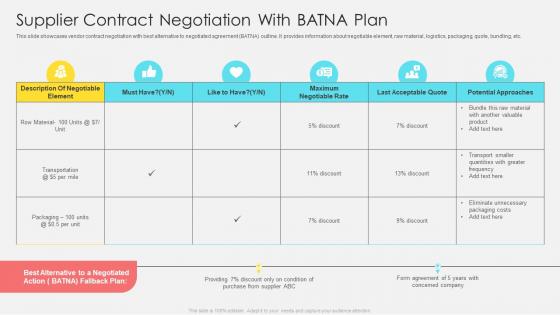
Supplier Contract Negotiation With BATNA Plan




Try Before you Buy Download Free Sample Product
 Impress Your
 Audience
 100%
100% Editable
 Save Hours
 of Time


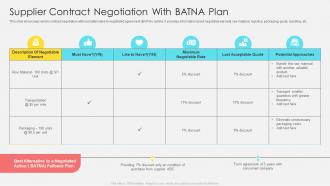
This slide showcases vendor contract negotiation with best alternative to negotiated agreement BATNA outline. It provides information about negotiable element, raw material, logistics, packaging, quote, bundling, etc.
People who downloaded this PowerPoint presentation also viewed the following :
Supplier Contract Negotiation With BATNA Plan with all 6 slides:
Use our Supplier Contract Negotiation With BATNA Plan to effectively help you save your valuable time. They are readymade to fit into any presentation structure.





FAQs for Supplier Contract Negotiation
BATNA means "Best Alternative to a Negotiated Agreement" - your backup plan if things go south. What will you do if this deal doesn't work out? Maybe you've got other job offers, or another supplier lined up. That's your BATNA right there. The stronger it is, the more confident you'll feel walking into negotiations. You won't come across as desperate (which people can smell from a mile away, honestly). I learned this the hard way in my last salary negotiation - didn't have any other offers and it showed. Take time beforehand to map out your alternatives and strengthen them if possible.
Look, having a solid BATNA is like having a safety net - you're not scrambling to accept whatever crappy deal they throw at you. I've seen people cave way too easily just because they're terrified of walking away empty-handed. But when you know exactly what you'll do if this negotiation tanks? That confidence is obvious. You'll push harder for what you actually want. Honestly, it also helps you spot whether their offer is genuinely good or if you're just panicking. Quick tip - spend like 10 minutes before any negotiation figuring out your backup plan. Trust me on this one.
So basically, you want backup options before negotiating anything. Could be another vendor, different supplier (maybe pricier but whatever), or just doing it yourself instead of outsourcing. Job stuff? Having another offer in your pocket or being cool with staying put. Partnership deals - you can always go solo or find someone else to work with. Sometimes walking away is your best move, which honestly catches people off guard more than you'd think. The trick is figuring out what you'd actually do if this deal falls through. Once you know that, you won't feel pressured into taking garbage terms.
Look at three main things: is it actually realistic, what's the real value, and how fast can you pull the trigger on it. Don't bullshit yourself about whether your backup plan will actually work - I've watched too many people count on flaky alternatives. Figure out the concrete benefits: cash, time, whatever actually matters to you. Timeline matters too. The more solid your BATNA is, the better you'll feel walking into that negotiation. Honestly, write the details down so you're not just crossing your fingers and hoping it'll pan out when push comes to shove.
So your BATNA is basically what sets your walk-away point - you'll know exactly when to bail on a crappy deal. Having a solid backup plan gives you way more confidence to push for what you actually want. It's like having a safety net, you know? When you've got strong alternatives, you can afford to take bigger risks in the negotiation. But if you don't know your BATNA, you're just flying blind and might end up accepting something terrible when better options exist. Honestly, I think most people skip this step and it shows. Always map out your best alternative before going in.
Don't just blurt out that you have other options - that sounds desperate. Instead, ask stuff like "What would make this better than my other choices?" Timeline pressure works too. Honestly, I've seen people blow deals by making empty threats, so only mention alternatives when you actually have them. You can also bring up what you've heard the market's paying without naming names. Save the direct "I have other offers" bomb for when things get serious - and only if it's true. Oh, and don't give away too many details upfront.
Don't tell them your backup plan - huge mistake. They'll just offer you something barely better than what you can get elsewhere. Why give them that advantage? It's like showing your cards too early. Plus they might even mess with your other options if they know what they are. Better to just hint that you've got alternatives without getting specific. Something like "I'm exploring a few different paths" works. That way you still have some mystery working for you. Trust me, keep them guessing about what else you might do.
BATNA is basically your backup plan - what you'd do if this whole negotiation crashes and burns. It's totally different from ZOPA and reservation price though. Your reservation price? That's the worst deal you'd actually take in THIS negotiation. BATNA is your best option somewhere else entirely. ZOPA is where both people's ranges overlap - honestly the simplest concept of the three. Here's the thing: your BATNA actually sets your reservation price, which is why you should always figure out your alternatives first. Otherwise you're just guessing at what's acceptable.
Okay so when your backup plan is trash, you gotta think outside the box. Try cooking up some other options beforehand - even crappy alternatives are better than nothing. Since you can't really walk away, focus hard on connecting with them and finding stuff that benefits everyone. Do your homework on why your position makes sense and figure out what they actually want. Honestly? Sometimes having no good alternatives forces you to get more creative than you would otherwise. Instead of going in all "take it or leave it," shift to "okay how do we both win here." Start thinking of backup plans right now though.
Okay so here's what saved my ass in negotiations - map out what you'll actually do if this deal tanks. Don't just think about backup options, go make a couple real. Like actually call other people, get numbers, figure out timelines. I used to wing it and got burned pretty bad once. The trick is having concrete alternatives, not just "oh I could probably find something else." Put real numbers on them. Honestly, walking in with two solid backup plans changes everything - suddenly you're not desperate and they can tell. It's weird how much that shifts the whole dynamic.
Oh man, cultural stuff totally changes your backup plan game. Like, you think "I'll just walk away and find another vendor" sounds reasonable, right? But in some cultures that's basically relationship suicide - you're burning bridges you didn't even know were there. Time's another weird factor. Your timeline might feel totally normal to you but comes across as crazy rushed to them. What counts as a decent alternative is all over the map too, depending on how they view hierarchy, group vs individual choices, that whole thing. Honestly, do some homework on their cultural background first or your BATNA might be worthless.
Okay, so first thing - stop and figure out where you actually stand now. Did your backup plan get better? Then you can push harder for more stuff. Got worse? Time to get creative instead of being stubborn about your demands. Here's the tricky part though - don't let them see that anything changed (unless it helps you, duh). Maybe take a break to figure out your whole approach again? I'd probably do that honestly. You need to know your new walk-away point before you say anything else.
Comparison charts work really well - just put your BATNA next to what they're offering so everyone can see the difference. Decision trees are solid if you've got multiple backup options. Personally, I think pros/cons lists are the easiest for presentations since people get them instantly. Traffic light colors (red/yellow/green) make it obvious which alternatives actually make sense. Even something basic like a flowchart saying "if this bombs, we go with plan B" helps people understand you're not desperate. Oh, and don't overcomplicate the visuals - you want them thinking about strategy, not trying to decode some weird diagram you spent three hours making.
Honestly, having a solid backup plan makes you way more confident at the table. You're not scrambling to accept whatever scraps they throw at you. Instead, you can actually focus on finding something that works for everyone. Trust me, nobody wants to deal with that awkward tension later when someone feels like they got ripped off. When you know what you're worth and have other options, people respect that. It keeps you grounded about what's actually fair - which is huge for building real trust. Plus you won't end up in one of those partnerships where someone's secretly bitter about the terms.
Ask them open-ended stuff about their timeline and what happens if this falls through. People usually crack under pressure - watch how they react to your proposals. Do they sound rushed? Are they jumping at everything you say? That's your clue right there. Also, knowing their industry helps tons because you can guess what other options they actually have. I swear, half the battle is just getting them comfortable enough to overshare. The more they ramble, the more you'll figure out their backup plan. Market research doesn't hurt either if you have time for that.
-
Excellent Designs.
-
Thanks to SlideTeam, we have an ideal template to present all the info we need to cover. Their slides give our numbers and projections a more clear and enchanting look.