


Supply Chain Risk Management Approaches Organization Process Planning Evaluate




Try Before you Buy Download Free Sample Product
 Impress Your
 Audience
 100%
100% Editable
 Save Hours
 of Time


Our Supply Chain Risk Management Approaches Organization Process Planning Evaluate are topically designed to provide an attractive backdrop to any subject. Use them to look like a presentation pro.
People who downloaded this PowerPoint presentation also viewed the following :
Supply Chain Risk Management Approaches Organization Process Planning Evaluate with all 12 slides:
Use our Supply Chain Risk Management Approaches Organization Process Planning Evaluate to effectively help you save your valuable time. They are readymade to fit into any presentation structure.
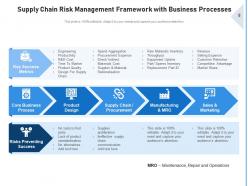
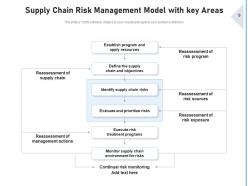
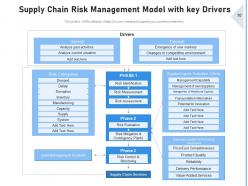
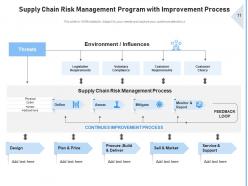

FAQs for Supply Chain Risk Management Approaches Organization
Honestly, it all comes down to single points of failure - supplier dependency, geographic clustering, demand spikes. Natural disasters and geopolitical stuff like trade wars can wreck you overnight. Cyber attacks on your suppliers are becoming a real nightmare too. Don't just look at your main suppliers either, dig into the whole network. Financial instability of key partners will bite you hard. Quality issues spread fast. Map out your most critical components first, then trace backwards through the chain. I learned this the hard way when our main vendor went under last year.
Honestly, IoT sensors and tracking systems are your best bet for seeing what's happening across your whole supply chain in real time. AI and machine learning can actually predict problems before they hit - way better than trying to spot patterns yourself. Weather delays, supplier drama, inventory mess-ups - you'll catch them early. Blockchain's pretty solid for transparency too, though I know that sounds buzzy. The trick is connecting everything so you're not switching between a million different screens. Pick whatever area's causing you the biggest headaches right now and start there.
Honestly, supplier selection is like your main defense against supply chain disasters. Don't just focus on price and quality - dig into their financial health, where they're located, compliance track record, all that stuff. Diversify your suppliers too because putting all your eggs in one basket is asking for trouble. Oh, and check out their suppliers as well since problems trickle down. I'd create some kind of scoring system that balances risk with your usual criteria. Always keep backup suppliers ready to go - learned that one the hard way! Geographic spread matters more than people think.
First thing - map out your whole supplier network, not just the obvious ones but their suppliers too. Yeah, it's a pain but you need that visibility. Run risk assessments on geographic spread, how financially solid they are, operational dependencies. Send questionnaires and do site visits to see how they handle their own risk management. Don't forget external stuff like political drama, natural disasters, regulatory changes in their regions. Honestly, a scoring system works best for figuring out which relationships need backup plans first.
Start by mapping out your whole supply chain - every supplier and what they depend on. Find your critical failure points and figure out how likely disruptions are plus their impact. Build in backup suppliers for critical stuff (costs more upfront but trust me, you'll thank yourself later). Don't just check on suppliers once a year - monitor them constantly. Set up clear escalation protocols so everyone knows their role when shit hits the fan. Oh, and run scenario planning exercises regularly to test everything. Actually had a client skip this step once and it bit them hard during COVID.
Trade wars and political drama can totally wreck your supply chains. Border closures, sanctions - all that stuff hits hard when you're relying on suppliers from sketchy regions. Here's what works: spread your suppliers around geographically so you're not screwed if one area goes sideways. Map out where your critical parts actually come from, then hunt down backup sources. Oh, and run some worst-case scenarios - what happens if borders slam shut or tariffs spike overnight? Building that flexibility upfront saves you from panicking later when everything's falling apart. Trust me, scrambling for new suppliers mid-crisis is not fun.
Think of inventory like your emergency fund - you need enough buffer stock to handle supplier delays or sudden demand jumps without panicking. But don't go crazy hoarding everything because that just locks up your cash. I'd start by looking at your past disruptions to figure out realistic safety levels. Use stuff like ABC analysis and demand forecasting to get smart about it. Too little and you're scrambling when things go sideways. Too much and you're basically paying to store things that might never sell. The trick is hitting that balance where you're protected but not drowning in excess stock.
Dude, first thing - get everyone on the same page with how you're talking about risks. Like, create standard categories so when someone says "high risk" you all mean the same thing. Set up monthly check-ins or quarterly reviews, whatever fits your timeline. A supplier portal works great for this - everyone can see the same dashboards and updates. The tricky part? Actually getting people to use it consistently (I swear, some folks will do anything to avoid logging in). Map out who needs what info and when, then build everything around that. Half your headaches will disappear once communication flows properly.
Honestly, diversification is your best friend here - never rely on just one supplier for critical stuff. Map out your whole supply chain so you can spot trouble before it hits. I'd definitely build relationships with backup suppliers now, not when you're scrambling. Yeah, keeping extra inventory costs money, but trust me, it's way cheaper than dealing with shutdowns later. Cross-train people so they can jump between roles when things go sideways. Oh, and create a solid response plan with clear roles and communication lines. Start by listing your most important suppliers, then find alternatives for each one.
Ugh, regulatory changes are such a nightmare - they basically blow up your entire risk management setup. You'll have to rebuild supplier vetting from scratch, plus get new monitoring systems and redo all your backup plans. Global sourcing makes it even messier since each region has different rules. What passes in Europe might be totally illegal here, you know? I learned this the hard way last year when new regs dropped out of nowhere. Building flexibility into your supply chain is really the only way to survive these curveballs without losing your mind.
Look at four main areas: how your suppliers are performing (delivery times, quality), their financial health, where they're all located, and inventory levels. Most companies already track this stuff somewhere - you just need dashboards that actually alert you when shit hits the fan. Like if 70% of your suppliers are clustered in one area or a key vendor starts missing deliveries. Financial metrics are huge too - credit scores, payment terms, all that. Honestly, geographic risk gets overlooked way too much. Start with whatever's easiest to pull together first, then expand from there.
Honestly, working closely with your supply chain partners is like having backup when things go sideways. You'll spot problems way earlier instead of getting blindsided. Share resources when someone's struggling, build contingency plans together - basically don't go it alone. The tricky part is being open about where you're vulnerable (feels weird at first, I get it), but how can they help if they don't know what's broken? Start small though. Pick your most important suppliers and set up monthly calls to talk through potential issues. Way better than crossing your fingers and hoping nothing breaks.
So data analytics is like your early warning system for when supply chains go sideways. You can catch patterns in how suppliers are performing and predict where bottlenecks might hit. Honestly, it's way better than just crossing your fingers and hoping nothing breaks. Focus on predictive models that track supplier finances, political stuff, weather - all the chaos that screws things up. Start collecting data from everywhere you touch the supply chain. Then get tools that actually make sense of it all instead of just giving you pretty charts that don't help anyone.
Honestly, climate stuff is throwing all the old risk management strategies out the window. You can't just react anymore when floods and hurricanes are smashing supply chains left and right. What's working now is spreading suppliers across different regions - not putting all your eggs in one geographic basket, you know? Real-time monitoring helps catch problems before they explode, though it's pricey. Buffer inventory costs more upfront but saves your ass later. Start by checking where your current suppliers are located against climate risk maps. That'll show you the scary vulnerabilities fast.
Yeah, cyber attacks can totally mess up your supply chain. Hackers break into supplier systems to steal data or mess with production schedules. Sometimes they even plant malware in products before you get them. Your logistics networks are targets too - they'll redirect shipments or grab shipping info. Here's the thing that really gets me: one hacked supplier becomes a backdoor into your whole network. I know a company that lost weeks of production because ransomware hit just one key supplier. You've got to check your suppliers' security regularly and have response plans ready for these situations.
-
Best way of representation of the topic.
-
Very unique, user-friendly presentation interface.
-
Understandable and informative presentation.
-
Great designs, really helpful.
-
The content is very helpful from business point of view.
-
Understandable and informative presentation.