


Supply Chain Security Powerpoint Ppt Template Bundles




Try Before you Buy Download Free Sample Product
 Impress Your
 Audience
 100%
100% Editable
 Save Hours
 of Time


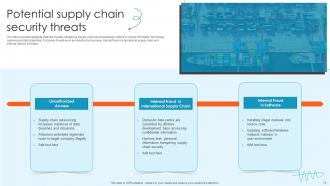
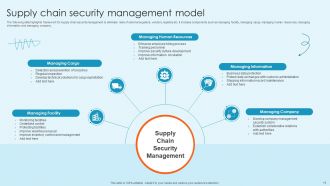
Introducing our comprehensive PowerPoint PPT presentation on Supply Chain Security a cuttingedge solution designed to fortify your business against potential threats. This powerful presentation delves into the realms of data protection, automation, software, and cyber security to safeguard your supply chain from vulnerabilities. Gain insights into risk reduction strategies and learn how to implement advanced technologies to streamline operations while ensuring the utmost security. With this PPT, your team will be equipped to tackle challenges headon, bolstering the resilience of your supply chain and reinforcing your organizations overall security posture. Stay one step ahead in todays evolving landscape with our Supply Chain Security PPT, your ultimate resource for safeguarding your business.
People who downloaded this PowerPoint presentation also viewed the following :
Supply Chain Security Powerpoint Ppt Template Bundles with all 23 slides:
Use our Supply Chain Security Powerpoint Ppt Template Bundles to effectively help you save your valuable time. They are readymade to fit into any presentation structure.







FAQs for Supply Chain Security Powerpoint
Modern supply chains face vulnerabilities including third-party vendor risks, inadequate visibility across complex networks, cybersecurity gaps, single points of failure, and insufficient authentication protocols. These weaknesses create opportunities for disruption, data breaches, and counterfeit products, with many organizations finding that comprehensive risk assessment and diversified supplier strategies ultimately deliver enhanced resilience and competitive advantage.
Organizations assess supply chain security risks through comprehensive vendor audits, third-party risk assessments, continuous monitoring systems, security questionnaires, and on-site inspections of critical suppliers. These evaluation methods enable companies to identify vulnerabilities, establish security baselines, and implement risk mitigation strategies, with many manufacturers and retailers finding that regular assessments significantly reduce operational disruptions and enhance overall resilience.
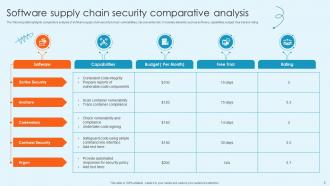
Technology plays a crucial role in enhancing supply chain security through blockchain for transparency, IoT sensors for real-time monitoring, AI for threat detection, RFID for tracking, and automated compliance systems. These solutions streamline operations by providing end-to-end visibility, enabling rapid response to disruptions, and minimizing risks, with many organizations finding that strategic technology integration delivers competitive advantage and operational resilience.
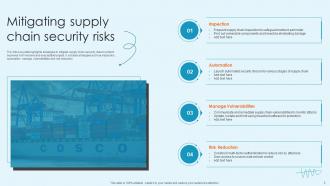
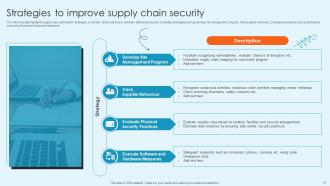
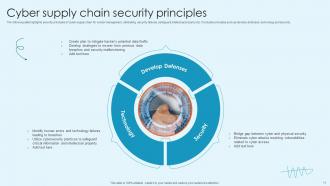
Companies can mitigate supply chain cybersecurity threats through vendor risk assessments, multi-factor authentication, network segmentation, continuous monitoring, and incident response planning. These strategies work by establishing security baselines for suppliers, isolating critical systems, and enabling rapid threat detection, with organizations in manufacturing and retail finding that comprehensive supply chain security programs reduce breach risks while maintaining operational efficiency.
Collaboration among suppliers improves supply chain security by enabling shared threat intelligence, standardized security protocols, and coordinated incident response across all network partners. Through collaborative platforms and information sharing agreements, suppliers collectively identify vulnerabilities, implement consistent protective measures, and respond faster to disruptions, ultimately delivering enhanced resilience and reduced risk exposure for all stakeholders.
**INPUT**: What government regulations impact supply chain security best practices? **OUTPUT**: Key regulations include FISMA, NIST frameworks, FDA supply chain requirements, financial services compliance standards, and international trade security mandates. These regulations enhance supply chain transparency by mandating risk assessments, vendor verification, and continuous monitoring, with many organizations finding that compliance ultimately delivers competitive advantage and operational resilience. **Word count**: 50 words
Global sourcing complicates supply chain security by introducing multiple regulatory environments, diverse vendor standards, extended transportation networks, and limited visibility across international partners. Organizations face challenges with inconsistent quality controls, varying cybersecurity protocols, and geopolitical risks, while managing complex logistics ultimately requires enhanced monitoring systems and strategic risk mitigation frameworks.
Common supply chain security breach indicators include unexpected system slowdowns, unauthorized network access, anomalous data transfers, vendor credential compromises, and unusual third-party communications. These warning signs help organizations detect threats by monitoring network traffic, validating supplier authenticity, and tracking data flows, with many companies finding that early detection through comprehensive monitoring ultimately prevents significant operational disruptions and financial losses.
Effective supply chain security training programs include role-based cybersecurity modules, vendor risk assessment workshops, incident response simulations, phishing awareness exercises, and compliance requirement education. These programs enhance organizational resilience by building employee recognition of third-party vulnerabilities, strengthening authentication protocols, and improving threat detection capabilities, with many manufacturing and retail companies finding that comprehensive training significantly reduces security breaches and operational disruptions.
Organizations can ensure supplier data integrity through comprehensive verification processes, real-time monitoring systems, blockchain-based tracking, regular audits, and multi-source validation protocols. These approaches enable companies to detect discrepancies, verify certifications, and maintain transparent supply chains, with many manufacturers and retailers finding that automated validation systems significantly reduce risks while enhancing operational efficiency and supplier trust.
Supply chain security performance metrics include threat detection rates, vendor compliance scores, incident response times, supply chain visibility percentages, and risk assessment frequencies. These measurements enable organizations to monitor vulnerabilities across their networks, evaluate supplier security standards, and track remediation effectiveness, with many companies finding that comprehensive metrics ultimately deliver enhanced operational resilience and competitive advantage.
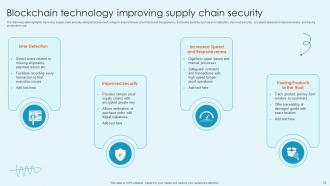
Blockchain technology enhances supply chain transparency and security by creating immutable transaction records, enabling real-time tracking, and providing decentralized verification across all stakeholders. Through distributed ledgers, companies in manufacturing, pharmaceuticals, and food services can trace products from origin to consumer, reduce counterfeiting risks, and streamline compliance reporting, ultimately delivering greater trust and operational efficiency.
Companies should establish crisis response teams, activate alternative suppliers, communicate transparently with stakeholders, assess financial impacts, and implement recovery protocols. Through real-time monitoring and contingency planning, organizations in manufacturing, retail, and healthcare can minimize operational downtime, maintain customer relationships, and strengthen supply chain resilience, ultimately delivering competitive advantage in an increasingly volatile business environment.
Ethical sourcing practices enhance supply chain security by establishing transparent vendor relationships, implementing rigorous supplier audits, and ensuring compliance with international standards. These approaches minimize risks from unreliable suppliers, reduce exposure to regulatory violations, and build resilient partnerships, with many manufacturing and retail organizations finding that ethical sourcing ultimately delivers greater operational stability and competitive advantage.
Successful supply chain security implementations include Walmart's blockchain food traceability system, Maersk's TradeLens platform for container tracking, and Boeing's supplier verification programs across aerospace manufacturing. These strategic initiatives streamline risk management, enhance transparency, and accelerate incident response, with many organizations finding that comprehensive security frameworks ultimately deliver operational resilience and competitive advantage.
-
Visually stunning presentation, love the content.
-
Easy to use and customize templates. Helped me give a last minute presentation.