


Survey Results Regarding Benefits Of Supplier Supplier Management For Efficient Operations Strategy SS




Try Before you Buy Download Free Sample Product
 Impress Your
 Audience
 100%
100% Editable
 Save Hours
 of Time


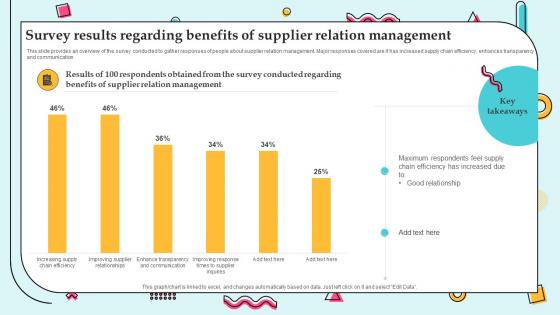
This slide provides an overview of the survey conducted to gather responses of people about supplier relation management. Major responses covered are it has increased supply chain efficiency, enhances transparency and communication
People who downloaded this PowerPoint presentation also viewed the following :
Survey Results Regarding Benefits Of Supplier Supplier Management For Efficient Operations Strategy SS with all 10 slides:
Use our Survey Results Regarding Benefits Of Supplier Supplier Management For Efficient Operations Strategy SS to effectively help you save your valuable time. They are readymade to fit into any presentation structure.









FAQs for Survey Results Regarding Benefits Of Supplier Supplier Management For Efficient
Key components of an effective supplier management strategy include supplier selection and evaluation, performance monitoring, contract management, relationship building, and risk assessment. These elements work together by establishing clear performance metrics, fostering strategic partnerships, and ensuring supply chain resilience, with many organizations finding that integrated supplier management ultimately delivers cost savings, improved quality, and enhanced operational efficiency.
Organizations assess supplier financial stability through credit ratings analysis, financial statement reviews, cash flow evaluations, debt-to-equity ratios, and third-party risk assessment tools. These comprehensive evaluations enable companies to identify potential supply chain vulnerabilities early, negotiate better terms, and maintain operational continuity, with many finding that proactive financial monitoring reduces disruption risks by up to 40%.
Technology revolutionizes supplier relationship management through automated procurement systems, real-time performance dashboards, digital communication platforms, predictive analytics, and integrated supply chain visibility tools. These solutions streamline vendor onboarding, contract management, and risk assessment processes, while enabling data-driven decisions that strengthen partnerships, reduce costs, and ultimately deliver enhanced operational efficiency and competitive advantage.
Cultural differences significantly impact supplier negotiations through varying communication styles, decision-making processes, relationship-building expectations, and business etiquette preferences. While Western companies often prioritize direct negotiations and quick decisions, many Asian suppliers emphasize long-term relationship development and consensus building, with successful organizations finding that cultural awareness ultimately delivers stronger partnerships and more favorable terms.
Key supplier performance metrics include quality ratings, on-time delivery percentages, cost competitiveness, compliance scores, and responsiveness measures. These metrics enable organizations to streamline procurement decisions, minimize supply chain risks, and enhance operational efficiency, with many companies finding that comprehensive supplier scorecards ultimately deliver better vendor relationships and significant cost savings.
Risk management integrates into supplier management through comprehensive supplier assessments, continuous monitoring systems, diversified sourcing strategies, and robust contingency planning protocols. Financial services firms and manufacturing companies increasingly implement automated risk scoring platforms, real-time performance dashboards, and multi-tier supplier networks, ultimately delivering enhanced supply chain resilience and operational continuity.
Best practices for conducting supplier audits include establishing clear audit criteria, conducting regular on-site assessments, reviewing compliance documentation, evaluating financial stability, and implementing corrective action protocols. These comprehensive audits enable organizations to minimize supply chain risks, ensure quality standards, and maintain regulatory compliance, with many companies finding that systematic supplier evaluations ultimately deliver enhanced operational efficiency and stronger vendor partnerships.
Supplier diversity contributes to business success by expanding market reach, reducing supply chain risks, and driving innovation through varied perspectives and solutions. Organizations increasingly find that diverse supplier networks enhance competitive positioning, improve community relationships, and often deliver cost efficiencies, while strengthening resilience against market disruptions and regulatory requirements.
Sustainable and ethical sourcing strategies include supplier audits, certification requirements, risk assessments, collaborative partnerships, and transparent supply chain mapping. These approaches enable organizations to minimize environmental impact, ensure fair labor practices, and maintain compliance standards, with many companies in retail, manufacturing, and food industries finding that ethical sourcing ultimately delivers enhanced brand reputation and long-term competitive advantage.
Businesses leverage data analytics to improve supplier management by monitoring performance metrics, predicting supply chain risks, and optimizing procurement decisions through real-time insights. These analytics enable organizations to identify cost-saving opportunities, assess supplier reliability, and enhance delivery timelines, with many companies finding that data-driven supplier strategies reduce operational costs while strengthening vendor relationships.
Common supplier management challenges include inconsistent quality control, delivery delays, communication gaps, compliance risks, and cost fluctuations across multiple vendor relationships. Organizations mitigate these through strategic vendor diversification, implementing robust performance monitoring systems, establishing clear communication protocols, and leveraging digital procurement platforms, with many companies finding that proactive relationship management and data-driven supplier scorecards ultimately deliver enhanced operational efficiency and reduced supply chain disruptions.
Collaborative partnerships with suppliers enhance innovation and efficiency by fostering knowledge sharing, joint problem-solving, and co-development of products or processes. These strategic relationships enable organizations to leverage supplier expertise, reduce development costs, and accelerate time-to-market, with many companies finding that close collaboration ultimately delivers competitive advantages and operational excellence.
Global supply chain disruptions create significant implications for supplier management, including increased risk assessment requirements, diversification needs, enhanced monitoring systems, supply chain visibility demands, and strengthened contingency planning protocols. These challenges ultimately drive organizations toward more resilient supplier relationships, strategic geographic diversification, and advanced tracking technologies, with many companies finding that proactive supplier management delivers competitive advantages during volatile periods.
Communication is crucial for maintaining strong supplier relationships, serving as the foundation for trust, transparency, and collaborative problem-solving in procurement processes. Effective communication enables organizations to negotiate better terms, resolve issues quickly, and align expectations, with many companies in manufacturing and retail finding that regular supplier engagement ultimately delivers improved quality, reduced costs, and enhanced supply chain resilience.
Training opportunities for supplier management teams include contract negotiation skills, risk assessment methodologies, performance measurement frameworks, technology proficiency, and regulatory compliance standards. These comprehensive programs enhance team capabilities through hands-on workshops, industry certifications, and cross-functional collaboration training, ultimately delivering improved supplier relationships, reduced operational risks, and stronger competitive advantage in increasingly complex supply chain environments.
-
Colors used are bright and distinctive.
-
Wide collection of templates available. SlideTeam has made it easier to create presentations in just a few minutes.