


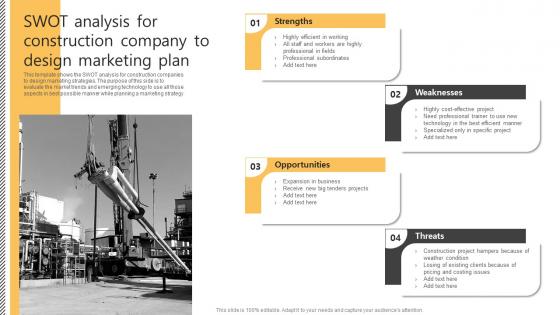
Swot Analysis For Construction Company To Design Marketing Plan




Try Before you Buy Download Free Sample Product
 Impress Your
 Audience
 100%
100% Editable
 Save Hours
 of Time


This template shows the SWOT analysis for construction companies to design marketing strategies. The purpose of this side is to evaluate the market trends and emerging technology to use all those aspects in best possible manner while planning a marketing strategy.
People who downloaded this PowerPoint presentation also viewed the following :
Swot Analysis For Construction Company To Design Marketing Plan with all 6 slides:
Use our Swot Analysis For Construction Company To Design Marketing Plan to effectively help you save your valuable time. They are readymade to fit into any presentation structure.





FAQs for Swot Analysis For Construction Company To
SWOT's pretty straightforward - you've got Strengths and Weaknesses (stuff inside your control), then Opportunities and Threats (external things happening around you). Here's the thing though: don't go easy on the weaknesses section. I've watched so many teams basically lie to themselves there and wonder why the analysis didn't help. Be specific too - writing "good team" tells you nothing useful. What makes them good? Focus on how the four sections connect with each other. That's honestly where the real insights happen. Oh, and make sure your opportunities/threats are actually external - market shifts, competitors, industry drama, whatever.
Okay so here's the thing - most people just check off SWOT boxes and move on, which is honestly a waste of time. The good stuff happens when you match what you're already great at with actual gaps in the market. Check your strengths section first. What capabilities aren't you fully using? Then look at emerging trends or underserved customers who might need exactly that. I always tell people to hunt for those sweet spots where your competitive edge meets real market demand. That intersection is where you'll find opportunities worth pursuing. Connect those dots and you're golden.
Honestly, competitive analysis is what makes SWOT actually worth doing. Without it, you're just guessing what counts as a real strength vs basic industry standards. I always tell people to research 3-5 competitors first - it's a game changer. You'll spot market gaps you'd never see otherwise, plus get a realistic view of actual threats instead of made-up ones. Too many SWOTs end up being pointless internal fluff (I've definitely been guilty of this before). But when you know what competitors are doing wrong? That's where the real opportunities hide.
Don't just create your SWOT once and call it done - that's where most people mess up. Set quarterly reviews (monthly if you're in something crazy fast-moving). Mix up who's in the room each time so you're not hearing the same perspectives over and over. Market stuff changes constantly, so stay plugged into what competitors are doing and any regulatory shifts. Honestly, the hardest part is just making it routine. Put a recurring meeting on the calendar and actually show up to it. Otherwise it'll just sit there being useless.
Honestly, SWOT analysis is like getting a reality check for your business. It shows you exactly where you stand so you can make smarter moves. Use your strengths to grab opportunities. Fix weaknesses before they bite you. And yeah, prepare for threats coming your way. I've watched teams completely change direction after doing one right - it's wild how much clarity it gives you. Think of it as a GPS for decisions. Resources get allocated better when you know what's actually realistic for your situation. Oh, and update it every few months because everything moves so fast now.
Think of your strengths as like having special radar for good opportunities. Once you actually know what you're great at, spotting the right external moves becomes way easier. Say your team kills it at digital marketing - you'd see new social platforms as goldmines instead of scary unknowns. Honestly, most people skip this step and wonder why they keep chasing the wrong things. Just write down your top 3-5 strengths first. Then scan for trends where those abilities give you a real edge over competitors.
Don't be vague - saying "great customer service" means nothing without examples. Office politics mess these up too, where people won't admit real problems or act like every competitor is gonna destroy you. Get different departments involved, not just the executives. Also balance internal stuff with what's actually happening in your market. Oh, and this might sound obvious, but actually DO something with it afterward. I've seen so many companies spend hours on these things then never look at them again. What's the point of that?
Start with PESTLE to map out all the external stuff - political changes, economic trends, social shifts, that kind of thing. Then take those findings and plug them straight into your SWOT's opportunities and threats. Works way better than doing them separately, honestly. PESTLE gives you the big picture macro view, while SWOT helps you figure out how it all connects to your actual situation and what you're good at. I'd probably throw in some competitive analysis too if you have time. Makes the whole thing more useful when you treat them as a package deal rather than isolated exercises.
Netflix in 2007 is the perfect case study here. They saw streaming as this massive opportunity but also knew it'd kill their DVD business. Most companies would've played it safe, right? Instead they just went all-in on streaming and basically destroyed their own cash cow. Saved them from ending up like Blockbuster though. Starbucks pulled something similar after 2008 - used their SWOT to realize they'd gotten too scattered with random products. Went back to focusing on coffee. The real trick isn't just filling out the boxes. You've gotta actually do something with those brutal honest insights, even when they're scary.
SWOT analysis is perfect for figuring out where you actually beat the big guys - maybe you're faster to pivot or know your customers by name. Be brutally honest about strengths and weaknesses first. Then hunt for market gaps that match what you're already good at. Don't skip the threats part though! I can't tell you how many small business owners ignore this and get caught off guard later. Oh, and avoid making huge lists - pick 2-3 solid insights per section instead. Turn those into real actions you can handle with whatever budget you've got.
Get people from different departments to help you out - they'll catch stuff you totally missed. Skip the vague fluff like "good reputation" and use actual data instead. Those generic SWOTs are the worst! Pick your top 3-5 items for each section so you don't get overwhelmed with a massive list. Match up your internal strengths/weaknesses with the external opportunities/threats to find good strategic fits. Oh, and set a date to revisit it since things change crazy fast in business. Don't just dump everything in there equally - rank by what'll actually impact you most.
Honestly, start with anonymous surveys - people will actually tell you the truth when their name isn't attached. Hit up different departments, not just the executives who think they know everything. Sales folks see customer pain points, operations knows where stuff breaks down, customer service hears all the complaints. After surveys, do some group brainstorming sessions but mix the levels - don't just stick VPs in a room together. The magic happens when someone from the warehouse can speak up to the marketing director. Oh, and make sure people feel safe being honest rather than just saying what sounds good. Focus groups with frontline staff are gold too since they spot things leadership totally misses.
Digital transformation totally flips your SWOT analysis on its head. Suddenly your strengths are things like data analytics and cloud setup instead of old-school assets. Weaknesses? Think cybersecurity holes and employees who still print emails (we all know that person). New opportunities pop up everywhere - automation, digital markets, customer insights you never had before. But threats get scarier too. Cyber attacks, tech startups eating your lunch, your systems becoming dinosaurs overnight. Honestly, you'll need to revisit your SWOT way more often now. Maybe quarterly? Everything moves so damn fast in digital compared to traditional business stuff.
Getting outsiders involved in your SWOT is honestly a game-changer. Your customers and suppliers will straight-up tell you things your team would never admit - like that "strength" you've been bragging about that nobody actually cares about. They spot blind spots you miss completely. Market threats? They're living them daily while you're stuck in meeting rooms. I learned this the hard way last year. Even just grabbing coffee with 2-3 key people outside your company can be eye-opening. Don't overthink it - casual conversations work best. You'll get way more honest feedback than any formal survey.
Dude, visual SWOT analysis is a game changer. Nobody wants to stare at bullet points anymore. I usually go for colorful quadrant charts or those matrix things with icons - way more engaging than plain text. Your stakeholders will actually stay awake during presentations! Executives eat this stuff up because they can scan it quickly. Canva's pretty solid for this, or Miro if you're feeling fancy. Oh, and use different symbols for each section - makes it super easy to follow. Trust me, anything beats those ancient-looking spreadsheets from like 20 years ago.
-
This PowerPoint layout is very helpful from a business point of view, and it's visually stunning too! I'm so happy with this product because it has helped me understand and deliver great presentations.
-
My presentations were a bit amateur before I found SlideTeam’s designs. I’ve been able to find slides for nearly every topic I’ve had to present. Thanks, Slideteam!