


Talent Acquisition Management Guide For Organization Powerpoint Presentation Slides




Try Before you Buy Download Free Sample Product
 Impress Your
 Audience
 100%
100% Editable
 Save Hours
 of Time


Elevate your talent acquisition game with our Talent Acquisition Management Guide for Organization template, a comprehensive manual meticulously crafted for HR managers and recruiters. This indispensable resource encompasses a wide spectrum of talent acquisition essentials, including best practices for sourcing, hiring, interviewing, and onboarding top-notch talent. It is your go-to tool for enhancing candidate quality and streamlining the talent acquisition process. Delve into proven methods for attracting and retaining top candidates, while establishing a distinctive candidate experience that sets your organization apart. The guide also covers key aspects like HR manager responsibilities, vacancy identification, and recruitment sources. Access this invaluable resource to supercharge your talent acquisition efforts and secure the best talent for your organizations success. Download the template now to unlock the secrets of effective talent acquisition.
People who downloaded this PowerPoint presentation also viewed the following :
Content of this Powerpoint Presentation
Slide 1: This slide introduces Talent Acquisition Management Guide for Organization.
Slide 2: This slide depicts the Agenda of the presentation.
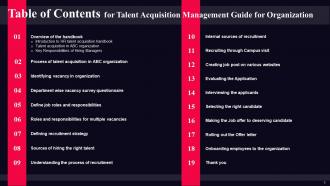
Slide 3: This slide incorporates the Table of contents.
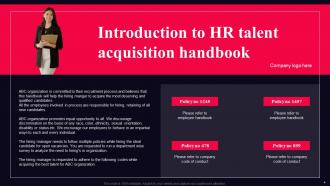
Slide 4: This slide reveals the Introduction to HR talent acquisition handbook.
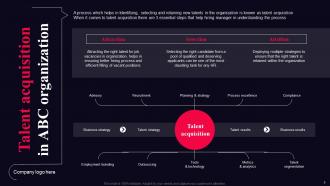
Slide 5: This slide displays the Talent acquisition in ABC organization.
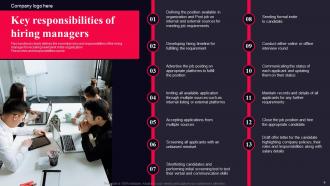
Slide 6: This slide exhibits the Key responsibilities of hiring managers.
Slide 7: This slide presents the Process of talent acquisition in ABC organization.
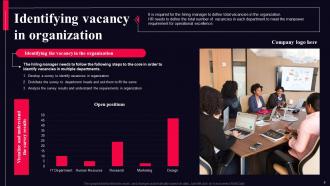
Slide 8: This slide focuses on Identifying vacancy in organization.
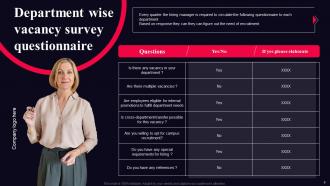
Slide 9: This slide depicts the Department wise vacancy survey questionnaire.
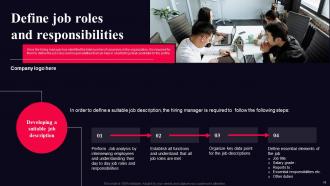
Slide 10: This slide deals with Defining job roles and responsibilities.
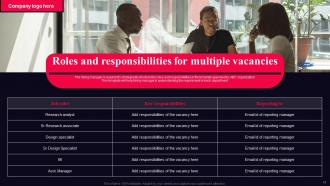
Slide 11: This slide exhibits the Roles and responsibilities for multiple vacancies.
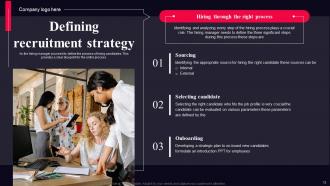
Slide 12: This slide focuses on Defining recruitment strategy.
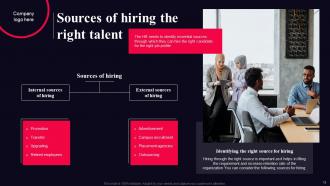
Slide 13: This slide exhibits the Sources of hiring the right talent.
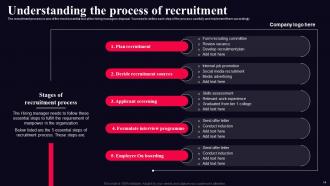
Slide 14: This slide talks about Understanding the process of recruitment.
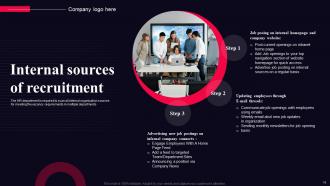
Slide 15: This slide emphasizes on the Internal sources of recruitment.
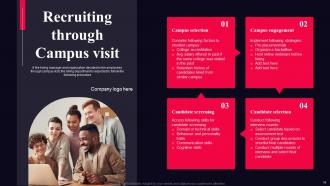
Slide 16: This slide mentions about Recruiting through campus visit.
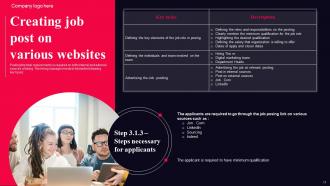
Slide 17: This slide deals with Creating job post on various websites.
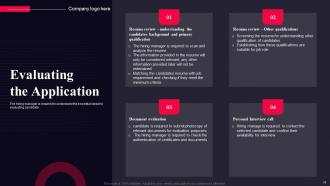
Slide 18: This slide focuses on Evaluating the application.
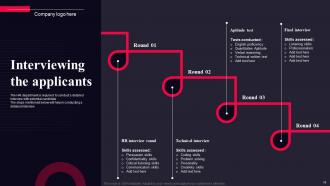
Slide 19: This slide talks about Interviewing the applicants.
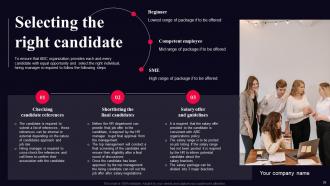
Slide 20: This slide focuses on Selecting the right candidate.
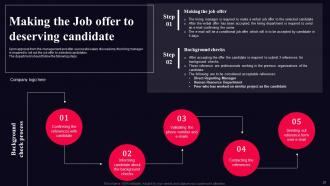
Slide 21: This slide emphasizes on Making the job offer.
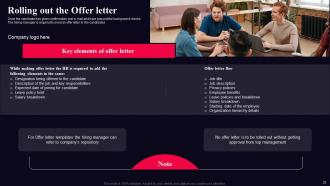
Slide 22: This slide displays Rolling out the offer letter.
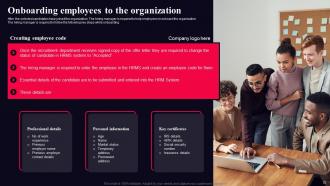
Slide 23: This slide indicates Onboarding employees to the organization.
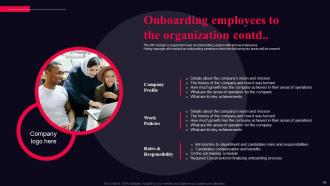
Slide 24: This slide continues the Onboarding employees to the organization.
Slide 25: This slide reveals the company information.
Slide 26: This slide is used for depicting the Additional information.
Slide 27: This is the Icons slide containing all the Icons used in the plan.
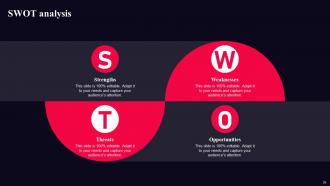
Slide 28: This slide elucidates the SWOT analysis.
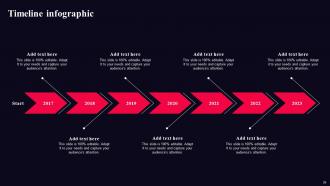
Slide 29: This slide illustrates the Timeline infographic with related imagery.
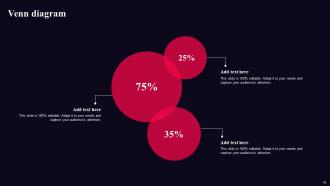
Slide 30: This is the Venn diagram slide.
Slide 31: This is the Target slide. State your organizational targets here.
Slide 32: This is the Thank You slide for acknowledgement.
Talent Acquisition Management Guide For Organization Powerpoint Presentation Slides with all 40 slides:
Use our Talent Acquisition Management Guide For Organization Powerpoint Presentation Slides to effectively help you save your valuable time. They are readymade to fit into any presentation structure.













FAQs for Talent Acquisition Management Guide For Organization
**INPUT**: What are the key components of an effective talent acquisition strategy? **OUTPUT**: Effective talent acquisition strategies include employer branding, candidate experience optimization, data-driven recruitment analytics, strategic sourcing channels, and streamlined selection processes. These components work together by enhancing organizational reputation, accelerating hiring timelines, and improving candidate quality, with many companies finding that this integrated approach ultimately delivers competitive talent advantages and reduces recruitment costs significantly. **Word count: 56 words**
Data analytics enhances talent acquisition by streamlining candidate sourcing, improving screening accuracy, and predicting hiring success through comprehensive performance metrics. Through predictive modeling and behavioral analysis, organizations can identify top candidates faster, reduce time-to-hire significantly, and minimize costly recruitment errors, ultimately delivering more strategic hiring decisions and competitive workforce advantages.
Employer branding significantly influences talent attraction by showcasing company culture, values, career development opportunities, and employee experiences across digital platforms and recruitment touchpoints. Through strategic branding initiatives, organizations in sectors like technology, healthcare, and finance enhance their competitive positioning, reduce hiring costs, and attract higher-quality candidates, ultimately delivering stronger talent pipelines and improved retention rates.
Technology streamlines talent acquisition through automated resume screening, AI-powered candidate matching, digital interview scheduling, and integrated communication platforms. These solutions enhance efficiency by reducing manual tasks, accelerating candidate evaluation, and improving collaboration between hiring teams, with many organizations finding faster time-to-hire and significantly better candidate experiences.
Common talent acquisition challenges include high competition for skilled candidates, lengthy recruitment cycles, skills gaps in emerging technologies, candidate experience management, and cost-per-hire pressures. These obstacles present both hiring difficulties and strategic opportunities, with many organizations finding that streamlined processes, enhanced employer branding, and data-driven recruitment ultimately deliver faster placements and competitive talent advantages.
Diversity and inclusion initiatives significantly enhance talent acquisition by expanding candidate pools, improving employer branding, and attracting top-tier talent from underrepresented groups. These strategic programs enable organizations to access broader skill sets, foster innovation through varied perspectives, and build competitive advantage, with many companies finding that inclusive hiring practices ultimately deliver better business outcomes and stronger market positioning.
Organizations can implement proactive talent pipelining, multi-channel sourcing strategies, employer brand optimization, data-driven candidate targeting, and strategic partnership development with universities and industry networks. These practices streamline recruitment by expanding candidate pools, reducing time-to-hire, and enhancing quality matches, with many companies finding that diversified sourcing approaches ultimately deliver stronger talent pipelines and competitive hiring advantages.
Candidate experience improves through streamlined application processes, transparent communication timelines, personalized feedback, mobile-optimized platforms, and consistent touchpoints throughout recruitment stages. Organizations like tech companies and healthcare systems enhance engagement by providing real-time updates, structured interview processes, and prompt responses, ultimately reducing dropout rates while strengthening employer branding and competitive positioning.
**INPUT**: What metrics are crucial to measure the success of talent acquisition efforts? **OUTPUT**: Crucial talent acquisition metrics include time-to-fill, cost-per-hire, quality of hire, candidate experience scores, and retention rates within the first year. These measurements enable organizations to streamline recruitment processes, optimize resource allocation, and enhance hiring outcomes, with many companies finding that strategic metric tracking ultimately delivers faster placements, reduced hiring costs, and stronger long-term employee performance across departments.
Artificial intelligence streamlines talent acquisition through automated resume screening, predictive analytics for candidate success, chatbots for initial interviews, bias reduction algorithms, and enhanced candidate matching. These AI-powered tools enable HR teams to process applications faster, identify top talent more accurately, and deliver improved candidate experiences, while significantly reducing time-to-hire and recruitment costs.
Internal mobility enhances talent acquisition by reducing external hiring costs, accelerating time-to-fill, and improving employee retention through clear career progression paths. Organizations increasingly leverage internal mobility programs to fill critical roles faster while boosting engagement, with many companies finding that promoting from within delivers stronger cultural alignment and reduces onboarding time significantly.
Remote work policies significantly expand talent acquisition strategies by enabling access to global talent pools, reducing geographical constraints, and allowing competitive positioning against location-bound employers. Organizations leverage these policies to attract top candidates from diverse markets, streamline recruitment costs, and enhance employer branding, with many companies finding that flexible work arrangements ultimately deliver broader candidate diversity and improved talent retention rates.
Top talent retention strategies include competitive compensation packages, professional development opportunities, flexible work arrangements, recognition programs, and clear career advancement paths. These approaches enhance employee satisfaction by offering growth potential, work-life balance, and meaningful recognition, with many organizations finding that strategic combinations of these elements significantly reduce turnover while strengthening competitive advantage.
Recruitment marketing leverages employer branding, targeted content, social media engagement, candidate personas, and data-driven campaigns to attract quality talent. Through strategic storytelling and authentic workplace culture showcases, organizations enhance their talent pipeline, reduce time-to-hire, and improve candidate quality, with many companies finding that comprehensive marketing approaches deliver stronger applicant pools and competitive hiring advantages.
Recruiters should receive training in advanced sourcing techniques, behavioral interviewing methods, diversity and inclusion practices, employer branding strategies, and data analytics for recruitment metrics. These development programs enhance talent identification accuracy, streamline candidate assessment processes, and improve hiring quality, with many organizations finding that well-trained recruiters significantly reduce time-to-hire while attracting top-tier candidates.
-
“The presentation template I got from you was a very useful one.My presentation went very well and the comments were positive.Thank you for the support. Kudos to the team!”
-
“I always have a wonderful experience with SlideTeam. It's my ""go to"" when I need a template.”