


Talent Recruitment Strategy By Using Employee Value Proposition Powerpoint Presentation Slides




Try Before you Buy Download Free Sample Product
 Impress Your
 Audience
 100%
100% Editable
 Save Hours
 of Time


An Employee Value Proposition is a comprehensive system of support, recognition, and values employers offer their employees. Grab our Talent Recruitment Strategy by Using the Employee Value Proposition template. It can assist any company in attracting highly skilled job candidates and improving employee retention. Our Employer Branding deck evaluates the current situation by examining the effectiveness of the organizational culture and industry assessment. This helps to determine the companys position in comparison to competitors. It then identifies critical factors that lead to employee dissatisfaction and showcases the process of building employee value propositions. Additionally, our Retention Strategy PPT includes a questionnaire to measure the overall employee experience and analyze survey results. It also provides an overview of various channels and platforms to promote employee value propositions during the recruitment journey. Further, our talent Attraction module highlights the impact of implementing an employee value proposition on the company and surveys existing employees to determine the companys position compared to others in the market. Finally, it outlines various dashboards for human resource personnel to track and monitor employee performance. Access it now.
People who downloaded this PowerPoint presentation also viewed the following :
Content of this Powerpoint Presentation
Slide 1: This slide introduces Talent Recruitment Strategy by Using Employee Value Proposition. Commence by stating Your Company Name.
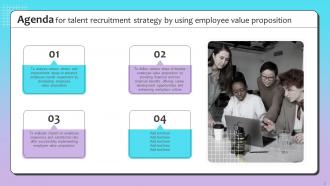
Slide 2: This slide depicts the Agenda of the presentation.
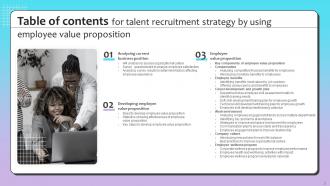
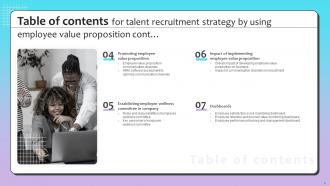
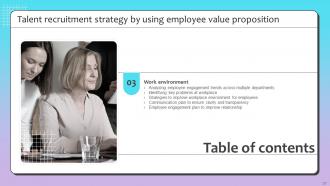
Slide 3: This slide incorporates the Table of contents.
Slide 4: This is yet another slide continuing the Table Of Contents.
Slide 5: This slide highlights the Title for the Topics to be covered further.
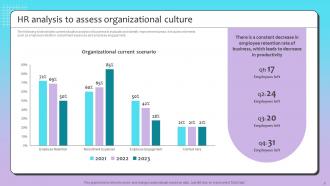
Slide 6: This slide exhibits current situation analysis of business to evaluate and identify improvement areas.
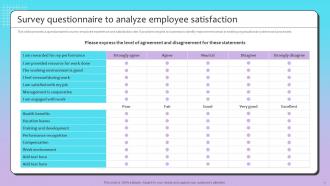
Slide 7: This slide presents a questionnaire to survey employee experience and satisfaction rate.
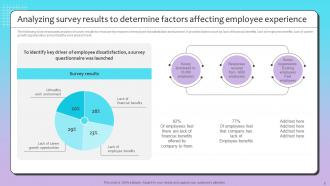
Slide 8: This slide showcases analysis of survey results to measure key reasons of employee dissatisfaction and turnover.
Slide 9: This slide mentions the Heading for the Contents to be discussed next.
Slide 10: This slide showcases various factors presenting advantage of using employee value proposition on business.
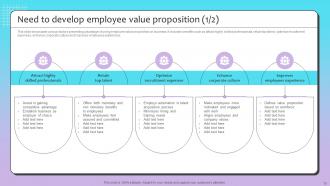
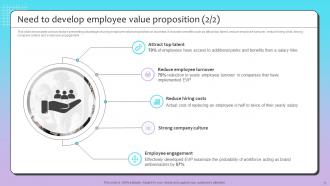
Slide 11: This slide portrays the Need to develop employee value proposition.
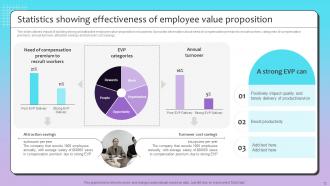
Slide 12: This slide reveals the Statistics showing effectiveness of employee value proposition.
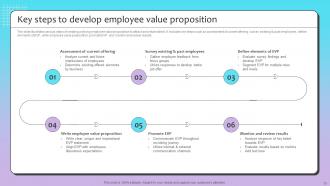
Slide 13: The slide illustrates various steps of creating a strong employee value proposition to attract and retain talent.
Slide 14: This slide incorporates the Title for the Ideas to be further discussed.
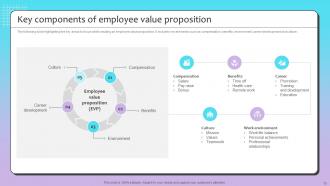
Slide 15: This slide highlights the five key areas to focus while creating an employee value proposition.
Slide 16: This slide depicts the Heading for the Ideas to be covered in the next template.
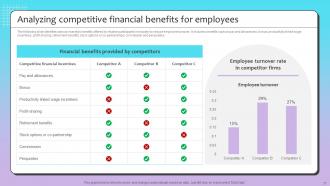
Slide 17: The following slide identifies various monetary benefits offered by relative participants in industry.
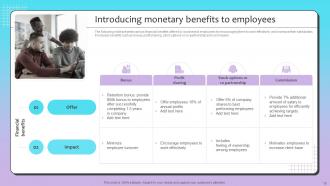
Slide 18: This slide deals with Introducing monetary benefits to employees.
Slide 19: This slide contains the Title for the Contents to be discussed in the following template.
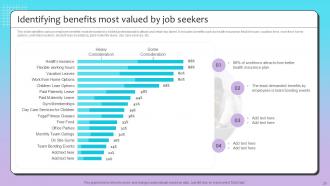
Slide 20: The slide identifies various employee benefits most demanded by skilled professionals.
Slide 21: This slide presents various non monetary benefits offered by business to employees for encouraging them to work effectively.
Slide 22: This slide exhibits the Heading for the Topics to be covered further.
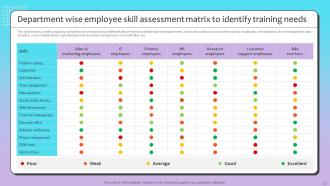
Slide 23: The slide shows a matrix analyzing competencies of employees of different departments.
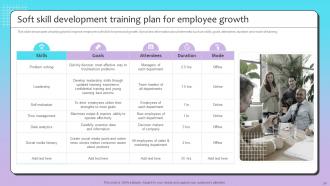
Slide 24: This slide eluicdates the Soft skill development training plan for employee growth.
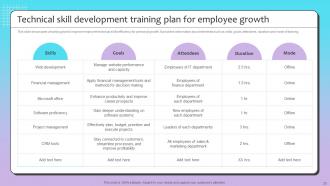
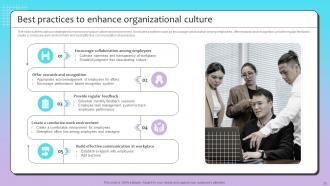
Slide 25: This slide illustrates the Technical skill development training plan for employee growth.
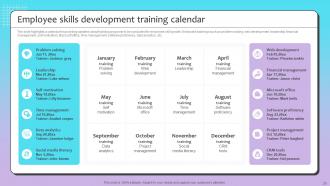
Slide 26: The slide highlights a calendar for providing updates about training programs to be conducted for employee skill growth.
Slide 27: This slide includes the Title for the Topics to be discussed next.
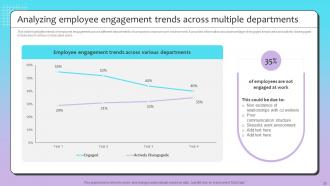
Slide 28: This slide highlights trends of employee engagement across different departments of company.
Slide 29: This slide focuses on Identifying key problems at workplace.
Slide 30: This slide outlines various strategies to enhance workplace environment.
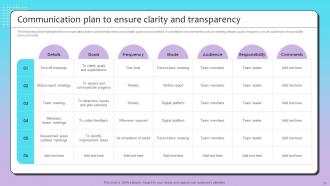
Slide 31: This slide shows the Communication plan to ensure clarity and transparency.
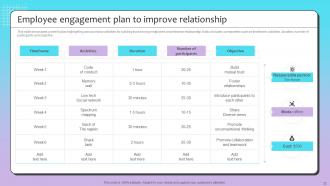
Slide 32: This slide talks about Employee engagement plan to improve relationship.
Slide 33: This slide includes the Heading for the Contents to be covered in the following template.
Slide 34: The slide highlights various policies introduced by business to ensure work life balance for employees.
Slide 35: This slide outlines various strategies to improve workplace culture and environment.n.
Slide 36: This slide mentions the Title for the Ideas to be discussed next.
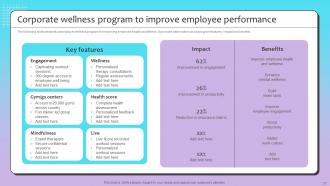
Slide 37: The following slide presents a workplace wellness program for improving employee health and fitness.
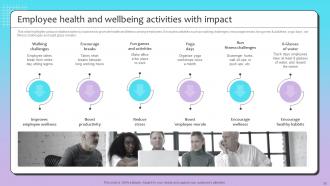
Slide 38: This slide highlights various initiatives taken by business to promote health and fitness among employees.
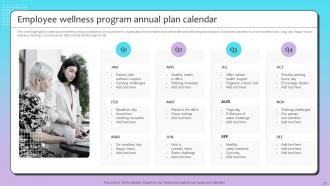
Slide 39: This slide displays the Employee wellness program annual plan calendar.
Slide 40: This slide shows the Heading for the Ideas to be covered in the upcoming template.
Slide 41: The slide illustrates various communication channels to promote employee value proposition throughout recruitment journey.
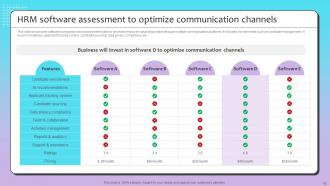
Slide 42: This slide talks about the HRM software assessment to optimize communication channels.
Slide 43: This slide displays the Title for the Contents to be discussed in the following template.
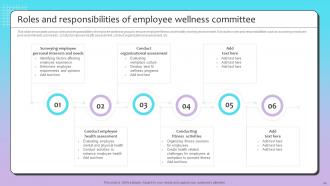
Slide 44: This slide showcases various roles and responsibilities of employee wellness group.
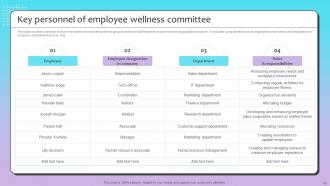
Slide 45: This slide provides overview of team members of employee wellness group to enhance staff experience and improve organizational culture.
Slide 46: This slide depicts the Heading for the Topics to be covered in the forth-coming template.
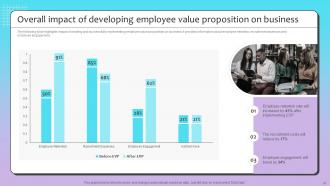
Slide 47: The following slide highlights impact of creating and successfully implementing employee value proposition on business.
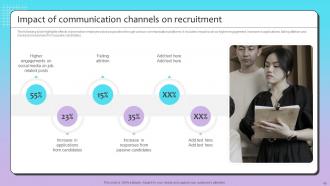
Slide 48: This slide reevals the Impact of communication channels on recruitment.
Slide 49: This slide indicates the Title for the Topics to be discussed next.
Slide 50: This slide showcases a dashboard presenting various metrics to measure and analyze employee overall satisfaction rate.
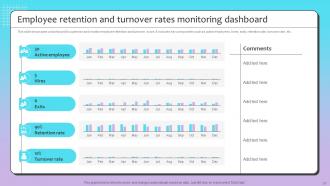
Slide 51: This slide outlines a dashboard to supervise and monitor employee retention and turnover score.
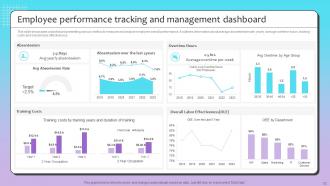
Slide 52: This slide reveals a dashboard presenting various metrics to measure and analyze employee overall performance.
Slide 53: This is the Icons slide containing all the Icons used in the plan.
Slide 54: This slide is used for depicting some Additional information.
Slide 55: This slide provides overview of Industry analysis to understand business position among competitors.
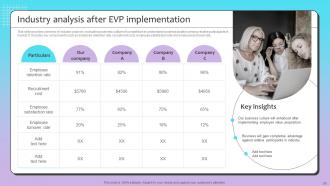
Slide 56: This slide showcases Industry analysis after EVP implementation.
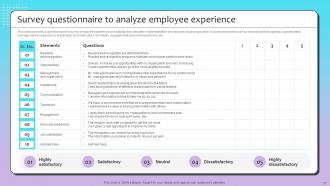
Slide 57: This slide presents a questionnaire to survey employee experience and satisfaction rate after implementation of employee value proposition.
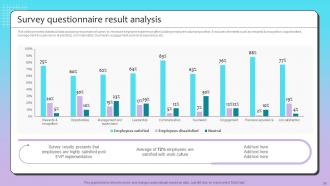
Slide 58: This slide reveals the Survey questionnaire result analysis.
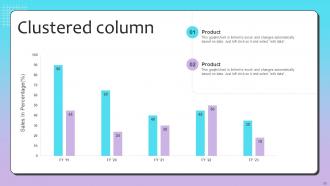
Slide 59: This slide presents the Clustered column chart.
Slide 60: This slide displays the Puzzle diagram.
Slide 61: This is Meet our team slide. State your team-related information here.
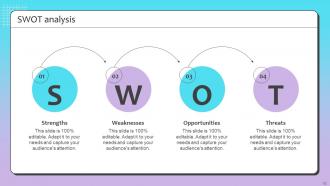
Slide 62: This slide shows the SWOT analysis.
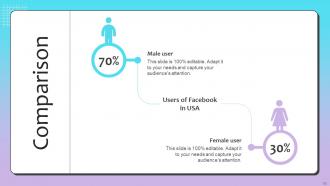
Slide 63: This slide is used for the purpose of Comparison.
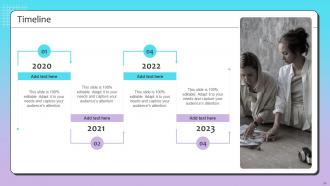
Slide 64: This slide exhibits the Company's Timeline.
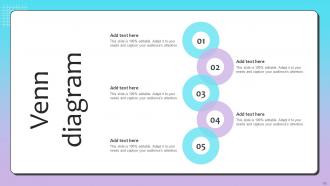
Slide 65: This is the Venn diagram slide.
Slide 66: This slide contains the Post it notes for reminders and deadlines.
Slide 67: This slide represents the firm's Location across the globe.
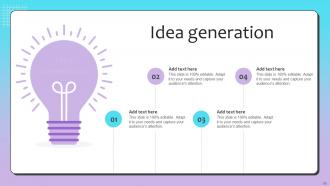
Slide 68: This is the Idea generation slide for encouraging fresh ideas.
Slide 69: This is the Thank You slide for acknowledgement.
Talent Recruitment Strategy By Using Employee Value Proposition Powerpoint Presentation Slides with all 74 slides:
Use our Talent Recruitment Strategy By Using Employee Value Proposition Powerpoint Presentation Slides to effectively help you save your valuable time. They are readymade to fit into any presentation structure.





















FAQs for Talent Recruitment Strategy By Using Employee Value Proposition
Effective talent recruitment strategies encompass employer branding, sourcing, screening, interviewing, and onboarding—all crucial for attracting qualified candidates. These components streamline hiring by leveraging data analytics, social media, and employee referral programs, ultimately delivering a competitive advantage and reduced time-to-fill, with many organizations finding that proactive sourcing significantly enhances candidate quality.
Employers can leverage social media to enhance recruitment by proactively sourcing candidates, building employer branding, and streamlining application processes. While requiring consistent engagement, these platforms enable targeted advertising, direct outreach to passive talent, and showcasing company culture, with many HR departments finding that LinkedIn, Facebook, and X deliver qualified leads. Ultimately, this delivers reduced time-to-hire and improved candidate quality, enhancing competitive advantage in an increasingly talent-constrained landscape.
Employer branding significantly impacts talent acquisition by shaping perceptions of a company’s culture, values, and employee experiences. It attracts qualified candidates, reduces recruitment costs, and fosters employee loyalty, with many organizations finding that a strong brand delivers a 50% decrease in cost-per-hire. Ultimately, a compelling employer brand enhances competitive advantage in an increasingly talent-scarce landscape.
Data analytics enhances recruitment by identifying skill gaps, predicting candidate success, and optimizing sourcing channels through metrics like time-to-fill and cost-per-hire. Utilizing predictive modeling, banks and hospitals, for instance, streamline candidate screening, ultimately delivering faster hiring cycles and improved quality of hire. These technologies enable a strategic combination of data-driven insights and human expertise, with many institutions finding that proactive analysis minimizes bias and boosts retention.
Talent recruitment strategies to reduce bias include standardized interviews, blind resume screening, diverse interview panels, and structured evaluation criteria. These approaches streamline assessment by focusing on skills and experience, with many organizations finding that diverse panels deliver more objective evaluations and ultimately enhance hiring decisions, fostering inclusivity and competitive advantage.
Candidate experience is increasingly important in talent acquisition, impacting employer brand, acceptance rates, and ultimately, quality of hire through streamlined applications, transparent communication, and respectful interactions. While efficient processes are key, fostering positive relationships—like personalized feedback in banking or swift responses in healthcare—enhances engagement, with many organizations finding that a strong candidate journey delivers a competitive advantage and reduced time-to-fill.
Innovative assessment methods include gamified assessments, video interviews, skills-based simulations, and data-driven psychometric tests, alongside traditional interviews. These technologies enhance evaluation by revealing practical skills, cultural fit, and problem-solving abilities, with many financial services and healthcare institutions finding that predictive accuracy significantly increases, ultimately delivering better hiring decisions and reduced turnover.
Organizations can create a diverse talent pipeline by leveraging inclusive sourcing, blind resume screening, and employee referral programs, alongside partnerships with diverse professional organizations. While broadening outreach helps attract varied candidates, it also requires cultivating an inclusive company culture, with many institutions finding that equitable hiring practices significantly enhance innovation and market reach, ultimately delivering a competitive advantage and stronger employee engagement.
Remote work options significantly impact talent recruitment strategies by expanding the talent pool, reducing geographical constraints, and enhancing employee value propositions. While presenting both challenges and opportunities regarding team cohesion, these approaches streamline recruitment by accelerating hiring timelines and minimizing costs, with many organizations finding that offering flexibility delivers a competitive advantage and attracts highly skilled professionals in an increasingly competitive landscape.
Recruitment automation tools streamline the hiring process by automating job postings, candidate sourcing, and initial screening, ultimately reducing time-to-hire and associated costs. While these technologies enhance efficiency, it also requires careful configuration to avoid overlooking qualified candidates. With many HR departments finding that automated workflows accelerate candidate engagement, enhance employer branding, and deliver a more efficient, data-driven approach to talent acquisition.
New hire onboarding best practices include clear role expectations, comprehensive training, mentorship programs, regular check-ins, and fostering a welcoming culture. These approaches streamline integration by accelerating skill development, building rapport, and clarifying career paths, with many organizations finding that engaged employees are 24% more likely to stay. Ultimately delivering reduced turnover and enhanced organizational performance across industries like healthcare and financial services.
Organizations can assess cultural fit during recruitment by utilizing behavioral interviews, skills assessments, and realistic job previews, ensuring candidates align with core values. While technical skills remain crucial, evaluating personality traits, communication styles, and collaborative tendencies helps predict long-term success, with many institutions finding that shared values enhance employee retention and boost overall team performance.
Passive candidate engagement necessitates a multi-pronged approach including targeted LinkedIn outreach, personalized email campaigns, and showcasing employer branding through compelling content. These strategies streamline recruitment by proactively identifying skilled professionals, fostering relationships, and ultimately delivering a stronger talent pipeline with many organizations finding that consistent, value-driven communication yields the best results.
Candidate feedback significantly enhances recruitment by revealing pain points, streamlining communication, and identifying areas for improvement throughout the applicant journey. While collecting this data requires dedicated effort, it also enables organizations to refine job descriptions, interviewer training, and overall employer branding, with many HR departments finding that increased transparency builds trust. Ultimately delivering a more positive candidate experience and attracting top-tier talent, enhancing competitive advantage in an increasingly tight labor market.
Talent recruitment challenges include limited qualified candidates, lengthy time-to-hire, and increasing salary expectations, presenting both challenges and opportunities. Organizations can address these by leveraging data analytics, enhancing employer branding, and streamlining application processes, ultimately delivering faster hiring cycles and a stronger talent pipeline. With many institutions finding that proactive sourcing and skills-based assessments significantly enhance recruitment effectiveness, a strategic combination of these approaches enables competitive advantage in an increasingly demanding landscape.
-
The presentations are very helpful. I am always able to get appropriate templates for the different topics related to my profession.
-
Fantastic collection of visually appealing PowerPoint templates. They certainly uplift the look of the presentation.