


Target Audience Green Landscaping Startup Go To Market Strategy GTM SS




Try Before you Buy Download Free Sample Product
 Impress Your
 Audience
 100%
100% Editable
 Save Hours
 of Time


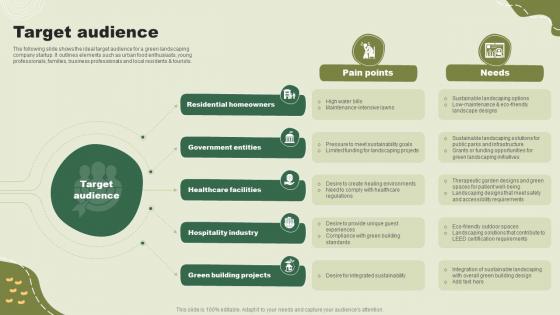
The following slide shows the ideal target audience for a green landscaping company startup. It outlines elements such as urban food enthusiasts, young professionals, families, business professionals and local residents and tourists.
People who downloaded this PowerPoint presentation also viewed the following :
Target Audience Green Landscaping Startup Go To Market Strategy GTM SS with all 9 slides:
Use our Target Audience Green Landscaping Startup Go To Market Strategy GTM SS to effectively help you save your valuable time. They are readymade to fit into any presentation structure.








FAQs for Target Audience Green Landscaping Startup Go To Market
Homeowners interested in green landscaping services typically include middle to upper-income households aged 35-55, environmentally conscious millennials, and retirees prioritizing sustainability and health benefits. These demographics span suburban professionals, families with children concerned about chemical exposure, and wellness-focused individuals, with many finding that eco-friendly landscaping enhances property values while reducing environmental impact.
Green landscaping clients prioritize environmental sustainability, cost-effective water usage, and long-term ecological benefits, while traditional clients focus primarily on immediate aesthetic appeal and conventional maintenance approaches. These environmentally conscious customers, including eco-minded homeowners, sustainable businesses, and institutional facilities, increasingly seek native plant solutions, water conservation systems, and organic maintenance practices, ultimately delivering reduced environmental impact and lower operational costs.
Eco-friendly practices that resonate most include native plant landscaping, organic lawn care, water-efficient irrigation systems, pollinator-friendly gardens, and sustainable hardscaping materials. These approaches deliver environmental benefits while reducing maintenance costs, with many residential and commercial clients finding that xeriscaping and rain gardens enhance property value while supporting local ecosystems.
Primary motivations for adopting green landscaping include environmental responsibility, cost reduction through lower water and maintenance requirements, enhanced property values, and improved outdoor living experiences. These sustainable approaches deliver significant long-term savings, increased curb appeal, and healthier ecosystems, with many homeowners finding that native plantings and water-efficient designs ultimately provide both environmental benefits and substantial financial returns.
Landscaping companies can effectively communicate sustainable benefits by emphasizing cost savings through reduced water usage, long-term property value enhancement, and environmental stewardship that resonates with eco-conscious clients. Through targeted content showcasing native plant success stories, water conservation case studies, and maintenance reduction examples, companies demonstrate tangible outcomes while positioning themselves as strategic partners in sustainable property management.
Social media serves as a powerful visual showcase for green landscaping services, enabling businesses to display before-and-after transformations, sustainable design techniques, and eco-friendly project outcomes through platforms like Instagram and Facebook. These platforms facilitate direct engagement with environmentally conscious homeowners and commercial property managers, while targeted advertising helps reach clients specifically interested in sustainable landscaping solutions, ultimately building trust and generating qualified leads.
Consumers face challenges including higher upfront costs, limited plant knowledge, maintenance uncertainty, and finding qualified green contractors. Businesses can address these by offering flexible financing options, providing educational resources and maintenance guides, partnering with certified sustainable landscapers, and demonstrating long-term cost savings through reduced water bills and property value increases, ultimately making eco-friendly landscaping more accessible and profitable.
Spring and summer represent peak demand seasons for green landscaping services, with residential clients prioritizing spring installations and maintenance while commercial properties focus on summer upkeep and aesthetic enhancements. Educational institutions and municipalities typically schedule major projects during summer months to minimize disruptions, with many organizations finding that seasonal timing directly impacts both project costs and landscape establishment success rates.
Cultural attitudes towards sustainability significantly influence green landscaping audiences by driving demand for eco-friendly practices, native plant selections, and resource conservation methods. These shifting perspectives create market opportunities across residential, commercial, and municipal sectors, with environmentally conscious consumers increasingly prioritizing water-efficient designs, organic maintenance approaches, and biodiversity enhancement, ultimately delivering both environmental stewardship and long-term cost savings.
Eco-conscious consumers gravitate toward native plant gardens, rain gardens, permeable hardscaping, organic lawn care, and xeriscaping solutions that minimize water usage and chemical inputs. These sustainable landscaping approaches deliver reduced maintenance costs, lower water bills, and enhanced property values, while supporting local ecosystems, with many homeowners finding that drought-resistant designs provide long-term environmental and financial benefits.
Customer testimonials and case studies enhance green landscaping marketing by building credibility, demonstrating real environmental impact, and showcasing measurable results like water conservation and maintenance cost reductions. These authentic stories enable landscaping companies to address common concerns about sustainability costs while highlighting successful transformations for residential communities, commercial properties, and municipal projects, ultimately delivering trust and competitive differentiation.
Consumers connect with nature through desires for tranquility, stress relief, environmental stewardship, childhood memories, and seasonal beauty, which drive landscaping decisions toward native plants, wildlife habitats, and sustainable designs. These emotional motivations enable homeowners to create personal sanctuaries while enhancing property values, with many finding that nature-inspired landscapes deliver both psychological wellness and long-term investment returns.
Education about native plants and sustainable practices is crucial for attracting environmentally conscious customers, as it builds trust, demonstrates expertise, and differentiates your landscaping business from competitors. Through workshops, informational content, and consultations, landscaping companies can showcase their knowledge while helping clients understand long-term benefits like reduced water usage and maintenance costs, ultimately converting educated prospects into loyal customers.
Businesses can tailor green landscaping marketing by emphasizing sustainability credentials, using social media platforms like Instagram and TikTok, showcasing eco-certifications, and highlighting cost-saving benefits through native plant installations and water-efficient designs. These approaches resonate with younger demographics who prioritize environmental responsibility, with many landscaping companies finding that transparency about carbon footprint reduction, biodiversity enhancement, and long-term ecological impact ultimately delivers stronger client engagement and competitive advantage.
Pricing significantly influences green landscaping decisions by balancing upfront investment costs with long-term savings, sustainability benefits, and property value enhancement. While initial expenses for eco-friendly materials and native plants may be higher, many homeowners and commercial property managers find that reduced water bills, lower maintenance costs, and increased property values ultimately deliver competitive returns and environmental stewardship.
-
Great product, helpful indeed!
-
Nice and innovative design.