


Techniques Of Storytelling Training Ppt




Try Before you Buy Download Free Sample Product
 Impress Your
 Audience
 100%
100% Editable
 Save Hours
 of Time


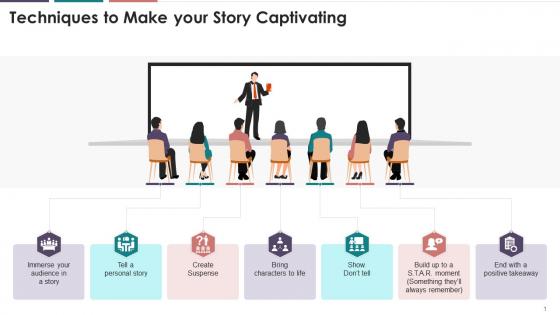
This slide explains the different techniques that can be used by the speaker while sharing a story with the target audience.
People who downloaded this PowerPoint presentation also viewed the following :
Techniques Of Storytelling Training Ppt with all 17 slides:
Use our Techniques Of Storytelling Training Ppt to effectively help you save your valuable time. They are readymade to fit into any presentation structure.










FAQs for Techniques Of
Effective storytelling in presentations includes a compelling narrative arc, relatable characters or scenarios, emotional connection points, clear conflict resolution, and strategic visual support. These elements work together by engaging audiences through personal relevance, maintaining attention through structured tension, and delivering memorable messages, with many presenters finding that storytelling techniques significantly enhance audience retention and persuasion outcomes.
Visuals enhance storytelling by creating emotional connections, simplifying complex narratives, and improving audience retention through compelling imagery, infographics, and data visualizations. Through strategic visual elements, presenters can guide audience attention, reinforce key messages, and transform abstract concepts into memorable experiences, with many organizations finding that visual storytelling increases engagement rates and drives more persuasive business outcomes.
Story structure influences audience engagement by creating emotional rhythm, building suspense through strategic pacing, establishing clear character arcs, and delivering satisfying resolution points that maintain attention throughout the narrative. Well-structured stories, especially in business presentations and marketing campaigns, guide audiences through deliberate tension-and-release cycles, ultimately delivering stronger emotional connections and more memorable messaging experiences.
Emotion serves as the primary driver for audience engagement and memory retention, transforming data-driven presentations into compelling narratives that resonate long after the meeting ends. Through strategic emotional connections, presenters across industries like healthcare, financial services, and technology find that audiences retain key messages more effectively, make faster decisions, and ultimately translate presentation insights into actionable business outcomes.
Presenters can use anecdotes to illustrate key points by selecting relevant personal experiences, customer success stories, or industry examples that directly connect to their main message, creating emotional resonance and memorable context. These narrative techniques transform abstract concepts into relatable scenarios, with many business leaders finding that well-chosen anecdotes enhance audience engagement, improve message retention, and ultimately deliver more persuasive presentations.
Effective storytelling techniques for complex information include analogies and metaphors, sequential narrative structures, character-driven scenarios, visual storytelling elements, and problem-solution frameworks. These approaches streamline understanding by connecting abstract concepts to familiar experiences, with many organizations finding that narrative-based presentations increase audience retention and engagement rates significantly.
Tailoring storytelling requires analyzing audience age, cultural background, professional level, and communication preferences to select relevant themes, language complexity, and cultural references. For instance, technical audiences respond to data-driven narratives while creative teams prefer emotional journeys, with successful presenters finding that demographic-specific storytelling enhances engagement, comprehension, and ultimately delivers stronger business outcomes.
Common storytelling pitfalls include overcomplicating narratives, using irrelevant anecdotes, neglecting audience connection, failing to align stories with key messages, and excessive emotional manipulation. These mistakes can derail presentations by confusing audiences, diluting core content, and reducing credibility, with many presenters finding that strategic, audience-focused storytelling delivers clearer communication and stronger engagement.
Virtual storytelling techniques include using interactive polls, breakout discussions, visual metaphors, audience chat engagement, and strategic camera positioning. These methods enhance connection by creating shared experiences, encouraging participation, and maintaining visual interest, with many presenters finding that combining personal anecdotes with digital tools ultimately delivers more memorable and impactful virtual experiences.
A strong hook immediately captures audience attention, establishes emotional connection, and creates compelling anticipation that drives engagement throughout the narrative. This critical opening element enables presenters to differentiate their message in increasingly crowded communication environments, with many organizations finding that powerful opening moments significantly enhance audience retention, message recall, and ultimately deliver stronger business outcomes and competitive advantage.
Conflict and resolution create emotional engagement by establishing tension, presenting challenges, and demonstrating solutions, which keeps audiences invested in outcomes. Through strategic narrative arcs, presenters can showcase problem-solving capabilities, highlight competitive advantages, and guide stakeholders through transformation journeys, with many organizations finding that conflict-driven storytelling ultimately delivers more memorable presentations and stronger stakeholder buy-in.
Developing a unique storytelling style involves mastering personal narrative voice, incorporating authentic experiences and perspectives, experimenting with different structural approaches like chronological versus thematic organization, and adapting tone to match your personality and audience expectations. Many successful presenters find that combining their professional expertise with personal anecdotes, varying their pacing and emphasis, and consistently practicing their delivery ultimately creates a distinctive style that enhances audience engagement and makes their presentations more memorable and impactful.
Presenters can effectively conclude stories by reinforcing the core message, connecting to the audience's objectives, creating an emotional resonance, and providing a clear call-to-action or takeaway. This strategic combination enables audiences to retain key insights while feeling personally invested, with many business leaders finding that memorable conclusions drive behavioral change, enhance decision-making, and ultimately deliver stronger engagement and measurable results.
Tone and voice establish the emotional foundation and personality of your story, determining how audiences connect with and interpret your message. They shape audience perception, create consistent brand identity, and guide emotional responses, with many organizations finding that maintaining authentic voice across presentations, marketing materials, and communications ultimately delivers stronger audience engagement and more memorable storytelling experiences.
Feedback improves storytelling skills by identifying unclear narrative elements, highlighting emotional connection gaps, and revealing audience engagement patterns through post-presentation surveys, peer reviews, and real-time reactions. Through systematic feedback collection, presenters can refine their pacing, strengthen story arcs, and enhance audience resonance, with many organizations finding that structured feedback loops significantly elevate presentation effectiveness and business outcomes.
-
The designs by SlideTeam are honestly the best I have seen so far. Will be definitely coming back for more.
-
This PowerPoint layout is very helpful from a business point of view, and it's visually stunning too! I'm so happy with this product because it has helped me understand and deliver great presentations.