


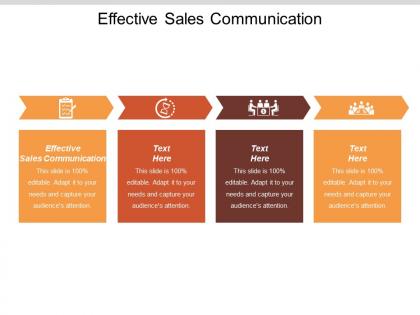
Effective sales communication ppt powerpoint presentation visual aids inspiration cpb




Try Before you Buy Download Free Sample Product
 Impress Your
 Audience
 100%
100% Editable
 Save Hours
 of Time


Business is about time as well as money. If you run a business you can?t have all the time to create your own presentations from scratch. That?s why you should make use of high quality Effective Sales Communication Ppt Powerpoint Presentation Visual Aids Inspiration Cpb.
People who downloaded this PowerPoint presentation also viewed the following :
Effective sales communication ppt powerpoint presentation visual aids inspiration cpb with all 5 slides:
The key to a powerful presentation is to create slides that are consistent in font font size graphics and animation. You don?t need to be a pro to achieve this because our Effective Sales Communication Ppt Powerpoint Presentation Visual Aids Inspiration Cpb are meant just for that.

FAQs for Effective sales communication ppt powerpoint presentation visual
Dude, stories are everything in sales. They stick in people's heads way better than just listing features. When you tell a prospect about another client who had their exact problem and how your product fixed it, they can actually picture themselves winning. People buy with their emotions first, then figure out the logical reasons later - I bombed so many presentations before I figured this out! Short stories work best. Make them relevant to whoever you're talking to. Actually, the more specific the better because then it feels real to them.
Dude, visuals are a game changer for sales presentations. People remember what they can actually see - like product demos, ROI charts, customer timelines. Way better than drowning them in bullet points. Complex stuff gets explained faster with graphics too. I swear half my prospects zone out during the boring parts, but throw up a clean screenshot or chart? Boom, they're back. Just don't go overboard with fancy animations or whatever. Keep it simple and make sure everything ties back to your main points. High contrast is clutch if you're presenting across a conference table.
Match their vibe first - formal or casual, whatever they're doing. Then ask real questions about what's bugging them at work and actually listen. Don't just sit there planning your next pitch, you know? Active listening honestly feels like cheating sometimes, it works so well. Look for stuff you have in common early on. Use their name without being weird about it. Reference things they told you so they know you're paying attention. Oh, and focus on genuinely wanting to help with their problems instead of just dumping your product on them.
Honestly, start by figuring out who you're actually talking to. What bugs them? How do they communicate? Younger people want quick, visual stuff on digital platforms. Older crowds? They need details and want to build relationships first. I totally bombed once trying TikTok-style energy with some serious executives - awkward doesn't even cover it. Industry makes a huge difference too. Tech people live for specs and data, but retail buyers only care about margins and whether customers will actually buy it. Your whole approach should shift - the words you use, your examples, even how you structure meetings. Ask yourself what's keeping THAT person up at night.
Actually listen to what they're saying - don't just sit there planning your comeback. Ask questions to dig deeper because "too expensive" usually means they don't see the value yet. I love the feel-felt-found thing: "I get it, other clients felt the same way, but here's what they discovered." Never get defensive or you'll kill any trust you've built. Think of objections as chances to give them info that actually matters to their situation. Oh, and always tie it back to their specific problems - that's what they really care about anyway.
Honestly, active listening is hands down the most underrated skill in sales. Most reps just sit there waiting for their turn to talk - huge mistake. Your prospects will literally tell you exactly how to sell to them if you actually pay attention. When you really listen, you'll pick up on their real problems and what drives them, not just surface-level stuff. Ask follow-up questions and repeat back what you heard. Makes them feel understood, plus you'll close way more deals. I swear, it's like having a cheat code sometimes.
Look, you need three things that actually matter: hook them with their biggest pain point right away, show clear value that connects to *their* situation, and end with a solid call-to-action. Most reps mess this up by jumping straight into features - don't be that person. Throw in some testimonials or case studies for proof. Oh, and make it interactive so you're not just rambling at them for 20 minutes. Map out what's keeping them up at night first, then build everything around fixing those problems. It's gotta feel like a conversation, not some rehearsed pitch.
Honestly, body language is huge in sales - way more than most people realize. Your posture and eye contact? That stuff builds trust before you even open your mouth. I learned this the hard way when I kept crossing my arms during calls (thought I looked professional, actually looked defensive). Lean in when they're talking. Mirror how they sit. Good eye contact = instant credibility. People trust what they see over what they hear, which is kind of crazy when you think about it. Just stay aware of what signals you're sending because prospects pick up on everything subconsciously.
Honestly? Don't talk their ear off when you should be listening. People hate when you just rattle off features instead of actually figuring out what's bugging them. Also, please do some research first - I've seen way too many reps walk in totally clueless. Those cookie-cutter presentations are the worst... like, at least pretend you know what company you're talking to! Oh, and don't be that pushy salesperson trying to close on the first call. Just have a normal conversation and actually try to help them solve something real.
Honestly, most sales reps completely suck at follow-up. You've gotta stay consistent though - it keeps you in their head and shows you're not just trying to hit quota. Trust builds over time with multiple touchpoints. After prospects think things over, new questions always pop up. That's your chance to send case studies or tackle objections their team brought up. Don't just randomly remember to call back whenever - set up an actual system for it. I learned this the hard way when I forgot to follow up with a huge prospect last year.
Track both your activities and actual results - that's where the real insights live. Response rates and meeting-to-opportunity conversions are solid starting points. Deal velocity matters too. Email open/reply rates? Brutal but honest feedback on your messaging game. Pipeline progression shows how well prospects actually move after your calls. Oh, and don't skip the softer stuff like customer feedback scores or the quality of questions people ask during conversations. Mix all this data together and you'll spot what's genuinely working vs. what just *feels* productive.
Dude, definitely stalk your prospects on social before calling - but like, in a helpful way, not creepy. LinkedIn's obvious for B2B stuff. Check their posts, what their company's up to, who you both know. Twitter's solid too for seeing what actually bugs them or gets them excited. Nobody wants some random person pitching them cold, you know? Comment on their stuff first, share some decent industry content yourself. Build up some actual credibility before you slide into their DMs. Oh and spend maybe 15 minutes each morning just engaging with their posts - it's way better than going in blind.
Honestly, empathy is what makes the difference between average and amazing salespeople. You've got to really get their pain points and what drives them - sometimes what they're NOT saying matters more than what they are (learned this the hard way). People buy from folks they trust, and trust comes when they feel understood instead of being pitched at constantly. I always start conversations with open questions about their actual challenges. Listen to their answers before you even think about your product. Once you nail that connection, everything else flows way more naturally.
Oh man, virtual presentations are tough! You've gotta bring way more energy since you can't tell if people are zoned out. Mix up your voice more. Ask specific people questions instead of that awkward "any questions?" thing that nobody ever answers. Test your screen share stuff first - I learned that the hard way when mine crashed mid-presentation. Break things up every 5 minutes or so with polls or whatever, otherwise people just start checking email. And honestly? Keep segments shorter than you think. People's attention spans are garbage on video calls.
Lead with whatever benefit they actually care about - skip the fluff. I used to write these massive emails that nobody read because I was trying to sound smart instead of being clear. Simple language beats jargon every time. Break stuff up with bullets so people can scan it quickly. After writing each sentence, ask yourself "okay but why should they care?" - cuts out so much unnecessary crap. Oh and don't give them like 5 different next steps. Pick one thing you want them to do and make it obvious.
No Reviews