


Twitter Tech Stack Powerpoint Ppt Template Bundles Tech Stack





Try Before you Buy Download Free Sample Product
 Impress Your
 Audience
 100%
100% Editable
 Save Hours
 of Time


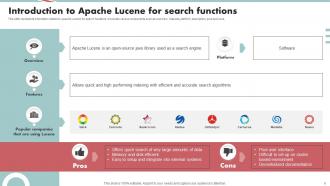
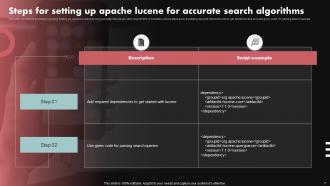
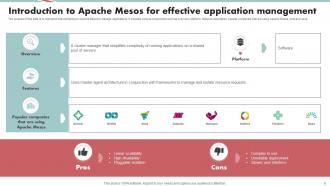
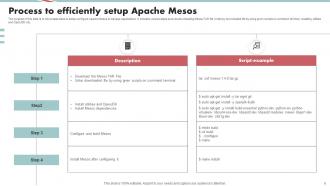
Introducing our comprehensive PPT on Twitter Tech Stack, your ultimate guide to unraveling the technologies that power one of the worlds leading social media platforms. Dive into the Twitter Tech Stack to understand the seamless integration of cutting edge tools and frameworks. Discover the art of website designing with Bootstrap as we guide you through the step by step setup process. Unleash the potential of Apache Lucene, a powerful search engine, with an in depth overview and setup instructions. Maximize your project management capabilities with Jira, as we highlight its key features and walk you through the steps to create a Jira Board. Explore the versatility of Apache Mesos, its pros and cons, and the script to set it up efficiently. Elevate your understanding of the Twitter ecosystem and empower your tech skills with our Twitter Tech Stack PPT today.
People who downloaded this PowerPoint presentation also viewed the following :
Twitter Tech Stack Powerpoint Ppt Template Bundles Tech Stack with all 21 slides:
Use our Twitter Tech Stack Powerpoint Ppt Template Bundles Tech Stack to effectively help you save your valuable time. They are readymade to fit into any presentation structure.










FAQs for Twitter Tech Stack Powerpoint Ppt Template
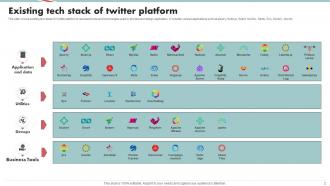
So Twitter's backend is mostly Scala and Java - Scala became their main thing for handling insane scale. Frontend stuff uses JavaScript/TypeScript, mobile apps are Swift and Kotlin. They ditched Ruby on Rails super early because it just couldn't handle Twitter's growth (smart move honestly). Python comes in for data science and ML work. Scala's really what you want to focus on though - that's the core of how they process billions of tweets. Oh and definitely check out their open-source projects if you want to see the actual implementation details.
So Twitter uses Apache Kafka for message queuing and Storm for stream processing - they're handling millions of tweets every second. You know how tweets pop up instantly in your feed? That's all this tech working behind the scenes. They've got Redis caching the popular stuff too. Most of their backend runs on Scala and Java, routing tweets to timelines crazy fast. The whole thing has to work in under a second because people expect real-time everything these days. Honestly, if you're building something like this, just start with Kafka - everyone uses it for a reason.
Kafka's basically the backbone for Twitter's insane data flow. Millions of tweets, likes, retweets - all that stuff gets processed per second. It's like a super highway that never gets traffic jams, moving everything from when you hit "tweet" to it showing up in feeds and trending topics. The ordering stays intact even when things break (which honestly impressed me when I first learned about it). You know how your timeline updates instantly? That's this system working. Worth diving into their docs if you're building anything that needs to handle crazy volumes of real-time data.
So Twitter basically spreads everything out across tons of servers and data centers - that's how they don't crash when some celebrity drops drama and everyone floods the app. They've got Redis and Memcached doing the heavy lifting on caching, plus they split user data across multiple databases so nothing becomes a bottleneck. Load balancers shuffle traffic around globally. Honestly, the microservices thing is pretty smart too since each piece can fail without taking down the whole system. If you're building something like this, just remember redundancy is everything - always have backups running.
So Twitter's actually pretty smart about this - they don't just use one database for everything. MySQL handles the basic user info and tweets. For the crazy massive stuff like timelines and analytics, they use Cassandra since it's built for that kind of scale. Redis does all the caching so things load fast. Oh, and they actually built their own database called Manhattan for some of their critical services, which is kinda impressive honestly. FlockDB manages all the follower/following connections between users. It's really about picking the right database for each job rather than forcing one to do everything.
So Twitter's caching is actually pretty smart - they use Redis and Memcached but stack them in layers. Instead of just caching individual tweets (which would be kinda inefficient), they cache whole timeline chunks. That's why your feed loads so fast even with millions of users posting constantly. They've got everything from database queries to pre-rendered timeline pieces cached, plus their CDN handles the static stuff. Oh, and edge caching for trending content too. If you're building something similar, honestly just start with whatever's slowest first - usually the gnarly database queries that take forever to run.
So Twitter's mostly on TensorFlow for production stuff, though they use PyTorch too. They built this thing called Cortex on top for serving models - pretty solid from what I've heard. Most of their data processing runs on Scala and Java since their whole stack is JVM-based anyway. For real-time ML they've got Heron (their streaming platform) plus Apache Storm. The tricky part is how they handle feature stores and versioning when you're at that scale. Oh, and their Cortex project is open source if you want to dig into it. That'd be my starting point honestly.
So Twitter built this whole thing around Finagle - it's their custom RPC framework that acts like a service mesh. Thousands of services need to talk to each other, which gets messy fast. They lean hard on circuit breakers and load balancing to prevent everything from falling over. Distributed tracing is huge for them because honestly, trying to debug cascading failures without it? Good luck with that. Each service handles its own data following domain-driven design. My advice though - nail your monitoring and tracing setup first. You can't fix what you can't see, and trust me, you'll need that visibility when things break.
So Twitter's security is actually pretty solid - they've got OAuth 2.0 handling API stuff, plus rate limiting so people can't spam their servers. All data gets encrypted with SSL/TLS too. They run automated scans on their code and honestly their bug bounty program pays decent money from what I've seen. DDoS protection covers the infrastructure side, along with tight access controls internally. Oh and their rate limiting setup is really smart - worth checking out if you're building something similar since that's where most of the third-party integrations happen anyway.
Yeah so Twitter's actually pretty old school - they run most stuff on their own data centers instead of just throwing everything on AWS like everyone else does. Makes sense though, at their scale buying hardware is way cheaper than renting it forever. They do use some cloud stuff for CDN and backups I think, but the core tweet processing? That's all their own metal. Honestly kinda refreshing that they didn't just go the typical startup route. If you're building something that massive, owning your infrastructure pays off big time.
Twitter's basically built on open-source stuff. Kafka handles their crazy data streams, Redis does the caching, MySQL runs the databases. Pretty smart honestly - they can tweak everything for their insane scale without paying massive licensing fees. They give back to the community too, which... yeah, makes sense when you're using that much free software. Elasticsearch powers their search, plus a bunch of monitoring tools I can't remember off the top of my head. If you're building something similar, definitely start with the proven open-source options first.
So Twitter handles their API pretty smartly - they've got rate limiting and caching with Redis for speed. Instead of your app constantly pinging their servers (which is annoying for everyone), they use webhooks to push updates to you. Much cleaner that way. They batch requests when they can and give you decent error messages with proper HTTP codes. On your end, definitely cache whatever responses you can so you don't hit their limits. Oh and don't forget to set up your auth tokens properly - learned that one the hard way!
Dude, Twitter's scale is absolutely insane - they're processing hundreds of millions of tweets every single day. Real-time performance has to stay solid while keeping everything reliable, which is honestly a nightmare combo. Content moderation at that volume? Forget about it, the spam and bot fighting alone is crazy work. When Twitter goes down people literally riot online, so they need backup systems for their backup systems. Oh and they can't just throw unlimited money at servers either. It's basically like solving the world's most stressful distributed systems puzzle while everyone's watching.
So Twitter basically watches everything you do - your likes, retweets, how long you scroll past stuff. Then their algorithms use all that data to figure out what you actually want to see. Pretty wild how sophisticated it gets, honestly. The whole system learns from millions of people clicking around to decide tweet order, what's trending, even which ads to show you. Oh and if you're trying to build something like this yourself, focus on the engagement stuff that actually matters rather than just tracking basic clicks and views.
So Twitter has this crazy deployment setup - they're pushing code hundreds of times a day, which honestly seems exhausting but whatever works I guess. Their whole thing is built around a monorepo with automated tests running constantly. The smart part is how they do canary releases, basically testing changes on small groups first. Feature flags are huge for them too since you can flip features on/off without touching code. Unit tests, integration tests, the works. If you're trying to level up your pipeline, I'd definitely start with gradual rollouts and feature toggles - way less stressful than going all-in immediately.
-
The pricing page of this website is very sorted. I felt no pain while buying the PPTs.
-
Great product with highly impressive and engaging designs.