


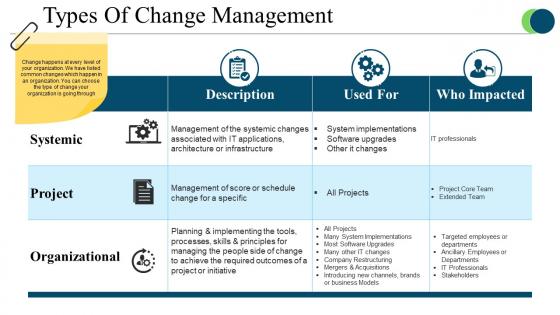
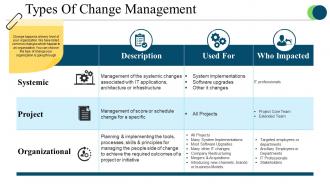
Types of change management powerpoint slide images





Try Before you Buy Download Free Sample Product
 Impress Your
 Audience
 100%
100% Editable
 Save Hours
 of Time


Eliminate disparity with our Types Of Change Management Powerpoint Slide Images. End the existence of differing conditions.
People who downloaded this PowerPoint presentation also viewed the following :
Types of change management powerpoint slide images with all 5 slides:
Increase interracial camaraderie with our Types Of Change Management Powerpoint Slide Images. Get folks to focus on their common heritage as humans.


FAQs for Types of change management
Honestly, most change fails because leaders think people will just roll with it - they won't. Start by getting your executives fully on board, then find your early adopters who can help sell the vision. Communication is huge here - explain the WHY behind everything, not just what's happening. Nobody likes being blindsided. Resistance is gonna happen no matter what, so plan for it and give people proper training. The timing piece is tricky... I've seen so many companies rush because the C-suite gets antsy, but that usually backfires. Oh, and involve employees from day one if you can swing it.
Honestly, I'd survey people first - see how they feel about change and if leadership's actually committed. Check their current workload too because nobody wants more chaos when they're already swamped. Look back at past changes. Did they work or completely fail? If everything usually crashes, fix that pattern first. Rate stuff like communication channels, available resources, and whether you've got supporters in each department. I always make a simple 1-10 scorecard for these things - sounds nerdy but it works. Focus on your lowest scores before jumping into anything big. Trust me, rushing never ends well.
Honestly, communication makes or breaks everything with change. People freak out way more about not knowing what's happening than the actual change itself - which is kinda crazy when you think about it. Be upfront about the why, the what, and when things will happen. Don't just blast out one announcement and call it done though. You'll need to repeat stuff because everyone processes this differently. Oh, and definitely make it a conversation, not just you talking at them. Address their concerns directly. I'd rather over-communicate than have people making up their own stories about what's going down.
Ugh, where do I even start? Communication is everything - if leadership isn't bought in from the start, you're screwed. People hate change when they don't get the "why" behind it. I've watched so many projects completely tank because teams rushed the rollout without proper training. The emotional stuff gets overlooked too, which is honestly kind of ridiculous. Give people time to actually process what's happening. Oh, and buffer time - you'll need way more than you think. Get your key players involved early and over-communicate everything upfront.
Your leadership style literally determines if change works or crashes and burns. Collaborative leaders get buy-in because people actually feel included in decisions. Sure, autocratic types push things through fast, but then deal with massive resistance later - I've watched that disaster unfold too many times. The leaders who explain WHY we're changing? They crush it with adoption rates. How you handle pushback matters huge. Stay visible, keep communication consistent, and actually support your people through the messy uncertainty. That's what separates successful change from expensive failures.
You gotta track the obvious stuff first - adoption rates, how fast people get up to speed, productivity numbers, cost savings compared to what you expected. But honestly? The softer metrics matter just as much. Employee satisfaction, retention, survey feedback. Those are way harder to BS your way through. Also watch for red flags like tons of support tickets or endless training requests - dead giveaway that people are struggling. Oh, and definitely get your baseline numbers before you change anything. Then check monthly so you can pivot if things go sideways instead of realizing six months later that everything's broken.
Start by explaining the "why" behind everything - nobody likes being blindsided. Don't sugar-coat the rough parts either, people can tell when you're being fake. Let them actually give input instead of just pretending to listen. One-on-ones with team leads are huge during transitions, that's honestly where all the real stuff comes up. Celebrate the small wins as they happen rather than waiting until it's all done. Oh, and keep communicating throughout the whole mess - I can't stress that enough. Radio silence kills these things faster than anything else.
Honestly, just be super upfront about why you're making changes - people hate being left in the dark. Get them involved in figuring out how to actually do it. When they help plan stuff, they don't fight it as much (and their ideas are usually pretty solid). Don't brush off their worries or act defensive when they complain. Training helps a ton because most pushback comes from people feeling lost. Oh, and definitely get your most respected team members on board first - they'll do half the convincing for you. Celebrate small wins early so everyone sees it's not a total disaster.
Honestly, tech makes change management way less painful. Digital surveys are a game-changer for checking how people actually feel - way better than those awkward paper forms we used to do. Collaboration platforms keep everyone on the same page, while project management tools help you track who's adapting and who's dragging their feet. Analytics dashboards are clutch for spotting pushback early. E-learning is great too since people can learn at their own speed instead of sitting through boring mandatory meetings (ugh). My advice? Pick one tool that fixes your biggest headache first. Don't go crazy trying to digitize everything at once.
Look, stakeholder analysis is basically your roadmap for figuring out who's gonna be affected by your change - and more importantly, who might fight it. Map out everyone from the C-suite down to actual users. Rate their influence and whether they'll love or hate what you're doing. I've watched so many projects blow up because someone ignored the "unimportant" department that ended up having serious pull. Once you know who's who, you can craft messages that actually resonate with each group. Oh, and build your supporter army early - you'll need them when things get messy.
Honestly, culture can totally make or break your global rollout. Different regions communicate concerns in wildly different ways - some cultures need way more relationship-building before they'll buy into anything new. Others just want you to tell them exactly what's in it for them personally. Power dynamics are huge too (trust me on this one). Some teams literally expect orders from the top, while others get annoyed if you don't ask for their input first. Oh, and timing? Your "urgent 30-day deadline" might seem crazy to cultures that prefer slower, more thoughtful implementation. Map out each region's cultural style first, then adjust your approach.
Honestly, start with role-playing workshops - they're super awkward at first but people actually get into them. Your managers need leadership coaching because they've got to model the behavior you want everyone else to follow. Cross-training is clutch for building confidence with new processes. I'd also set up peer mentoring since having a support buddy makes everything less overwhelming when stuff feels chaotic. Oh, and don't make it a one-time thing - keep the training ongoing. Pro tip: begin with your most influential people first, then let it spread naturally from there.
Honestly, if you don't get leadership on board first, you're just gonna be banging your head against a wall. Map out where you are now vs where you want to end up, then figure out who's getting hit hardest by these changes. Communication is everything - like, way more than you think you need. Train people early because once they're confused, they'll fight you on everything. Oh, and definitely build in ways to get feedback so you can pivot when stuff goes wrong (and it will). Celebrate the small wins too - keeps people motivated. Start with just one tiny change as a pilot before you go crazy company-wide.
Okay so project management is all the technical stuff - timelines, budgets, deliverables. Change management? That's getting people to actually use what you built. Here's the thing - you can deliver the most amazing system ever, but if nobody wants to adopt it or they don't know how, you're screwed. I've seen this happen way too many times honestly. Change management covers the communication, training, all that human stuff that makes or breaks your project. Don't treat it like an add-on either. Bake it in from the start.
Okay so here's the thing - most places totally mess this up. They launch the change, have a little celebration, then wonder why everyone's back to the old way in 3 months. You can't just implement and peace out. Make it part of how you actually operate day-to-day. Your performance reviews should reflect it, managers need to coach it consistently, and you've got to call people out when they slip back into old habits (which they will). Regular check-ins are clutch for catching problems early. Otherwise you're basically just hoping it sticks, which... good luck with that.
-
Very unique, user-friendly presentation interface.
-
Informative presentations that are easily editable.