


Types retail store location ppt powerpoint presentation ideas templates cpb




Try Before you Buy Download Free Sample Product
 Impress Your
 Audience
 100%
100% Editable
 Save Hours
 of Time


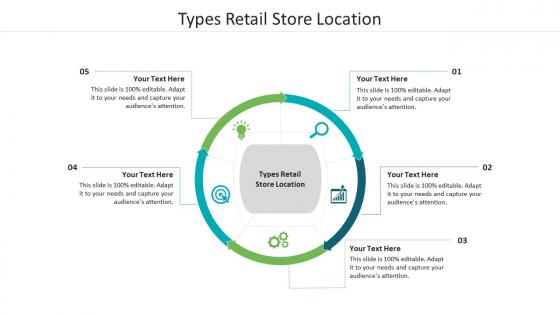
Our Types Retail Store Location Ppt Powerpoint Presentation Ideas Templates Cpb are topically designed to provide an attractive backdrop to any subject. Use them to look like a presentation pro.
People who downloaded this PowerPoint presentation also viewed the following :
Types retail store location ppt powerpoint presentation ideas templates cpb with all 9 slides:
Use our Types Retail Store Location Ppt Powerpoint Presentation Ideas Templates Cpb to effectively help you save your valuable time. They are readymade to fit into any presentation structure.








FAQs for Types retail store location ppt powerpoint presentation
Key factors include foot traffic patterns, target demographic proximity, competition density, rental costs, and accessibility via transportation. These location elements work together to drive customer acquisition and operational efficiency, with many retailers finding that strategic positioning near complementary businesses or high-visibility areas ultimately delivers higher sales volumes and sustainable competitive advantage.
Foot traffic significantly influences retail success by driving customer volume, increasing brand visibility, and generating spontaneous purchases through impulse buying behavior. High-traffic locations, particularly in shopping malls, busy street corners, and near transit hubs, enable retailers to capture more potential customers, reduce marketing costs, and achieve higher sales per square foot, ultimately delivering enhanced revenue growth and competitive market positioning.
Urban locations offer higher foot traffic, diverse customer demographics, public transit access, and premium brand positioning, while suburban locations provide lower rent costs, ample parking, larger store formats, and family-oriented customer bases. While urban stores generate higher sales per square foot, they face intense competition and operational costs, whereas suburban locations deliver cost efficiency and customer convenience but require stronger marketing to drive traffic.
Digital tools and data analytics assist retail location selection by analyzing foot traffic patterns, demographic data, competitor proximity, transportation accessibility, and economic indicators within specific areas. Through predictive modeling and geographic information systems, retailers can evaluate potential sales performance, assess market saturation, and identify underserved areas, ultimately minimizing investment risks while maximizing revenue potential and competitive positioning.
Competition significantly influences retail location decisions through market saturation analysis, customer traffic patterns, pricing strategies, and accessibility considerations. Retailers strategically position stores to capitalize on high-traffic areas while avoiding oversaturated markets, with many finding that proximity to complementary businesses enhances foot traffic, ultimately delivering competitive advantage through strategic positioning and optimized customer reach.
Demographics significantly influence retail location decisions by determining customer density, purchasing power, age distribution, lifestyle preferences, and shopping behaviors within specific areas. Retailers analyze population data to match their target market with neighborhood characteristics, with clothing brands favoring younger demographics near universities, while luxury retailers seek affluent areas, ultimately ensuring optimal customer alignment and sales potential.
Emerging retail location trends include ghost kitchens, micro-fulfillment centers, pop-up experiences, hybrid showroom-warehouses, and neighborhood convenience hubs. These formats streamline operations by reducing overhead costs, enhancing last-mile delivery, and creating flexible customer touchpoints, with many retailers finding that smaller, strategically distributed locations deliver faster services and improved local market penetration.
Lease agreements vary significantly by location type, with shopping malls requiring percentage rent plus base rent, while street-level locations typically use fixed monthly payments with personal guarantees. Strip centers offer moderate flexibility with shorter terms, department stores negotiate anchor tenant privileges with reduced rates, and pop-up spaces provide month-to-month arrangements, ultimately enabling retailers to align costs with foot traffic expectations and strategic positioning.
Location significantly impacts omni-channel strategies through inventory positioning, fulfillment capabilities, customer touchpoint optimization, and service integration across digital and physical channels. Strategic store placement enables click-and-collect services, faster last-mile delivery, and seamless returns processing, with many retailers finding that well-positioned locations ultimately deliver enhanced customer experiences and operational efficiency.
Seasonal fluctuations significantly influence retail location strategy by driving businesses toward flexible lease arrangements, multi-location approaches, and destination-specific positioning. Tourist destinations, shopping districts, and seasonal markets experience dramatic traffic variations, with many retailers finding that diversified location portfolios, pop-up strategies, and data-driven site selection ultimately deliver stability and competitive advantage across changing consumer patterns.
Accessibility and parking significantly impact customer footfall by reducing barriers to store visits, enhancing convenience, and accommodating diverse customer needs including mobility requirements. Retail locations with ample parking and accessible entrances often see increased dwell time and repeat visits, with shopping centers and grocery stores finding that convenient parking directly correlates with higher sales volumes and customer satisfaction.
Pop-up stores revolutionize traditional retail location strategies by enabling brands to test new markets, reduce overhead costs, and create urgency-driven customer experiences without long-term commitments. These temporary retail concepts allow retailers to experiment with high-traffic areas like shopping centers, festivals, and urban districts, ultimately delivering market insights and brand awareness while minimizing financial risk.
Proximity to suppliers and logistics significantly impacts retail location decisions by reducing transportation costs, minimizing inventory holding expenses, and enabling faster product replenishment cycles. Strategic positioning near distribution centers allows retailers to streamline supply chain operations, respond quickly to demand fluctuations, and maintain optimal stock levels, with many retail chains finding that logistics-focused locations ultimately deliver lower operational costs and improved customer satisfaction.
Community demographics significantly influence retail store selection by determining purchasing power, consumer preferences, lifestyle needs, and shopping behaviors within specific areas. Retailers analyze factors like household income, age distribution, family composition, and cultural preferences to strategically position stores, with grocery chains targeting family-dense suburbs, luxury brands focusing on affluent neighborhoods, and convenience stores serving high-traffic urban areas, ultimately delivering tailored shopping experiences and competitive market positioning.
Retailers can adapt through omnichannel integration, flexible lease agreements, pop-up stores, micro-fulfillment centers, and data-driven site selection strategies. These approaches enable businesses to respond to shifting consumer behaviors, optimize operational costs, and maintain competitive positioning, with many retailers finding that combining physical and digital touchpoints ultimately delivers enhanced customer experiences and improved market resilience.
-
Editable templates with innovative design and color combination.
-
Unique research projects to present in meeting.