


Upgrading Cybersecurity With Incident Response Playbook Powerpoint Presentation Slides




Try Before you Buy Download Free Sample Product
 Impress Your
 Audience
 100%
100% Editable
 Save Hours
 of Time


Cyber security is essential to protect businesses and individuals from spammers and cyber criminals. Grab our professionally crafted Upgrading Cybersecurity with Incident Response Playbook template that aims to safeguard the private data of your employees and assets. Our experts at SlideTeam have created this customizable Incident Response Playbook to handle such cybersecurity risk situations. Our Cybersecurity Incident Response deck contains a standardized incident response methodology. Businesses can use this to manage cybersecurity risk situations and instruct new hires to plan for and handle an incident successfully. It further addresses the Incident Response Approach and Key Statistics Associated with Cyber Threats, Ransom Payment, etc. Our Ransomware Playbook also exhibits critical statistics Associated with Cyber Threats, Ransom Payment, and Phases that will effectively respond to such cases. Slides like the training program and communication plan will help develop cyber awareness and effectively handle any incident. The incident monitoring dashboard portion will also aid in tracking security incidents at the departmental level and incident management in real time. Get access right away.
People who downloaded this PowerPoint presentation also viewed the following :
Content of this Powerpoint Presentation
Slide 1: This slide introduces Upgrading Cybersecurity with Incident Response Playbook. Commence by statingYour Company Name.
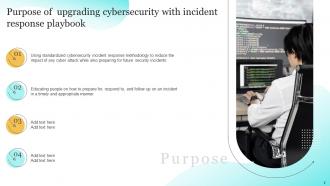
Slide 2: This slide depicts the Purpose of the presentation.
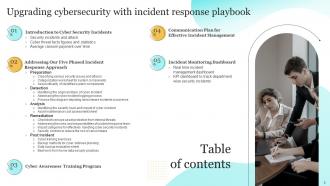
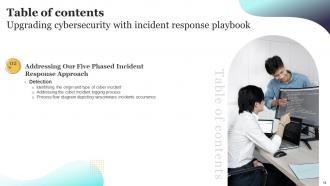
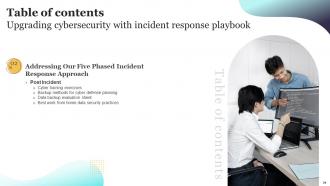
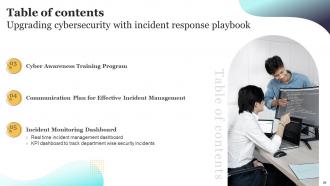
Slide 3: This slide incorporates the Table of contents.
Slide 4: This slide highlights the Title for the Topics to be discussed next.
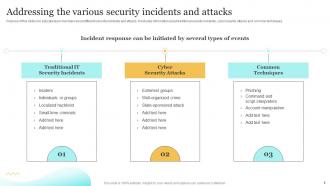
Slide 5: The Purpose of this slide is to educate team members about different security incidents and attacks.
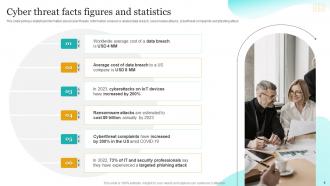
Slide 6: This slide portrays statistical information about cyber threats.
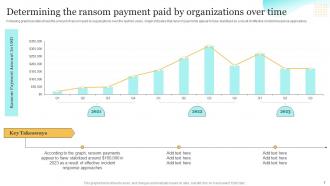
Slide 7: This slide deals with Determining the ransom payment paid by organizations over time.
Slide 8: This slide contains the Heading for the Components to be discussed next.
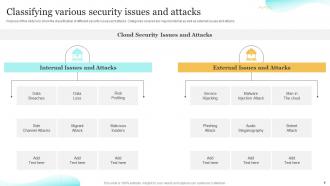
Slide 9: The Purpose of this slide is to show the classification of different security issues and attacks.
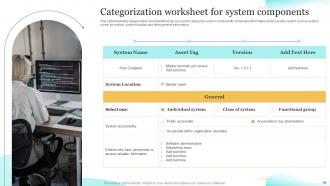
Slide 10: This slide illustrates categorization worksheet that can be used to categorize system components.
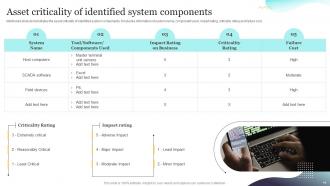
Slide 11: The Mentioned slide demonstrates the asset criticality of identified system components.
Slide 12: This slide presents the Title for the Ideas to be further discussed.
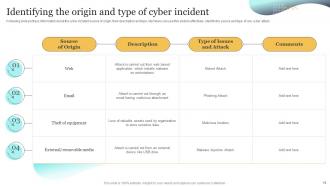
Slide 13: This slide emphasizes on Identifying the origin and type of cyber incident.
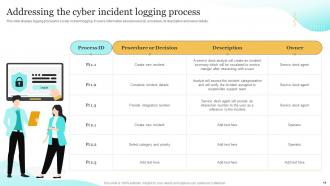
Slide 14: This slide focuses on Addressing the cyber incident logging process.
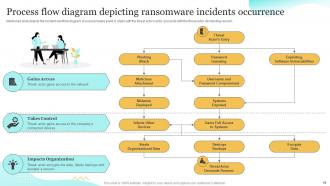
Slide 15: The Mentioned slide depicts the incident workflow diagram of a ransomware event.
Slide 16: This slide elucidates the Heading for the Ideas to be covered in the following template.
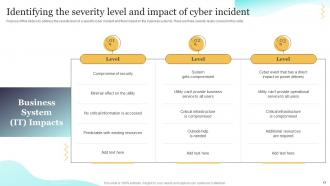
Slide 17: The Purpose of this slide is to address the severity level of a specific cyber incident and their impact on the business systems.
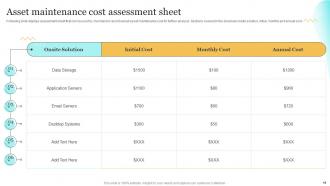
Slide 18: The Following slide displays assessment sheet that can be used by members to record overall asset maintenance cost for further analysis.
Slide 19: This slide highlights the Title for the Components to be covered in the following template.
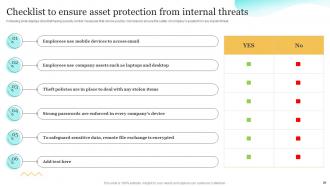
Slide 20: The Following slide presents the checklist having security control measures that can be used by members to ensure the safety of company’s assets from any insider threat.
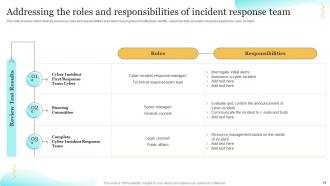
Slide 21: This slide provides information about various roles and responsibilities of incident response team to effectively identify, report and take accurate measures against any cyber incident.
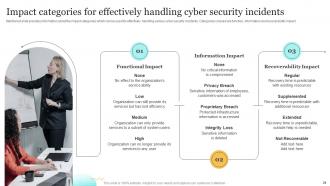
Slide 22: This slide indicates the Impact categories for effectively handling cyber security incidents.
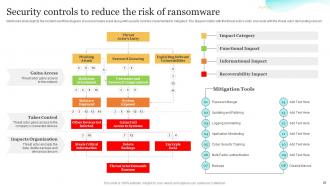
Slide 23: This slide depicts the Security controls to reduce the risk of ransomware.
Slide 24: This slide highlights the Heading for the Topics to be discussed further.
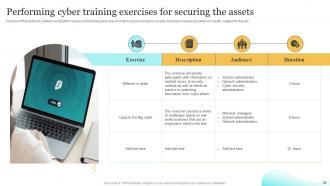
Slide 25: The Purpose of this slide is to address and perform various cyber training exercises in order to secure company’s assets.
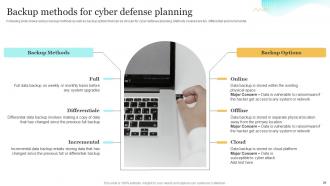
Slide 26: The Following slide shows various backup methods as well as backup options that can be chosen for cyber defense planning.
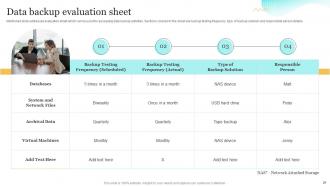
Slide 27: The Mentioned slide addresses evaluation sheet which can be used for assessing data backup activities.
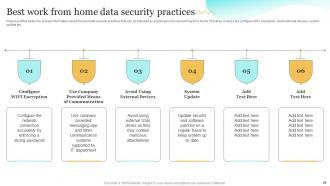
Slide 28: This slide exhibits the Best work from home data security practices.
Slide 29: This slide incorporates the Title for the Ideas to be covered next.
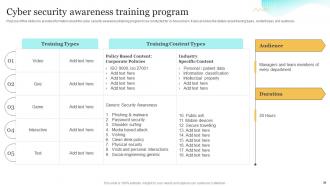
Slide 30: The Purpose of this slide is to provide information about the cyber security awareness training program to be conducted for in-house team.
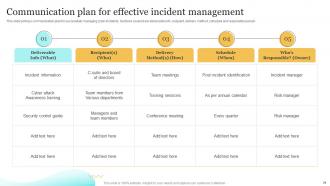
Slide 31: This slide portrays the communication plan for successfully managing cyber incidents.
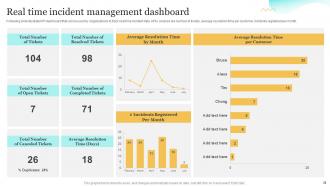
Slide 32: The Following slide illustrate KPI dashboard that can be used by organizations to track real time incident data.
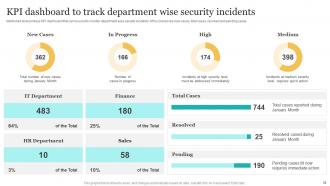
Slide 33: This slide reveals the KPI dashboard to track department wise security incidents.
Slide 34: This is the Icons slide containing all the Icons used in the plan.
Slide 35: This slide depicts some Additional information.
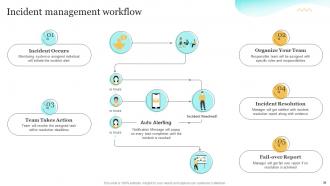
Slide 36: This slide illustrates the Incident management workflow.
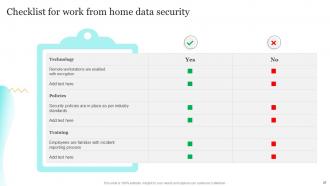
Slide 37: This slide displays the Checklist for work from home data security.
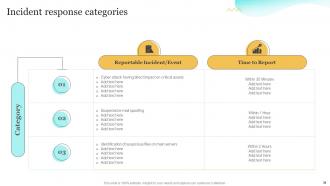
Slide 38: This slide indicates the Incident response categories.
Slide 39: This slide represents the SWOT analysis.
Slide 40: This is the About us slide. State your company information here.
Slide 41: This slide is used to depict organization's vision, mission and goal.
Slide 42: This is Meet our team sldie. State the information related to your team members here.
Slide 43: This slide reveals the Timeline of the firm.
Slide 44: This is the Venn Diagram slide.
Slide 45: This slide elucidates the 30 60 90 days plan for efficient planning.
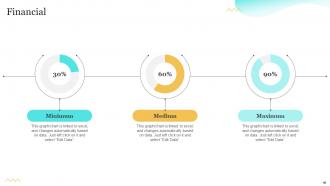
Slide 46: This slide exhibits information related to the Financial topic.
Slide 47: This slide contains the Post it notes for reminders and deadlines.
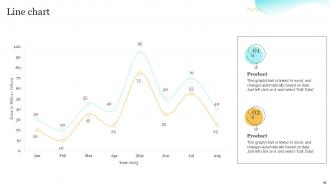
Slide 48: This slide presents the Line chart.
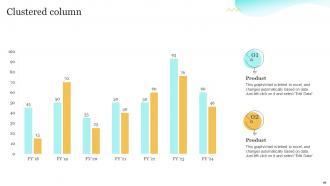
Slide 49: This slide showcases the Clustered column.
Slide 50: This is the Thank You slide for acknwoledgement.
Upgrading Cybersecurity With Incident Response Playbook Powerpoint Presentation Slides with all 55 slides:
Use our Upgrading Cybersecurity With Incident Response Playbook Powerpoint Presentation Slides to effectively help you save your valuable time. They are readymade to fit into any presentation structure.










FAQs for Upgrading Cybersecurity With Incident Response Playbook
Essential components include incident classification frameworks, detailed response procedures, stakeholder communication protocols, evidence preservation guidelines, and recovery procedures. These elements work together by enabling rapid threat assessment, coordinating cross-functional teams, and minimizing business disruption, with many organizations finding that structured playbooks reduce response times by 60% while ensuring regulatory compliance.
Organizations tailor their incident response playbooks by creating threat-specific workflows for malware, phishing, ransomware, data breaches, and insider threats, with each workflow defining unique detection methods, containment strategies, and recovery procedures. These customized playbooks enable faster response times, more effective threat mitigation, and streamlined communication protocols, with many enterprises finding that sector-specific adaptations significantly enhance their overall security posture.
Communication serves as the central coordination mechanism in cybersecurity incident response, enabling stakeholder notifications, status updates, containment coordination, and regulatory reporting throughout the crisis. Effective communication protocols streamline decision-making processes, minimize confusion across technical teams, and ensure compliance requirements are met, while maintaining customer trust and operational transparency during security incidents.
Organizations should prioritize incidents using severity matrices that consider business impact, data sensitivity, affected systems, and regulatory implications, categorizing them as critical, high, medium, or low priority. Financial institutions typically treat data breaches as critical while classifying phishing attempts as medium priority, with many organizations finding that clear prioritization frameworks enable faster resource allocation, reduce response times, and ultimately minimize business disruption.
Regular training sessions, tabletop exercises, role-based workshops, documented procedures review, and simulated incident drills ensure comprehensive playbook familiarity across all team members. Organizations should conduct quarterly assessments, assign playbook champions within each department, and maintain updated contact lists, with many finding that hands-on simulation exercises significantly improve response times and coordination during actual security incidents.
Cybersecurity incident response playbooks integrate with existing security policies through alignment mapping, cross-referencing compliance requirements, establishing clear escalation pathways, and embedding standardized procedures within current workflows. This strategic combination enables organizations to streamline response times, maintain regulatory compliance, and ensure seamless coordination across security teams, ultimately delivering enhanced threat mitigation and operational efficiency.
Key metrics include mean time to detection, containment time, recovery duration, false positive rates, and stakeholder communication effectiveness. These measurements enable organizations to identify bottlenecks, streamline response procedures, and enhance overall security posture, with many enterprises finding that regular playbook assessments reduce incident costs and minimize business disruption significantly.
Incident response playbooks should be reviewed quarterly and updated immediately following any security incident, regulatory change, or infrastructure modification. Through regular assessments, organizations can identify gaps, incorporate lessons learned, and adapt to evolving threats, with many enterprises finding that consistent updates significantly reduce response times and improve containment effectiveness during actual breaches.
Regular tabletop exercises, phishing simulations, breach scenario walkthroughs, role-based response training, and cross-departmental coordination drills form the foundation of effective cyber incident preparation. These training methods enhance team readiness by building muscle memory, improving communication protocols, and identifying response gaps, with organizations like hospitals and financial institutions finding that quarterly simulations significantly reduce actual incident response times.
Organizations should document lessons learned through structured post-incident reviews that capture response timeline analysis, communication gaps, technical vulnerabilities discovered, and resource allocation effectiveness. These comprehensive reports enable security teams to update playbooks, refine detection rules, and enhance training protocols, with many enterprises finding that systematic documentation reduces incident response times by 30-40% while strengthening overall security posture.
Tools that enhance incident response include SIEM platforms, endpoint detection systems, threat intelligence feeds, automated orchestration tools, and forensic analysis software. These technologies streamline response by accelerating threat detection, automating containment procedures, and enabling real-time collaboration, with many organizations finding that integrated platforms significantly reduce response times while improving overall security posture.
Regulatory compliance significantly shapes incident response playbooks by mandating specific notification timelines, documentation requirements, data breach protocols, and stakeholder communication procedures. Financial institutions must align with PCI DSS and SOX requirements, while healthcare organizations incorporate HIPAA breach notification rules, ultimately ensuring that response procedures meet legal obligations while maintaining operational efficiency and minimizing regulatory penalties.
Designated roles and responsibilities ensure rapid, coordinated incident response by eliminating confusion, streamlining communication channels, and enabling parallel task execution across critical functions like containment, investigation, and stakeholder communication. This structured approach significantly reduces response times and minimizes business impact, with many organizations finding that clear role definitions enhance team efficiency and ultimately deliver faster recovery while maintaining operational continuity during security incidents.
Third-party vendors can be incorporated through formal agreements defining roles, responsibilities, and communication protocols, vendor risk assessments, and integrated escalation procedures. Many organizations establish vendor security requirements, conduct joint incident response exercises, and maintain updated contact lists, while ensuring vendors align with internal security standards and regulatory compliance, ultimately creating a coordinated defense network that enhances overall incident response capabilities.
Common pitfalls include creating overly complex procedures, failing to define clear roles and responsibilities, neglecting regular testing and updates, and omitting communication protocols with stakeholders. These oversights can significantly delay response times during actual incidents, with many organizations finding that streamlined playbooks focusing on automated workflows, pre-approved decision trees, and cross-functional coordination ultimately deliver faster containment and reduced business impact.
-
SlideTeam’s pool of 2Million+ PPTs has really benefited my team, everyone from the IT department to HR. We are lucky to have crossed ways with them.
-
I came across many PowerPoint presentations with excellent creatives and I believe they would be beneficial to my work.