


Using Modern It Service Delivery Practices To Drive KPI Defined Business Outcomes Complete Deck




Try Before you Buy Download Free Sample Product
 Impress Your
 Audience
 100%
100% Editable
 Save Hours
 of Time


Collaboration of IT and business drive efficiencies, stabilize the business, and help in cost containment. Grab our efficiently designed Using Modern IT Service Delivery Practices to Drive KPI-Defined Business Outcomes template that illustrates how advanced Machine Learning ML and Artificial Intelligence AI analytic models can maximize service delivery performance, service health, and proactive problem resolution. Also, this presentation acquaints viewers with a list of machine learning skills that organizations must use to handle service abnormalities, etc. In addition to that, our professionally curated PPT presents details on the application of new customer engagement models by aligning HR, finance, legal, customer support, and sales and marketing team. Further, this PPT provides rich information on shifting from transactional services to transforming the entire stack, building a new IT culture, etc. Our ready-to-use PowerPoint presentation will help you conduct your employees AI and Machine Learning Training Program. It will also be helpful in the transformation from reactive service to proactive service, creating values for business stakeholders and devising a communication plan along with service delivery KPI dashboards. Customize this 100 percent editable template now.
People who downloaded this PowerPoint presentation also viewed the following :
Content of this Powerpoint Presentation
Slide 1: This slide introduces Using Modern IT Service Delivery Practices to Drive KPI-Defined Business Outcomes. State Your Company Name and begin.
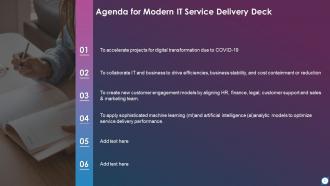
Slide 2: This slide states Agenda of the presentation.
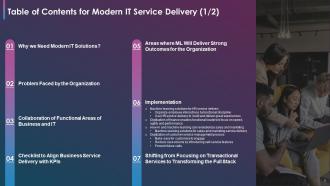
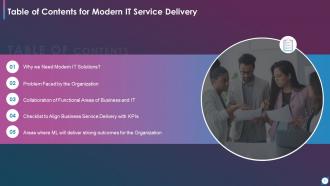
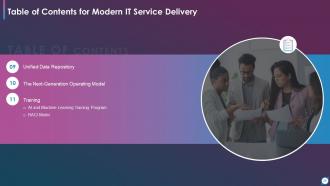
Slide 3: This slide presents Table of Content for the presentation.
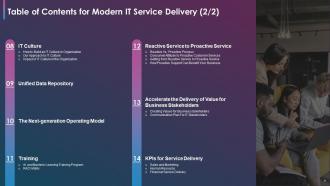
Slide 4: This is another slide continuing Table of Content for the presentation.
Slide 5: This slide highlights title for topics that are to be covered next in the template.
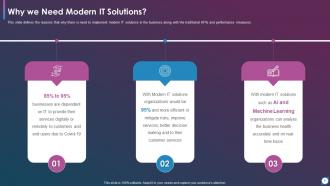
Slide 6: This slide defines the reasons that why there is need to implement modern IT solutions.
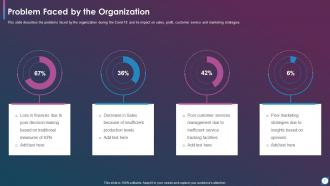
Slide 7: This slide describes the problems faced by the organization during the Covid-19 and its impact on sales.
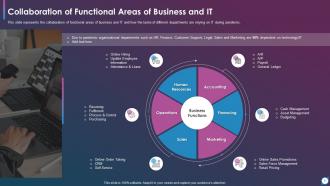
Slide 8: This slide displays Collaboration of Functional Areas of Business and IT.
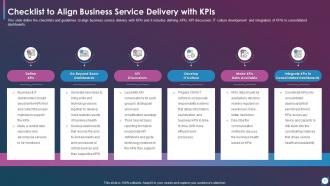
Slide 9: This slide represents Checklist to Align Business Service Delivery with KPIs.
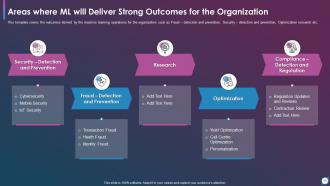
Slide 10: This slide showcases Areas where ML will Deliver Strong Outcomes for the Organization.
Slide 11: This slide highlights title for topics that are to be covered next in the template.
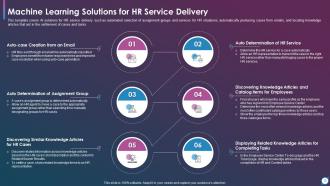
Slide 12: This slide shows Machine Learning Solutions for HR Service Delivery.
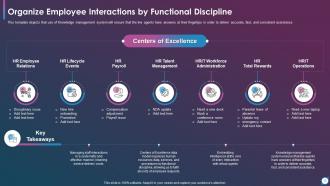
Slide 13: This slide presents Organize Employee Interactions by Functional Discipline.
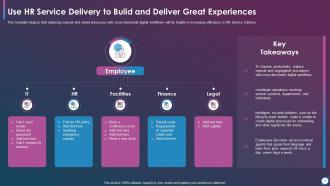
Slide 14: This slide displays Use HR Service Delivery to Build and Deliver Great Experiences.
Slide 15: This slide highlights title for topics that are to be covered next in the template.
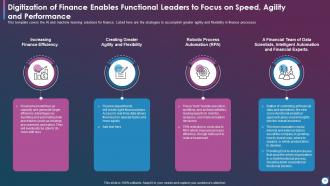
Slide 16: This template covers the AI and machine learning solutions for finance.
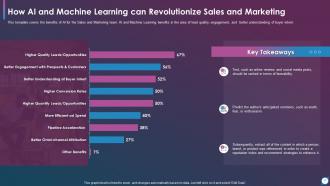
Slide 17: This slide represents How AI and Machine Learning can Revolutionize Sales and Marketing.
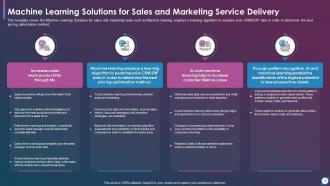
Slide 18: This slide showcases Machine Learning Solutions for Sales and Marketing Service Delivery.
Slide 19: This slide highlights title for topics that are to be covered next in the template.
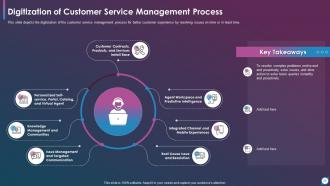
Slide 20: This slide shows Digitization of Customer Service Management Process.
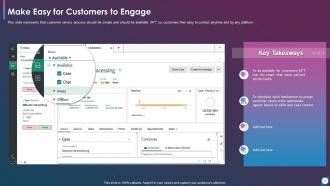
Slide 21: This slide represents that customer service process should be simple.
Slide 22: This slide showcases Reduce Case Volume by Introducing Self-Service Features.
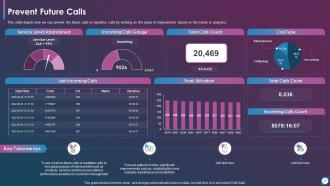
Slide 23: This slide depicts how we can prevent the future calls or repetitive calls by working on the areas of improvement.
Slide 24: This slide highlights title for topics that are to be covered next in the template.
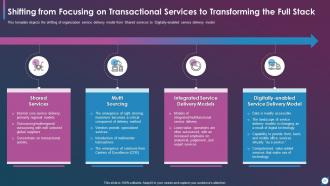
Slide 25: This slide shows Shifting from Focusing on Transactional Services to Transforming the Full Stack.
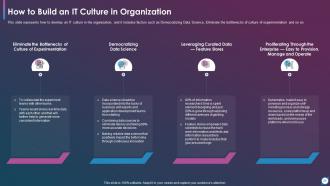
Slide 26: This slide represents how to develop an IT culture in the organization.
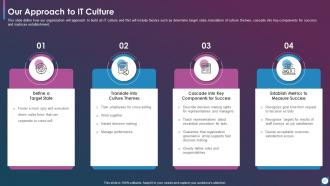
Slide 27: This slide define how our organization will approach to build an IT culture.
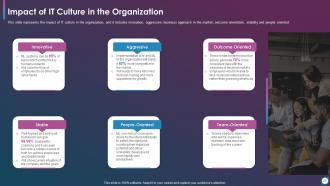
Slide 28: This slide represents the impact of IT culture in the organization.
Slide 29: This slide highlights title for topics that are to be covered next in the template.
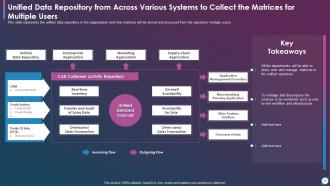
Slide 30: This slide showcases Unified Data Repository from Across Various Systems to Collect the Matrices for Multiple Users.
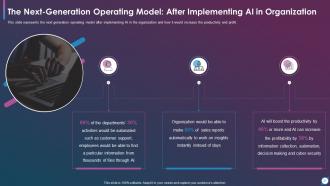
Slide 31: This slide represents the next generation operating model after implementing AI in the organization.
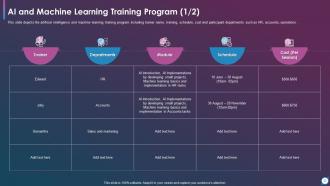
Slide 32: This slide showcases AI and Machine Learning Training Program.
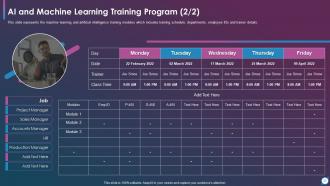
Slide 33: This slide shows AI and Machine Learning Training Program.
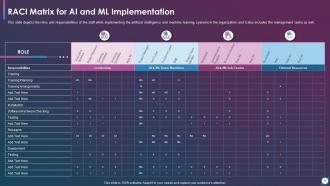
Slide 34: This slide presents RACI Matrix for AI and ML Implementation.
Slide 35: This slide highlights title for topics that are to be covered next in the template.
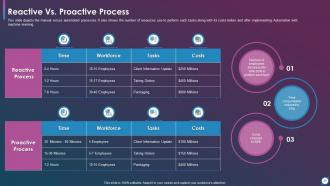
Slide 36: This slide depicts the manual versus automated processes.
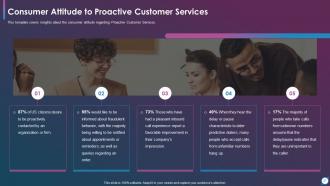
Slide 37: This slide represents Consumer Attitude to Proactive Customer Services.
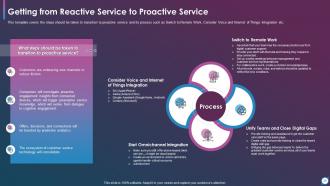
Slide 38: This slide showcases Getting from Reactive Service to Proactive Service.
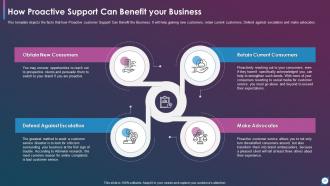
Slide 39: This slide shows How Proactive Support Can Benefit your Business.
Slide 40: This slide highlights title for topics that are to be covered next in the template.
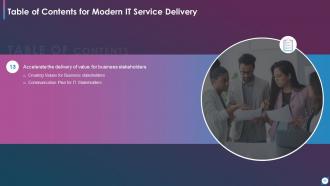
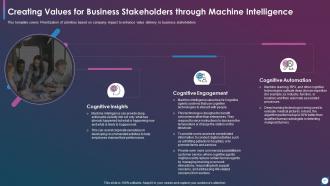
Slide 41: This slide presents Creating Values for Business Stakeholders through Machine Intelligence.
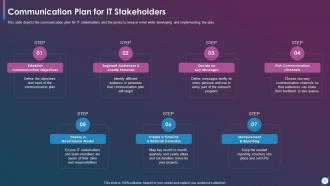
Slide 42: This slide depicts the communication plan for IT stakeholders.
Slide 43: This slide highlights title for topics that are to be covered next in the template.
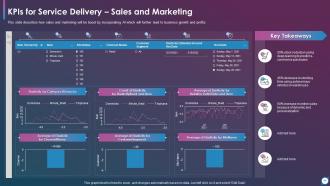
Slide 44: This slide describes how sales and marketing will be boost by incorporating AI.
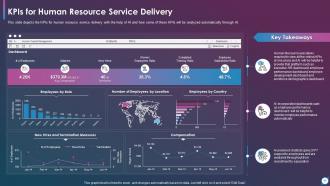
Slide 45: This slide depicts the KPIs for human resource service delivery with the help of AI.
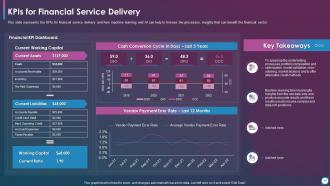
Slide 46: This slide represents the KPIs for financial service delivery.
Slide 47: This slide displays Icons for Using Modern IT Service Delivery Practices to Drive KPI-Defined Business Outcomes.
Slide 48: This slide is titled as Additional Slides for moving forward.
Slide 49: This is Our Mission slide with related imagery and text.
Slide 50: This is About Us slide to show company specifications etc.
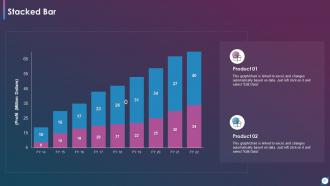
Slide 51: This slide represents Stacked Bar chart with two products comparison.
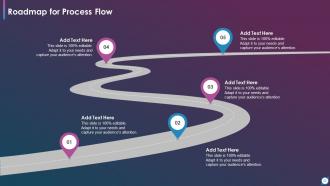
Slide 52: This slide showcases Roadmap for Process Flow.
Slide 53: This slide shows Post It Notes. Post your important notes here.
Slide 54: This slide contains Puzzle with related icons and text.
Slide 55: This slide depicts Venn diagram with text boxes.
Slide 56: This is a Thank You slide with address, contact numbers and email address.
Using Modern It Service Delivery Practices To Drive KPI Defined Business Outcomes Complete Deck with all 61 slides:
Use our Using Modern It Service Delivery Practices To Drive KPI Defined Business Outcomes Complete Deck to effectively help you save your valuable time. They are readymade to fit into any presentation structure.






FAQs for Using Modern It Service Delivery Practices To Drive KPI Defined Business
Effective IT service delivery frameworks include service catalog management, incident and problem management, change control processes, performance monitoring systems, and customer communication protocols. These components work together by standardizing service requests, minimizing downtime through proactive issue resolution, and ensuring transparent communication with stakeholders, ultimately delivering consistent user experiences and operational efficiency across organizations.
Organizations can measure IT service delivery performance through key metrics including response times, resolution rates, system uptime, user satisfaction scores, and service level agreement compliance. These measurements enable streamlined monitoring by tracking incident volumes, measuring mean time to recovery, and analyzing cost per ticket, with many enterprises finding that comprehensive dashboards ultimately deliver enhanced operational efficiency and improved customer experiences.
ITIL enhances service delivery practices by providing standardized frameworks for incident management, change management, problem resolution, service catalog development, and performance monitoring. Through these structured processes, organizations streamline operations, reduce downtime, and improve customer satisfaction, with many IT departments finding that ITIL implementation delivers faster response times and more predictable service outcomes.
Automation improves IT service delivery efficiency by streamlining routine tasks, reducing manual errors, and accelerating response times through automated ticketing, monitoring, and deployment processes. Organizations across sectors like banking and healthcare find that automated workflows enable faster incident resolution, minimize downtime, and enhance resource allocation, ultimately delivering improved customer experiences and operational cost savings.
Customer feedback influences IT service delivery improvements by identifying pain points, revealing performance gaps, highlighting user experience issues, and uncovering unmet needs across various touchpoints. Through systematic feedback analysis, IT organizations streamline service processes, enhance response times, and optimize resource allocation, with many enterprises finding that customer-driven improvements ultimately deliver higher satisfaction rates and stronger competitive positioning.
Common IT service delivery challenges include inadequate resource allocation, poor communication between teams, insufficient monitoring capabilities, lack of standardized processes, and skills gaps in emerging technologies. These obstacles can be mitigated by implementing robust ITSM frameworks, enhancing cross-functional collaboration, deploying automated monitoring tools, and investing in continuous staff training, ultimately delivering improved service quality and operational efficiency.
Service level agreements can be optimized through regular performance monitoring, stakeholder feedback integration, realistic target setting, automated reporting mechanisms, and continuous improvement processes. These strategic approaches enhance service delivery by establishing clear expectations, reducing response times, and improving customer satisfaction, with many organizations finding that well-structured SLAs ultimately deliver competitive advantages and operational efficiency.
Cloud computing transforms IT service delivery models by enabling on-demand scalability, reducing infrastructure costs, and accelerating deployment timelines through automated provisioning and flexible resource allocation. Through cloud platforms, organizations streamline operations, enhance service reliability, and deliver faster customer experiences, with many financial services and healthcare institutions finding that hybrid cloud approaches ultimately provide both operational efficiency and strategic competitive advantage.
Organizations ensure continuous improvement in IT service delivery through regular performance monitoring, feedback collection from stakeholders, process optimization reviews, and implementation of automation tools. By establishing key performance indicators, conducting periodic assessments, and leveraging data analytics, many institutions find that they can streamline operations, reduce response times, and enhance user satisfaction while maintaining cost-effective service delivery.
Incident management ensures rapid restoration of IT services when disruptions occur, minimizing business impact through structured detection, classification, prioritization, and resolution processes. It maintains service availability and user productivity by reducing downtime, enabling faster problem resolution, and improving customer satisfaction, with organizations finding that effective incident management delivers significant cost savings and competitive advantage.
AI and machine learning revolutionize IT service delivery by automating routine tasks, predicting system failures, and enabling intelligent self-service capabilities. Through predictive analytics and automated incident resolution, organizations streamline support operations, reduce response times, and enhance user experiences, with many IT departments finding that these technologies ultimately deliver significant cost savings while improving service quality.
Remote IT service delivery best practices include cloud-based service management platforms, automated monitoring and alerting systems, secure remote access protocols, standardized communication channels, and comprehensive self-service portals. These approaches enhance operational efficiency by enabling 24/7 support capabilities, reducing response times, and maintaining service quality consistency, with many organizations finding that strategic automation ultimately delivers cost reductions while improving customer satisfaction.
Collaboration tools enhance communication in IT service delivery teams by centralizing project updates, enabling real-time messaging, and providing shared workspaces for documentation and troubleshooting. These platforms streamline incident response, facilitate knowledge sharing across distributed teams, and integrate with ticketing systems, ultimately delivering faster resolution times and improved service quality for organizations managing complex IT infrastructures.
Change management ensures IT service delivery remains stable and reliable by controlling modifications through structured approval processes, impact assessments, and coordinated implementation schedules. This systematic approach minimizes service disruptions, reduces failed deployments, and maintains system integrity, with many organizations finding that proper change controls ultimately deliver faster incident resolution, improved customer satisfaction, and enhanced operational efficiency.
Organizations can tailor IT service delivery by implementing role-based service catalogs, customized SLA frameworks, stakeholder-specific communication protocols, and differentiated support tiers based on business criticality. Through strategic segmentation, companies like financial services firms deliver executive dashboards for C-suite visibility while providing technical APIs for development teams, ultimately enhancing user satisfaction and operational efficiency.
-
Informative presentations that are easily editable.
-
Nice and innovative design.