


Marketing Value Chain Process Of Media Industry




Try Before you Buy Download Free Sample Product
 Impress Your
 Audience
 100%
100% Editable
 Save Hours
 of Time


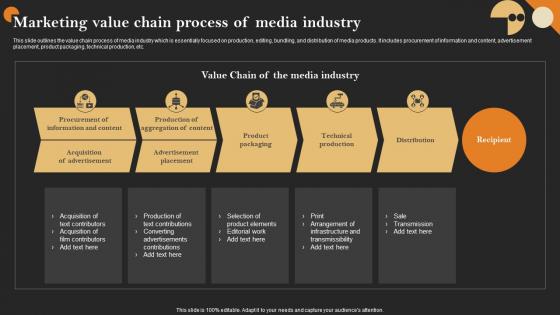
This slide outlines the value chain process of media industry which is essentially focused on production, editing, bundling, and distribution of media products. It includes procurement of information and content, advertisement placement, product packaging, technical production, etc.
People who downloaded this PowerPoint presentation also viewed the following :
Marketing Value Chain Process Of Media Industry with all 6 slides:
Use our Marketing Value Chain Process Of Media Industry to effectively help you save your valuable time. They are readymade to fit into any presentation structure.





FAQs for Marketing Value Chain Process
So there are five main parts to the marketing value chain: market research, product development/positioning, marketing communications, sales channels, and customer service/retention stuff. Picture it like a pipeline where everything connects. When your research sucks, it messes up everything else down the line - which happens more than you'd think. Don't treat these as separate boxes though. They're all feeding into each other constantly. I'd start by figuring out where you're weakest across those five areas. That'll tell you what needs fixing first instead of trying to tackle everything at once.
Start by mapping your whole customer journey - awareness through purchase to keeping them around. Check your analytics for where people bail out. High bounce rates? Conversion drops? That's where you're bleeding customers. Honestly, surveys are gold here - people will straight up tell you what sucks about your process. I'd also peek at what competitors are doing better at each stage. The hard part isn't finding the data, it's actually facing up to where you're screwing up. But once you know where people are dropping off, you can fix it.
Here's my take: marketing tech changes everything about how you reach customers. You can automate follow-ups, personalize stuff for thousands of people at once, and see results instantly instead of waiting forever. Analytics let you tweak campaigns while they're running - honestly, it's kind of amazing compared to the old guessing game we used to play. The coolest part? Sales and marketing teams can finally access the same customer info instead of working in separate bubbles. My advice is look at what you're still doing manually and start automating those pain points first.
Honestly, you've gotta track different stuff at each stage. Awareness is all about reach and impressions - pretty straightforward. Then for consideration, look at engagement rates, website traffic, and how good your leads actually are. Conversion is obvious - sales, conversion rates, customer acquisition costs. Most companies totally bomb at retention though (myself included sometimes) because new customer metrics are way more exciting. But that's where lifetime value and churn rates matter most. The trick is connecting each metric so you can spot where things fall apart. I'd start by seeing what you're already measuring and figure out what's missing.
Think of customer feedback as your reality check - shows you what's actually happening vs what you hoped would happen. Map it to different stages of your marketing funnel so you can see where things break down. Honestly, some of the best insights come from the harshest reviews (ouch but true). Use it to tweak your messaging, fix pricing issues, or figure out why people bail at checkout. Focus on the feedback that points to your biggest pain points first. Those usually give you the most bang for your buck when you fix them.
Map your content to each stage of the funnel, but do it with purpose. Blog posts and social stuff work great for awareness. Comparison guides and case studies? Perfect for when people are actually considering you. Product demos and testimonials seal the deal at conversion. Here's what most teams mess up though - they completely forget about retention. I see this constantly. Keep your existing customers happy with newsletters, tutorials, customer wins. Way cheaper than finding new ones. The trick is being intentional about what content serves which stage instead of just throwing stuff at the wall.
So first thing - you gotta tear down those silos. Make both teams accountable for the same stuff, like revenue growth or customer lifetime value. Weekly meetings between the team leads help a ton. Also set up joint planning sessions where they hash out target accounts and messaging together before anything launches. Honestly, I've watched companies completely botch this by keeping everyone separate - it's a disaster waiting to happen. Get them using the same CRM so there's no confusion about handoffs. Oh, and cross-train people! Sales should know how leads get generated, marketers need to understand the actual sales process. Game changer.
So segmentation completely changes how you do marketing - you're basically customizing everything for different customer groups instead of that generic approach. Your content gets targeted, you pick different channels, sales pitches change. Way more work at first but honestly? Results are so much better. Operations has to juggle multiple campaigns, your service people need to know segment differences, procurement might handle different product versions. Oh and coordination becomes huge - you can't have these segments running in totally different directions. I'd start by figuring out which segments go through which parts of your process.
Honestly, social media touches every part of your marketing funnel. You can research what customers actually want, test your messaging before going big, and distribute content without breaking the bank. The coolest part? Your customers basically become free marketers when they post about you. Real-time feedback is huge too - you'll spot problems fast and can jump in with customer service instantly. Oh, and retargeting people based on their social activity is pretty powerful. My advice? Figure out where your people actually spend time online first, then go all-in on those platforms instead of spreading yourself thin everywhere.
Honestly, start with the big three: efficiency, effectiveness, and how much money you're actually making. CAC and CLV are your bread and butter - plus conversion rates at every stage. The MQL to SQL ratio is huge too, that's literally where most campaigns die a slow death. Attribution gets tricky when you're running multiple channels (been there), but you need it. I'd say audit what you're tracking right now first. Find the biggest holes in your measurement setup and tackle those. Short sentences work. But mixing in longer ones keeps it from sounding robotic and weird.
Honestly, most companies just throw marketing money around without any real strategy behind it. What you want to do is line up your marketing with whatever actually makes you valuable - like if your logistics are amazing, hammer that delivery speed message everywhere. First figure out which parts of your business (from getting materials to customer service) really set you apart from competitors. Then focus your spending there instead of spreading it thin. I'd probably audit what you're doing now against this - might be eye-opening how disconnected everything is. Make every dollar reinforce what makes you different.
Ugh, data silos are the worst - departments hoard their info like it's gold or something. Getting sales, marketing, and customer service to actually share? Good luck with that. Your biggest headache will be measuring ROI since everything's spread across different tools and timeframes. Don't even get me started on making your CRM play nice with marketing automation. People hate changing how they work too. Honestly, just pick your two most stubborn departments and focus on connecting them first. Figure out where your data gaps are biggest and tackle those. Way easier than trying to fix everything at once.
Honestly, analytics is what finally made marketing click for me. You can see exactly where people bail in your funnel instead of just guessing why sales suck. Track everything from first visit to actual purchase - which channels convert vs just get clicks. Real-time spend optimization beats throwing cash at Facebook and crossing your fingers. Pick one revenue-driving metric first though, don't try tracking everything at once (learned that the hard way). You'll start spotting patterns in customer behavior and can actually predict what they want next.
Honestly, mapping out your marketing funnel visually makes such a huge difference in presentations. People's eyes just glaze over with spreadsheets, but show them a flow chart? Suddenly everyone gets it. You'll catch bottlenecks between awareness and conversion that were totally invisible before. Stakeholders actually stay awake too - way better than another boring bullet-point slide. I learned this the hard way after too many painful quarterly reviews. Focus becomes crystal clear when you see the whole customer journey laid out from first click to purchase. Team handoffs that seemed fine suddenly look messy. Try it next time you're presenting campaign results.
Honestly, your marketing value chain needs to move with your customers - they're not shopping the same way they did five years ago. Map out where people actually discover and buy from you now versus where you're still putting effort. Social media wasn't even a marketing channel back in the day, right? Now it's huge. People want personalized stuff and smooth experiences across all their touchpoints. You'll probably need better data analytics and ways to actually listen to what customers are saying. Oh, and those feedback loops everyone talks about? They actually matter now. Start by figuring out which of your current tactics feel outdated compared to how people really behave.
-
Excellent Designs.
-
The templates are easy to get, and the chat customer support is excellent.