


Vendor Compliance PowerPoint PPT Template Bundles




Try Before you Buy Download Free Sample Product
 Impress Your
 Audience
 100%
100% Editable
 Save Hours
 of Time


Our Vendor Compliance PowerPoint PPT Template Bundles are topically designed to provide an attractive backdrop to any subject. Use them to look like a presentation pro.
People who downloaded this PowerPoint presentation also viewed the following :
Vendor Compliance PowerPoint PPT Template Bundles with all 17 slides:
Use our Vendor Compliance PowerPoint PPT Template Bundles to effectively help you save your valuable time. They are readymade to fit into any presentation structure.







FAQs for Vendor Compliance PowerPoint
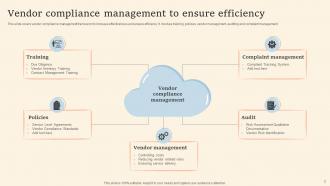
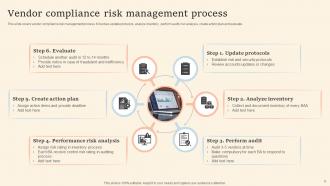
Key components include comprehensive vendor assessments, regular monitoring and auditing, clear contractual requirements, risk categorization frameworks, and ongoing performance evaluation. These elements work together by establishing baseline expectations, ensuring continuous oversight, and maintaining regulatory alignment, with many organizations finding that structured compliance programs ultimately reduce operational risks, enhance vendor relationships, and deliver stronger business outcomes across their supply chains.
Organizations assess vendor compliance effectively through comprehensive audits, continuous monitoring systems, performance scorecards, contract review processes, and risk assessment frameworks. These strategic approaches streamline oversight by automating compliance tracking, establishing clear performance metrics, and enabling proactive risk mitigation, with many companies finding that systematic vendor evaluation ultimately delivers enhanced operational transparency and stronger supplier relationships.
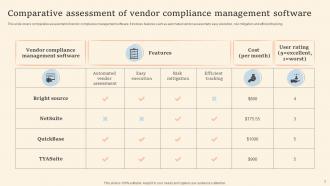
Technology streamlines vendor compliance management through automated monitoring systems, real-time risk assessment tools, digital documentation platforms, and integrated reporting dashboards. These solutions enable organizations to track compliance metrics continuously, identify potential violations early, and maintain comprehensive audit trails, while reducing manual oversight costs and ensuring consistent regulatory adherence across all vendor relationships.
Businesses face challenges including inconsistent documentation standards, varying regulatory requirements across jurisdictions, limited visibility into vendor operations, resource constraints for monitoring activities, and keeping pace with evolving compliance frameworks. These obstacles can result in compliance gaps, increased audit risks, and potential regulatory penalties, with many organizations finding that manual tracking processes become increasingly unmanageable as vendor networks expand.
Organizations establish transparent vendor compliance communication through regular audits, standardized reporting requirements, dedicated compliance portals, and clear escalation procedures for issues. Through digital platforms and structured review meetings, companies enable real-time compliance monitoring, streamlined documentation processes, and proactive issue resolution, with many finding that consistent communication frameworks ultimately deliver stronger vendor relationships and reduced compliance risks.
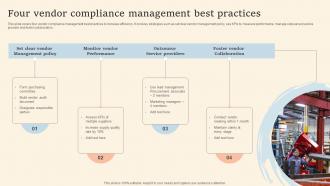
Best practices for ongoing vendor compliance monitoring include automated tracking systems, regular audit schedules, real-time risk assessments, standardized documentation processes, and continuous performance evaluations. These approaches streamline oversight by establishing clear metrics, enabling proactive issue identification, and maintaining comprehensive records, with many organizations finding that systematic monitoring ultimately delivers reduced compliance risks and stronger vendor relationships.
Regulatory changes significantly impact vendor compliance by requiring updated contracts, enhanced monitoring protocols, stricter documentation standards, and revised risk assessment frameworks. Organizations must adapt their vendor management processes to address new legal requirements, with many financial services and healthcare companies finding that proactive compliance monitoring ultimately delivers reduced regulatory risk and stronger vendor relationships.
Vendor non-compliance can result in regulatory penalties, operational disruptions, reputational damage, financial losses, and increased liability exposure for businesses. These consequences often cascade throughout organizations, with companies in healthcare, finance, and manufacturing finding that non-compliant vendors can trigger audit failures, contract terminations, and costly remediation efforts, ultimately compromising competitive positioning.
Organizations can train their staff through comprehensive compliance workshops, role-specific policy guides, vendor management certification programs, and regular scenario-based exercises. These training approaches enhance understanding by providing real-world case studies from sectors like healthcare and financial services, while establishing clear escalation procedures and monitoring protocols, ultimately ensuring consistent enforcement and reducing compliance risks across all vendor relationships.
Vendor compliance metrics should include audit scores, regulatory violation incidents, contract adherence rates, documentation completeness percentages, and corrective action response times. These performance indicators enable organizations to systematically track compliance effectiveness across their supply chain, with many companies finding that regular metric-driven evaluations reduce risk exposure while strengthening vendor relationships and operational transparency.
Companies create vendor compliance cultures through comprehensive training programs, regular audits, clear communication of expectations, performance metrics tied to compliance standards, and collaborative partnerships that emphasize shared responsibility. These strategies enhance accountability by establishing transparent reporting systems, providing ongoing support and resources, and implementing recognition programs that reward compliant behavior, ultimately delivering stronger partnerships and reduced regulatory risks across vendor networks.
Organizations can rectify vendor compliance violations through corrective action plans, enhanced monitoring protocols, mandatory retraining programs, contract amendments with stricter terms, and phased remediation timelines. These strategies work by establishing clear accountability measures, implementing regular audit checkpoints, and creating structured improvement pathways, with many companies finding that combining immediate corrections with long-term preventive measures ultimately strengthens vendor relationships while ensuring sustained compliance.
Businesses can utilize audits to ensure vendor compliance by conducting regular performance assessments, reviewing contractual adherence, verifying quality standards, and monitoring regulatory requirements. Through systematic audit processes, organizations streamline risk management, enhance operational transparency, and strengthen vendor relationships, with many finding that consistent auditing ultimately delivers improved service quality and competitive advantage.
Risk management serves as the foundation of vendor compliance assessment by identifying potential vulnerabilities, evaluating regulatory adherence, assessing operational risks, and analyzing financial stability across vendor relationships. Through systematic risk evaluation, organizations can prioritize compliance monitoring, implement targeted controls, and establish contingency plans, with many enterprises finding that proactive risk assessment ultimately reduces compliance costs while strengthening vendor partnerships.
Organizations integrate vendor compliance into supply chain strategy by establishing standardized assessment frameworks, embedding compliance requirements into vendor selection criteria, and implementing continuous monitoring systems throughout supplier relationships. This strategic integration enables companies to minimize supply chain risks, enhance operational transparency, and strengthen partnerships, with many manufacturing and retail organizations finding that proactive compliance management delivers improved quality control and competitive advantage.
-
A library of engaging, customizable and content-ready templates.
-
“Easy to use. I always wanted to have a quick search for products and SlideTeam has helped me have it.”