


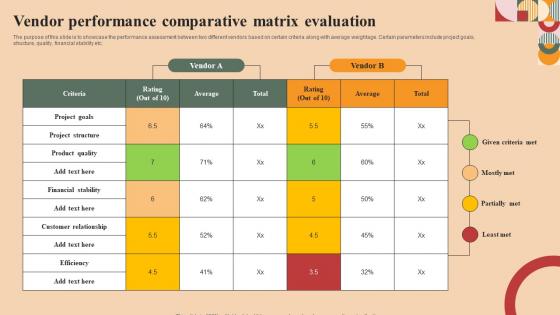
Vendor Performance Comparative Matrix Evaluation




Try Before you Buy Download Free Sample Product
 Impress Your
 Audience
 100%
100% Editable
 Save Hours
 of Time


The purpose of this slide is to showcase the performance assessment between two different vendors based on certain criteria along with average weightage. Certain parameters include project goals, structure, quality, financial stability etc.
People who downloaded this PowerPoint presentation also viewed the following :
Vendor Performance Comparative Matrix Evaluation with all 6 slides:
Use our Vendor Performance Comparative Matrix Evaluation to effectively help you save your valuable time. They are readymade to fit into any presentation structure.





FAQs for Vendor Performance
Look at five key things: money situation, tech skills, reputation, pricing, and whether you'll actually want to work with them. Check if they're financially solid first - seriously, having a vendor fold halfway through is a nightmare. Get references from similar companies and make sure they can actually do what they claim. Pricing should be crystal clear upfront, no surprises later. Communication style matters more than people think - if they're weird to talk to now, imagine dealing with them for months. I'd make a simple scoring sheet to compare them objectively rather than just picking whoever seems nicest.
First thing - grab their financial statements and scan for steady revenue growth plus decent cash flow over 2-3 years. Debt levels matter too, obviously. Run a credit check through Dun & Bradstreet if you can swing it. Client references are honestly where the real dirt comes out - people will tell you about late payments or sketchy deliveries. How long have they been around? Any big lawsuits hanging over them? Oh, and definitely ask about their backup plans for economic weirdness. Good vendors have actually thought that stuff through already.
Honestly, vendor reputation is like your insurance policy. Check their references and reviews - see how they've handled projects like yours. I learned this the hard way watching companies chase the lowest bid, then get completely screwed over by sketchy vendors. Talk to their past clients if you can. Their screw-ups become your screw-ups, which sucks. Red flags are red flags, even if their proposal looks amazing. Don't ignore your gut just because the price is right.
Honestly, certifications are huge when you're vetting vendors. Look for stuff like ISO standards or SOC compliance - basically proof they've been audited by someone other than themselves. Anyone can say they're secure, but can they actually prove it? Make sure the certs are current though, and actually relevant to what you need. Don't just collect random certifications like Pokemon cards. Figure out which standards matter for your industry first, then make those your dealbreakers. Oh, and double-check they're from legit certification bodies, not some sketchy outfit.
For vendor risk assessment, I'd go with a risk matrix first - plot probability against impact for financial, cyber, and operational stuff. Due diligence questionnaires are useful but honestly, half the time you get generic answers that don't help much. Financial ratio analysis tells you if they're actually stable. On-site audits are where you really see what's going on behind the scenes. There are third-party platforms that'll automate some of this too, which is nice. Mix maybe 2-3 approaches depending on how critical the vendor is to your business.
Honestly, tech makes vendor evaluation so much less painful. Instead of hunting down spreadsheets from different departments (ugh), procurement platforms just pull all the financial data and performance metrics automatically. Digital scorecards help you compare everyone fairly too. AI can spot red flags you'd probably miss when you're drowning in data - which happens more than I'd like to admit. Pick one platform and actually stick with it. Getting your whole team on board is half the battle, but once they do it consistently, the process becomes way smoother.
Set up a weighted scoring matrix first - maybe 40% cost, 30% tech capabilities, 20% vendor stability, 10% references. Score each vendor 1-5 on everything, then multiply by your weights. Trust me, I picked the cheapest option once and it was a disaster. Have different people score independently before discussing it as a team - way less bias that way. The trick is staying consistent with how you score across all vendors. Oh, and document everything! Someone's always gonna ask later why you didn't go with the cheaper guy, especially if things get tight budget-wise.
Get at least 3-5 references from clients similar to your company size. Don't just call the names they give you though - ask tough questions about timelines, budgets, and how they dealt with problems. My favorite question is "what would you do differently if starting over?" People get way more honest with that one. Mix phone calls with written questions too since some folks are chattier over email. Oh, and ask the same core stuff to everyone so you can catch patterns. Trust me, the red flags become pretty obvious when you hear the same complaints twice.
Look, vendor evaluation is what makes or breaks your supply chain partnerships long-term. You can't just cross your fingers and hope suppliers work out. Regular assessments on performance and reliability help you figure out who's actually a strategic partner versus just someone filling orders. Think of it like dating - you wouldn't marry someone without really knowing them, right? Transparency and continuous improvement build way stronger relationships than scorekeeping alone. I learned this the hard way with a supplier who seemed great initially. Bottom line: treat evaluation as relationship building and you'll avoid major headaches down the road.
Start with their R&D spending as a percentage of revenue - shows if they're actually putting money where their mouth is. Patent portfolio and recent launches are good indicators too. I'd dig into their innovation process because honestly, half these companies just slap "innovative" on everything. Customer case studies are clutch for seeing real problem-solving in action. Quick thing - check if they partner with universities or tech companies since that's where cool stuff usually happens. Oh, and definitely get a demo of their latest features. You'll spot the difference between genuine innovation and marketing fluff pretty fast.
Track the obvious stuff first - are they hitting deadlines and quality standards? Cost overruns are a red flag too. Honestly, communication matters more than most people think - you shouldn't have to hunt them down for status updates. I'd also watch how they handle problems when they come up (and they always do). Set up quarterly reviews covering delivery, costs, responsiveness, and maybe throw in innovation if that's relevant to your project. Oh, and compliance stuff if you're in a regulated space. Create a simple scorecard so you've got actual data for renewals instead of just going with your gut.
Honestly, cultural fit is huge when picking vendors - way bigger than most people realize. Had this one vendor who was super secretive about everything and it was a complete disaster. You'll be working with these people constantly, so if they don't match your vibe on stuff like communication or ethics, it's gonna be painful. Like, really painful. Short conversations with their team before you commit can save you so much headache later. Trust me on this one - shared values make everything flow better. Don't just focus on their pricing and capabilities. The "do we actually get along" factor matters more than you'd think.
Honestly, start with their compliance stuff right away - GDPR, HIPAA, SOX, whatever applies to you. We almost got screwed once because a vendor had terrible data handling practices. Their insurance and liability terms matter too, even though that legal paperwork is mind-numbing to read through. Don't skip it though! Get your legal team involved early to spot any weird clauses. Oh, and pay attention to how easy it'll be to actually break up with them if things go south. Trust me on this one.
So feedback loops completely change how vendor evaluations work - instead of doing them once and forgetting about it, you're constantly talking. Share what's going well and what sucks on a regular basis, then they can fix problems before your next big review. Honestly, vendors usually know stuff about your process that you don't. They'll tell you "this requirement is weird, nobody does it that way." I'd do quarterly check-ins instead of waiting a whole year. Way better than everyone panicking when contracts are up for renewal.
Honestly, standardized templates are a game-changer - make your scoring rubrics upfront and you'll save so much time later. Cross-functional teams help too since waiting for finance to respond individually is painful (they're always the slowest, I swear). Digital platforms work great for centralizing all the vendor docs. Figure out your deal-breakers early and actually stick to them instead of changing requirements mid-process. Oh, and automate reference checks if you can. I'd start by mapping your current workflow first - you'll spot the real bottlenecks pretty quickly and know where to focus.
-
Love how there are no boring templates here! The design is fresh and creative, just the way I like it. Can't wait to edit and use them for my extended projects!
-
Great quality slides in rapid time.