


Vendor Selection Timeline With Key Phases Vendor Management For Effective Procurement




Try Before you Buy Download Free Sample Product
 Impress Your
 Audience
 100%
100% Editable
 Save Hours
 of Time


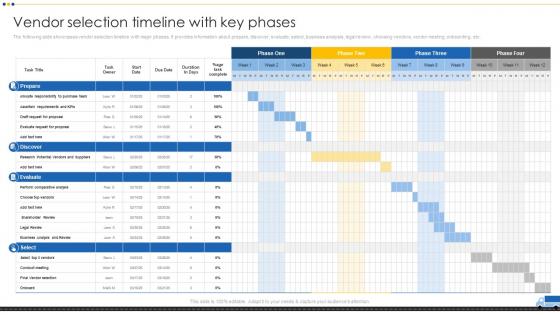
The following slide showcases vendor selection timeline with major phases. It provides information about prepare, discover, evaluate, select, business analysis, legal review, choosing vendors, vendor meeting, onboarding, etc.
People who downloaded this PowerPoint presentation also viewed the following :
Vendor Selection Timeline With Key Phases Vendor Management For Effective Procurement with all 6 slides:
Use our Vendor Selection Timeline With Key Phases Vendor Management For Effective Procurement to effectively help you save your valuable time. They are readymade to fit into any presentation structure.





FAQs for Vendor Selection Timeline With Key Phases Vendor Management
Ok so vendor management - you need solid selection criteria first, then nail down contracts with clear SLAs. Performance monitoring is obvious but relationship stuff matters more than people think. Don't skip risk assessment (seriously, I've watched companies get burned on this). Track your financials and compliance religiously. Oh and always have exit plans ready because things go sideways sometimes. Create some kind of scorecard system to measure everything consistently. Review quarterly so problems don't pile up on you. Proper onboarding helps too - sets the tone early.
Figure out exactly what you need and your budget first - seriously, this saves so much drama down the road. Check their actual track record and financial health, not just the fancy promises on their website. References are huge here, especially from companies like yours. Pay attention to how they communicate during the whole selection thing too. If they're already being weird and slow to respond, that's probably how they'll be once you're stuck with them. Oh, and make a simple scoring sheet to compare everyone fairly. Don't forget to negotiate terms before you sign anything!
Track the obvious stuff first - delivery times, quality scores, costs vs what you're paying them. Response time is huge too because slow vendors are the worst when you need something fixed ASAP. If they work with your customers, definitely measure satisfaction there. Compliance matters depending on your industry. Monthly scorecards work well - just weight everything based on what actually matters to you. Oh and do quarterly sit-downs to go over results with them directly. Having those conversations beats just sending reports into the void.
Honestly, just automate the boring stuff you're doing by hand right now. Vendor management platforms can centralize your contracts and track performance metrics without you having to chase people down via email all the time. Real-time spending visibility is huge too - you'll actually know when renewals are coming up instead of getting surprised. I'd say pick your biggest headache first though. Maybe it's where you store contracts, or tracking how vendors perform, or just getting payments processed smoothly. Find something that fixes that specific problem and integrate it with whatever procurement tools you're already using.
Honestly? Poor communication kills most vendor relationships. You'll also deal with crappy contracts and missed deadlines constantly. Get everything in writing upfront - like, everything. Regular check-ins help catch problems early. A decent vendor management system saves your sanity when juggling multiple relationships. I learned this the hard way after trying to track everything in spreadsheets for way too long. Set up escalation plans before things go sideways, not during the crisis. Most vendors actually want to fix issues if you give them a clear path to do it. Really though, it's just like managing any relationship - be direct about what you need and don't let boundaries slide.
Look, good vendor relationships literally save you money - better pricing, faster support when things go sideways, smoother day-to-day stuff. Your vendors will actually care about helping you succeed instead of just collecting payments. I've watched companies pocket serious cash during contract renewals purely because the vendor liked working with them. Honestly, it's kind of crazy how much easier everything gets when you're not fighting your suppliers constantly. They'll hook you up with early access to new products, bend rules when you need it. Just stop treating them like faceless corporations and start building real partnerships.
You're basically writing the playbook for your whole vendor relationship during contract negotiation. This is where you hash out pricing, what they'll deliver, and what happens if stuff goes wrong. I know it feels boring upfront, but trust me - it'll save you so many headaches down the road. Take time to nail down terms that actually make sense for your business. Don't just rush to get signatures because you want it done. Good negotiation gets you better deals and protects you from getting screwed over later. Performance metrics matter too - be specific about what success looks like.
Honestly, you've got to bake compliance stuff right into how you pick vendors from day one. Do your homework upfront - check their certs, run background checks, look at their security setup before you sign anything. Here's where most companies mess up though: they think they're done after that initial vetting. Wrong! Set up regular audits and reviews throughout the whole relationship. Your contracts need teeth too - specific compliance requirements, penalties when they screw up, and easy exit clauses. It's way more work than just checking a box once, but trust me, it's worth it.
Honestly, most companies only hit up vendors when stuff breaks - total waste. Try monthly check-ins just to chat about what's going well or sucking. Share where you're actually trying to go long-term so they can help you get there better. Set up some win-win metrics that work for both of you. Ask for their thoughts on improving things too - they deal with tons of other businesses so they've probably seen solutions you haven't even thought of yet. Treat them more like actual partners instead of just people you pay to fix problems.
Honestly, vendor diversity is way more valuable than most people think. Fresh perspectives and innovative solutions? You'll get both from smaller, diverse suppliers who aren't stuck in corporate red tape. Competitive pricing is usually better too since they actually want your business. Your brand looks good, customers notice, and - here's the thing - tons of companies now require diversity spending anyway. I'd start small though. Maybe set aside like 10% of your vendor budget for diverse suppliers and see how it goes. Track the results and you'll probably be surprised how well it works out.
Ugh, I know the feeling - there's like a million options and it gets crazy overwhelming. For big companies, SAP Ariba and Coupa are pretty solid, though Oracle works too. Smaller tools like Vendorful might be better if you don't need all the bells and whistles. Most handle the usual stuff - onboarding, contracts, tracking performance. They'll cut down on all that manual work you're probably drowning in right now. My advice? Write down what's driving you nuts first, then demo maybe 3 platforms max. Otherwise you'll just confuse yourself even more.
Oh man, learned this one the hard way! Always have backup vendors lined up before you actually need them. Get those contracts pre-negotiated so when your main supplier craps out, you can switch fast. Keep multiple options for anything critical - honestly, putting all your eggs in one basket is just asking for trouble. Document everything about how each vendor works, set up solid SLAs with actual penalties. Oh and make sure your team knows who does what when things go sideways. Trust me, you don't want to be scrambling to find alternatives while everything's on fire.
Start with regular check-ins - weekly or monthly depending on how big the project is. Make your expectations crystal clear from day one and always get important decisions in writing (seriously, people forget everything). Multiple ways to contact you are clutch when problems come up. Here's the thing though - you gotta be quick to respond too. If you take days to answer their questions, they'll just make assumptions and wing it. I'd also do quarterly reviews to see how things are going. Honestly, just treat them like they're part of your actual team instead of some outside contractor.
Look, you've gotta build vendor management into your procurement planning right from the start. First thing - match your vendor criteria to what your business actually cares about (sustainability, cost cuts, whatever). Then figure out who's a strategic partner versus just some supplier you buy staplers from - because honestly, those relationships are totally different beasts. Set up standard evaluation processes and bake performance reviews into every contract. Your procurement team needs to see what's happening with vendors across all departments too. The whole thing should be about managing relationships long-term, not just buying stuff.
Look, your customers will totally blame YOU when vendors screw up, not the actual vendor who caused the mess. That's just how it works unfortunately. So you've gotta stay on top of these relationships - set clear metrics upfront and actually check in regularly. Good vendor management means fewer headaches reaching your customers. They get their stuff on time, quality stays solid, and you don't deal with angry calls about delayed shipments. It's one of those invisible things that only gets noticed when it goes wrong. Trust me, putting in the work upfront saves you tons of drama later.
-
No second thoughts when I’m looking for excellent templates. SlideTeam is definitely my go-to website for well-designed slides.
-
Wonderful ideas and visuals. I'm really pleased with the templates, which are unique and up to date.