


Vertical Roadmap Timeline Development Marketing Product Research Business Organizational




Try Before you Buy Download Free Sample Product
 Impress Your
 Audience
 100%
100% Editable
 Save Hours
 of Time


Our Vertical Roadmap Timeline Development Marketing Product Research Business Organizational are topically designed to provide an attractive backdrop to any subject. Use them to look like a presentation pro.
People who downloaded this PowerPoint presentation also viewed the following :
Vertical Roadmap Timeline Development Marketing Product Research Business Organizational with all 11 slides:
Use our Vertical Roadmap Timeline Development Marketing Product Research Business Organizational to effectively help you save your valuable time. They are readymade to fit into any presentation structure.
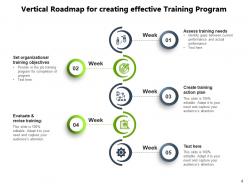
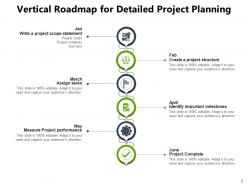
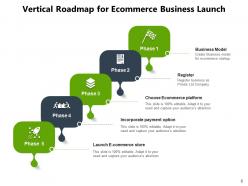
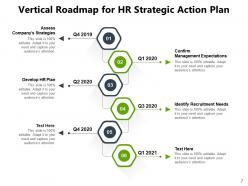

FAQs for Vertical Roadmap Timeline Development Marketing Product
An effective vertical roadmap encompasses strategy, tactics, milestones, and resource allocation. These components guide organizations in achieving specific goals by outlining key initiatives, deliverables, timelines, and responsible parties across departments. For example, a retail company's vertical roadmap for digital transformation might include e-commerce platform upgrades, omnichannel customer experience initiatives, and data analytics integration, all with clearly defined timelines and resource commitments.
Aligning vertical roadmaps with overall business strategy involves identifying key business objectives and then mapping out specific initiatives and milestones that directly contribute to achieving those objectives. This process ensures that each vertical team's efforts are focused and contribute to the larger organizational goals, streamlining resource allocation and maximizing impact. For example, in a retail organization, a vertical roadmap for customer experience might align with the overall business strategy of increasing customer lifetime value by outlining initiatives like personalized marketing campaigns, loyalty programs, and improved customer service training.
Vertical roadmap development leverages methodologies like Agile, Lean, and Scrum to align business goals with specific departmental objectives. These frameworks enable organizations to prioritize initiatives, allocate resources effectively, and track progress transparently across various functions, ultimately delivering enhanced operational efficiency and strategic alignment.
Prioritizing initiatives within a vertical roadmap involves carefully considering both strategic alignment and feasibility. Companies often use a combination of methods, such as impact assessment, resource availability analysis, and stakeholder alignment workshops, to determine which initiatives will deliver the greatest value and have the highest probability of success. By leveraging data-driven insights and collaborative decision-making, organizations can ensure their vertical roadmap focuses on initiatives that drive tangible business outcomes, such as increased revenue, enhanced customer satisfaction, or operational efficiency.
Stakeholders play a crucial role in vertical roadmap development, providing insights, perspectives, and ultimately, buy-in. They include executives, department heads, subject matter experts, and even customers, each contributing their expertise to define goals, prioritize initiatives, and identify potential roadblocks. This collaborative approach ensures the roadmap aligns with organizational objectives, addresses key challenges, and drives successful execution across departments, ultimately leading to increased efficiency and competitive advantage.
Ensuring flexibility in your vertical roadmap involves establishing clear objectives, fostering continuous communication, and implementing iterative development cycles. By aligning roadmap goals with overarching business strategies and regularly engaging stakeholders, organizations can identify emerging trends and adjust priorities accordingly. This iterative approach, incorporating agile methodologies and data-driven insights, allows for seamless adaptation to market shifts and evolving customer needs, ultimately driving successful outcomes and competitive advantage.
Vertical roadmaps, while valuable for strategic planning, present several pitfalls to avoid. These include a lack of stakeholder alignment, failing to consider resource allocation and capacity, neglecting to incorporate market trends and competitor analysis, and setting overly ambitious goals without clear milestones. By addressing these challenges, organizations can ensure their vertical roadmaps effectively guide growth and deliver tangible business outcomes.
Measuring the success of a vertical roadmap implementation involves tracking key performance indicators (KPIs) aligned with your strategic objectives. These KPIs can include increased operational efficiency across departments, improved customer experiences through streamlined processes, and demonstrable growth in revenue or market share within the targeted vertical. By analyzing these metrics, organizations can assess the roadmap's effectiveness in delivering tangible business value and driving competitive advantage.
Vertical roadmap development tools help visualize progress across departments and functions by combining timelines, goals, and initiatives. Popular options include specialized roadmap software like Aha!, ProductPlan, and Roadmunk, which offer features like drag-and-drop interfaces, customizable templates, and collaboration tools, enabling teams in sectors like tech, finance, and healthcare to align on strategic priorities and track progress effectively. These platforms ultimately deliver increased transparency, improved communication, and a clear understanding of how each team contributes to the overall organizational vision.
Vertical roadmaps should be reviewed and updated at least quarterly, aligning with the dynamic nature of business landscapes. These reviews enable organizations to incorporate new market insights, emerging technologies, and shifting customer demands, while also ensuring that strategic objectives remain relevant and achievable. Regularly updating vertical roadmaps helps businesses maintain agility and responsiveness, ultimately maximizing their competitive advantage in evolving markets.
Vertical roadmap development requires gathering input from diverse cross-functional teams, and several techniques can facilitate this process. Techniques include surveys and questionnaires to capture broad perspectives, workshops and brainstorming sessions to encourage collaborative ideation, and one-on-one interviews to delve deeper into individual team member insights. These methods, when implemented strategically, enable organizations to build roadmaps that are comprehensive, aligned with business goals, and supported by a collective understanding across departments.
Integrating customer feedback into vertical roadmap development ensures the roadmap aligns with evolving needs and market demands. This can be achieved by conducting regular customer surveys, analyzing support tickets and online reviews, and engaging in direct conversations with key customers, ultimately allowing the roadmap to prioritize features and functionalities that deliver the most value and address pain points directly, leading to increased customer satisfaction and stronger competitive positioning.
A vertical roadmap outlines the progression of a product or initiative, and timelines and milestones are crucial for its success. They provide a clear structure, defining specific deliverables and deadlines, which helps teams stay focused and accountable. By breaking down the roadmap into manageable phases with defined milestones, organizations can effectively allocate resources, track progress, and ensure alignment across departments. This structured approach ultimately delivers a more efficient and successful product launch or implementation, with many organizations finding that clear timelines lead to improved stakeholder communication and project outcomes.
Vertical roadmaps support innovation by aligning strategic goals with tactical execution across all departments. They provide a clear visual pathway for new ideas to flow from conception to implementation, enabling cross-functional collaboration and resource allocation. With a vertical roadmap, organizations can identify innovation opportunities specific to each department, fostering a culture where experimentation and improvement are actively encouraged, ultimately driving faster time-to-market and competitive advantage.
Vertical roadmaps focus on a specific product or service line, outlining its evolution and features over time, while horizontal roadmaps take a broader view, aligning initiatives across different departments or business units. Vertical roadmaps delve deep into a single product's journey, prioritizing its development and enhancements, often with a customer-centric perspective, whereas horizontal roadmaps emphasize cross-functional collaboration and strategic alignment, ensuring initiatives support overall business goals. Ultimately, vertical roadmaps deliver a detailed plan for product success, while horizontal roadmaps facilitate organizational cohesion and strategic execution.
-
Nice and innovative design.