


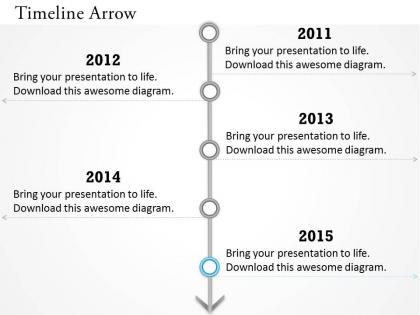
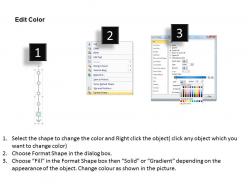
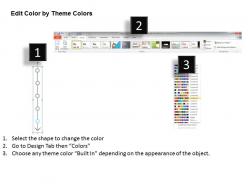
Vertical timeline roadmap diagram 0314




Try Before you Buy Download Free Sample Product
 Impress Your
 Audience
 100%
100% Editable
 Save Hours
 of Time


Give any role to our Vertical Timeline Roadmap Diagram 0314. They will enact it professionally.
People who downloaded this PowerPoint presentation also viewed the following :
Vertical timeline roadmap diagram 0314 with all 5 slides:
Feel enormously fortunate with our Vertical Timeline Roadmap Diagram 0314. You will be certainly filled with glee.
FAQs for Vertical timeline
**INPUT**: What are the key benefits of using a vertical timeline roadmap diagram in presentations? **OUTPUT**: Vertical timeline roadmap diagrams enhance presentation clarity by displaying project phases, milestones, dependencies, and deliverables in chronological sequence while maximizing vertical screen space. These visual tools streamline stakeholder communication and strategic planning by enabling audiences to quickly grasp project progression, identify critical checkpoints, and understand resource allocation timelines, ultimately delivering improved project transparency and enhanced decision-making capabilities.
A vertical timeline enhances project milestone clarity by organizing key deliverables, deadlines, and dependencies in chronological order, creating visual hierarchy through strategic spacing and clear milestone markers. This structured approach enables project managers, stakeholders, and team members to quickly identify critical path items, upcoming deadlines, and resource allocation needs, ultimately streamlining project communication and reducing scheduling conflicts.
A vertical timeline roadmap should include clear milestone markers, specific dates or time periods, detailed task descriptions, progress indicators, and stakeholder responsibilities. These elements enhance project communication by providing visual clarity, accountability tracking, and deadline transparency, with many organizations finding that well-structured timelines streamline coordination, reduce confusion, and ultimately deliver improved project outcomes and team alignment.
Vertical timelines excel in scenarios requiring detailed milestone descriptions, mobile-friendly presentations, and space-constrained environments like reports or dashboards. They prove particularly effective for project management workflows, compliance tracking in regulated industries, and executive briefings where stakeholders need comprehensive progress visibility, ultimately delivering better readability and enhanced information retention compared to horizontal alternatives.
Strategic color usage in vertical timeline roadmaps significantly enhances audience engagement by creating visual hierarchy, improving information retention, and guiding attention flow through chronological content. Through purposeful color schemes, organizations streamline complex project narratives, with many finding that consistent branding colors, progress indicators, and milestone differentiation ultimately deliver clearer communication and stronger stakeholder buy-in across presentations.
**INPUT**: What software tools are recommended for creating vertical timeline roadmap diagrams? **OUTPUT**: Recommended software tools for vertical timeline roadmap diagrams include Microsoft Visio, Lucidchart, Canva, PowerPoint, and specialized project management platforms like Monday.com and Asana. These tools streamline roadmap creation through drag-and-drop functionality, customizable templates, and collaborative features, with many organizations finding that integrated platforms enhance project visibility and stakeholder alignment.
Vertical timeline diagrams can be customized through industry-specific milestones, relevant visual elements, specialized terminology, and sector-appropriate color schemes and icons. Healthcare organizations might incorporate patient journey stages and regulatory compliance markers, while manufacturing companies emphasize production phases and quality checkpoints, ultimately delivering clearer project visualization and enhanced stakeholder communication across diverse business environments.
Common pitfalls include overcrowding with excessive detail, poor visual hierarchy that makes progression unclear, inconsistent spacing between milestones, vague or unmeasurable deliverables, and neglecting stakeholder input during design. These roadmaps succeed by maintaining clear chronological flow, balanced information density, and realistic timelines, with many organizations finding that regular stakeholder reviews and iterative refinement ultimately deliver better project alignment and strategic outcomes.
Teams should integrate feedback into their vertical timeline roadmap process by establishing regular review checkpoints, creating structured feedback collection mechanisms, and building flexibility for iterative adjustments based on stakeholder input. Through collaborative workshops and milestone evaluations, organizations streamline communication, enhance project alignment, and accelerate decision-making, with many project teams finding that systematic feedback integration ultimately delivers improved outcomes and stronger stakeholder buy-in.
Icons and visuals transform vertical timeline roadmaps by enhancing comprehension, reducing cognitive load, and creating immediate visual recognition of different phases, milestones, and categories. These design elements enable faster information processing, improve audience engagement during presentations, and help stakeholders quickly identify critical phases, with many organizations finding that well-designed visual timelines significantly streamline project communication and strategic planning discussions.
A vertical timeline roadmap facilitates better project management by providing clear milestone visualization, sequential task tracking, dependency mapping, and progress monitoring throughout project lifecycles. This structured approach enables teams to identify bottlenecks early, allocate resources strategically, and maintain stakeholder alignment, with many organizations finding that vertical formats enhance communication clarity and deliver improved project completion rates.
Best practices for presenting vertical timeline roadmaps include using progressive disclosure, maintaining clear visual hierarchy, and practicing smooth transitions between timeline phases. During live presentations, executives and project managers should highlight key milestones with pausing techniques, use pointer tools strategically, and explain dependencies between phases, ultimately enabling audiences to grasp project progression while maintaining engagement throughout complex timeline discussions.
Shared vertical timeline diagrams enhance collaboration by centralizing project visibility, synchronizing team efforts across departments, and providing real-time progress tracking for all stakeholders. These visual roadmaps streamline communication in organizations by eliminating information silos, reducing meeting overhead, and enabling proactive decision-making, with many teams finding that shared timelines significantly improve project coordination and delivery outcomes.
Emerging trends in vertical timeline roadmap design include interactive elements, data integration capabilities, real-time status updates, mobile-responsive layouts, and AI-powered milestone predictions. These innovations enhance project visualization by enabling dynamic content updates, seamless stakeholder collaboration, and automated progress tracking, with many organizations finding that modern roadmaps deliver improved transparency and strategic alignment across teams.
Vertical timeline roadmaps enhance strategic planning sessions by visualizing project sequences, milestone dependencies, and resource allocation timelines in a clear, top-down format. These diagrams enable planning teams to identify potential bottlenecks, align cross-functional initiatives, and communicate long-term objectives effectively, with many organizations finding that vertical layouts facilitate better stakeholder engagement and strategic decision-making.
-
It saves your time and decrease your efforts in half.
-
Great quality product.