


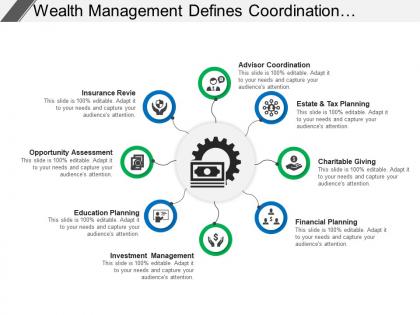
Wealth management defines coordination charity investment planning




Try Before you Buy Download Free Sample Product
 Impress Your
 Audience
 100%
100% Editable
 Save Hours
 of Time


Our Wealth Management Defines Coordination Charity Investment Planning ensure everlasting energy. Your ideas will never run dry.
People who downloaded this PowerPoint presentation also viewed the following :
Wealth management defines coordination charity investment planning with all 5 slides:
Boost interracial harmony with our Wealth Management Defines Coordination Charity Investment Planning. Elaborate on the broad concept of humanity.


FAQs for Wealth management defines coordination
Track your spending first - seriously, you'll be shocked where money disappears. Diversify across different investments, don't dump everything in one stock (learned that lesson with GameStop lol). Always spend less than you make, obviously. Build an emergency fund and get decent insurance for the big stuff. Long-term thinking beats trying to time the market every time. Rebalance your portfolio when things get out of whack. The boring fundamentals actually work if you stick with them instead of chasing whatever's trending on Reddit.
Risk tolerance tests figure out how much market craziness you can actually handle without losing sleep. Conservative folks end up with more bonds - kinda boring but whatever, at least you won't have a heart attack watching your account. Aggressive types load up on stocks since they're cool with the ups and downs. The whole point is avoiding that panic-selling thing when markets tank because you went too hard too fast. Honestly, just use your risk score to nail down that stock-to-bond split first, then build from there.
Dude, taxes can seriously wreck your wealth building if you're not careful. I've watched people basically throw away like 30-40% of their potential gains over the years just from sloppy planning. You gotta time your income and deductions right, pick investment accounts that don't get hammered by taxes, and structure everything smartly. The thing is, your wealth manager and tax guy need to actually talk to each other - can't just treat them like separate things. Smart tax moves let more of your money stay invested and compound instead of going to the IRS. Worth getting serious about.
Yeah, trends matter but not how you'd expect. Don't chase every shiny new thing - that's just gambling with extra steps. Use them to tweak your asset mix instead. Tech's been killing it lately? Maybe trim some of that back. The boring truth is you need a solid core strategy, then make small adjustments around the edges. I check mine every few months and think: does this actually change where I'll be in 10 years? Most of the time it doesn't, honestly.
Okay so basically you don't want all your money in one thing, right? Mix it up - stocks, bonds, maybe some REITs if you're feeling fancy. The whole point is when one investment tanks, hopefully others are doing better so you're not totally screwed. I learned this the hard way back in college lol. Your returns won't be as crazy high OR crazy low, which honestly sounds boring but it's way less stressful. Geography matters too - spread across different countries. Start simple though, don't overthink it. Just avoid putting everything into whatever stock your coworker's hyping up this week.
So basically estate planning is like making a game plan for passing down your money without the government grabbing a huge chunk. Trusts and smart gifting can save your family serious cash - I'm talking 40%+ that would otherwise go to taxes and legal fees. Starting early is clutch because that compound growth over decades? It's honestly wild to see. Even basic stuff makes a difference. Get a simple will done and update your beneficiaries every year (yeah, I know it's boring but whatever). Your family will thank you later when they're not dealing with probate hell and actually get to keep what you worked for.
So AI is completely changing portfolio management right now. Risk analysis got way more sophisticated, plus you can do personalized strategies that would've taken forever manually. Robo-advisors handle all the basic portfolio stuff - honestly kind of nice since it frees you up for actual client relationships. Blockchain's making custody and settlements smoother too. Oh and the mobile apps now? Clients actually use them because they show real-time insights that don't suck. Here's the thing though - these tools just make you better at what you're already doing. Focus on the ones that actually fix problems your clients complain about.
Okay so first thing - figure out what you actually want your retirement to look like, then work backwards. Most people get a reality check when they see how much they need to save monthly, it's kinda brutal honestly. Don't forget about Social Security and any employer matching (free money!). Mix up your accounts too - 401k, IRA, whatever gives you the best tax breaks. I always think of it as part of the bigger money picture, not this separate scary thing. Starting early is obviously ideal, but if you're behind just crank up your savings rate. Better late than never, right?
Dude, the main things that'll mess with your head are fiduciary duty, conflicts of interest, and being upfront about everything. Always put your clients first - sounds obvious but it's harder than you think. You've gotta disclose any conflicts like commission stuff or if you're pushing your company's products. Match investments to what people can actually handle risk-wise, not what pays you more. Honestly, this whole industry can be pretty sketchy if you let it. Document everything because people will come after you if things go south. Oh, and fees - be crystal clear about what you're charging. Trust me on this one.
Dude, behavioral finance is basically learning why your brain sabotages your money decisions. Like when you panic and sell everything during a crash? Classic emotional mistake. There are these psychological traps - loss aversion, overconfidence, following the crowd like sheep. Once you know about them, you can set up systems to fight back. Auto-rebalancing works great, or just doing regular monthly investments regardless of what's happening. I swear, half the battle is catching yourself before you do something stupid. Figure out which biases screw with you most, then make rules that force you to slow down instead of acting on pure emotion.
So active investing is when you're constantly trading stocks, trying to time the market and pick winners. Pretty stressful tbh. Passive just means buying index funds that track something like the S&P 500 and leaving them alone. Here's the thing though - active costs way more in fees, and most fund managers can't even beat the market anyway. Passive is boring but cheaper and less work. I'd honestly just start with low-cost index funds for most of your money. You can always mess around with individual stocks later if you get the itch.
Communication literally makes or breaks everything in wealth management. Seriously, I've watched advisors tank relationships just because they disappeared for months at a time. Your clients' lives are changing constantly - new jobs, divorces, kids going to college - so you can't just set it and forget it. Stay ahead of the game instead of waiting for them to call you freaking out about some market dip. Regular check-ins are huge. Actually listen when they talk about their concerns too, don't just nod along. Their risk tolerance isn't some static thing you figure out once and move on.
Crypto's probably your best bet - Bitcoin and Ethereum are solid starts. REITs give you real estate exposure without buying property. Don't just stick to gold though, lithium and rare earth metals are interesting right now. Agricultural futures too if you're feeling adventurous. Private credit is blowing up since banks aren't lending as much. Infrastructure debt's another option. Honestly, even collectibles work - art, wine, Pokemon cards (I know, sounds crazy but people make money). Just don't go overboard. Maybe 5-15% of your portfolio max since this stuff's way more volatile than regular stocks.
So basically, fiduciary means your advisor has to put you first - legally. They can't chase fat commissions or push sketchy products that benefit them more than you. Most people don't even know to ask about this, which is wild. The upside? You know they can't screw you over without consequences. Downside is they might play it safer with recommendations since their ass is on the line if things tank. Just ask straight up "are you a fiduciary?" when you meet them. Simple question that'll tell you everything.
Honestly, big global stuff can totally mess with your investment strategy. When interest rates jump or there's some crazy geopolitical drama, markets go nuts. I'd probably shift things around - like if inflation's getting ugly, dump some cash and maybe grab commodities or those inflation-protected bonds. Currency swings from international drama can screw with your foreign investments too. Don't panic though - that's when people make dumb moves. Just check your risk tolerance every few months and rebalance based on what actually matters for your timeline. Flexibility beats freaking out every time.
-
Excellent products for quick understanding.
-
Commendable slides with attractive designs. Extremely pleased with the fact that they are easy to modify. Great work!