


Web Development Technologies Company Profile CD




Try Before you Buy Download Free Sample Product
 Impress Your
 Audience
 100%
100% Editable
 Save Hours
 of Time


Web Development Technologies Company Profile is a professional description that aims to inform clients about service offerings, structure, resources, financial performance, etc. This profile showcases the executive summary and company introduction, which includes our core values, headquarters, number of employees, specialties, industry, company type, etc. It also covers the mission, vision, employee count and breakdown, and design services offered by our company. Further, this PPT represents the service pricing structure, web development procedure, project portfolio, web designing technologies, business model canvas, company history and milestones, global presence, management team, etc. Moreover, the module exhibits our major clients, their reviews, global partners, and awards and accolades. Also, it represents financial highlights such as revenue, net profits, operating income, EBITDA margin, and revenue split by geography and industry. Additionally, the deck captures a comparison with competitors based on financials, services, and market share. At last, the presentation highlights marketing strategies to promote business, future expansion plans, SWOT analysis, CSR expenditure, breakdown, and initiatives and case study approach. Get access to this powerful template now
People who downloaded this PowerPoint presentation also viewed the following :
Content of this Powerpoint Presentation
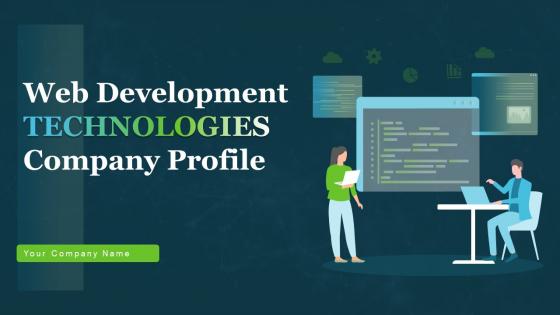
Slide 1: This slide introduces Web Development Technologies Company Profile. State your company name and begin.
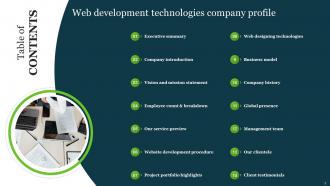
Slide 2: This slide shows Table of Content for the presentation.
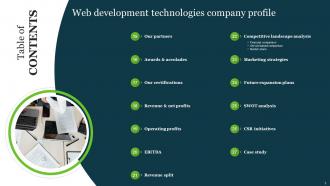
Slide 3: This is another slide continuing Table of Content for the presentation.
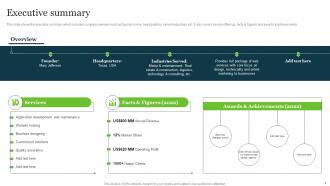
Slide 4: This slide shows the executive summary which includes company overview.
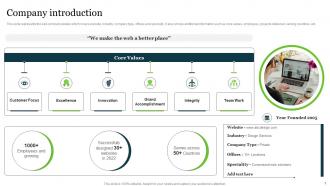
Slide 5: This slide represents the web company details which covers website, industry, company type, offices and specialty.
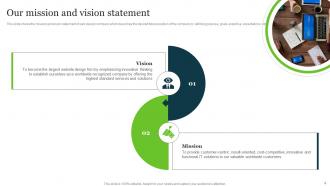
Slide 6: This slide presents Our mission and vision statement.
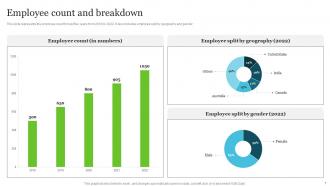
Slide 7: This slide represents the employee count for last five years from 2018 to 2022.
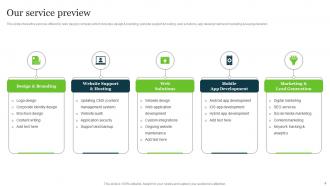
Slide 8: This slide shows the services offered by web design company.
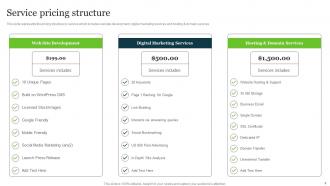
Slide 9: This slide represents the pricing structure by service.
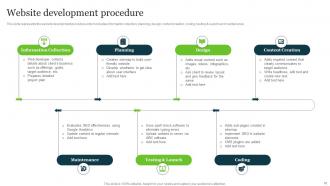
Slide 10: This slide showcases website development procedure .
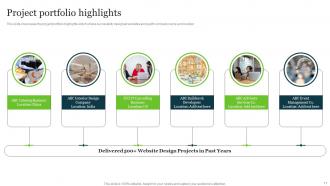
Slide 11: This slide showcases the project portfolio highlights which shows successfully designed websites.
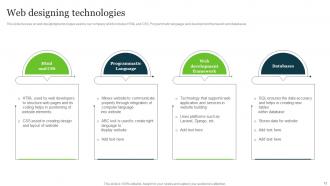
Slide 12: This slide focuses on web designing technologies used by our company.
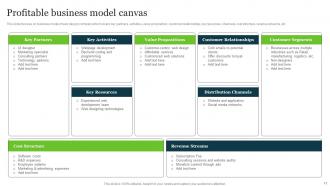
Slide 13: This slide displays Profitable business model canvas.
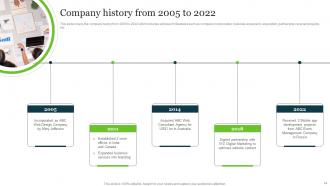
Slide 14: This slide represents Company history from 2005 to 2022.
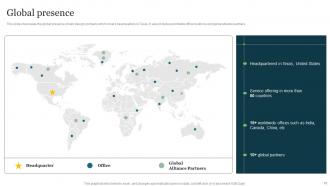
Slide 15: This slide showcases the global presence of web design company.
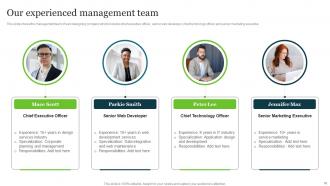
Slide 16: This slide shows Our experienced management team.
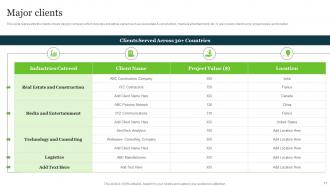
Slide 17: This slide represents the clients of web design company.
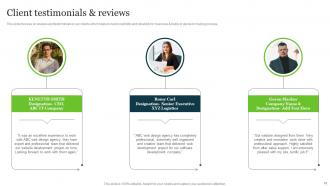
Slide 18: This slide showcases Client testimonials & reviews.
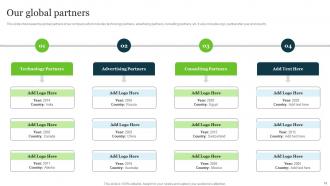
Slide 19: This slide shows global partners of our company which includes technology partners, advertising partners, etc.
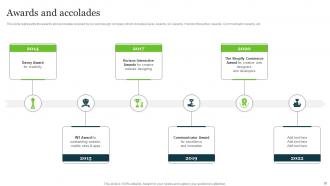
Slide 20: This slide represents the awards and accolades received by our web design company.
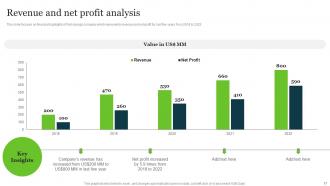
Slide 21: This slide showcases Revenue and net profit analysis.
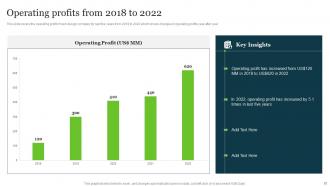
Slide 22: This slide shows Operating profits from 2018 to 2022.
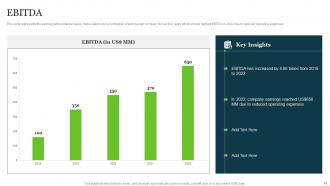
Slide 23: This slide represents the earning before interest, taxes, depreciation and amortization of web design company.
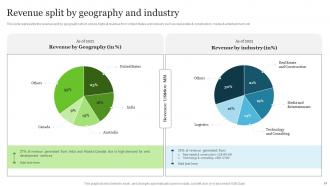
Slide 24: This slide showcases Revenue split by geography and industry.
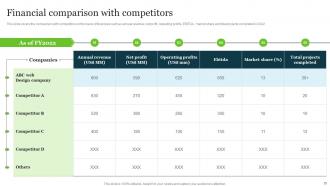
Slide 25: This slide shows Financial comparison with competitors.
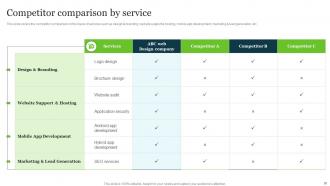
Slide 26: This slide presents Competitor comparison by service.
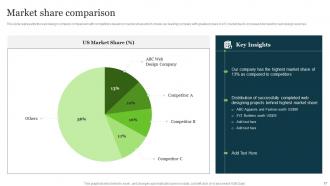
Slide 27: This slide represents the web design company comparison with competitors based on market share.
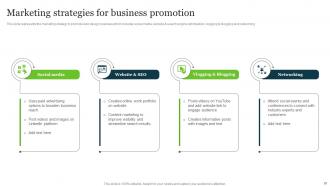
Slide 28: This slide showcases Marketing strategies for business promotion.
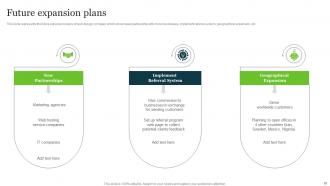
Slide 29: This slide represents the future expansion plans of web design company.
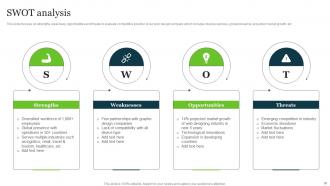
Slide 30: This slide focuses on strengths, weakness, opportunities and threats to evaluate competitive position.
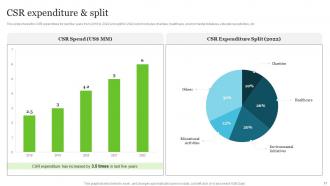
Slide 31: This slide shows the CSR expenditure for last five years from 2018 to 2022.
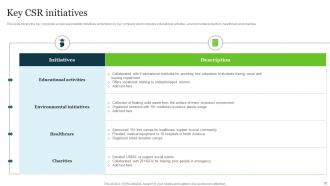
Slide 32: This slide covers the key corporate social responsibility initiatives undertaken by our company.
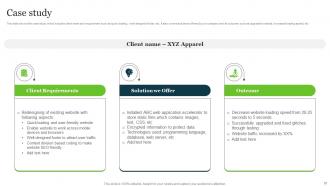
Slide 33: This slide shows the case study which includes client name and requirement .
Slide 34: This slide contains all the icons used in this presentation.
Slide 35: This slide is titled as Additional Slides for moving forward.
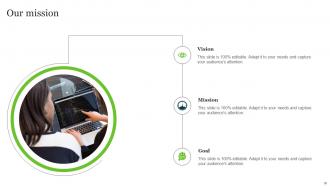
Slide 36: This is Our Mission slide with related imagery and text.
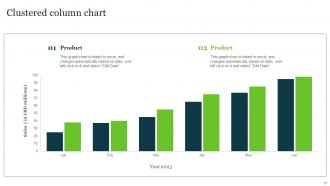
Slide 37: This slide provides Clustered Column chart with two products comparison.
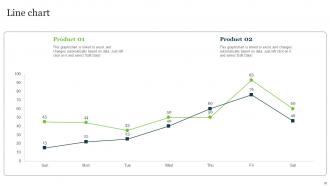
Slide 38: This slide describes Line chart with two products comparison.
Slide 39: This slide shows Post It Notes. Post your important notes here.
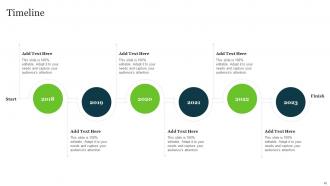
Slide 40: This is a Timeline slide. Show data related to time intervals here.
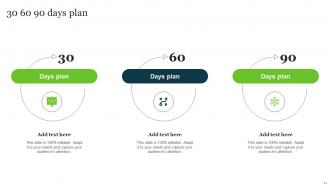
Slide 41: This slide provides 30 60 90 Days Plan with text boxes.
Slide 42: This is Our Target slide. State your targets here.
Slide 43: This is a Thank You slide with address, contact numbers and email address.
Web Development Technologies Company Profile CD with all 48 slides:
Use our Web Development Technologies Company Profile CD to effectively help you save your valuable time. They are readymade to fit into any presentation structure.






FAQs for Web Development Technologies
Front-end development focuses on user interfaces, visual design, user experience, and client-side functionality using HTML, CSS, and JavaScript. Back-end development handles server logic, databases, APIs, security, and data processing through languages like Python, Java, or Node.js, with many organizations finding that strategic collaboration between both teams ultimately delivers seamless, scalable web applications.
React typically delivers faster rendering through its virtual DOM and component-based architecture, while Angular provides comprehensive built-in features like dependency injection, routing, and form handling. React offers greater flexibility and easier learning curves for developers, whereas Angular excels in large-scale enterprise applications, with many organizations finding that React suits rapid prototyping while Angular streamlines complex, structured development projects.
CSS Grid provides two-dimensional layout control for complex web designs, enabling precise positioning of elements across rows and columns simultaneously, while Flexbox excels at one-dimensional layouts within individual rows or columns. Modern web developers strategically combine both technologies, with Grid handling overall page structure and Flexbox managing component-level alignment, ultimately delivering more responsive, maintainable websites with enhanced user experiences across devices.
Progressive Web Apps enhance mobile user experience by delivering app-like functionality through web browsers, offering offline capabilities, push notifications, fast loading times, and seamless installation without app stores. Through service workers and responsive design, PWAs enable retailers, news platforms, and financial services to provide native app experiences while reducing development costs, improving engagement rates, and ultimately delivering broader accessibility across devices and operating systems.
Git remains the dominant version control system, with GitHub, GitLab, and Bitbucket serving as leading repository hosting platforms alongside Apache Subversion and Mercurial for specific use cases. These tools streamline collaborative development by enabling seamless code tracking, branch management, and merge conflict resolution, with many development teams finding that integrated CI/CD pipelines ultimately accelerate deployment cycles and enhance project reliability.
Responsive design fundamentally shifts developers from creating multiple separate websites to building single, flexible platforms that adapt seamlessly across devices through fluid grids, flexible images, and media queries. This approach streamlines development workflows, reduces maintenance costs, and enhances user experiences, with many organizations finding that responsive strategies ultimately deliver broader market reach and improved conversion rates.
Essential security measures include HTTPS encryption, input validation, authentication protocols, regular security audits, and firewall protection. These safeguards streamline protection by preventing data breaches, blocking malicious attacks, and ensuring regulatory compliance, with many financial services and healthcare organizations finding that comprehensive security frameworks ultimately deliver enhanced customer trust and competitive advantage.
Web developers can optimize site speed by compressing images, minifying CSS and JavaScript, implementing lazy loading, utilizing content delivery networks, and enabling browser caching. These techniques streamline page load times by reducing file sizes, distributing content globally, and minimizing server requests, with many e-commerce and media companies finding that faster sites deliver improved user engagement and higher conversion rates.
CMS platforms like WordPress deliver streamlined content management, cost-effective development, extensive plugin ecosystems, built-in SEO optimization, and faster deployment timelines compared to custom solutions. These systems enable organizations to maintain websites without technical expertise, reduce ongoing development costs, and leverage community-supported features, with many businesses finding that WordPress's scalability and user-friendly interface ultimately enhance operational efficiency while minimizing resource requirements.
RESTful APIs use multiple endpoints with fixed data structures, while GraphQL employs a single endpoint allowing clients to request specific data fields, reducing over-fetching and under-fetching issues. Many organizations find that RESTful APIs work well for simpler applications and caching scenarios, while GraphQL excels in complex applications requiring flexible data retrieval, ultimately delivering enhanced performance and developer efficiency.
WebAssembly significantly enhances web application performance by enabling near-native execution speeds, supporting multiple programming languages beyond JavaScript, and facilitating complex computational tasks directly in browsers. This technology streamlines resource-intensive applications like gaming platforms, video editing tools, and data visualization dashboards, with many organizations finding that WebAssembly delivers faster loading times and improved user experiences.
DevOps practices are revolutionizing web development by enabling continuous integration, automated testing, streamlined deployment pipelines, and enhanced collaboration between development and operations teams. Through containerization and infrastructure as code, organizations in e-commerce, fintech, and healthcare deliver faster releases, reduce system downtime, and improve scalability, ultimately achieving shorter development cycles and more reliable web applications.
AI advancements significantly enhance web development through automated code generation, intelligent testing frameworks, predictive analytics, and personalized user experiences. These technologies streamline development workflows by reducing manual coding time, improving bug detection accuracy, and enabling dynamic content optimization, with many development teams finding that AI-powered tools ultimately deliver faster deployment cycles and more sophisticated web applications.
Developers ensure cross-browser compatibility through progressive enhancement, CSS resets, feature detection libraries like Modernizr, comprehensive testing across multiple browsers, and responsive design frameworks. These approaches streamline development by standardizing code behavior, identifying browser-specific limitations, and delivering consistent user experiences, with many organizations finding that systematic compatibility testing ultimately reduces maintenance costs and enhances customer satisfaction.
Web accessibility best practices include semantic HTML markup, proper heading hierarchies, alt text for images, keyboard navigation support, and sufficient color contrast ratios. These approaches enhance user experiences by accommodating screen readers, motor disabilities, and visual impairments, with many organizations finding that accessible design ultimately delivers broader market reach and improved usability for all users.
-
I discovered this website through a google search, the services matched my needs perfectly and the pricing was very reasonable. I was thrilled with the product and the customer service. I will definitely use their slides again for my presentations and recommend them to other colleagues.
-
Amazing slides! Unique, attractive, and easy to understand.