


Weekly progress in product release plan requirement gathering methods ppt powerpoint presentation file gallery




Try Before you Buy Download Free Sample Product
 Impress Your
 Audience
 100%
100% Editable
 Save Hours
 of Time


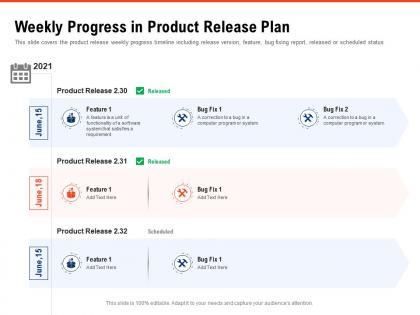
This slide covers the product release weekly progress timeline including release version, feature, bug fixing report, released or scheduled status
People who downloaded this PowerPoint presentation also viewed the following :
Weekly progress in product release plan requirement gathering methods ppt powerpoint presentation file gallery with all 2 slides:
Use our Weekly Progress In Product Release Plan Requirement Gathering Methods Ppt Powerpoint Presentation File Gallery to effectively help you save your valuable time. They are readymade to fit into any presentation structure.
FAQs for Weekly progress in product release plan requirement gathering methods ppt powerpoint
Alright, so you'll want five main things for your release plan. Start with your timeline and milestones - that's your backbone. Then figure out who's doing what (seriously, this prevents so much chaos later). Write out detailed specs so there's no confusion about features. Communication strategy for stakeholders is huge too, and don't skip the success metrics part. Oh, and definitely have rollback procedures ready because something always breaks at the worst possible moment. Risk planning matters but honestly, timeline first, then build everything else around it. That approach has saved me more times than I can count.
Honestly, market research is what saves you from launching at the worst possible time. Surveys and competitor analysis show you what people actually want - not what you think they want. I've watched so many teams discover their target audience was completely different than expected and had to scramble. Start with your existing customers first, ask about their pain points. That's where the good stuff usually hides. You don't want to launch into a dead market or miss that perfect timing window. Research tells you when customers are ready and how to price it right.
Look, competitive analysis is super helpful for timing decisions. When rivals are close to launching something similar, you'll probably need to speed things up - even if your product isn't perfect yet. Better to get there first than miss the window completely. But if you're pioneering new territory? Take your sweet time and really polish everything. I've seen too many companies get caught off guard by surprise launches. Keep tabs on what others are building so you can adjust your timeline smartly instead of scrambling last minute.
Dig into your current customer data first - who's already buying from you or showing interest? Check out their demographics, what bugs them, how they shop. Then scope out your competitors' audiences because honestly, you can learn a ton from what they're doing. Surveys and interviews with potential users are super revealing too. Build detailed personas that show not just who these people are, but what actually drives their decisions. Don't skip validation though - test with small focus groups or beta users before you go all in. Way better than guessing.
Honestly, the worst thing you can do is be way too optimistic about timing - like, always add buffer time because stuff will go wrong. Feature creep kills projects too. I know it's tempting to squeeze in "just this one tiny thing" but don't! Actually talk to your engineers about what's realistic instead of guessing. Oh, and don't forget testing takes forever - plan for QA and having a rollback plan ready. Most people skip getting everyone on the same page first, then act surprised when stakeholders freak out later. Work backwards from your real deadline and be honest about timeframes.
Honestly, you've gotta nail down who owns what first - that's where most projects blow up. Get everyone in a room for a proper kickoff so you're all chasing the same goals. Weekly standups with eng, product, marketing, and support work way better than you'd think for catching problems early. Nobody wants those last-minute fire drills, trust me on that one. Definitely get some shared tracker going where teams can update their own stuff and see dependencies. Oh, and figure out your decision-making chain before you need it - when trade-offs hit (and they will), you don't want people arguing about who gets final say.
So you'll need engagement stuff like user adoption and retention - basically are people actually using this thing? Revenue impact and customer satisfaction scores matter too. App crashes and load times are super boring but you'll hate yourself if you ignore them. Honestly, the first 30 days are make-or-break for catching problems early. Support tickets tell you a lot about what's broken. Don't go crazy with metrics though - pick like 5-7 max or you'll drown in all that data.
Honestly, just talk to people constantly - that's like 90% of it. Build buffer time into your deadlines because trust me, stuff will break. I learned this the hard way on my last project lol. Keep everyone updated even when nothing's happening, and don't sugarcoat problems when they pop up. Write down exactly what you're launching vs what you're not, because someone will definitely try to sneak in "one tiny feature" at the last second. When they do, show them how it'll push everything back. Regular check-ins are your friend. The whole thing comes down to zero surprises.
Dude, you HAVE to get user feedback early - like, way before you think you're ready. I've watched so many launches crash because teams waited until the last minute when nothing can be fixed anymore. Start with rough prototypes if you can, definitely during beta at minimum. Users will spot stuff you'd never catch - weird usability problems, features that make zero sense, things you thought were brilliant but actually confuse everyone. Honestly, sometimes they'll love something you almost cut. Set up some basic way for people to tell you what sucks now, not later.
Honestly, start with teaser posts on social - people eat that stuff up. Email drips work great too, especially if you make folks feel like insiders getting early access. I'd definitely hit up industry publications for sneak peeks and maybe do some behind-the-scenes content showing how your team actually builds this thing. Beta programs are solid because users become your biggest advocates. Oh, and countdown timers on your site create serious FOMO. Just don't go crazy trying every single tactic - pick 2-3 that actually make sense for your audience and nail those instead.
So your distribution channels basically control your whole timeline - it's annoying but true. Retail takes forever because you're dealing with buyer meetings, shelf negotiations, all that bureaucratic stuff. Direct-to-consumer is way faster and you can pivot quickly, but honestly you better have your shipping figured out first. Amazon's pretty chill though - they won't crucify you if you screw up at the start. Each channel wants different marketing too. My advice? Map out what each channel actually needs, then work backwards from when you want to launch. Saves you from scrambling later.
Honestly, clear goals are like having a GPS for your whole release. Everyone stays on the same page about what winning looks like. I've watched teams waste months building stuff that marketing never promised customers - total nightmare. When scope creep hits (and it will), solid goals help you decide what stays and what gets cut. The trick is picking 2-3 specific outcomes you can actually measure, then letting those drive your other decisions. Otherwise you're just guessing and hoping things work out.
Start planning for updates from day one - don't wait until after launch. I'd do shorter sprints and block out time between releases specifically for improvements. Too many teams I know treated this stuff as an afterthought and got burned later. Get user feedback flowing early so you're actually iterating on real data, not guesses. Maybe split your time 70/30 between new features and polishing existing ones? Shipping is honestly just when the real work begins - that's when you learn what actually needs fixing.
So content marketing is basically your storytelling engine through the whole release cycle. Before launch, you're building hype with teasers and educational stuff. During launch? Demos and case studies to drive adoption. After that, keep things rolling with user stories and feature breakdowns. Honestly, most people sleep on how crucial this actually is – like, it's what transforms boring product features into value props that actually hit different with customers. Oh, and definitely map your content calendar to release milestones early. Just make sure you're covering each stage of the customer journey or you'll miss opportunities.
Dude, project management tools like Jira or Linear are game-changers for release planning. They automate all the boring repetitive stuff and keep everything in one spot. Real-time updates mean you're not constantly bugging people about where things stand. Sure, the notifications can get annoying (I swear I turn half of them off), but seeing bottlenecks and dependencies automatically adjust? Worth it. Don't try to change everything at once though - just pick something that plays nice with what you're already using.
-
Illustrative design with editable content. Exceptional value for money. Highly pleased with the product.
-
Appreciate the research and its presentable format.