

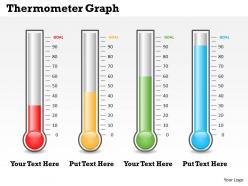
0414 thermometer powerpoint presentation





Try Before you Buy Download Free Sample Product
 Impress Your
Audience
 100%
Editable
 Save Hours
of Time


Handle your assets with our 0414 Thermometer Powerpoint Presentation. You will be delighted with the greater dividends.
People who downloaded this PowerPoint presentation also viewed the following :
0414 thermometer powerpoint presentation with all 5 slides:
Ride the contours of life with our 0414 Thermometer Powerpoint Presentation. Take the ups and downs in your stride.


FAQs for 0414
Thermometer types include digital, infrared, mercury, alcohol, and bimetallic models, each serving specific measurement needs across industries. These instruments streamline temperature monitoring by enabling precise readings, remote sensing, and continuous tracking in healthcare facilities, manufacturing plants, and food service operations, ultimately delivering improved safety protocols and operational efficiency.
Digital thermometers typically deliver greater accuracy than mercury thermometers through electronic sensors, faster response times, and precise digital readouts that eliminate human error in reading measurements. While mercury thermometers can be accurate when calibrated properly, digital versions streamline temperature monitoring by providing consistent results, enhanced safety without toxic materials, and often include features like memory storage, ultimately enabling more reliable healthcare and industrial applications.
Digital sensors, infrared technology, smart connectivity, miniaturization, and wireless transmission have revolutionized contemporary thermometer design and functionality. These advancements enable faster readings, non-contact measurements, and real-time data sharing across healthcare facilities, food service operations, and manufacturing environments, ultimately delivering enhanced accuracy, streamlined workflows, and better patient experiences while reducing cross-contamination risks.
Infrared thermometers excel in high-temperature industrial settings, food service operations, HVAC maintenance, medical facilities, and hazardous material handling environments. These devices enable contactless temperature measurement in manufacturing plants, commercial kitchens, and healthcare facilities, ultimately delivering faster assessments, enhanced safety protocols, and improved operational efficiency across temperature-sensitive industries.
Thermometer calibration ensures accurate temperature measurements by adjusting readings against known reference points, with improper calibration leading to systematic errors that compound across measurements. Common methods include ice point calibration using pure water at freezing, steam point calibration at boiling, and multi-point calibration across temperature ranges, with laboratories and manufacturing facilities finding regular calibration essential for quality control and regulatory compliance.
Thermometers ensure food safety by accurately measuring internal temperatures to eliminate harmful bacteria, verify proper cooking stages, and maintain cold storage requirements. In commercial kitchens, restaurants, and food processing facilities, these devices streamline compliance with health regulations while enhancing customer safety, ultimately delivering consistent culinary results and reducing foodborne illness risks.
Thermometers provide essential temperature data for climate research by measuring atmospheric conditions, ocean temperatures, soil heat levels, and seasonal variations across diverse geographical regions. Through strategic placement in weather stations, research facilities, and remote monitoring systems, scientists track long-term climate patterns, assess environmental changes, and develop predictive models, ultimately delivering critical insights for climate adaptation and environmental policy decisions.
Key features for medical thermometers include accuracy within ±0.1°C, fast response time, easy disinfection capabilities, digital display readability, and appropriate measurement range for human body temperature. These features ensure reliable patient monitoring by delivering precise readings, reducing infection risks, and enabling quick temperature assessments, with hospitals and clinics finding that quality thermometers enhance diagnostic accuracy while streamlining patient care workflows.
Clinical thermometer readings are interpreted by comparing the measured temperature to established normal ranges, typically 97-99°F (36.1-37.2°C) for oral readings, with variations for rectal, ear, or forehead measurements. Healthcare professionals in hospitals, clinics, and home care settings use these readings alongside other symptoms to assess fever patterns, monitor patient recovery, and make treatment decisions, ultimately enabling faster diagnosis and more targeted medical interventions.
Mercury thermometers present significant safety concerns including toxic vapor exposure, environmental contamination risks, and potential mercury poisoning from breakage or improper disposal. Digital electronic thermometers, infrared models, and alcohol-based alternatives deliver safer temperature measurement while eliminating hazardous materials, with many healthcare facilities and laboratories finding these modern options provide faster, more accurate readings and enhanced workplace safety.
Thermal expansion in glass thermometers works because liquids like mercury or alcohol expand uniformly when heated and contract when cooled, moving up or down the calibrated glass tube. This predictable volumetric change creates accurate temperature readings, with the liquid's position corresponding to specific temperature values, ultimately enabling precise measurements in laboratories, medical facilities, and industrial applications where reliable temperature monitoring delivers critical operational data.
Smart thermometers integrate with home automation systems through Wi-Fi connectivity, mobile app controls, voice assistant compatibility, automated scheduling, and multi-zone management capabilities. These technologies streamline temperature control by enabling remote adjustments, learning user preferences, and coordinating with other smart devices, ultimately delivering enhanced energy efficiency and personalized comfort while reducing utility costs for homeowners.
Thermometer maintenance best practices include regular calibration checks, proper cleaning with appropriate disinfectants, protective storage in designated cases, and routine accuracy verification against known standards. Healthcare facilities and laboratories find that implementing scheduled maintenance protocols, avoiding extreme temperature exposure, and maintaining calibration logs ensures reliable readings, reduces equipment replacement costs, and ultimately delivers consistent diagnostic accuracy across patient care and research applications.
Thermometers assist laboratory settings by enabling precise temperature control for experiments, ensuring sample integrity, monitoring equipment performance, and maintaining regulatory compliance standards. Through digital and infrared technologies, laboratories achieve consistent results, prevent costly sample degradation, and streamline quality assurance processes, with pharmaceutical and research facilities finding that accurate temperature monitoring ultimately delivers operational efficiency and reliable scientific outcomes.
Emerging thermometer trends include wireless connectivity, AI-powered analytics, miniaturized sensors, real-time monitoring systems, and integration with IoT platforms. These technologies streamline temperature management by enabling predictive maintenance, automated alerts, and seamless data collection, with healthcare facilities, food processing plants, and manufacturing operations finding enhanced compliance, reduced waste, and improved operational efficiency.
-
Great quality slides in rapid time.
-
Great designs, really helpful.