


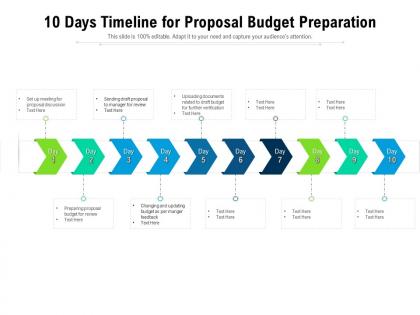
10 days timeline for proposal budget preparation




Try Before you Buy Download Free Sample Product
 Impress Your
 Audience
 100%
100% Editable
 Save Hours
 of Time


Our 10 Days Timeline For Proposal Budget Preparation are topically designed to provide an attractive backdrop to any subject. Use them to look like a presentation pro.
People who downloaded this PowerPoint presentation also viewed the following :
10 days timeline for proposal budget preparation with all 2 slides:
Use our 10 Days Timeline For Proposal Budget Preparation to effectively help you save your valuable time. They are readymade to fit into any presentation structure.

FAQs for 10 days timeline for
So you'll need to cover personnel stuff first - salaries, benefits, any consultants. Then there's your direct costs like equipment and supplies, plus travel if you're going anywhere. Overhead rates are usually a set percentage your finance people can tell you. Cost-sharing requirements always seem to pop up at the last minute, so check on that early. Honestly, the budget narrative is almost as important as the numbers - you need to explain each line item without drowning them in details. I'd start this whole process way earlier than you think you need to. Finance takes forever to get back to you.
Break your project down into specific chunks and estimate hours for each piece - trust me, this saves you from nasty surprises later. Look up current rates for contractors or any specialized stuff you'll need. Don't forget the sneaky costs like travel, equipment, software licenses (those add up fast). I throw in a 10-15% buffer every time because something weird always happens. Try to get actual quotes from vendors early since ballpark estimates are usually garbage. Being detailed beats making broad guesses any day. Your future self will be grateful when the budget questions start flying.
You definitely need stakeholder input for budget prep. Team leads and subject matter experts know what stuff actually costs - they'll catch your unrealistic assumptions before it's too late. Way better to hear "are you kidding me with that timeline?" now than after you submit. Get client contacts involved too if you can. They'll spot hidden costs and gaps you totally missed. Oh, and start this whole thing like 2-3 weeks early. You don't want to be scrambling to fix everything last minute because someone pointed out you forgot about equipment rentals or whatever. Been there, it sucks.
So here's what I do - make a simple spreadsheet with your project goals across the top and all your budget stuff down the side. Then score how badly you need each expense. The tricky part? Those "nice to have" things will totally disguise themselves as must-haves, so be brutal about it. Put your biggest money toward whatever will make or break the whole thing. I learned this the hard way on a project last year - spent too much on fancy extras early on. Once you've ranked everything, give percentages based on actual impact, not what feels "fair." Short sentences work. Don't overthink the balance thing.
Honestly, I'd just start with Excel or Google Sheets if you're decent with formulas - way easier than you think. Proposify and PandaDoc are solid if you want the fancy proposal software route with built-in templates. I've watched so many people get stuck tweaking elaborate tools when a basic spreadsheet would've worked perfectly fine. Short sentences work. For bigger teams, maybe Monday.com or Asana to track who approved what and when. The real trick is finding something everyone will actually stick with, not just the shiniest option. Start simple, then upgrade when you're genuinely hitting walls.
Honestly, always pad your budget by 10-15% for unexpected stuff. I got burned once when equipment costs shot up halfway through writing a proposal - not fun. Break it down smart though: 5% for personnel issues, 10% for equipment/supplies, 15% for travel since that's where things get weird. Most funders actually expect this kind of buffer, so don't feel bad about it. Just don't throw in some random "miscellaneous" line and call it a day. Be specific about what might go wrong. Oh, and double-check their guidelines first - some places cap how much contingency you can ask for.
So indirect costs are all those background expenses that keep your org running - admin support, rent, IT stuff, you know? Funders actually expect you to include them because they're not stupid, they know you need overhead to function. Without charging for indirect costs, you're basically eating those expenses yourself which is nuts long-term. Most grants have set rates for this stuff (like 10-15% usually?). Just double-check their limits before you submit because some are weirdly strict about it. Don't leave money on the table though - if they allow it, claim it.
Look up 3-4 similar projects and see how they broke down their budgets - industry associations usually have this stuff posted. Make a quick spreadsheet to compare the numbers. Your indirect costs should hit somewhere between 10-25% (depends on your field), and don't lowball the salary estimates or you'll look amateur. Honestly, the biggest mistake people make is just copying someone else's budget without thinking. You want to show you actually researched current market rates for those positions. It's not rocket science, but you've got to do the legwork first.
Make sure every line item connects to actual results they care about. Past project data is your best friend here - concrete ROI numbers beat vague promises every time. Break big expenses into smaller pieces so they don't freak out. Also throw in what could go wrong without proper funding (stakeholders love worst-case scenarios for some reason). Here's the key though: don't just bring one budget. Have your dream version plus a stripped-down "this is literally the minimum" backup ready. That way you're not scrambling when they inevitably ask you to cut 20%.
Keep your charts super clean - bar charts for comparing line items, pie charts for showing how you're dividing up the budget. Don't go crazy with animations or tons of text, honestly that stuff just gets distracting. Make sure people in the back can actually read your font size (learned that one the hard way). Stick with your company's colors if you can. Oh, and definitely add quick explanations for the big budget categories so everyone gets why you're spending money there. Export as PDF before presenting - trust me, formatting always breaks when you need it most.
Honestly, indirect costs will kill you if you're not careful - facilities, admin, benefits pile up way faster than expected. Labor rates are where people mess up most though. I see tons of proposals that lowball hourly rates to look competitive, but you'll hate yourself later when you're working for peanuts. Travel and equipment costs? Yeah, those too. Oh and make sure your budget actually matches what you're proposing - if you want a data analyst but have zero data collection money, reviewers will spot that immediately. Get someone to double-check your math before hitting submit.
Create different budget versions and number them - v1, v2, whatever works. Document every change with a quick note about why it affects the budget (more people, new equipment, longer timeline). Trust me, this stuff happens ALL the time so don't stress about it. Keep a clear trail showing how each change led to budget tweaks. Update your line items and narrative together so they match the new scope. Oh, and definitely get everyone to sign off before you call any version final - saves headaches later.
Set up variance reports every week or two - depends how long your project is. I track actual vs planned for each budget line item, not just the total (spreadsheets work fine, nothing fancy). Honestly, waiting for monthly reviews is a mistake I made early on. Catch problems fast. Set some thresholds too - like if anything goes 10% over budget, dig into it right away. The real trick though? Write down WHY you went over budget each time. That's how you'll actually get better at this stuff going forward.
Get everyone together ASAP before they hear it from someone else - trust me, that never goes well. Just be straight up about what's changing and why, even if it sucks. Don't try to make budget cuts sound like some amazing opportunity (ugh, hate when managers do that). Give them the real numbers and explain how their day-to-day work gets affected. Then actually ask what they think - people are way less pissed when you include them in figuring out solutions. Oh, and send a follow-up email afterward so nobody can claim they "didn't hear that part" later.
Look at the variance between what you estimated vs what actually happened - if it's over 10-15%, your process needs tweaking. I usually get way too into the weeds with this stuff after wrapping projects, but honestly it pays off. Compare your labor hours to reality, check if your indirect rates were accurate. Track how often you go over vs under budget across different proposals. A basic spreadsheet works fine for logging this stuff. You'll start seeing patterns emerge that'll help you nail future estimates better.
-
Very well designed and informative templates.
-
Easily Understandable slides.
-
Unique design & color.
-
Attractive design and informative presentation.
-
Use of different colors is good. It's simple and attractive.