


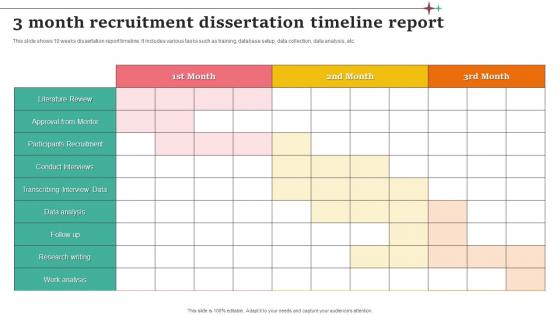
3 Month Recruitment Dissertation Timeline Report




Try Before you Buy Download Free Sample Product
 Impress Your
 Audience
 100%
100% Editable
 Save Hours
 of Time


This slide shows 10 weeks dissertation report timeline. It includes various tasks such as training, database setup, data collection, data analysis, etc.
People who downloaded this PowerPoint presentation also viewed the following :
3 Month Recruitment Dissertation Timeline Report with all 6 slides:
Use our 3 Month Recruitment Dissertation Timeline Report to effectively help you save your valuable time. They are readymade to fit into any presentation structure.





FAQs for 3 Month Recruitment
Key phases in a recruitment dissertation timeline include topic selection and literature review, research methodology design, data collection through surveys or interviews, analysis and interpretation, and final writing with revisions. These phases typically span 6-12 months, with many graduate students finding that systematic planning, regular advisor consultations, and milestone tracking ultimately streamline the process while ensuring comprehensive research quality.
Students can effectively plan their research design by allocating 3-4 weeks for methodology selection, literature review integration, and sampling framework development within their timeline. This strategic approach enables comprehensive planning for data collection methods, participant recruitment strategies, and analysis techniques, while many students find that early design planning ultimately streamlines their research execution and enhances dissertation quality.
Effective time management strategies for recruitment dissertation completion include creating detailed project timelines, setting weekly milestones, using task prioritization matrices, implementing focused writing blocks, and establishing regular supervisor meetings. These approaches streamline the research process by breaking complex recruitment analysis into manageable phases, maintaining consistent progress momentum, and enabling early identification of potential delays, with many graduate students finding that structured scheduling ultimately delivers reduced stress and higher-quality research outcomes.
Students should allocate approximately 40% of their timeline to data collection and 35% to analysis, with remaining time for writing and revisions. This strategic distribution enables thorough participant recruitment, comprehensive interview scheduling, and detailed statistical or thematic analysis, while many graduate programs find that concurrent preliminary analysis during collection phases ultimately streamlines the overall research process and enhances dissertation quality.
The literature review significantly shapes recruitment dissertation timelines by establishing foundational knowledge, identifying research gaps, and informing methodology selection, typically requiring 3-4 months of intensive research and analysis. This comprehensive phase determines subsequent research directions, influences data collection approaches, and provides theoretical frameworks that guide the entire study, with many doctoral candidates finding that thorough literature reviews ultimately streamline later dissertation phases.
Students can balance coursework and dissertation research by creating structured schedules, dedicating specific hours to each activity, setting realistic milestones, and utilizing time management tools effectively. Through strategic planning and consistent communication with advisors, many find that breaking dissertation tasks into smaller, manageable segments while maintaining coursework commitments ultimately delivers better academic outcomes and reduces overwhelming stress levels.
Common recruitment dissertation obstacles include data access delays, participant recruitment challenges, ethical approval bottlenecks, literature review scope creep, and analysis complexity issues. These challenges can be mitigated by establishing early stakeholder relationships, creating flexible sampling strategies, submitting ethics applications well in advance, and developing structured timelines with buffer periods, ultimately enabling researchers to deliver comprehensive findings while maintaining academic rigor and meeting critical deadlines.
Setting milestones and deadlines throughout the recruitment dissertation process is crucial for maintaining progress, managing complex research phases, and ensuring timely completion of this extensive academic undertaking. These structured timelines enable students to systematically navigate literature reviews, data collection, candidate interviews, and analysis phases, while providing accountability checkpoints that prevent procrastination, ultimately delivering reduced stress, improved research quality, and enhanced academic outcomes.
Ethical considerations for recruitment dissertation timelines include obtaining IRB approval, securing informed consent, ensuring participant confidentiality, allowing adequate withdrawal periods, and conducting thorough data anonymization. These protocols require additional planning time, with many researchers finding that building 4-6 weeks of buffer time enables comprehensive ethical compliance while maintaining research integrity and participant trust.
Feedback integration requires scheduling regular review points throughout your timeline, incorporating dedicated revision periods after each major section, and building buffer time for implementing suggestions. Many successful students establish monthly advisor meetings, peer review sessions for methodology and findings chapters, and allocate 2-3 weeks between draft submissions and final versions, ultimately ensuring comprehensive input enhances research quality while maintaining steady progress toward completion.
Project management tools like Trello, Asana, Microsoft Project, Gantt chart software, and research-specific platforms like Mendeley can streamline recruitment dissertation timeline management effectively. These technologies enhance organization by automating task scheduling, centralizing research documentation, and tracking milestone progress, with many graduate students finding that integrated platforms ultimately deliver improved time management and reduced academic stress.
Students can review and revise their recruitment dissertation timelines by conducting regular milestone assessments, analyzing data collection progress, and adjusting research phases based on participant availability and response rates. Through systematic timeline audits, many graduate students find that incorporating buffer periods, reallocating time between literature review and analysis phases, and maintaining flexibility in recruitment strategies ultimately delivers more realistic project completion schedules and higher-quality research outcomes.
**INPUT**: What are best practices for conducting surveys and interviews within the designated timeline? **OUTPUT**: Best practices include developing structured questionnaires early, scheduling interviews strategically across your timeline, using digital survey platforms for faster data collection, and building buffer time for follow-ups and rescheduling. These approaches streamline data gathering by maximizing response rates, ensuring consistent questioning, and accommodating participant availability, with many researchers finding that early preparation and flexible scheduling ultimately deliver higher-quality insights within tight academic deadlines.
Students can ensure recruitment dissertation flexibility by building buffer periods into their timeline, developing contingency plans for data collection delays, and maintaining regular communication with advisors for guidance adjustments. By creating modular research phases, establishing alternative participant pools, and documenting progress weekly, many graduate students find that unexpected recruitment challenges become manageable obstacles rather than derailment factors, ultimately delivering stronger research outcomes.
External recruitment research significantly impacts dissertation timelines through data collection delays, participant scheduling challenges, ethical approval processes, and response rate variables that can extend projects by several months. While these factors present scheduling uncertainties, they ultimately deliver richer, more comprehensive findings with real-world applicability, with many graduate students finding that industry partnerships and professional insights enhance dissertation quality and career prospects.
-
Time saving slide with creative ideas. Help a lot in quick presentations..
-
Excellent template with unique design.