


3 Year Financial Plan Powerpoint Ppt Template Bundles





Try Before you Buy Download Free Sample Product
 Impress Your
 Audience
 100%
100% Editable
 Save Hours
 of Time


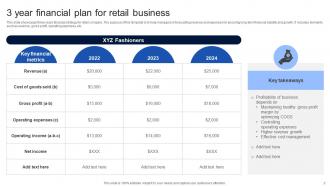
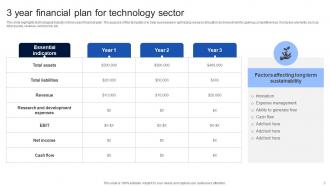
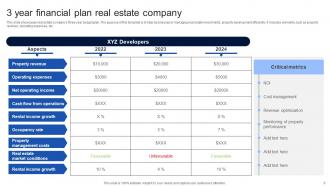
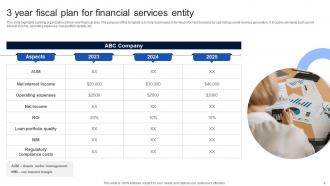
Introducing our comprehensive PowerPoint presentation PPT on 3 Year Financial Plan your definitive guide to crafting a robust Financial Strategy, Wealth Management Plan, and Fiscal Plan that ensures long term financial well-being. In an ever-changing economic landscape, a well-structured financial plan is the foundation for securing your financial future. This presentation delves into the intricacies of Financial Strategy, empowering you with the tools to set clear financial goals and navigate the complexities of wealth management. Explore the art of Wealth Management Planning, where you all learn how to build and protect your assets effectively. Dive into the world of Fiscal Planning, ensuring that you are in control of your financial destiny. Whether you are an individual, a financial advisor, or a business owner, this PPT equips you with the knowledge and methodologies to chart a three year financial roadmap for success. Elevate your financial planning and wealth management with our 3 Year Financial Plan presentation.
People who downloaded this PowerPoint presentation also viewed the following :
3 Year Financial Plan Powerpoint Ppt Template Bundles with all 25 slides:
Use our 3 Year Financial Plan Powerpoint Ppt Template Bundles to effectively help you save your valuable time. They are readymade to fit into any presentation structure.


















FAQs for 3 Year Financial Plan Powerpoint
A comprehensive financial plan includes budgeting and cash flow analysis, investment strategies, retirement planning, insurance coverage, and tax optimization strategies. These components work together by establishing financial goals, managing risk exposure, and maximizing wealth accumulation, with many individuals and families finding that integrated planning delivers greater financial security and long-term prosperity.
Individuals can effectively set financial goals by establishing specific, measurable objectives with clear timelines, prioritizing emergency funds and debt reduction for short-term focus, and targeting retirement savings and major purchases for long-term planning. Through strategic budgeting, automated savings, and regular goal reassessment, people streamline their financial progress while maintaining flexibility, ultimately delivering enhanced financial security and peace of mind.
Budgeting serves as the foundation of successful financial planning by tracking income and expenses, identifying spending patterns, establishing savings goals, and creating accountability for financial decisions. Through systematic budget management, individuals and businesses can allocate resources strategically, reduce unnecessary costs, and accelerate wealth building, ultimately delivering greater financial security and competitive advantage in achieving long-term objectives.
Debt repayment should prioritize high-interest obligations first, such as credit cards and personal loans, while maintaining minimum payments on all accounts to preserve credit scores. This strategic approach, combined with building emergency funds and continuing retirement contributions, enables individuals to reduce financial stress, improve cash flow, and ultimately achieve greater long-term wealth accumulation.
Conservative investors benefit from bonds, dividend stocks, and money market funds, while moderate investors often choose diversified mutual funds and balanced portfolios. Aggressive investors typically pursue growth stocks, emerging markets, and alternative investments, with many financial advisors finding that strategic asset allocation across these categories delivers optimal risk-adjusted returns while maintaining long-term wealth building potential.
Tax planning integrates into personal financial planning through strategic timing of income and deductions, maximizing retirement account contributions, and coordinating investment strategies with tax implications. Through careful planning across tax-advantaged accounts, asset location strategies, and income timing, individuals streamline their overall tax burden while enhancing long-term wealth accumulation and financial goal achievement.
Financial planning software includes budgeting platforms like Mint and YNAB, investment trackers like Personal Capital, tax preparation tools like TurboTax, and comprehensive suites like Quicken. These technologies streamline expense tracking, automate savings goals, and provide real-time portfolio analysis, with many financial advisors finding that integrated platforms ultimately deliver enhanced client experiences and operational efficiency.
Life changes significantly reshape financial priorities by introducing new responsibilities, expenses, and long-term goals that require strategic adjustments to budgeting, insurance coverage, and investment timelines. Marriage often involves combining assets and debt management, while children necessitate education funding, increased insurance needs, and retirement planning modifications, with many families finding that early preparation and regular plan reviews ultimately deliver greater financial security and flexibility for evolving circumstances.
Common financial planning pitfalls include inadequate emergency savings, lack of clear goals, emotional investing decisions, insufficient retirement contributions, and poor debt management strategies. These challenges often stem from procrastination, unrealistic expectations, and failure to regularly review plans, with many individuals finding that working with financial advisors helps streamline decision-making and ultimately delivers better long-term outcomes.
Balancing retirement savings with current obligations requires strategic prioritization through employer 401(k) matching, automated percentage-based allocations, and debt management strategies. Many financial advisors recommend starting with employer matches, gradually increasing retirement contributions while managing high-interest debt, ultimately creating sustainable long-term wealth building alongside meeting immediate financial responsibilities.
Emergency funds serve as financial safety nets that protect against unexpected expenses, job loss, medical emergencies, and economic downturns, while maintaining financial stability without deriving debt. They enable individuals and families to navigate crises with confidence, preserve long-term investment strategies, and avoid costly borrowing, ultimately delivering peace of mind and financial resilience in an increasingly uncertain economic landscape.
Financial planning for self-employed individuals requires greater emphasis on irregular income management, estimated tax payments, self-funded retirement accounts, and comprehensive health insurance coverage, while salaried employees typically focus on employer-sponsored benefits optimization and steady contribution strategies. Self-employed professionals must prioritize emergency funds covering 6-12 months of expenses and quarterly tax reserves, ultimately delivering greater financial flexibility with enhanced planning complexity.
Strategies include paying bills on time, reducing credit utilization below 30%, maintaining older accounts, diversifying credit types, and regularly monitoring credit reports for errors. These approaches enhance creditworthiness by demonstrating financial responsibility, minimizing debt-to-credit ratios, and establishing payment history, ultimately delivering lower interest rates, better loan terms, and increased borrowing power for major financial goals.
Estate planning integrates into comprehensive financial plans through tax optimization strategies, asset protection mechanisms, and wealth transfer structures that align with long-term financial goals. These components work together by minimizing estate taxes, ensuring liquidity for beneficiaries, and preserving family wealth across generations, with many financial advisors finding that coordinated planning ultimately delivers greater financial security and legacy preservation.
Working with a financial advisor provides personalized expertise, comprehensive portfolio management, tax optimization strategies, retirement planning guidance, and objective emotional discipline during market volatility. While DIY planning offers cost savings and direct control, many individuals find that professional advisors deliver superior long-term returns through strategic asset allocation and behavioral coaching, ultimately enhancing wealth accumulation and financial security.
-
Design layout is very impressive.
-
I took a chance with SlideTeam. I never looked back. Great products and great service.