


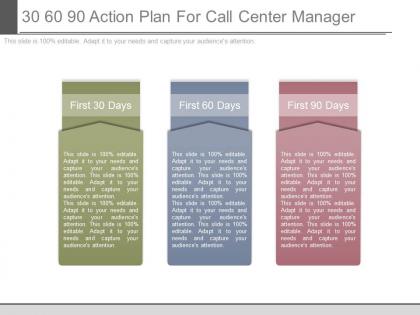
30 60 90 action plan for call center manager ppt slides




Try Before you Buy Download Free Sample Product
 Impress Your
 Audience
 100%
100% Editable
 Save Hours
 of Time


Be the star of the boardroom for your next presentation. Carefully crafted 30 60 90 Action Plan For Call Center Manager Ppt Slides design for all of your presentation needs.
People who downloaded this PowerPoint presentation also viewed the following :
30 60 90 action plan for call center manager ppt slides with all 7 slides:
Our 30 60 90 Action Plan For Call Center Manager Ppt Slides ensure everyone pays heed. Your advice will be faithfully followed.





FAQs for 30 60 90 action plan for call center
Honestly, just spend your first month getting to know the lay of the land. Meet with each team member individually - that's where you'll learn the real story about what's going on. Check out the key numbers like call volume and customer satisfaction to see where you're starting from. I'd definitely listen to some recorded calls and maybe shadow a few agents during different shifts to see what customers are actually experiencing. Get familiar with whatever systems they're using too. Oh, and document the good stuff along with the problems, but don't go changing everything right away. That never ends well.
Look, first thing - dig into your call monitoring data. Average handle time, first call resolution rates, customer satisfaction scores, all that stuff. I'd actually listen to some calls yourself (yeah it takes forever but you'll learn more than any report). Shadow a few agents during their shifts too. Schedule one-on-ones with everyone to hear their side of things - what's driving them crazy, what processes suck. Don't forget to check any coaching notes from whoever was there before you. Honestly, the performance reviews might be more telling than you'd expect. By week three you should know who your stars are and where the biggest problems live.
Focus on the basics first - handle time, first call resolution, and abandonment rates. Those directly hit customer experience. Call volume trends are massive too since they reveal staffing issues. Honestly? I'd obsess over agent utilization and schedule adherence in your first 60 days. Bad scheduling ruins everything else. Skip satisfaction scores for now - they're always behind the curve anyway. Track this stuff weekly, not monthly, so you catch problems early. Oh, and set up those automated dashboards immediately. Trust me, you don't want to be hunting for data when things go sideways.
Start with call routing software and basic dashboards - you'll get immediate visibility into what's actually happening. First 30 days, that's it. After that, add the fancier stuff like AI sentiment analysis and automated quality scoring over the next couple months. I know all the shiny tools look amazing, but honestly? Data on your current headaches comes first. By day 90, get predictive analytics running so you can forecast staffing and catch trends early. Oh, and don't dump everything on your team at once - one new tool per month max or they'll hate you.
First thing - do a skills assessment right when you start so you know what you're actually dealing with. Most teams think they're better than they are, honestly. Break training into small chunks over 30 days instead of cramming everything at once. Focus on three main things: updating product knowledge, coaching soft skills, and getting everyone comfortable with your systems. Role-playing helps tons for those nightmare customer calls. Set up mentor pairs too - people learn better from each other sometimes. Oh, and don't skip the weekly check-ins to see what's actually working versus what isn't.
Honestly, those first 30-60 days will make or break you with the team. Get out of your office and actually walk around - do one-on-ones with everyone and really listen when they complain about stuff. I mean, they're probably expecting another manager who'll just hide in meetings all day. Celebrate the small wins right away too. Someone handles a tough call? Call it out immediately. Coffee chats work better than formal meetings for figuring out what's actually broken. The metrics matter obviously, but show them you care about them as people first. Quick wins celebrated loudly = instant credibility.
Honestly, customer feedback is your best friend for planning those first 90 days. Pull last quarter's surveys and complaint data first - you'll be shocked how wrong your gut instincts probably are about what's actually broken. I learned this the hard way at my last job! Spend your first month digging into escalation patterns and identifying the real pain points. Then set specific targets for day 60, like cutting hold times or fixing whatever process is making people mad. By day 90, you can actually see if your changes worked. Way better than just guessing what needs fixing.
Honestly, just start with one-on-ones with your agents and team leads - they'll spill everything if you actually listen. Then dig into your metrics like AHT and CSAT to see what's broken. The numbers only tell half the story though. Shadow some calls during rush hours, check if your knowledge base is actually helpful or total garbage (spoiler: it's usually garbage). Listen to call recordings when you can. I'd throw everything into a basic spreadsheet and knock out the easy fixes first. Quick wins keep people motivated while you tackle the bigger mess.
Start with one-on-ones to figure out what's actually bugging people. Usually it's dumb stuff like broken systems or outdated scripts - not some deep morale issue. Make small fixes weekly, even tiny ones, because momentum builds fast. Celebrate wins out loud and get specific with praise instead of just "nice work." Call center people feel pretty invisible most of the time, so honestly? Just caring about their input is huge. Oh, and set up some way for quick feedback - could be a suggestion box, whatever - but you gotta actually use what they tell you.
Honestly, you'll want to flip your approach as you settle in. First month? Ask tons of questions during one-on-ones - you're still figuring out who's who and how things actually work. Around day 30-60, start floating your ideas but keep it collaborative. This part gets weird because everyone's secretly wondering what you're really planning! After 60 days though, you should be laying out your vision pretty confidently while keeping those relationships intact. It's basically going from "What's your take on this?" to "Alright, here's where we're headed and how we'll make it happen." The timing matters more than you'd think.
Honestly, start simple with three main things: daily dashboards, weekly scorecards, and monthly trend reports. Track the basics first - call volume, handle times, resolution rates, customer satisfaction. Don't get caught up in all the bells and whistles right away (trust me on this one). Just get consistent data flowing and automate those reports so you're not stuck pulling numbers manually every week. Make sure your team can actually read the dashboards without squinting at them for five minutes. Focus on metrics that'll actually help your agents perform better and keep customers happy. Nail the foundation in your first month, then add the fancy stuff later.
Look, most managers mess this up by jumping into flashy new stuff right away. First thing? Actually listen to your call recordings and figure out where things are going wrong. I know it sounds boring but trust me on this one. Train your team on listening skills and empathy - that makes a huge difference. Get your call routing fixed so people aren't waiting forever. Make sure your knowledge base isn't garbage so agents can actually help customers quickly. Oh, and do those real-time coaching sessions where you can hop on calls. Once that foundation's solid, then you can worry about the fancy programs.
So at 30 days, you're basically just watching and taking notes - what's happening with your agents, team stuff, obvious problems. Then around 60 days, start connecting those observations to actual numbers and figure out what needs fixing. The 90-day mark is honestly where things get real - that's when you can spot the difference between quick fixes and the messy systemic stuff that'll need serious work. Oh, and definitely track the same agents through all three reviews or you won't be able to tell if anyone's actually improving. Makes building development plans way easier too.
Start with IT, HR, and Training - honestly, these three will save your sanity. IT fixes all the tech headaches your team deals with constantly. HR's got your back for hiring and managing people. Training keeps everyone sharp, especially new hires who are totally lost at first. Sales and Marketing are key too since they basically control what hits your phones (and trust me, they'll have strong opinions about how you're doing). Finance handles your budget stuff, Facilities sorts workspace issues. Skip formal meetings though - grab coffee instead. You'll actually learn how things work around there and people will be way more honest.
Honestly, I'd make data your best friend for that 30-60-90 plan instead of just winging it. First month, get your baseline numbers - handle times, resolution rates, how happy your agents actually are. I totally messed this up once thinking we needed more people when really our training sucked. Check those numbers every week to catch trends early. Say your 60-day goal was cutting hold times, but then you see satisfaction scores tanking because agents are rushing calls? Time to switch gears. Weekly data reviews became my thing - sounds boring but it'll save you.
-
Designs have enough space to add content.
-
It saves your time and decrease your efforts in half.